Ondansetron bluefish
Poland
Table of Contents
Package leaflet: Information for the user
Ondansetron Bluefish, 4 mg orodispersible tablets
Ondansetron Bluefish, 8 mg orodispersible tablets
Ondansetronum
Please read all of this leaflet carefully before taking this medicine, because it contains
important information for you.
- Keep this leaflet. You may need to read it again.
- If you have any further questions, ask your doctor, pharmacist or nurse.
- This medicine has been prescribed for you only. Do not pass it on to others. It may harm someone else, even if their symptoms are the same as yours.
- If you get any side effects, talk to your doctor, pharmacist or nurse. This includes any side effects not listed in this leaflet. See section 4.
Contents of the leaflet:
- What Ondansetron Bluefish is and what it is used for
- What you need to know before you take Ondansetron Bluefish
- How to take Ondansetron Bluefish
- Possible side effects
- How to store Ondansetron Bluefish
- Contents of the pack and other information
1. What Ondansetron Bluefish is and what it is used for
Ondansetron Bluefish is available as a tablet that dissolves rapidly when placed on the tongue. Ondansetron Bluefish contains the active substance ondansetron, which belongs to a group of medicines called antiemetics, used to prevent nausea and vomiting.
Ondansetron Bluefish may be used:
- to treat nausea and vomiting caused by cytotoxic chemotherapy in adults and children;
- to prevent nausea and vomiting after surgery in adults and children;
- to treat nausea and vomiting caused by radiotherapy in adults.
If you are unsure why this medicine has been prescribed for you, you should contact your doctor.
2. Important information before using Ondansetron Bluefish
When not to use Ondansetron Bluefish
- if the patient is allergic to ondansetron or any of the other ingredients of this medicine (listed in section 6);
- if the patient is taking apomorphine (used in the treatment of Parkinson's disease).
Warnings and precautions
Before starting treatment with Ondansetron Bluefish, discuss this with your doctor, pharmacist,
or nurse
- if the patient is pregnant or plans to become pregnant soon;
- if the patient is breastfeeding;
- if the patient has liver disease;
- if the patient has a blocked bowel or suffers from severe constipation;
- in children under 2 years of age or with a body surface area below 0.6 m².
Ondansetron Bluefish and other medicines
Tell your doctor or pharmacist about all medicines the patient is currently taking or has recently taken, as well as any medicines the patient plans to take, such as phenytoin,
carbamazepine, rifampicin, tramadol.
Pregnancy and breastfeeding
Ondansetron Bluefish should not be used during the first trimester of pregnancy. This is because Ondansetron Bluefish may slightly increase the risk of cleft lip and/or cleft palate [an opening or fissure in the upper lip and/or palate]. If the patient is already pregnant, suspects pregnancy, or plans to become pregnant, she should consult her doctor or pharmacist before using Ondansetron Bluefish. If the patient is a woman of childbearing age, effective contraception may be advised.
Ondansetron is likely to pass into breast milk. Therefore, breastfeeding is not recommended during treatment with Ondansetron Bluefish.
Driving and operating machinery
Ondansetron Bluefish has no influence on the ability to drive or operate machinery.
Ondansetron Bluefish contains aspartame, glucose, maltodextrin, sorbitol, sulfur dioxide, and sodium
Ondansetron Bluefish contains aspartame (E 951). The medicine contains 0.88 mg of aspartame in each 4 mg orodispersible tablet and 1.76 mg of aspartame in each 8 mg orodispersible tablet. Aspartame is a source of phenylalanine. It may be harmful for patients with phenylketonuria. This is a rare genetic disorder in which phenylalanine accumulates in the body due to its improper excretion.
Ondansetron Bluefish contains sorbitol (E 420). The medicine contains 8.4 mg of sorbitol in each 4 mg orodispersible tablet and 16.9 mg of sorbitol in each 8 mg orodispersible tablet.
Ondansetron Bluefish contains glucose and maltodextrin. If the patient has previously been diagnosed with intolerance to certain sugars, the patient should consult a doctor before taking this medicine. It may have a harmful effect on teeth.
Ondansetron Bluefish contains sulfur dioxide (E 220). The medicine may rarely cause severe hypersensitivity reactions and bronchospasm.
Ondansetron Bluefish contains sodium. The medicine contains less than 1 mmol (23 mg) of sodium per orodispersible tablet, meaning the medicine is considered "sodium-free".
3. How to use Ondansetron Bluefish
This medicine should always be used exactly as your doctor has told you. If you are unsure, you should
contact your doctor or pharmacist.
After starting treatment:
The effect of Ondansetron Bluefish should begin within 1 or 2 hours after taking a dose.
If the patient experiences nausea within one hour of taking a dose, the same dose should be taken again.
If nausea occurs more than one hour after taking the medicine, do not take more tablets than recommended
in the leaflet. If nausea continues, contact your doctor.
Treatment and prevention of nausea and vomiting caused by chemotherapy or radiotherapy:
Adults:
8 mg 1 to 2 hours before starting chemotherapy or radiotherapy, followed by 8 mg every
12 hours for 5 days. Your doctor may recommend that the first dose is given as an injection.
Elderly patients:
The dosage is the same as for adults.
Use in children (aged 2 years and above) and adolescents (< 18 years):
The dose is individually adjusted and depends on the child's body size/surface area. Ondansetron Bluefish
must not be used in children with a total body surface area below 0.6 m².
Children over 6 months of age and adolescents
- The usual dose is up to 4 mg twice daily
- The medicine can be given for up to 5 days
Treatment and prevention of postoperative nausea and vomiting:
Adults, treatment and prevention:
16 mg one hour before surgery, or alternatively 8 mg one hour before anaesthesia, followed by two further
8 mg doses given at 8-hour intervals. Your doctor may recommend that the first dose is given as an injection.
Elderly patients, treatment and prevention:
Experience with ondansetron in elderly patients is limited. Ondansetron is well tolerated in patients over 65 years
of age receiving chemotherapy (see above).
Patients with mild or moderate hepatic impairment:
The total daily dose should not exceed 8 mg.
Patients who are poor metabolizers of mephenytoin and debrisoquine:
No dose adjustment or change in dosing frequency is required.
Tablets should be taken as follows:
Do not remove Ondansetron Bluefish tablets from the blister or pierce the foil until it is time to take the medicine.
It is important not to push the tablet out of its cavity to avoid breaking it (Fig. A).
In each blister, tablets are separated by perforations. Detach the cavity containing one tablet along the perforation
(Fig. 1). Carefully remove the protective foil. Peel back the protective foil from the corner marked with an arrow
(Fig. 2 and 3).
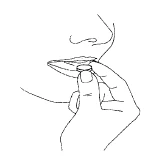
Remove the tablet from the packaging with dry hands and place it on the tongue (Fig. 4). When the tablet disintegrates,
it may be swallowed with water.
Fig. A. Fig. 1.
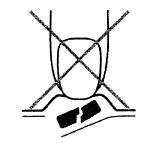

Fig. 2. Fig. 3.

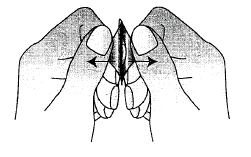
Fig. 4.
Taking more Ondansetron Bluefish than recommended
If an adult or child takes more Ondansetron Bluefish than recommended, contact your doctor immediately or go to
a hospital. Take the medicine pack with you.
If you miss a dose of Ondansetron Bluefish
Do not take a double dose to make up for a missed dose.
If you miss a dose and experience nausea or vomiting, take Ondansetron Bluefish as soon as possible and continue
taking the following doses as before.
If you miss a dose and do not have nausea or vomiting, take the next dose as stated in the leaflet.
4. Possible side effects
Like all medicines, this medicine can cause side effects, although not
everyone will get them.
Some patients may be allergic to certain medicines. If any of the following
side effects occur shortly after taking Ondansetron Bluefish, you should stop
taking the medicine and contact your doctor immediately:
- Sudden wheezing and pain or tightness in the chest
- Swelling of the eyelids, face, lips, mouth or tongue
- Skin rash – red spots or hives (skin welts) anywhere on the body
- Collapse
Other possible side effects:
Very common (may affect more than 1 in 10 people)
- Headache
Common (may affect up to 1 in 10 people)
- Constipation
- Feeling of warmth or flushing (sensation of blood rushing to the head)
Uncommon (may affect up to 1 in 100 people)
- Heart rhythm disturbances, chest pain with or without ST-segment depression, slow heart rate.
- Asymptomatic increase in liver enzyme activity.
- Seizures, movement disorders including extrapyramidal symptoms such as dystonic reactions, oculogyric crisis (involuntary upward deviation of the eyes), and disturbances of voluntary movements, without significant or lasting impact on the patient's clinical status.
- Hiccups
- Low blood pressure
Rare (may affect up to 1 in 1,000 people)
- Immediate hypersensitivity reactions, sometimes severe, including anaphylactic reactions.
- Dizziness during intravenous administration, which in most cases can be prevented or resolved by prolonging the infusion time.
- Transient visual disturbances (e.g. blurred vision) during intravenous administration.
Very rare (may affect up to 1 in 10,000 people)
- Transient loss of vision, primarily during intravenous administration.
In most cases, blindness resolved within 20 minutes. Most patients were receiving
chemotherapeutic agents, including cisplatin. In some cases of transient vision loss,
a cortical origin has been described.
The strawberry flavouring contains sulphur dioxide (E220), which in rare
cases may cause severe allergic reactions and bronchospasm.
If any of the side effects worsen or if any side effects not listed in this leaflet occur,
you should inform your doctor or pharmacist.
Reporting of side effects
If you experience any side effects, including those not listed in this leaflet,
you should inform your doctor, pharmacist or nurse. Side effects can be reported directly to the Department of Monitoring of Adverse Drug Reactions, Office for Registration of Medicinal Products, Medical Devices and Biocidal Products, Al. Jerozolimskie 181 C, 02-222 Warsaw, Tel.: +48 22 49 21 301,
Fax: +48 22 49 21 309, Website: https://smz.ezdrowie.gov.pl
Side effects may also be reported to the marketing authorization holder.
Reporting of side effects helps provide more information on the safety of the medicine.
5. How to store Ondansetron Bluefish
Keep this medicine out of the sight and reach of children.
Store in the original packaging to protect from light.
Store below 30°C.
Do not use this medicine after the expiry date stated on the carton or foil under "Expiry date" or "EXP". The expiry date refers to the last day of the stated month.
Do not use this medicine if there are visible signs of deterioration, such as discoloration or broken tablets.
Medicines must not be disposed of via wastewater or household waste. Ask your pharmacist how to dispose of medicines no longer required. These measures will help protect the environment.
6. Contents of the pack and other information
What Ondansetron Bluefish contains
- The active substance is ondansetron. Each orodispersible tablet contains 4 mg or 8 mg of ondansetron.
- The other ingredients are aspartame (E 951), crospovidone type B, magnesium stearate, microcrystalline cellulose, Pharmaburst\™ C1 (containing mannitol (E 421), sorbitol (E 420), crospovidone (type A) and colloidal anhydrous silica), strawberry flavouring [(containing glucose, corn maltodextrin, potato maltodextrine, gum arabic (2.3%) and sulphur dioxide (E 220)], sodium stearyl fumarate.
What Ondansetron Bluefish looks like and contents of the pack
Orodispersible tablets.
Ondansetron Bluefish 4 mg and 8 mg are white, flat, round tablets with bevelled edges.
Ondansetron Bluefish is available in packages containing 6 x 1, 10 x 1, 14 x 1, 20 x 1, 30 x 1, 50 x 1, 60 x 1, 100 x 1 tablets in unit blister packs OPA/Aluminium/PVC/Aluminium.
Not all pack sizes may be marketed.
Marketing Authorisation Holder
Bluefish Pharmaceuticals AB
P.O. Box 49013
100 28 Stockholm
Sweden
Manufacturer
Bluefish Pharmaceuticals AB
Gävlegatan 22
113 30 Stockholm
Sweden
Sofarimex Industria Química e Farmacêutica S.A.
Av. das Indústrias - Alto do Colaride
Cacem, 2735-213
Portugal
This medicinal product is authorised in the European Economic Area member states under the following names:
| Member State | Medicinal product name |
| Denmark | Ondansetron Bluefish 4 mg/ 8 mg orodispersible tablets |
| Finland | Ondansetron Bluefish 4 mg/ 8 mg orodispersible tablets Ondansetron Bluefish 4 mg/ 8 mg orodispersible tablets |
| Spain | Ondansetron Bluefish 4 mg/ 8 mg buccodispersible tablets EFG |
| Germany | Ondansetron Bluefish 4 mg/ 8 mg orodispersible tablets |
| Norway | Ondansetron Bluefish 4 mg/ 8 mg orodispersible tablets |
| Poland | Ondansetron Bluefish |
| Sweden | Ondansetron Bluefish 4 mg/ 8 mg orodispersible tablets |
| United Kingdom | Ondansetron 4 mg/ 8 mg orodispersible tablets |