Ondansetron accord 2 mg/ml
Poland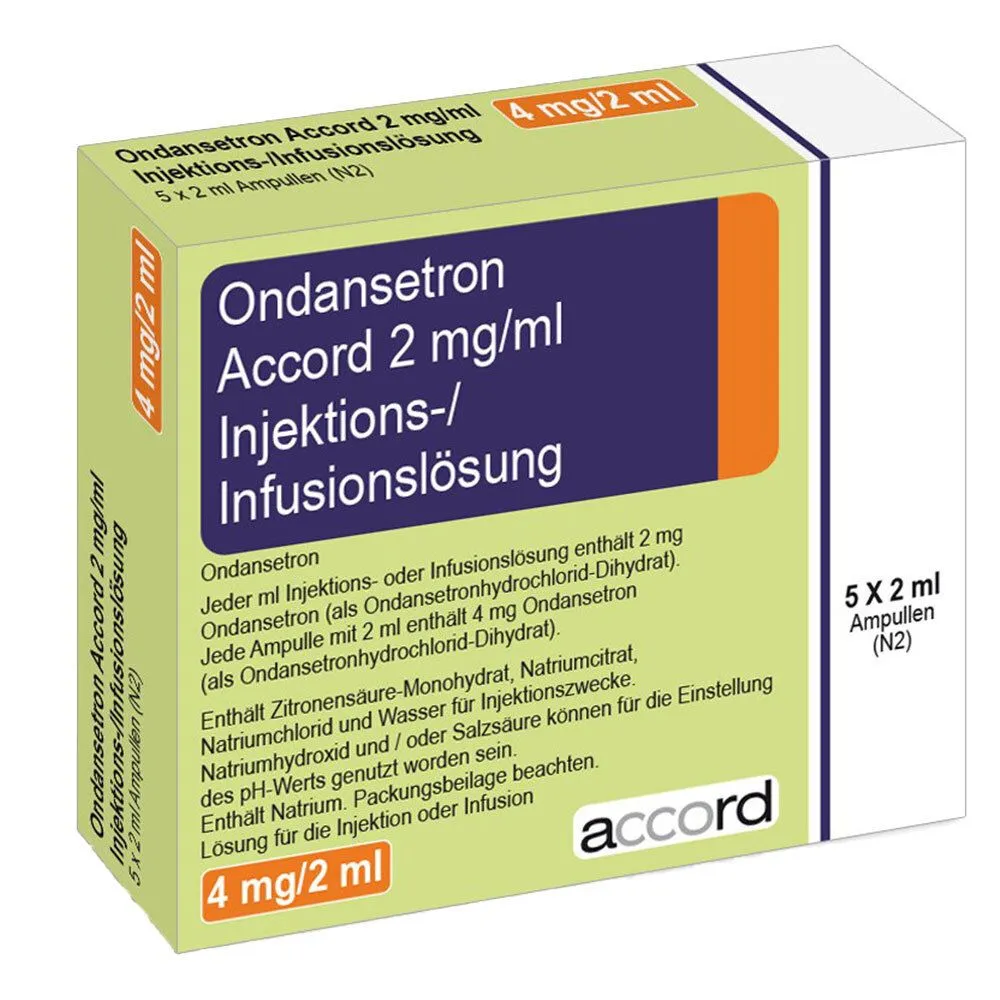
Table of Contents
- Package leaflet: Information for the user
- 1. What Ondansetron Accord is and what it is used for
- 2. Important information before using Ondansetron Accord
- 3. How to use Ondansetron Accord
- 4. Possible side effects
- 5. How to store Ondansetron Accord
- 6. Contents of the pack and other information
- The following information is intended solely for medical or healthcare personnel
Package leaflet: Information for the user
Ondansetron Accord 2 mg/ml, solution for injection or infusion
Ondansetronum
Please read all of this leaflet carefully before using this medicine, because it contains
important information for you.
- Keep this leaflet. You may need to read it again.
- If you have any further questions, ask your doctor, pharmacist, or nurse.
- This medicine has been prescribed for you only. Do not pass it on to other people. It may harm them, even if their symptoms are the same as yours.
- If you experience any side effects, including any not listed in this leaflet, tell your doctor, pharmacist, or nurse.
The medicine is called Ondansetron Accord 2 mg/ml, solution for injection or infusion. However, in the remainder of this leaflet it will be referred to as Ondansetron Accord.
Contents of the leaflet
- What Ondansetron Accord is and what it is used for
- What you need to know before you use Ondansetron Accord
- How to use Ondansetron Accord
- Possible side effects
- How to store Ondansetron Accord
- Contents of the pack and other information
1. What Ondansetron Accord is and what it is used for
Ondansetron Accord contains the active substance ondansetron, which belongs to a group of medicines called antiemetics. Some treatments may cause nausea or vomiting. Antiemetic medicines can help prevent nausea and vomiting after treatment.
In adults, Ondansetron Accord is used:
- to prevent nausea and vomiting that may occur during chemotherapy (a course of chemotherapy) or radiotherapy for cancer treatment,
- to prevent and treat nausea and vomiting that may occur after surgery under general anaesthesia.
In children over 1 month of age, Ondansetron Accord may be used to prevent and treat postoperative nausea and vomiting.
In children over 6 months of age, Ondansetron Accord may also be used to treat nausea and vomiting during chemotherapy.
2. Important information before using Ondansetron Accord
When not to use Ondansetron Accord:
- if the adult or child is taking apomorphine (used in the treatment of Parkinson's disease);
- if the adult or child is allergic to ondansetron or to any of the other ingredients of this medicine (listed in section 6).
If the patient believes that any of the above apply, they should contact their doctor
before taking Ondansetron Accord.
Warnings and precautions
Before starting treatment with Ondansetron Accord, consult a doctor or
pharmacist:
- if the patient is allergic to medicines similar to ondansetron, such as those containing granisetron or palonosetron;
- if the adult or child has ever had heart problems, such as irregular heartbeat (arrhythmia);
- if the adult or child has intestinal problems;
- if the patient's liver is not functioning properly, the doctor may reduce the dose of Ondansetron Accord. If any of the above situations apply to the patient, they should inform their doctor.
Ondansetron Accord and other medicines
Tell your doctor or pharmacist about all medicines the adult or child is currently taking or has recently taken, as well as any medicines they plan to take, including
medicines available without a prescription.
- phenytoin and carbamazepine (medicines used to treat epilepsy) may adversely affect ondansetron levels in the body;
- rifampicin (a medicine used to treat itch, tuberculosis, and acne) may adversely affect ondansetron levels in the body;
- concomitant use of ondansetron may adversely affect the action of tramadol (a medicine used to relieve pain);
- fluoxetine, paroxetine, sertraline, fluvoxamine, citalopram, escitalopram (SSRIs [selective serotonin reuptake inhibitors]) (medicines used to treat depression and/or anxiety) may cause changes in mental state;
- venlafaxine, duloxetine (SNRIs [serotonin-noradrenaline reuptake inhibitors]) (medicines used to treat depression and/or anxiety) may cause changes in mental state;
- concomitant use of ondansetron with medicines affecting the heart (e.g. anthracyclines such as doxorubicin, daunorubicin or trastuzumab), antibiotics (e.g. erythromycin or ketoconazole), antiarrhythmics (e.g. amiodarone) and beta-blockers (e.g. atenolol or timolol) may increase the risk of heart rhythm disturbances. Inform the doctor if the patient is taking any of these medicines.
Pregnancy, breastfeeding and fertility
Ondansetron Accord should not be used during the first trimester of pregnancy. This is because
Ondansetron Accord may slightly increase the risk of cleft lip and/or cleft palate [an opening or fissure in the upper lip and/or palate]. If the patient is pregnant, suspects she may be pregnant, or is planning to become pregnant, she should consult her doctor or pharmacist before using this medicine. If the patient is a woman of childbearing age, effective contraception may be advised.
Breastfeeding is not recommended during treatment with Ondansetron Accord.
Animal studies have shown that ondansetron may pass into breast milk. This may affect the infant. Discuss this with your doctor.
Driving and operating machinery:
Ondansetron Accord has no influence on the ability to drive or operate machinery.
Ondansetron Accord contains sodium.
The medicine contains 3.62 mg of sodium (the main component of table salt) in each millilitre. This corresponds to 0.18% of the maximum recommended daily dietary sodium intake for adults.
3. How to use Ondansetron Accord
This medicine should always be taken exactly as prescribed by your doctor. If you have any doubts,
you should consult your doctor or pharmacist.
Ondansetron Accord is usually administered by a doctor or nurse.
The prescribed dose will depend on the type of treatment being given.
Prevention of nausea and vomiting caused by chemotherapy or radiotherapy
Adults
On the day of chemotherapy or radiotherapy, a dose of 8 mg is recommended for adults, administered
as an intravenous or intramuscular injection, immediately before chemotherapy or radiotherapy,
followed by a second 8 mg dose 12 hours later. The usual intravenous dose in adults should not exceed
8 mg.
On subsequent days:
- after chemotherapy, the medicine will be administered orally, either as an ondansetron tablet (8 mg) or 10 ml of syrup (8 mg),
- oral administration may begin 12 hours after the last intravenous dose and should continue for up to 5 days.
If chemotherapy or radiotherapy causes severe nausea and vomiting, it may be necessary to administer
a higher dose than the standard dose of Ondansetron Accord to an adult or child. Your doctor will decide
whether a dose adjustment is required.
Prevention of nausea and vomiting caused by chemotherapy
Children over 6 months of age and adolescents
The dose will be determined by the doctor based on body weight or body surface area.
On the day of chemotherapy:
- the first dose is administered by intravenous injection, immediately before treatment. After chemotherapy, the medicine is usually given to children orally, either as a tablet or syrup.
On subsequent days, oral administration may begin 12 hours after the last intravenous dose and should
continue for up to 5 days.
Prevention and treatment of nausea and vomiting in the postoperative period
Adults:
- The usual dose in adults is 4 mg, administered as an intravenous or intramuscular injection. To prevent vomiting, the medicine is given immediately before surgery.
Children:
- The doctor will determine the appropriate dose for children over 1 month of age and adolescents. The maximum dose of 4 mg should be administered as a slow intravenous injection. To prevent vomiting, the medicine is given immediately before surgery.
Patients with moderate or severe hepatic impairment
A dose exceeding 8 mg per day should not be used.
If nausea and vomiting persist in an adult or child
The medicine should take effect shortly after administration. If nausea or vomiting continues, inform
your doctor or nurse.
Administration of a higher than recommended dose of Ondansetron Accord
Since Ondansetron Accord will be administered by a doctor or nurse, it is unlikely that an adult or child
will receive too high a dose. However, if you suspect that an adult or child has received an overdose,
or if a dose has been missed, inform your doctor or nurse immediately.
If you have any further questions about the use of this medicine, consult your doctor, pharmacist, or nurse.
4. Possible side effects
Like all medicines, this medicine can cause side effects, although not everybody will experience them.
SERIOUS SIDE EFFECTS
Allergic reactions
If an adult or child experiences an allergic reaction, you must immediately inform the doctor or medical staff. Symptoms may include:
- sudden wheezing, chest pain or tightness in the chest,
- swelling of the eyelids, face, lips, mouth or tongue, which may make breathing difficult,
- rash – red spots or patches under the skin anywhere on the body (urticaria),
- fainting.
If any of these symptoms occur, you must contact a doctor immediately. You must stop taking this medicine.
Other side effects include:
Very common
(may affect more than 1 in 10 patients)
Headache
Common
(may affect less than 1 in 10 patients)
Sudden flushing of the face, hot flushes
Constipation
Changes in liver function test parameters (if the patient is receiving Ondansetron Accord together with cisplatin chemotherapy; in other cases, this side effect occurs less commonly)
Irritation at the injection site, such as pain, burning, swelling, redness or itching
Uncommon
(may affect less than 1 in 100 patients)
Seizures (convulsions)
Unusual body movements or jerking (dyskinesia)
Motor disorders (including persistent muscle contractions and/or repetitive movements, dystonia)
Irregular or slow heartbeat
Chest pain, with or without ST segment depression on ECG
Episodic forced upward gaze
Low blood pressure, which may lead to fainting or dizziness
Hiccups
Increased levels of substances (enzymes) produced by the liver (detectable in blood tests).
These effects were frequently reported in patients receiving cisplatin (a chemotherapy drug).
Rare
(may affect less than 1 in 1,000 patients)
Severe allergic reactions
Dizziness or feeling of emptiness in the head during rapid intravenous administration
Transient visual disturbances (such as blurred or double vision), mainly after intravenous administration
Heart rhythm disturbances (sometimes leading to sudden loss of consciousness)
Diarrhoea and abdominal pain
Very rare
(may affect less than 1 in 10,000 patients)
Severe, sudden allergic reaction with symptoms such as fever, skin blisters and skin peeling (toxic epidermal necrolysis; Lyell’s syndrome) and severe allergic reaction with high fever, skin blisters, joint pain and/or eye inflammation (Stevens-Johnson syndrome)
Poor vision or temporary loss of vision, usually lasting no longer than 20 minutes. Most patients were receiving chemotherapy, including cisplatin. In some cases, transient blindness was reported to be of cerebral origin.
Frequency unknown (cannot be estimated from available data)
Fluid retention (oedema)
Rash and itching
Myocardial ischaemia. Symptoms include: sudden chest pain or tightness in the chest
Reporting of side effects
If any side effects occur in an adult or child, including any not listed in this leaflet, inform your doctor,
pharmacist or nurse. Side effects can also be reported directly to the Department of Monitoring of Adverse Drug Reactions, Office for Registration of Medicinal Products, Medical Devices and Biocidal Products
Al. Jerozolimskie 181C
02-222 Warsaw
Tel: +48 22 49 21 201
Fax: +48 22 49 21 209
Website: https://smz.ezdrowie.gov.pl
Side effects can also be reported to the marketing authorization holder.
Reporting side effects helps provide more information on the safety of this medicine.
5. How to store Ondansetron Accord
Keep out of the sight and reach of children.
Do not use this medicine after the expiry date stated on the ampoule or carton after:
"Expiry date (EXP)". The expiry date refers to the last day of the stated month.
This medicinal product does not require any special storage conditions regarding temperature.
Ampoules should be stored in the outer packaging to protect them from light.
Do not use this medicine if the container is damaged or if particles and (or) crystals are visible.
Medicines should not be disposed of via wastewater or household waste. Ask your pharmacist how to dispose of medicines you no longer use. This will help protect the environment.
6. Contents of the pack and other information
What Ondansetron Accord contains
The active substance in Ondansetron Accord is ondansetron (in the form of dihydrochloride dihydrate).
1 ml of injection or infusion solution contains 2 mg of ondansetron (as ondansetron dihydrochloride dihydrate).
Each 2 ml ampoule contains 4 mg of ondansetron (as ondansetron dihydrochloride dihydrate).
Each 4 ml ampoule contains 8 mg of ondansetron (as ondansetron dihydrochloride dihydrate).
Other ingredients are: citric acid monohydrate, sodium citrate, sodium chloride, sodium hydroxide and (or) concentrated hydrochloric acid for pH adjustment, and water for injections.
What Ondansetron Accord looks like and contents of the pack
Ondansetron Accord is a clear, colourless solution for injection or infusion, contained in ampoules made of transparent or amber glass.
Ondansetron 2 mg/ml solution for injection is available in packs containing 5 ampoules of 2 ml, 5 ampoules of 4 ml, as well as 10 ampoules of 2 ml and 10 ampoules of 4 ml.
Not all pack sizes may be marketed.
Marketing Authorisation Holder
Accord Healthcare Polska Sp. z o.o.
Taśmowa 7 Street
02-677 Warsaw
Tel: +48 22 577 28 00
Manufacturer:
Accord Healthcare Polska Sp. z o.o.,
Lutomierska 50
95-200 Pabianice
Accord Healthcare Single Member S.A.
64th Km National Road Athens
Schimatari, 32009 Lamia
Greece
This medicinal product is authorised in the European Economic Area countries and in the United Kingdom (Northern Ireland) under the following names:
| Member State | Trade name |
| Austria | Ondansetron Accord 2 mg/ml Solution for Injection or Infusion |
| Belgium | Ondansetron Accord Healthcare 2 mg/ml solution for injection or perfusion/ solution for injection or infusion/ Solution for Injection or Infusion |
| Cyprus | Ondansetron Accord 2 mg/ml injectable solution or solution for infusion |
| Czech Republic | Ondansetron Accord 2 mg/ml concentrate for solution for injection or infusion |
| Denmark | Ondansetron Accord 2 mg/ml injection and infusion solution, solution |
| Estonia | Ondansetron Accord 2 mg/ml |
| Finland | Ondansetron Accord 2 mg/ml injection or infusion solution/ Solution for injection and infusion |
| Greece | Ondansetron Accord 2 mg/ml injectable solution or solution for infusion |
| Spain | Ondansetron Accord Healthcare 2 mg/ml for injection or infusion EFG |
| Ireland | Ondansetron 2 mg/ml Solution for Injection or Infusion |
| Latvia | Ondansetron Accord 2 mg/ml solution for injection or infusion |
| Malta | Ondansetron 2 mg/ml Solution for Injection or Infusion |
| Germany | Ondansetron Accord 2 mg/ml Solution for Injection or Infusion |
| Norway | Ondansetron Accord 2 mg/ml solution for injection and infusion |
| Poland | Ondansetron Accord 2 mg/ml |
| Portugal | Ondansetron Accord |
| Slovakia | Ondansetron Accord 2 mg/ml solution for injection or infusion |
| Slovenia | Ondansetron Accord 2 mg/ml solution for injection or infusion |
| Sweden | Ondansetron Accord 2 mg/ml Solution for Injection and Infusion |
| United Kingdom (Northern Ireland) | Ondansetron 2 mg/ml Solution for Injection or Infusion |
| Italy | Ondansetron Accord Healthcare 2 mg/ml Solution for Injection or Infusion |
The following information is intended solely for medical or healthcare personnel
Instructions for use:
For intravenous or intramuscular injection or for intravenous infusion after dilution.
The prescribing physician using ondansetron to prevent delayed nausea and vomiting associated with radiotherapy or chemotherapy in adults, adolescents, and children should consider appropriate guidelines regarding drug use and accepted clinical practices.
Nausea and vomiting induced by chemotherapy and radiotherapy:
Adults: The severity of vomiting induced by anticancer treatment varies depending on drug doses and combinations of chemotherapy and radiotherapy used in treatment regimens. The route of administration and dosage of ondansetron should be flexibly selected within the range of 8 mg to 32 mg per day, according to the recommendations below.
Chemotherapy and radiotherapy with emetogenic potential:
Ondansetron may be administered rectally, orally (tablet or syrup), intravenously, or intramuscularly.
For most patients undergoing emetogenic chemotherapy or radiotherapy, ondansetron should be administered as a single 8 mg dose via slow intravenous injection (lasting no less than 30 seconds) or intramuscular injection immediately before chemotherapy, followed by 8 mg orally every 12 hours.
To prevent delayed or prolonged vomiting beyond the first 24 hours, oral or rectal treatment with ondansetron should be continued for up to 5 days after completion of the treatment cycle.
Highly emetogenic chemotherapy:
In patients receiving highly emetogenic chemotherapy, e.g., high-dose cisplatin, ondansetron may be administered orally, rectally, intravenously, or intramuscularly. The following dosing regimens of ondansetron administered within the first 24 hours after initiation of chemotherapy have demonstrated comparable efficacy:
- A single 8 mg dose administered via slow intravenous injection (lasting no less than 30 seconds) or intramuscular injection immediately before chemotherapy.
- Slow intravenous injection (lasting no less than 30 seconds) or intramuscular injection of 8 mg every 2 to 4 hours, or continuous intravenous infusion at 1 mg/hour for 24 hours.
- A maximum initial dose of 16 mg diluted in 50 to 100 ml of 0.9% sodium chloride solution for infusion or another suitable infusion fluid (see section 6.6) administered as an infusion lasting no less than 15 minutes immediately before chemotherapy. After the initial dose, two additional 8 mg doses may be administered intravenously at 4-hour intervals (via injection lasting no less than 30 seconds) or intramuscularly.
The choice of dosing regimen should depend on the severity of emesis.
A single dose exceeding 16 mg should not be administered due to dose-dependent increased risk of QT interval prolongation (see sections 4.4, 4.8, and 5.1 of the Summary of Product Characteristics).
The efficacy of ondansetron in highly emetogenic chemotherapy may be enhanced by adding a single intravenous dose of 20 mg of sodium phosphate dexamethasone prior to chemotherapy.
To prevent delayed or prolonged vomiting after the first 24 hours, rectal or oral ondansetron treatment should be continued for up to 5 days after completion of the treatment cycle.
Children and adolescents:
Treatment of nausea and vomiting induced by chemotherapy in children aged ≥ 6 months and adolescents.
The dosage for treatment of chemotherapy-induced nausea and vomiting is calculated based on body surface area (BSA) or body weight.
Dosing based on body surface area (BSA):
Ondansetron Accord should be administered intravenously as a single dose of 5 mg/m² immediately before chemotherapy. The single intravenous dose must not exceed 8 mg.
Oral administration may be initiated after 12 hours and continued for 5 days (see dosing tables in the Summary of Product Characteristics).
The total daily dose (divided doses) must not exceed 32 mg (the adult dose).
Dosing based on body weight:
Total daily doses based on body weight are higher than those calculated based on BSA. Ondansetron Accord should be administered intravenously as a single dose of 0.15 mg/kg immediately before chemotherapy. The single intravenous dose must not exceed 8 mg.
Two additional intravenous doses may be administered at 4-hour intervals.
Oral administration may be initiated after 12 hours and continued for 5 days (further information, see Summary of Product Characteristics).
Ondansetron Accord should be diluted in 5% glucose solution, 0.9% sodium chloride solution, or another compatible infusion fluid (see section 6.6 of the Summary of Product Characteristics) and administered as an intravenous infusion lasting no less than 15 minutes.
There are no controlled clinical trial data on the use of Ondansetron Accord for the prevention of delayed or prolonged nausea and vomiting induced by chemotherapy. There are no controlled clinical trial data on the use of Ondansetron Accord in the treatment of radiotherapy-induced nausea and vomiting in children.
Postoperative nausea and vomiting:
Adults: For the prevention of postoperative nausea and vomiting, ondansetron may be administered orally or via intravenous or intramuscular injection.
Ondansetron may be used as a single 4 mg dose administered intramuscularly or via slow intravenous injection immediately before induction of anesthesia.
For the treatment of postoperative nausea and vomiting, a single 4 mg dose administered intramuscularly or via slow intravenous injection is recommended.
Children (over 1 month of age) and adolescents:
Oral administration: No studies have been conducted on the oral use of ondansetron for the prevention or treatment of postoperative nausea and vomiting. In such cases, slow intravenous injection is recommended.
Injection: To prevent postoperative nausea and vomiting (PONV) in pediatric patients undergoing general anesthesia during surgery, ondansetron may be administered via slow intravenous injection (lasting at least 30 seconds) as a single dose of 0.1 mg/kg (maximum 4 mg) before, during, or after induction of anesthesia.
For the treatment of nausea and vomiting in pediatric patients after surgery under general anesthesia, ondansetron may be administered via slow intravenous injection (lasting at least 30 seconds) as a single dose of 0.1 mg/kg up to a maximum of 4 mg.
There are no data on the use of Ondansetron Accord in the treatment of postoperative nausea and vomiting in children under 2 years of age.
Elderly patients: Data on the use of ondansetron in the prevention and treatment of PONV in elderly patients are limited; however, ondansetron is well tolerated in patients over 65 years of age receiving chemotherapy.
Patients with renal impairment: No adjustment of daily dose, frequency, or route of administration is required.
Patients with hepatic impairment: The clearance of ondansetron is significantly reduced and the serum half-life significantly prolonged in patients with moderate to severe hepatic impairment. In such patients, the total daily dose should not exceed 8 mg; therefore, oral or parenteral administration is recommended.
Patients with slow metabolism of mephenytoin and debrisoquine: The elimination half-life of ondansetron is unchanged in patients classified as poor metabolizers of mephenytoin and debrisoquine. Consequently, repeated doses in these patients will result in similar exposure levels as in other patient groups. No adjustment of daily dose or dosing frequency is required.
Pharmaceutical incompatibilities:
This medicinal product must not be mixed with other medicinal products except those listed below.
The solution must not be sterilized in an autoclave.
Ondansetron Accord should only be combined with the following recommended solutions:
0.9% sodium chloride solution for intravenous infusion (BP) (0.9% w/v)
5% glucose solution for intravenous infusion (BP) (5% w/v)
10% mannitol solution for intravenous infusion (BP) (10% w/v)
Ringer's solution for intravenous infusion
0.3% potassium chloride (0.3% w/v) and 0.9% sodium chloride (0.9% w/v) solution for intravenous infusion (BP)
0.3% potassium chloride (0.3% w/v) and 5% glucose (5% w/v) solution for intravenous infusion (BP)
Chemical and physical stability of Ondansetron Accord after dilution with the recommended solutions has been demonstrated at concentrations of 0.016 mg/ml and 0.64 mg/ml.
Only clear, colorless solutions should be used.
Diluted solutions should be stored protected from light.
Shelf life and storage
In the closed package:
3 years.
No special temperature storage conditions are required. Ampoules should be stored in the outer packaging to protect from light.
Injection:
The product should be used immediately after first opening.
Infusion:
Chemical and physical stability of the solution diluted with recommended solvents has been demonstrated at 25°C and 2–8°C for 7 days.
From a microbiological standpoint, the product should be used immediately. Otherwise, the responsibility for storage time and conditions of the prepared solution lies with the user. In such cases, the solution should not be stored for longer than 24 hours at 2°C to 8°C, unless dilution was performed under controlled and validated aseptic conditions.