Olvit d3
PolandTable of Contents
Package leaflet: Information for the patient
OlVit D, 14,400 IU/ml, oral drops, solution
Cholecalciferolum
Please read carefully the entire leaflet before using the medicine, as it contains
important information for the patient.
- Keep this leaflet, so that you can read it again if necessary.
- If you have any questions, please consult your doctor or pharmacist.
- This medicine has been prescribed for a specific individual. Do not pass it on to others. The medicine may harm another person, even if their symptoms are the same.
- If you experience any adverse reactions, including those not listed in this leaflet, inform your doctor or pharmacist. See section 4.
Table of contents of the leaflet
- What OlVit D is and what it is used for
- Important information before taking OlVit D
- How to take OlVit D
- Possible side effects
- How to store OlVit D
- Contents of the pack and other information
1. What OlVit D is and what it is used for
OlVit D contains the active substance cholecalciferol (vitamin D).
OlVit D is used:
- for the prevention and treatment of vitamin D deficiency;
- for the treatment of rickets (a condition affecting bone development in children);
- as an adjunct to appropriate treatment of osteoporosis in patients at risk of vitamin D deficiency.
2. Important information before using OlVit D
When not to use OlVit D
- if the patient is allergic to cholecalciferol or to any of the other ingredients of this medicine (listed in section 6);
- if the patient has conditions leading to high calcium levels in the blood or increased excretion of calcium in the urine [for example, during treatment with certain medicines (benzothiazine derivatives) or when the patient is immobilized];
- if the patient has calcium-containing kidney stones or a tendency to develop such stones;
- if the patient has elevated vitamin D levels;
- if the patient has severe atherosclerosis (hardening of the arteries);
- if the patient has serious kidney function disorders.
Warnings and precautions
Before starting treatment with OlVit D, discuss it with your doctor or pharmacist.
Exercise caution when using OlVit D:
- if the patient is taking certain medications used to treat heart conditions (e.g. cardiac glycosides) or thiazide diuretics;
- if the patient has impaired kidney function; in such cases, the doctor will recommend monitoring blood calcium and phosphate levels, and the risk of soft tissue calcification should be considered;
- in case of severe kidney function impairment, cholecalciferol should not be used; the doctor will recommend supplementation with another vitamin D preparation;
- if the patient has sarcoidosis (Boeck’s disease), there is a risk of increased production of active forms of vitamin D;
- in cases of reduced bone mass due to inactivity (e.g. in immobilized patients), there is an increased risk of elevated blood calcium levels.
During long-term treatment, the doctor will recommend regular monitoring of calcium levels in blood and urine, and will check kidney function. If necessary, the doctor may recommend reducing the dose or discontinuing treatment.
Elevated parathyroid hormone levels may increase vitamin D metabolism, thereby increasing the requirement for vitamin D.
Additional doses of vitamin D should only be taken under strict medical supervision.
Children and adolescents
Avoid administering other vitamin D-containing products, especially in infants.
In case of doubt, the doctor will decide whether additional intake of vitamin-fortified foods or infant foods and vitamin D-containing medicines is needed.
OlVit D and other medicines
Inform your doctor or pharmacist about all medicines you are currently taking or have recently taken, as well as any medicines you plan to take. This is particularly important if the patient is taking:
- rifampicin or isoniazid (medicines used to treat tuberculosis);
- certain medicines affecting the heart (cardiac glycosides): they may cause harmful effects by increasing blood calcium levels (risk of arrhythmias); close medical supervision is required, including possible electrocardiographic (ECG) examinations and monitoring of blood calcium levels;
- thiazide diuretics: they increase the risk of elevated blood calcium levels due to reduced urinary calcium excretion; in such cases, the doctor will recommend regular monitoring of blood calcium levels;
- medicines used to treat epilepsy (carbamazepine, phenobarbital, phenytoin, primidone) or certain adrenal cortex hormones (glucocorticosteroids, "cortisone"): they may increase the requirement for vitamin D;
- medicines used to lower blood lipid levels (e.g. orlistat and cholestyramine): they may reduce intestinal absorption of vitamin D;
- medicines containing magnesium (e.g. antacids): these should not be taken during treatment with OlVit D, as this may lead to increased blood magnesium levels (hypermagnesemia);
- medicines containing aluminium (medicines used to treat heartburn).
OlVit D with food and drink
Exercise caution when consuming vitamin-fortified foods or infant foods.
Pregnancy and breastfeeding
If the patient is pregnant, breastfeeding, suspects she may be pregnant, or is planning to become pregnant, she should consult her doctor or pharmacist before using this medicine.
Pregnancy
If the doctor prescribes OlVit D during pregnancy, the recommended dosage must be strictly followed, as vitamin D overdose may be associated with risk of physical and mental impairment, as well as heart and eye disorders in the child.
Breastfeeding
Vitamin D and its metabolites pass into the breast milk of nursing mothers. No cases of overdose have been observed in breastfed infants. However, this should be taken into account if the infant is additionally receiving vitamin D supplements.
Driving and operating machinery
OlVit D has no effect or negligible effect on the ability to drive vehicles and operate machinery.
3. How to use OlVit D
This medicine should always be used as directed by a physician or pharmacist. If in doubt,
consult a physician or pharmacist.
The dosage will be determined by the physician. The dose depends on the indication for use of OlVit D.
Therefore, always follow the dosage prescribed by your physician, even if
the physician has prescribed a significantly higher dose for other patients.
If the physician has not advised otherwise, the recommended dosage is:
Prevention of vitamin D deficiency
The usual daily dose is:
Newborns, infants, and children from the second week of life up to 3 years of age: 1–2 drops.
Children from 4 years of age and adolescents: 1–3 drops.
Adults from 19 to 70 years of age: 1–4 drops.
Elderly individuals over 70 years of age: 2–4 drops.
Treatment of rickets
The total required dose of vitamin D depends on the severity of the disease.
At the beginning of rickets treatment, therapy is initiated with vitamin D preparations of higher concentration.
Subsequently, the usual daily dose ranges from 2 to 12 drops.
Treatment of vitamin D deficiency
The usual daily dose is:
Children and adolescents: 5 drops daily for 6 weeks, followed by 1–3 drops daily.
Adults from 19 to 70 years of age and elderly individuals over 70 years of age: 15 drops daily for
8 weeks, followed by 3–5 drops daily.
Adjunctive treatment of osteoporosis in patients at risk of vitamin D deficiency
The usual daily dose is:
Adults from 19 years of age: 2–4 drops daily or 14–26 drops weekly.
Method of administration
OlVit D is administered orally. It is best to administer the drops directly into the mouth or, if necessary, onto a spoon
with a small amount of liquid.
If needed, contact a physician or pharmacist if the patient feels that the effect of OlVit D is too strong or too weak.
Instructions for use
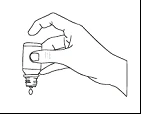
To dispense the contents, hold the bottle vertically and gently tap the bottom of the bottle with a finger until the first drop appears.
Use of a higher than recommended dose of OlVit D
In case of overdose of OlVit D, contact a physician immediately.
Symptoms of overdose may include: headache, loss of appetite, weakness, weight loss,
gastrointestinal disturbances (nausea, vomiting, constipation), developmental disorders, increased urine volume,
increased fluid intake, symptoms of paralysis, intellectual underdevelopment, elevated blood pressure, and severe cases of irregular heartbeat.
The physician will assess the severity of the overdose and decide on appropriate treatment.
Missed dose of OlVit D
Do not take a double dose to make up for a missed dose.
Discontinuation of OlVit D
Withdrawal symptoms are not known.
If you have any further questions regarding the use of this medicine, consult your physician or pharmacist.
4. Possible adverse effects
Like all medicinal products, this medicine can cause adverse effects, although they do not occur in everyone.
Vitamin D may cause the following adverse effects, particularly in cases of overdose:
Metabolism and nutrition disorders
Elevated calcium levels in blood and urine (hypercalcaemia, hypercalciuria).
Gastrointestinal disorders
Constipation, bloating, nausea, abdominal pain, diarrhoea.
The frequency of occurrence of the above adverse effects is unknown (cannot be estimated from the available data).
Reporting of adverse effects
If any adverse effects occur, including any adverse effects not listed in this leaflet, inform your doctor or pharmacist. Adverse effects can be reported directly to the Department of Monitoring Adverse Drug Reactions at the Office for Registration of Medicinal Products, Medical Devices and Biocidal Products
Al. Jerozolimskie 181C
02-222 Warsaw
Phone: +48 22 49 21 301
Fax: +48 22 49 21 309
Website: https://smz.ezdrowie.gov.pl
Reporting adverse effects helps to provide more information on the safety of the medicine.
Adverse effects can also be reported to the marketing authorization holder.
5. How to store OlVit D
- Do not store above 30°C.
- Keep the bottle in the outer packaging to protect from light.
- Keep the medicine out of the sight and reach of children.
- Do not use this medicine after the expiry date stated on the label and carton following EXP. The expiry date refers to the last day of the stated month.
- After first opening the bottle, the OlVit D oral drops should be used within 0 months. Any unused portion of the medicine should be discarded after this period. After first opening, do not store above 25°C.
- Do not use this medicine if cloudiness or discoloration of the solution is observed.
Medicines must not be disposed of via wastewater or household waste. Ask your pharmacist how to dispose of medicines no longer required. These measures will help protect the environment.
6. Contents of the pack and other information
What OlVit D contains
- The active substance is cholecalciferol (vitamin D). 1 ml (36 drops) contains: 14,400 IU (360 µg) cholecalciferol (vitamin D). 1 drop contains 400 IU (10 µg) cholecalciferol (vitamin D).
- The other ingredient is: medium-chain triglycerides.
What OlVit D looks like and contents of the pack
OlVit D is a clear, colourless to slightly yellow oral drops (oily solution) available in amber glass bottles containing 12.5 ml (corresponding to 450 drops) or 25 ml (corresponding to 900 drops), with a PE screw cap with tamper-evident ring and a PE dropper.
Marketing Authorisation Holder and Manufacturer
Marketing Authorisation Holder:
Fresenius Kabi Polska Sp. z o.o.
Al. Jerozolimskie 134
02-305 Warsaw
Poland
Manufacturer:
Fresenius Kabi Austria GmbH
Estermannstraße 17
4020 Linz
Austria
This medicinal product is authorised in the European Economic Area member states under the following names:
Austria Colecalciferol Fresenius 14.400 I.E./ml Tropfen zum Einnehmen, Lösung
Belgium Kabivit-D3 14400 IE/ml, druppels voor oraal gebruik, oplossing
Kabivit-D3 14400 UI/ml, solution buvable en gouttes
Kabivit-D3 14400 IE/ml, Tropfen zum Einnehmen, Lösung
Bulgaria Oleovit D3 14 400 IU/ml peroralni kapki, raztvor
Cyprus KabiVit 14.400 IU/ml, πόσιμο διάλυμα
Ireland Sapvit-D3 400 IU/drop Oral Drops, Solution
Estonia Colecalciferol Fresenius
Finland Oleo D3 14 400 IU/ml tipat, liuos
Greece KabiVit 14.400 IU/ml
Spain Vitamina D3 Fresenius Kabi 14.400 IU/ml solución oral
Lithuania Colecalciferol Fresenius 14400 TV/ml geriamieji lašai (tirpalas)
Latvia Colecalciferol Fresenius 14400 SV/ml pilieni iekšķīgai lietošanai, šķīdums
Malta KabiVit 14.400 IU/ml oral drops, solution
Norway KabiVit
Poland OlVit D
Portugal Colecalciferol Kabi
Czech Republic Olvit D3 14400 IU/ml perorální kapky, roztok
Romania Vitamina D3 Fresenius Kabi 14 400 UI/ml picături orale, soluţie
Slovakia Olvit D3, 14 400 IU/ml perorálne kvapky, roztok
Slovenia Oleovit D3 14400 i.e./ml peroralne kapljice, raztopina
Sweden Oleo D3 14 400 IE/ml orala droppar, lösning
Hungary Vitamin D3 Fresenius Kabi 14000 NE/ml belsőleges oldatos cseppek
United Kingdom
(Northern Ireland) Sapvit-D3 14,400 IU/ml Oral Drops, Solution