Olfen 100 sr
Poland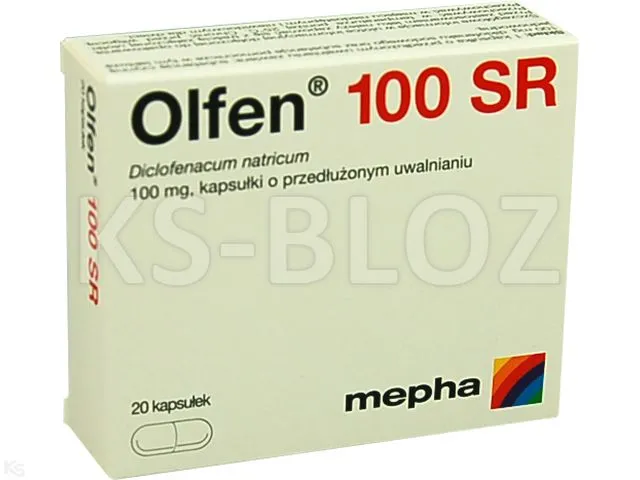
Table of Contents
Package leaflet: Information for the patient
Warning! Keep the leaflet, information on the immediate packaging in a foreign language!
Olfen 100 SR (Diclofenac-ratiopharm 100 mg Retardkapseln)
100 mg, prolonged-release hard capsules
Diclofenacum natricum
Olfen 100 SR and Diclofenac-ratiopharm 100 mg Retardkapseln are different trade names for the
same medicinal product.
Read the entire leaflet before taking this medicine, as it contains important information for
the patient.
- Keep this leaflet for future reference.
- If you have any further questions, consult your doctor, pharmacist, or nurse.
- This medicine has been prescribed for a specific individual. Do not pass it on to others. It may harm other people, even if their symptoms are the same.
- If you experience any adverse effects, including any not listed in this leaflet, inform your doctor, pharmacist, or nurse. See section 4.
Table of contents of the leaflet
- What Olfen 100 SR is and what it is used for
- What you need to know before taking Olfen 100 SR
- How to take Olfen 100 SR
- Possible side effects
- How to store Olfen 100 SR
- Contents of the pack and other information
1. What Olfen 100 SR is and what it is used for
Olfen 100 SR belongs to a group of medicines called non-steroidal anti-inflammatory drugs (NSAIDs), which are used to treat pain and inflammation.
Olfen 100 SR relieves symptoms of inflammatory conditions such as swelling and pain. It does not affect the underlying causes of inflammation or fever.
Olfen 100 SR may be used in the treatment of pain and inflammatory conditions, such as:
- Acute joint inflammation
- Chronic joint inflammation, particularly rheumatoid arthritis (chronic joint inflammation)
- Ankylosing spondylitis (Bechterew's disease) and other inflammatory rheumatic diseases of the spine
- Disorders arising from degenerative joint disease and spinal joint inflammation
- Rheumatic inflammatory conditions of soft tissues
- Painful swelling or inflammation following injury
If you have any doubts regarding the action or reasons for prescribing Olfen 100 SR, consult your doctor.
2. Important information before using Olfen 100 SR
You must follow all instructions given by your doctor or pharmacist carefully, even if they differ from the general information contained in this leaflet.
When not to use Olfen 100 SR:
- if the patient is allergic to sodium diclofenac or any of the other ingredients of this medicine (listed in section 6);
- if the patient currently has or has had peptic ulcer disease or duodenal ulcer, gastrointestinal bleeding, symptoms of blood in the stool, black stools, or gastric perforation;
- if the patient has previously experienced gastrointestinal bleeding or perforation associated with the use of NSAIDs;
- during the last three months of pregnancy (see section "Pregnancy and breastfeeding and effect on fertility");
- if the patient has severe liver, kidney, or heart failure;
- if the patient has ever experienced an allergic reaction after taking an anti-inflammatory or pain-relieving medicine (e.g. acetylsalicylic acid, diclofenac, or ibuprofen). In such cases, asthma, rhinitis, chest pain, skin rash, or facial swelling may occur. If the patient suspects an allergy, they should consult a doctor;
- if the patient has been diagnosed with heart disease and/or cerebrovascular disease, e.g. after a heart attack, stroke, transient ischaemic attack, or arterial embolism in the heart or brain, or after a procedure to unblock or bypass blocked blood vessels;
- if the patient currently has or has previously had circulatory disorders (peripheral vascular disease).
If any of the above symptoms apply to the patient, they must inform their doctor and must not take Olfen 100 SR until the doctor confirms that this medicine is suitable for them.
Children and adolescents
Olfen 100 SR must not be used in children or adolescents.
Warnings and precautions
Before starting treatment with Olfen 100 SR, discuss this with your doctor, pharmacist, or nurse.
Inform your doctor if:
- the patient is taking Olfen 100 SR together with other NSAIDs, including acetylsalicylic acid, corticosteroids, "blood-thinning" medicines, or certain antidepressants (see also "Olfen 100 SR and other medicines");
- the patient has asthma or allergies;
- the patient has previously experienced gastrointestinal disorders, such as gastric ulcers, bleeding, or black stools, or if they have previously experienced stomach discomfort or heartburn after taking NSAIDs;
- the patient has inflammatory bowel disease (ulcerative colitis) or gastrointestinal disorders (Crohn's disease);
- the patient currently has or has previously had heart problems or high blood pressure (see "Other special warnings" below);
- the patient has kidney or liver problems;
- the patient has swelling of the feet;
- the patient has bleeding disorders or other blood diseases, including the rare liver disease called porphyria.
Before taking diclofenac, inform your doctor:
- if the patient smokes;
- if the patient has diabetes;
- if the patient has angina, blood clots, hypertension, high cholesterol levels, or high triglyceride levels.
Before using Olfen 100 SR, inform your doctor if the patient has recently undergone or is scheduled to undergo surgery on the stomach or gastrointestinal tract, as Olfen 100 SR may sometimes impair intestinal wound healing after surgery.
The risk of adverse effects can be minimized by using the lowest effective dose for the shortest duration necessary.
If any of the above warnings apply to the patient, inform the doctor before using Olfen 100 SR.
Other special warnings
Do not take Olfen 100 SR together with other systemically acting non-steroidal anti-inflammatory drugs, including selective COX-2 inhibitors.
Medicines such as Olfen 100 SR may be associated with a small increased risk of heart attack or stroke. The risk is greater with higher doses and prolonged use. Do not exceed the recommended dose or duration of treatment.
If the patient has heart problems, has had a stroke, or suspects they may be at risk of such conditions (e.g. high blood pressure, diabetes, high cholesterol, or smoking), discuss treatment options with a doctor or pharmacist.
Olfen 100 SR may mask symptoms of infection (e.g. headache, high temperature), making infection harder to diagnose and treat effectively. If the patient feels unwell and needs to see a doctor, they must inform the doctor that they are taking Olfen 100 SR.
In very rare cases, Olfen 100 SR, like other anti-inflammatory medicines, may cause severe skin allergic reactions (e.g. exfoliative dermatitis, Stevens-Johnson syndrome with widespread rash, high fever, and joint pain, or toxic epidermal necrolysis with skin and mucous membrane lesions, high fever, and severe general condition). Therefore, inform your doctor immediately if such reactions occur. In rare cases, Olfen 100 SR, like other anti-inflammatory medicines, may cause allergic reactions, including severe allergic reactions, even if the medicine has not been used before.
Elderly patients
Elderly patients may be more sensitive to the effects of Olfen 100 SR. They should therefore follow medical advice particularly carefully and use the lowest effective dose that relieves symptoms. It is especially important that elderly patients report any adverse effects to their doctor immediately.
Olfen 100 SR and other medicines
Inform your doctor or pharmacist about all medicines the patient is currently taking or has recently taken, as well as any medicines they plan to take.
It is particularly important to inform your doctor if the patient is taking any of the following medicines:
- Lithium or selective serotonin reuptake inhibitors (medicines used to treat certain types of depression);
- Cardiac glycosides (e.g. digoxin), used in the treatment of heart conditions;
- Diuretics (medicines that increase urine output);
- Angiotensin-converting enzyme inhibitors or beta-blockers (a group of medicines used to treat hypertension and heart failure);
- Other anti-inflammatory medicines (such as acetylsalicylic acid/aspirin or ibuprofen);
- Corticosteroids (medicines used to reduce inflammation);
- Anticoagulants (medicines that prevent blood clotting);
- Antidiabetic medicines, except insulin;
- Methotrexate (a medicine used in the treatment of certain cancers or arthritis);
- Cyclosporine (a medicine used in organ transplant recipients);
- Quinolone antibiotics (medicines used to treat infections);
- Phenytoin (an antiepileptic medicine);
- Colestipol and cholestyramine (cholesterol-lowering medicines);
- Sulfinpyrazone (a medicine used in the treatment of gout);
- Voriconazole (a medicine used to treat fungal infections);
- Mifepristone (a medicine used in gynaecology);
- Diclofenac resinate.
Pregnancy, breastfeeding, and effect on fertility
If the patient is pregnant or breastfeeding, suspects she may be pregnant, or is planning to have a child, she should consult her doctor or pharmacist before using this medicine.
Pregnancy
Do not take Olfen 100 SR if the patient is in the last three months of pregnancy, as it may harm the unborn child or cause complications during delivery. Olfen 100 SR may cause kidney and heart problems in the unborn child. It may increase the risk of bleeding in both mother and child and may delay or prolong labour. Olfen 100 SR should not be used during the first six months of pregnancy unless the doctor considers it absolutely necessary. If treatment is required during this period or when trying to conceive, the lowest possible dose should be used for the shortest possible time. From week 20 of pregnancy, Olfen 100 SR may cause kidney problems in the unborn child if taken for longer than a few days – this may lead to low levels of amniotic fluid (oligohydramnios) or narrowing of a blood vessel (ductus arteriosus) in the baby's heart. If treatment is required for longer than a few days, the doctor may recommend additional monitoring.
Breastfeeding
Do not breastfeed while taking Olfen 100 SR, as this medicine may have harmful effects on the infant.
Fertility
Diclofenac may impair fertility. Inform your doctor if the patient is planning a pregnancy or has difficulty becoming pregnant.
Driving and operating machinery
Do not drive or operate any machinery if adverse effects such as visual disturbances, dizziness, drowsiness, or other central nervous system disorders occur while taking Olfen 100 SR.
This medicine contains monohydrate lactose and sodium.
Monohydrate lactose
If the patient has previously been diagnosed with intolerance to certain sugars, they should consult their doctor before taking this medicine.
Sodium
This medicine contains less than 1 mmol (23 mg) of sodium per prolonged-release capsule; therefore, this medicine is considered "sodium-free".
3. How to use Olfen 100 SR
This medicine should always be used as directed by the physician. In case of doubt, consult a doctor or pharmacist.
The doctor will provide precise instructions on how to use Olfen 100 SR. Depending on the individual patient's response to treatment, the doctor may recommend a higher or lower dose.
Dosage
Do not exceed the recommended dose. It is important to use the lowest effective dose for the shortest duration necessary to control symptoms and to avoid using Olfen 100 SR longer than necessary.
The doctor will provide precise instructions on how to use Olfen 100 SR. Depending on the individual patient's response to treatment, the doctor may recommend a higher or lower dose.
Adults
The recommended initial daily dose is 100 mg to 150 mg.
The usual recommended dose for adults is 1 capsule per day (100 mg of active substance sodium diclofenac), unless otherwise directed by the physician.
If necessary, therapy may be supplemented with 25 mg or 50 mg tablets or rectal capsules, up to a maximum daily dose of 150 mg of sodium diclofenac.
Patients with renal or hepatic impairment
Dose adjustment is not required in patients with mild to moderate renal or liver dysfunction.
Elderly patients
When using Olfen 100 SR in elderly patients, particular caution is advised. The lowest effective dose for the shortest duration necessary to relieve symptoms should be used. Gastrointestinal bleeding should be monitored regularly.
Children and adolescents
Olfen 100 SR should not be used in children and adolescents.
When and how long to use Olfen 100 SR
Capsules should be swallowed whole before meals, without chewing, with a glass of water. Do not exceed the recommended dose.
How long to use Olfen 100 SR
Strictly follow the physician's instructions.
Taking more than the recommended dose of Olfen 100 SR
If a dose higher than recommended has been taken by accident, inform a doctor or pharmacist immediately or go to the nearest hospital emergency department. Medical assistance may be required.
Missed dose of Olfen 100 SR
If a dose is missed, it should be taken as soon as remembered. If it is almost time for the next dose, skip the missed dose and take the next dose at the regular time. Do not take a double dose to make up for a missed dose.
Stopping Olfen 100 SR
If you have any further questions about the use of this medicine, consult your doctor or pharmacist.
4. Possible adverse reactions
Like all medicines, this medicine can cause adverse reactions, although not everyone will experience them.
Some adverse reactions may be serious.
You must stop taking Olfen 100 SR immediately and inform your doctor if the following occur:
- Mild, painful abdominal cramps and tenderness beginning soon after starting Olfen 100 SR treatment, followed by rectal bleeding or bloody diarrhoea, usually within 24 hours of the onset of abdominal pain (frequency not known - cannot be estimated from available data).
- Chest pain – chest pain which may be a symptom of a potentially serious allergic reaction called Kounis syndrome.
The following adverse reactions have been reported during treatment with Olfen 100 SR, with the following frequency: very common: more than 1 in 10 patients; common: 1 to 10 in 100 patients; uncommon: 1 to 10 in 1,000 patients; rare: 1 to 10 in 10,000 patients; very rare: less than 1 in 10,000 patients; frequency not known (frequency cannot be estimated from available data).
Some of the rare or very rare adverse reactions may be serious:
- Bruising or purpura
- High fever or persistent sore throat
- Allergic reaction with swelling of the face, lips, mouth, tongue or throat, often associated with rash and itching, which may cause difficulty swallowing, hypotension (low blood pressure), fainting
- Wheezing and feeling of tightness in the chest, shortness of breath (symptoms of asthma)
- Chest pain (symptoms of heart attack)
- Sudden and severe headache, nausea, dizziness, numbness, difficulty or inability to speak, paralysis (symptoms of stroke)
- Neck stiffness (symptoms of meningitis)
- Seizures
- High blood pressure (hypertension)
- Red or purple skin (possible symptoms of vasculitis), blistering rash, formation of blisters on lips, eyes and mouth, skin inflammation with peeling or erosion of the epidermis
- Severe stomach pain, bloody or black stools, vomiting blood, gastric and (or) duodenal ulceration
- Yellowing of the skin or eyes (symptoms of hepatitis)
- Blood in urine, excess protein in urine, marked reduction in urine output (symptoms of kidney dysfunction)
- Decreased platelet count (thrombocytopenia)
- Decreased white blood cell count (leukopenia)
- Decreased neutrophil count (agranulocytosis)
If any of the above symptoms occur, you should inform your doctor immediately.
Common: occur in 1 to 10 in 100 patients
- Headache
- Dizziness
- Nausea
- Vomiting
- Diarrhoea
- Dyspepsia
- Abdominal pain
- Flatulence
- Loss of appetite
- Liver function disorders (e.g. increased aminotransferase activity)
- Skin rash
Rare: occur in 1 to 10 in 10,000 patients
- Somnolence
- Urticaria
- Oedema
Very rare: occur in less than 1 in 10,000 patients
- Disorientation
- Depression
- Difficulty sleeping
- Nightmares
- Irritability
- Psychotic disorders
- Tingling or numbness of hands or feet
- Memory disorders
- Restlessness
- Tremor
- Taste disturbances
- Visual or auditory disturbances
- Pneumonitis
- Oral ulcers
- Constipation
- Oesophageal ulcers (upper part of the digestive tract carrying food to the stomach)
- Palpitations
- Hair loss
- Redness, swelling and blistering of the skin (due to increased sensitivity to sunlight)
- Anaemia
Medicines such as diclofenac may slightly increase the risk of heart attack or stroke. This risk is more likely with high doses and long-term treatment. Do not exceed the recommended dose or duration of treatment.
You should inform your doctor if any of the above adverse reactions occur.
If any adverse reactions occur, including any possible adverse reactions not listed in this leaflet, consult your doctor, pharmacist or nurse.
If Olfen 100 SR is used for longer than a few weeks, regular check-up visits with your doctor are recommended to ensure that no undetected adverse reactions have occurred.
Reporting of adverse reactions
If you experience any adverse reactions, including any adverse reactions not listed in this leaflet, tell your doctor, pharmacist or nurse.
Adverse reactions can be reported directly to the Department of Monitoring of Adverse Drug Reactions, Office for Registration of Medicinal Products, Medical Devices and Biocidal Products, Al. Jerozolimskie 181C, 02-222 Warsaw, Tel: +48 22 49 21 301, Fax: +48 22 49 21 309, Website: https://smz.ezdrowie.gov.pl
Reporting adverse reactions helps to provide more information on the safety of the medicine.
5. How to store Olfen 100 SR
Keep this medicine out of sight and reach of children.
The expiry date refers to the last day of the stated month.
Do not store above 25°C.
Translation of some abbreviations appearing on the immediate packaging:
Ch.-B. und Verw. bis: siehe Prägung – Batch number/Expiry date: see imprint.
Medicines must not be disposed of via wastewater or household waste. Ask your pharmacist how to dispose of medicines no longer required. These measures will help protect the environment.
6. Contents of the package and other information
What the medicine Olfen 100 SR contains
- The active substance is sodium diclofenac. Each capsule contains 100 mg of sodium diclofenac.
- The other ingredients are:
Capsule contents: monohydrate lactose, microcrystalline cellulose, microcrystalline cellulose and sodium carmellose, glyceryl trimyristate, titanium dioxide, triethyl citrate, colloidal anhydrous silica, ammonium methacrylate copolymer (type B).
Capsule shell: gelatin, titanium dioxide, red iron oxide, black iron oxide, erythrosine.
Printing ink used for printing on the capsule: shellac, iron oxide, propylene glycol, ammonium hydroxide.
What Olfen 100 SR looks like and contents of the pack
Gelatin, white-pink, two-part capsules filled with white granules, printed with black ink "100".
PVC/PVDC/Aluminium blisters in a cardboard box.
The pack contains 20 prolonged-release hard capsules.
Marketing Authorisation Holder in Germany, the country of export:
ratiopharm GmbH
Graf-Arco-Str. 3
89079 Ulm
Germany
Manufacturer:
Merckle GmbH
Ludwig-Merckle-Str. 3
89143 Blaubeuren
Germany
Parallel Importer:
Medezin Sp. z o.o.
ul. Zbąszyńska 3
91-342 Łódź
Repackaged in:
Medezin Sp. z o.o.
ul. Zbąszyńska 3
91-342 Łódź
Number of Marketing Authorisation in Germany, the country of export: 4369.00.03
Parallel Import Authorisation Number: 86/25
[Information about the registered trademark]