Oftidor
Poland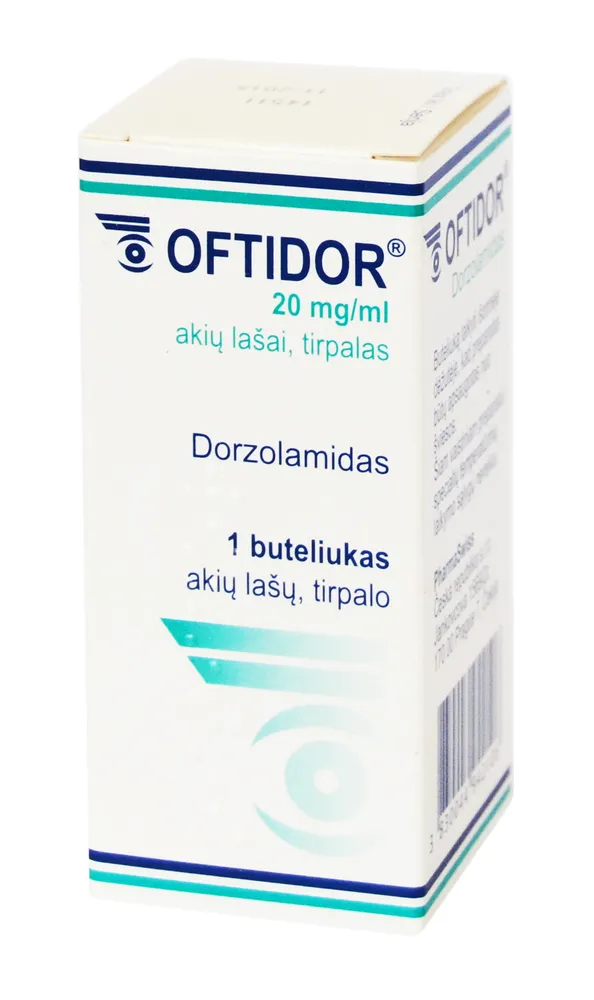
Table of Contents
- Patient Information Leaflet
- 1. What Oftidor is and what it is used for
- 2. Important information before using Oftidor
- When not to use Oftidor
- Warnings and precautions
- Children and adolescents
- Elderly
- Patients with kidney or liver impairment
- Oftidor and other medicines
- Pregnancy and breastfeeding
- Driving and using machines
- Important information about certain ingredients of Oftidor
- 3. How to use Oftidor
- 4. Possible adverse effects
- 5. How to store Oftidor
- 6. Contents of the package and other information
Patient Information Leaflet
Oftidor, 20 mg/ml, eye drops, solution
Dorzolamide
Please read this leaflet carefully before using this medicine, as it contains important information for you.
- Keep this leaflet, as you may need to read it again.
- If you have any questions, please consult your doctor or pharmacist.
- This medicine has been prescribed for a specific individual. Do not pass it on to others. It may harm someone else, even if their symptoms are the same.
- If you experience any adverse reactions, including any not listed in this leaflet, inform your doctor or pharmacist. See section 4.
Table of contents:
- What Oftidor is and what it is used for
- Important information before using Oftidor
- How to use Oftidor
- Possible side effects
- How to store Oftidor
- Contents of the pack and other information
1. What Oftidor is and what it is used for
Oftidor contains dorzolamide, which belongs to a group of medicines called carbonic anhydrase inhibitors.
This medicine is prescribed to reduce elevated intraocular pressure and to treat glaucoma. It may be used alone or in combination with other medicines that reduce intraocular pressure (such as beta-blockers).
2. Important information before using Oftidor
When not to use Oftidor
- if you are allergic to dorzolamide or any of the other ingredients of this medicine (listed in section 6)
- if you have severe kidney disease or have previously had kidney stones
- if you have hyperchloremic acidosis (a type of acid-base imbalance).
Warnings and precautions
Before starting Oftidor, discuss with your doctor or pharmacist if:
- you have or have previously had any liver problems
- you have acute angle-closure glaucoma (this occurs when the pressure inside the eye increases rapidly to very high levels)
- you have previously had an allergic reaction to any medicines
- you have previously had kidney stones
- you are taking orally administered carbonic anhydrase inhibitors (see section "Oftidor and other medicines")
- you have chronic corneal disease and/or have had an artificial lens implanted (intraocular surgery)
- you have had or are scheduled to undergo eye surgery
- you wear contact lenses (see section "Important information about certain ingredients of Oftidor").
If you experience eye irritation or new symptoms such as eye redness or eyelid swelling, you should contact your doctor immediately.
If you suspect an allergic reaction after using Oftidor (e.g. skin rash or itching, eye inflammation), stop using Oftidor immediately and contact your doctor without delay.
Children and adolescents
Dorzolamide 20 mg/ml eye drop solution has been studied in infants and children under 6 years of age with elevated intraocular pressure or glaucoma. For further information, please consult your doctor.
Elderly
No significant differences in efficacy and safety of dorzolamide 20 mg/ml eye drops have been observed in elderly patients compared to younger individuals.
Patients with kidney or liver impairment
Inform your doctor if you have or have previously had kidney or liver disease.
Oftidor and other medicines
Tell your doctor or pharmacist about all medicines you are currently taking, have recently taken, or plan to take, including eye drops and over-the-counter medicines, especially other carbonic anhydrase inhibitors such as acetazolamide or other sulfonamides (medicines used, among others, to treat infections).
Pregnancy and breastfeeding
If you are pregnant or breastfeeding, think you may be pregnant, or are planning to have a baby, you should consult your doctor or pharmacist before using this medicine.
Pregnancy
Oftidor should not be used during pregnancy.
Breastfeeding
It is not known whether dorzolamide passes into human milk. If treatment with Oftidor is necessary, breastfeeding is not recommended during this time. If you are breastfeeding or intend to breastfeed, inform your doctor. A decision should be made whether to discontinue breastfeeding or to discontinue or withhold dorzolamide therapy, taking into account the benefits of breastfeeding for the child and the benefits of therapy for the woman.
Driving and using machines
No studies on the effect on the ability to drive or operate machinery have been conducted.
Some adverse effects associated with this medicine, such as dizziness or blurred vision, may affect your ability to drive or operate machinery.
If you experience dizziness or blurred vision – especially shortly after using Oftidor – you should not:
- drive any vehicles
- operate any machinery
- perform any hazardous activities
- perform any tasks requiring high concentration.
Important information about certain ingredients of Oftidor
Oftidor contains benzalkonium chloride.
Oftidor contains 0.075 mg of benzalkonium chloride per ml, equivalent to 0.375 mg/5 ml of eye drop solution.
Benzalkonium chloride may be absorbed by soft contact lenses and may alter the colour of contact lenses. Soft contact lenses should be removed before using this medicine and may be reinserted 15 minutes after administration.
Benzalkonium chloride may also cause eye irritation, particularly if you have dry eyes or corneal disorders (the transparent layer at the front of the eye). If you experience abnormal sensations, stinging, or eye pain after using this medicine, consult your doctor.
3. How to use Oftidor
This medicine should always be used as directed by the physician. If in doubt, consult your doctor or pharmacist. The physician determines the appropriate dose and duration of treatment.
Unless otherwise instructed by the physician, the usual recommended dose is:
- If this medicine is the only one being used, the dose is one drop into the affected eye(s) in the morning, afternoon, and evening.
- If your doctor has prescribed this medicine together with a beta-blocking eye drop to reduce intraocular pressure, the dose is one drop of Oftidor into the affected eye(s) in the morning and evening.
- If the patient has previously been using another medicine to reduce intraocular pressure and the doctor is now switching to Oftidor, the previous medicine should be continued for one additional day. Then discontinue its use and start using Oftidor the following day.
If the patient is using other eye drops in addition to this medicine, a gap of at least 10 minutes should be maintained between the instillation of each drop.
Do not touch the eye or surrounding areas with the dropper tip. It may become contaminated with bacteria, which could cause eye infections leading to serious eye damage or even loss of vision.
To avoid possible contamination of the medicine, wash your hands before use and protect the dropper tip from contact with any surface. If the patient suspects that the medicine may have become contaminated, or if an eye infection occurs, contact the doctor immediately to discuss whether the medicine from the same bottle can still be used.
Never change the prescribed dose without consulting your doctor.
Instructions for use:
- Wash your hands and assume a comfortable sitting or standing position.
- Remove the protective cap from the bottle.
- Tilt your head backward and look upward.
- Gently pull down the lower eyelid of the affected eye with your index finger to create a pocket between the eyelid and the eyeball.
- Hold the bottle upside down, with the bottom facing upward, over the eye.
- Bring the dropper tip close to the eye without touching it. Be careful not to let the dropper tip touch the eye, fingers, or any other surface.
- Gently squeeze the bottle until one drop of medicine falls into the eye. Be careful not to squeeze too hard, to avoid instilling more than one drop into the affected eye.
- If the drop misses the eye, instill another drop.
- Remove your index finger and release the lower eyelid, then gently close the eye.
- Close the eye and press gently on the inner corner of the eye with your finger for about two minutes. This helps prevent the medicine from being absorbed into the rest of the body.
- If directed by your doctor, repeat the above steps for the other eye.
- Close the bottle carefully after each use.
Having assistance from another person or using a mirror may make administering the drops easier.
Accidental overdose of Oftidor
Immediately inform your doctor if the patient or anyone else accidentally swallows these eye drops, or if the medicine has been used more frequently than prescribed.
Missed dose of Oftidor
It is important to use the medicine as directed by your doctor. If a dose is missed, administer the drop as soon as possible. However, if it is almost time for the next dose, skip the missed dose and return to the regular dosing schedule.
Do not use a double dose to make up for a missed dose.
Stopping treatment with Oftidor
Do not discontinue or stop using Oftidor without first consulting your doctor. Treatment may not be effective if the patient does not use Oftidor regularly or frequently forgets to take it.
Elevated intraocular pressure can damage the optic nerve and lead to worsening vision. Vision loss may occur. Usually, the patient will not notice any symptoms of increased intraocular pressure. This condition can only be diagnosed by an eye examination performed by a doctor. If the patient has elevated intraocular pressure, regular eye examinations and intraocular pressure measurements are necessary.
If you have any further questions about the use of this medicine, consult your doctor or pharmacist.
4. Possible adverse effects
Like all medicines, this medicine can cause adverse effects, although not everyone will experience them.
If the patient experiences an allergic reaction and (or) severe skin reactions, including any of the
following symptoms, stop using Oftidor immediately and contact a doctor at once:
- swelling of the face, hands and feet, eyes, lips and (or) tongue, which may cause difficulty breathing or swallowing (angioedema)
- rash, hives and (or) itching
- shortness of breath, sudden narrowing of the airways (bronchospasm)
- red, blistering or peeling skin. Serious skin reactions may also include blisters and bleeding around the lips, eyes, mouth, nose, and genital organs. These may be signs of Stevens-Johnson syndrome or toxic epidermal necrolysis.
These are symptoms of rare (affecting up to 1 in 1,000 people) but potentially serious adverse
reactions, which may require immediate medical intervention (see also section 2. "Important information before using Oftidor", subsection "Warnings and precautions").
Other possible adverse effects
The following adverse effects have been reported during clinical trials or after market authorization:
Very common (may affect more than 1 in 10 people):
- burning and stinging sensation in the eyes
Common (may affect up to 1 in 10 people):
- eye surface disease with inflammation and vision disturbances (punctate epithelial keratitis)
- eye discharge with itching (conjunctivitis)
- eyelid irritation and (or) inflammation
- tearing or eye (eyes) itching
- blurred vision
- headache
- nausea, bitter taste in the mouth
- weakness, fatigue
Uncommon (may affect up to 1 in 100 people):
- uveitis
Rare (may affect up to 1 in 1,000 people):
- eye irritation, including redness and pain
- crusts on the eyelid margins
- temporary myopia (resolves after discontinuation of the medicine)
- swelling of the eye's surface layer (corneal edema)
- low intraocular pressure (intraocular hypotension)
- fluid accumulation under the retina (choroidal effusion following certain eye filtration surgeries)
- dizziness, numbness and (or) tingling sensation
- nosebleeds
- kidney stone formation in the urinary system
- throat irritation, dry mouth
- contact dermatitis (skin inflammation caused by contact with a substance)
Frequency not known (frequency cannot be estimated from available data):
- Dyspnea (feeling of breathlessness/difficulty breathing),
- Foreign body sensation in the eye (feeling that something is on the eye surface),
- Strong heartbeat, which may be rapid or irregular (palpitations),
- Increased heart rate,
- Increased blood pressure.
Reporting of adverse effects
If any adverse effects occur, including any not listed in this leaflet, inform your doctor, pharmacist, or nurse. Adverse effects can be reported directly to the Department of Monitoring of Adverse Drug Reactions at the Office for Registration of Medicinal Products, Medical Devices and Biocidal Products:
Al. Jerozolimskie 181C
02-222 Warsaw
Tel.: +48 22 49 21 301
Fax: +48 22 49 21 309
Website: https://smz.ezdrowie.gov.pl
Adverse effects can also be reported to the marketing authorization holder.
Reporting adverse effects helps to provide more information on the safety of the medicine.
5. How to store Oftidor
Keep this medicine out of the sight and reach of children.
Do not use this medicine after the expiry date stated on the cardboard box and bottle after "EXP". The expiry date refers to the last day of the stated month. "Lot" is the batch number.
After opening the bottle, the shelf life of Oftidor is a maximum of 1 month. After this period, any unused solution should be discarded.
Store in the outer packaging to protect from light.
No special temperature storage requirements for this medicinal product.
Medicines must not be disposed of via the sewage system or household waste. Ask your pharmacist how to dispose of medicines no longer required. These measures help protect the environment.
6. Contents of the package and other information
What the medicine Oftidor contains
- The active substance is dorzolamide (in the form of dorzolamide hydrochloride). 1 ml of eye drop solution contains 20 mg of dorzolamide, in the form of 22.26 mg dorzolamide hydrochloride.
- Other ingredients of the medicine are: benzalkonium chloride, hydroxyethylcellulose, mannitol (E421), monohydrate citric acid, sodium hydroxide (E524), purified water.
What Oftidor looks like and contents of the pack
Oftidor is a clear, colourless solution in a transparent bottle with a dropper and a screw cap.
Oftidor is available in the following pack sizes:
1 bottle with dropper containing 5 ml of eye drops.
Marketing Authorisation Holder and Manufacturer
Marketing Authorisation Holder
BAUSCH + LOMB IRELAND LIMITED
3013 Lake Drive
Citywest Business Campus
Dublin 24, D24PPT3
Ireland
[email protected]
Manufacturer
S.C. ROMPHARM COMPANY S.R.L.
Eroilor Street, no. 1A
Otopeni, 075100, Ilfov
Romania
This medicinal product is authorised in the European Economic Area countries under the following names:
Czech Republic OFTIDOR 2 % Oční kapky, roztok
Lithuania OFTIDOR 20 mg/ml Akių lašai, tirpalas
Latvia Oftidor 20 mg/ml acu pilieni, šķīdums
Poland OFTIDOR