Oftaquix
Poland
Table of Contents
| Package leaflet: Information for the user |
Warning! Keep this leaflet! Information on the immediate packaging in a foreign language.
OFTAQUIX
5 mg/ml, eye drops, solution
Levofloxacinum
Read the entire leaflet before using this medicine.
- Keep this leaflet, as you may need to read it again.
- If you have any questions, consult your doctor or pharmacist.
- This medicine has been prescribed for a specific individual. Do not give it to others. This medicine may harm others, even if their symptoms are the same.
- If any adverse reactions occur in the patient, including any adverse reactions not listed in this leaflet, inform your doctor or pharmacist. See section 4.
Table of contents of the leaflet:
- What Oftaquix is and what it is used for
- Important information before using Oftaquix
- How to use Oftaquix
- Possible side effects
- How to store Oftaquix
- Contents of the pack and other information
1. What Oftaquix is and what it is used for
The active substance in Oftaquix is levofloxacin. Levofloxacin is a synthetic fluoroquinolone antibiotic. It exerts a bactericidal effect against certain types of bacteria that may cause infections.
Levofloxacin in the form of eye drops is used in children over 1 year of age and adults for the treatment of bacterial infections affecting the front surface of the eye.
2. Important information before using Oftaquix
When not to use Oftaquix:
- If the patient has a known allergy (hypersensitivity) to levofloxacin or to any fluoroquinolone antibiotic, or to any of the other ingredients of the medicine.
- If the patient is less than 1 year old.
- If the patient is pregnant or breastfeeding.
When to exercise special caution when using Oftaquix
If during treatment the patient notices worsening of eye symptoms, or if after a period of treatment determined by the physician there are no signs of improvement, contact a physician immediately.
Oftaquix must not be administered subconjunctivally or directly into the anterior chamber of the eye.
Hypersensitivity reactions have been observed with systemic administration of fluoroquinolone drugs, even after a single dose. In case of an allergic reaction to levofloxacin, discontinue use of Oftaquix and contact a physician as soon as possible.
Tendon swelling and tendon rupture have occurred in patients receiving oral or intravenous fluoroquinolones, particularly in elderly patients and in patients concurrently treated with corticosteroids. Treatment with Oftaquix should be discontinued if tendon pain or swelling (tendonitis) occurs.
Use with other medicines
Inform the physician about all medicines recently used, including those obtained without a prescription. In particular, inform the physician or pharmacist about the use of any other eye drops or ointments before starting treatment with Oftaquix.
If the patient is using other eye drops, wait at least 15 minutes between administration of Oftaquix and other eye drops.
Pregnancy and breastfeeding
If the patient is pregnant or breastfeeding, she should consult a physician or pharmacist before using any medicine.
Use of Oftaquix in pregnant and breastfeeding women is contraindicated.
Driving and operating machinery
If the eye drops cause blurred vision, the patient should wait until vision is fully clear again before driving or operating mechanical vehicles or machinery.
Oftaquix contains benzalkonium chloride
This medicine contains approximately 0.002 mg of benzalkonium chloride per drop, equivalent to 0.05 mg/ml.
Benzalkonium chloride may be absorbed by soft contact lenses and may alter their color. Contact lenses should be removed before instilling the drops and at least 15 minutes should be waited before reinserting them.
Benzalkonium chloride may also cause eye irritation, especially in patients with dry eye syndrome or corneal disorders (the transparent layer at the front of the eye). If abnormal sensations, stinging, or eye pain occur after using the medicine, contact a physician.
3. How to use Oftaquix
Oftaquix must always be used as directed by your doctor. If in doubt, consult your doctor again.
Typically, one or two drops should be administered into the conjunctival sac of the infected eye or eyes every two hours (up to eight times a day), except during sleeping hours, for the first two days, followed by four times daily for the next three days.
Treatment usually lasts five days, but sometimes longer treatment cycles are used. Your doctor will inform you how long you should continue using the drops.
If you are using any other eye medication, wait at least 15 minutes between applying different types of eye drops.
Before administering the drops:
If possible, ask another person to instill the drops for you. Before administering the drops, ask these individuals to read these instructions in the patient's presence.
- Wash your hands.

- Open the bottle. Take special care not to touch the dropper tip to the eyelid or surrounding areas or any other surface. If this happens accidentally, inform your doctor or pharmacist so that a new, sterile bottle can be provided.
Tilt your head backward while sitting or lying down on your back.
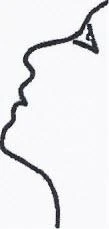
- Bring the dropper tip close to the eye without touching it.
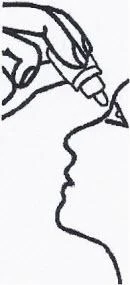
- Pull down the lower eyelid and look upward.
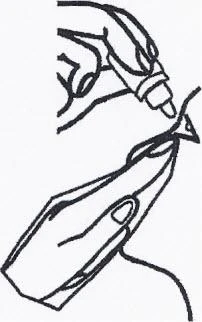
- Gently squeeze the bottle to release one drop into the space between the lower eyelid and the eye.
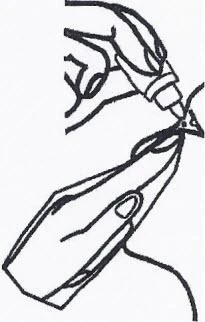
After administering the medication, it is recommended to press the inner corner of the eye with the index finger or close the eyes for 3 minutes. This helps prevent the medication from draining through the tear duct into the nose or throat, thereby increasing the amount of drug remaining in the eye and acting locally.
6) If an additional drop is required, and when treatment involves both eyes, repeat the steps described in steps 3 to 6.
After use, close the dropper carefully with the cap.
Accidental overdose of Oftaquix: rinse the eye(s) thoroughly with clean water and inform your doctor or pharmacist.
Missed dose of Oftaquix: administer the next dose as soon as you remember. Do not use a double dose to make up for a missed dose.
Accidental swallowing of eye drops
The amount of levofloxacin contained in the bottle is too small to cause adverse effects. However, if in doubt, inform your doctor or pharmacist, who will advise on necessary measures.
4. Possible side effects
Like all medicines, Oftaquix may cause side effects, although not everyone experiences them. If the patient experiences any severe or persistent side effects, treatment with Oftaquix should be discontinued and medical advice should be sought urgently.
An allergic reaction to Oftaquix may occur even after a single dose. In such a case, redness or itching of the eyes or eyelid swelling may occur. If this happens, treatment with Oftaquix should be stopped immediately and medical advice should be sought without delay.
Side effects may occur with the following frequency:
Very common: in more than 1 out of 10 patients
Common: in less than 1 out of 10, but more than 1 out of 100 patients
Uncommon: in less than 1 out of 100, but more than 1 out of 1,000 patients
Rare: in less than 1 out of 1,000, but more than 1 out of 10,000 patients
Very rare: in less than 1 out of 10,000 patients.
Common: eye burning sensation, blurred vision, or mucous discharge in the conjunctival sac.
Uncommon: eyelid clouding, conjunctival oedema, conjunctival papillary reaction, eyelid swelling, eye discomfort, eye itching, eye pain, conjunctival hyperaemia, conjunctival granulomatous reaction, dry eye sensation, eyelid erythema, photophobia, eyelid burning, dried crusts on the eyelid margins, lacrimation, headache, nasal irritation.
Rare: include allergic reactions not limited to the eyes, including skin rash.
Very rare: laryngeal oedema, severe allergic reactions such as sudden breathlessness and chest tightness, eyelid, facial or lip swelling.
In addition, nausea may occur.
If any of the side effects appear suddenly or worsen rapidly, treatment should be discontinued and immediate contact should be made with a doctor or hospital emergency department.
If other side effects occur which are not listed in this leaflet, the doctor or pharmacist should be informed.
Reporting of side effects
If any side effects occur, including any side effects not listed in this leaflet, inform your doctor or pharmacist. Side effects can also be reported directly to the Department of Monitoring Adverse Drug Reactions, Office for Registration of Medicinal Products, Medical Devices and Biocidal Products, Al. Jerozolimskie 181C, 02-222 Warsaw, tel.: +48 22 49 21 301, fax: +48 22 49 21 309, website: https://smz.ezdrowie.gov.pl.
Reporting side effects helps to provide more information on the safety of this medicine.
5. How to store Oftaquix
Keep Oftaquix out of the sight and reach of children.
Keep the bottle tightly closed.
Do not use this medicine after the expiry date. The expiry date refers to the last day of the stated month.
Oftaquix remains stable for 28 days after first opening the bottle.
Unused medicine should be returned to the pharmacy for safe disposal.
Medicines must not be disposed of via sewage systems or household waste. Ask your pharmacist how to dispose of medicines no longer in use. This helps protect the environment.
6. Contents of the package and other information
What Oftaquix contains
The active substance is levofloxacin 5 mg/ml in the form of levofloxacin hemihydrate 5.12 mg/ml. One bottle of Oftaquix contains 5 ml of solution.
Other ingredients are: benzalkonium chloride, sodium chloride, sodium hydroxide or hydrochloric acid, water for injections.
What Oftaquix looks like and contents of the pack
Eye drops, solution in a 5 ml bottle in a cardboard box.
For further information, please contact the marketing authorisation holder or parallel importer.
Marketing authorisation holder in Portugal, country of export:
Santen Oy
Niittyhaankatu 20
33720 Tampere
Finland
Manufacturer:
Santen Oy
Kelloportinkatu 1
33100 Tampere
Finland
Parallel importer:
InPharm Sp. z o.o.
ul. Strumykowa 28/11
03-138 Warsaw
Poland
Repackaged in:
InPharm Sp. z o.o. Services sp. k.
ul. Chełmżyńska 249
04-458 Warsaw
Poland
Marketing authorisation number in Portugal, country of export: 4041786
Parallel import authorisation number: 307/17