Oestrogel
Poland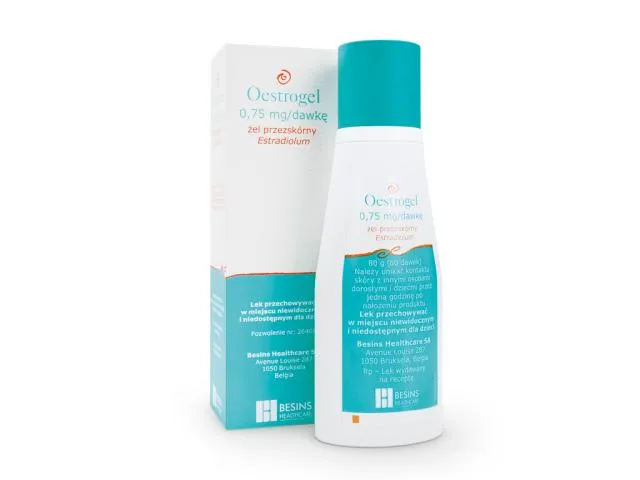
Table of Contents
Patient Information Leaflet
Oestrogel, 0.75 mg/dose, transdermal gel
Estradiol
Please read all of this leaflet carefully before using this medicine, because
it contains important information for you.
- Keep this leaflet, so that you can read it again if necessary.
- If you have any questions, please consult your doctor or pharmacist.
- This medicine has been prescribed for a specific individual. Do not pass it on to others. This medicine may harm other people, even if their symptoms are the same.
- If you experience any adverse effects, including any not listed in this leaflet, inform your doctor or pharmacist. See section 4.
Table of Contents
- What Oestrogel is and what it is used for
- Important information before using Oestrogel
- How to use Oestrogel
- Possible side effects
- How to store Oestrogel
- Contents of the pack and other information
1. What Oestrogel is and what it is used for
Oestrogel is a medicine used in hormone replacement therapy (HRT). The medicine contains the female hormone estradiol. When the gel is applied to the skin, the hormone is absorbed and passes into the bloodstream.
Oestrogel is used in postmenopausal women who have had at least 6 months since their last natural menstrual period.
Oestrogel is used in the following situations:
Relief of menopausal symptoms
During menopause, the amount of estrogen produced by a woman's body decreases. This may result in symptoms such as a feeling of warmth in the face, neck and chest (‘hot flushes’). Oestrogel relieves these postmenopausal symptoms. Oestrogel is prescribed only when symptoms significantly impair the patient’s daily life.
Prevention of osteoporosis
After menopause, some women may develop bone fragility (osteoporosis). All treatment options should be discussed with your doctor.
If you are at increased risk of fractures due to osteoporosis and other medicines are not suitable, Oestrogel may be used to prevent postmenopausal osteoporosis.
2. Important information before using Oestrogel
Medical history and regular check-ups
Hormone replacement therapy (HRT) carries risks that should be considered when deciding whether to start or continue treatment.
Experience with HRT use in women with premature menopause (due to ovarian failure or surgical procedures) is limited. In women with premature menopause, the risks of HRT may differ. Consult your doctor.
Before starting (or restarting) HRT, your doctor will take a medical history, including family history. Your doctor may perform a physical examination, including breast and (or) pelvic examination, if necessary.
After starting Oestrogel, you should attend regular check-ups (at least once a year). During these visits, discuss with your doctor the benefits and risks of continuing Oestrogel treatment.
As recommended by your doctor or nurse, you should undergo regular breast examinations.
When not to use Oestrogel:
Do not use Oestrogel if any of the following apply to you. If you have any doubts about any of the following points, consult your doctor before using Oestrogel.
- if you currently have or have had breast cancer, or if it is suspected;
- if you have or have had a malignant estrogen-dependent tumour, such as endometrial cancer, or if it is suspected;
- if you have vaginal bleeding of unknown cause;
- if you have untreated excessive thickening of the lining of the womb (endometrial hyperplasia);
- if you currently have or have had blood clots in the veins (venous thromboembolism), for example in the legs (deep vein thrombosis) or lungs (pulmonary embolism);
- if you have blood clotting disorders (such as protein C, protein S or antithrombin deficiency);
- if you currently have or recently had an arterial thrombotic disease, such as myocardial infarction, stroke or angina pectoris;
- if you currently have or have had liver disease, and liver function tests have not returned to normal;
- if you have a rare inherited blood disorder called "porphyria";
- if you are allergic (hypersensitive) to the active substance or any of the other ingredients of this medicine (listed in section 6). If any of the above symptoms occur for the first time during treatment with Oestrogel, stop taking it immediately and consult your doctor without delay.
When to exercise caution when using Oestrogel
Inform your doctor if you currently have or have previously had any of the following conditions, as they may recur or worsen during treatment with Oestrogel.
You should have more frequent check-ups if any of the following apply to you:
- uterine fibroids;
- endometriosis (endometrial tissue growth outside the uterus) or previous episodes of excessive endometrial thickening (endometrial hyperplasia);
- increased risk of thromboembolic disorders [see "Blood clots in the veins (thrombosis)"];
- increased risk of estrogen-dependent cancer (e.g. if your mother, sister or grandmother had breast cancer);
- high blood pressure;
- liver diseases, such as benign liver tumour;
- diabetes;
- gallstones;
- migraine or severe headaches;
- an autoimmune disease affecting multiple organs (systemic lupus erythematosus, SLE);
- epilepsy;
- asthma;
- a disease affecting the eardrum and hearing (otosclerosis);
- very high levels of blood fats (triglycerides);
- fluid retention due to heart or kidney disease;
- hereditary or acquired angioedema.
Stop using Oestrogel and contact your doctor immediately if you notice any of the following conditions during HRT:
- any of the diseases listed under "When not to use Oestrogel";
- yellowing of the skin or whites of the eyes (jaundice). These may be signs of liver disease;
- swelling of the face, tongue and (or) throat and (or) difficulty swallowing or hives combined with breathing difficulties, suggesting angioedema;
- a significant increase in blood pressure (symptoms may include headache, fatigue, dizziness);
- migraine-like headaches occurring for the first time;
- pregnancy;
- signs of blood clot formation, such as:
- painful swelling and redness in the legs;
- sudden chest pain;
- difficulty breathing.
More information is provided in the section "Blood clots in the veins (thrombosis)".
Note: Oestrogel is not a contraceptive. If less than 12 months have passed since your last menstrual period or if you are under 50 years of age, additional contraceptive measures may be necessary to prevent pregnancy. Consult your doctor.
HRT and malignant tumours
Excessive thickening of the lining of the womb (endometrial hyperplasia) and cancer of the womb lining (endometrial cancer)
Using estrogen-only HRT increases the risk of excessive thickening of the endometrium (endometrial hyperplasia) and endometrial cancer.
Adding a progestogen for at least 12 days in each 28-day cycle protects against this increased risk. Your doctor will prescribe a progestogen separately if you still have your uterus. If your uterus has been removed (hysterectomy), discuss with your doctor whether it is safe to use this medicine without a progestogen.
In women with an intact uterus who do not use HRT, endometrial cancer is diagnosed in an average of 5 out of 1,000 women aged 50 to 65 over time.
In women aged 50 to 65 with an intact uterus who use estrogen-only HRT, endometrial cancer is diagnosed in 10 to 60 out of 1,000 women (i.e. 5 to 55 additional cases), depending on dose and duration of treatment.
Oestrogel contains a higher dose of estrogen than other estrogen-only HRT products. The risk of endometrial cancer with Oestrogel used in combination with a progestogen is not known.
Irregular bleeding
During the first 3 to 6 months of treatment with Oestrogel, irregular or light bleeding (spotting) may occur. However, if irregular bleeding:
- lasts longer than 6 months,
- starts after using Oestrogel for more than 6 months,
- persists after stopping Oestrogel, contact your doctor immediately.
Bleeding of unknown cause
When using Oestrogel with a progestogen (i.e. progesterone), you will have a monthly withdrawal bleed. However, if you experience bleeding of unknown cause or spotting outside of withdrawal bleeding that:
- lasts longer than the first 6 months,
- occurs after using Oestrogel for more than 6 months,
- persists after stopping Oestrogel, contact your doctor immediately.
HRT and breast cancer
Evidence confirms that using hormone replacement therapy (HRT), either as a combination of estrogen and progestogen or estrogen alone, increases the risk of breast cancer. The additional risk depends on how long you use HRT. This additional risk becomes apparent after 3 years of HRT use. After stopping HRT, the additional risk gradually decreases, but the risk may persist for 10 years or longer if HRT was used for more than 5 years.
Comparison
In women aged 50 to 54 who do not use HRT, breast cancer will be diagnosed in an average of 13 to 17 out of 1,000 women over 5 years.
In women aged 50 who start a 5-year course of estrogen-only HRT, the number of cases will be 16–17 per 1,000 women (i.e. 0 to 3 additional cases).
In women aged 50 who start a 5-year course of estrogen-progestogen HRT, the number of cases will be 21 per 1,000 women (i.e. 4 to 8 additional cases).
In women aged 50 to 59 who do not use HRT, breast cancer will be diagnosed in an average of 27 out of 1,000 women over 10 years.
In women aged 50 who start a 10-year course of estrogen-only HRT, the number of cases will be 34 per 1,000 women (i.e. 7 additional cases).
In women aged 50 who start a 10-year course of estrogen-progestogen HRT, the number of cases will be 48 per 1,000 women (i.e. 21 additional cases).
- Examine your breasts regularly. Contact your doctor if you notice any changes such as:
- skin dimpling,
- changes in the nipple,
- any visible or palpable lumps.
Additionally, participation in available screening mammography programmes is recommended. It is important to inform the staff performing the screening mammogram that you are using HRT, as the medicine may increase breast density on imaging, which could affect mammogram results. In areas of increased density, mammography may not detect all lumps.
Ovarian cancer
Ovarian cancer is rare—much rarer than breast cancer. Using HRT containing only estrogens or a combination of estrogens and progestogens is associated with a slightly increased risk of ovarian cancer.
The risk of ovarian cancer depends on age. For example, in women aged 50–54 who do not use HRT, ovarian cancer will be diagnosed in 2 out of 2,000 women over 5 years. In women who have used HRT for 5 years, it will occur in about 3 out of 2,000 users (i.e. about 1 additional case).
Effect of HRT on the heart and circulation
Blood clots in the veins (thrombosis)
The risk of venous thromboembolism is approximately 1.3 to 3 times higher in women using HRT, especially during the first year of treatment, compared to women who do not use HRT.
Blood clots can be serious; if they travel to the lungs, they may cause chest pain, shortness of breath, fainting, or even death.
The likelihood of developing venous blood clots increases with age and depending on the presence of the following risk factors. Inform your doctor if any of the following apply to you:
- you are unable to walk for a prolonged period due to major surgery, injury, or illness (see also section 3 "If surgery is required"),
- you are obese (BMI >30 kg/m²),
- you have blood clotting disorders requiring long-term anticoagulant treatment,
- a close relative has had a blood clot in the leg, lung, or another organ,
- you have systemic lupus erythematosus (SLE),
- you have cancer.
Symptoms indicating blood clots are described in the section "Stop using Oestrogel and contact your doctor immediately."
In women aged 50 to 59 who do not use HRT, venous thrombosis will occur in an average of 4–7 out of 1,000 over 5 years. In women aged 50 to 59 who have used combined estrogen-progestogen HRT for more than 5 years, venous thrombosis will occur in 9–12 out of 1,000 (i.e. 5 additional cases). In women aged 50 to 59 who have had a hysterectomy and used estrogen-only HRT for 5 years, a clot will occur in 5–8 out of 1,000 (i.e. 1 additional case).
Heart disease (myocardial infarction/heart attack)
There is no scientific evidence that HRT prevents heart attacks.
Women over 60 years of age using combined estrogen-progestogen HRT have a slightly increased risk of heart disease compared to women not using HRT.
In women who have had a hysterectomy and use estrogen-only therapy, there is no increased risk of heart disease.
Stroke
The risk of stroke is about 1.5 times higher in women using HRT than in those not using it. The number of additional stroke cases due to HRT increases with age.
In women aged 50 to 59 who do not use HRT, ischemic stroke will occur in an average of 8 out of 1,000 over 5 years.
Among women aged 50–59 using HRT, 11 such cases will occur per 1,000 women using the therapy over 5 years (i.e. 3 additional cases).
Children
Estradiol in gel form may be accidentally transferred from the patient's skin to others. Avoid contact between other people, especially children, and the exposed skin area of the patient. Cover the area if necessary after the gel has dried. If a child comes into contact with the area of skin where estradiol has been applied, wash the child's skin with soap and water as soon as possible. Due to estradiol transfer, young children may show unexpected signs of sexual development (e.g. breast budding). In most cases, these symptoms resolve once the child is no longer exposed to estradiol gel.
If you observe any signs or symptoms of puberty (breast development or other sexual changes) in a child who may have been accidentally exposed to estradiol gel, contact your doctor.
Other conditions
- Use of Oestrogel may lead to fluid retention. Therefore, patients with heart or kidney dysfunction must be closely monitored during treatment with Oestrogel.
- HRT does not prevent memory loss. There is some evidence of an increased risk of memory loss in women who start HRT after age 65. Consult your doctor.
Using Oestrogel with other medicines
Some medicines may affect the action of Oestrogel. This may lead to irregular bleeding. This applies to the following medicines:
- other topical medicines (e.g. anticancer drugs);
- medicines used to treat epilepsy (e.g. phenobarbital, phenytoin, carbamazepine);
- medicines used to treat tuberculosis (e.g. rifampicin, rifabutin);
- medicines used to treat HIV infection (such as nevirapine, efavirenz, ritonavir, nelfinavir);
- herbal products containing St. John's wort (Hypericum perforatum).
HRT may affect the action of other medicines: - the antiepileptic drug lamotrigine, as seizure frequency may increase;
- medicines used to treat hepatitis C virus (HCV) infection (such as the combination regimen of ombitasvir/paritaprevir/ritonavir and dasabuvir with or without ribavirin, or the combination regimen of glecaprevir/pibrentasvir or sofosbuvir/velpatasvir/voxilaprevir), as they may cause increased liver function test values [increased alanine aminotransferase (ALT) enzyme activity] in women using combined hormonal contraceptives containing ethinylestradiol. Oestrogel contains estradiol instead of ethinylestradiol. It is not known whether ALT enzyme activity may increase when Oestrogel is used concurrently with these HCV treatment regimens.
Tell your doctor or pharmacist about all medicines you are currently taking or have recently taken, including over-the-counter medicines, herbal remedies, other natural products, or skincare cosmetics containing alcohol, cleansers, or detergents. Your doctor will advise you.
Laboratory tests
If a blood test is required, inform the laboratory staff that you are using Oestrogel, as it may affect the results of certain tests.
Pregnancy and breastfeeding
Oestrogel is recommended for use only in postmenopausal women.
If you become pregnant, stop using Oestrogel and contact your doctor.
Do not use Oestrogel during breastfeeding.
Precautions:
Oestrogel contains ethanol, which enhances skin penetration. The product is flammable. Exercise caution when applying the gel and avoid heat sources/open flames until the gel has dried on the skin.
This medicine contains 500 mg of alcohol (ethanol) in each 1.25 g dose, equivalent to 400 mg/g (40% w/w). It may cause stinging on damaged skin.
3. How to use Oestrogel
This medicine should always be used exactly as directed by your doctor or pharmacist. If you are unsure,
you should consult your doctor or pharmacist.
Your doctor will recommend the lowest effective dose necessary to treat your symptoms for the shortest possible duration. If you feel the medicine is too strong or not strong enough, you should inform your doctor.
Oestrogel is a gel containing the female hormone estradiol. When applied to the skin, the gel dries within 5 minutes, and the hormone is rapidly absorbed into the bloodstream.
DO NOT swallow the gel.
Apply a thin layer of gel to the entire arm, covering both the inner and outer surfaces from the wrist to the shoulder, and/or to the inner surface of the thighs. Spread the gel over as large a skin surface as possible.
DO NOT apply to damaged skin.
DO NOT apply the gel to the breasts or to mucous membranes, particularly do not apply to the mucous membranes of the vulva or vagina.
Before using a new bottle of gel, prime the pump by pressing it once and discard the first dose.
One pump delivers 1.25 g of gel (1 dose), corresponding to 0.75 mg of estradiol.
Where to apply Oestrogel
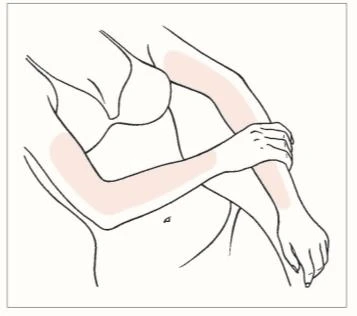
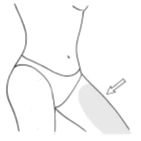
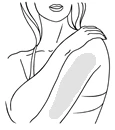
- The usual dose is ONE application (1.25 g of gel), applied daily to one arm from wrist to shoulder and/or to the inner surface of the thigh. Each container contains at least 60 doses (applications) of gel. Application of Oestrogel gel:
- The patient must apply the gel herself.
- Apply the gel in the evening or in the morning, preferably after washing, at the same time each day.
- For one hour after application, avoid skin-to-skin contact with other adults and children. Spread the gel over the LARGEST POSSIBLE AREA of the arm from wrist to shoulder and/or on the inner surface of the thighs, on intact, healthy skin.
If the skin remains sticky five minutes after application, this likely means the gel was not spread thinly enough. Next time, spread the gel over a larger area of the arms and shoulders and/or inner thighs.
After applying the gel to the skin, always wash your hands thoroughly with soap and water.
Do not allow others to touch the area of skin where the gel has been applied until it is completely dry; if necessary, cover the area with clothing.
- Women with an intact uterus: Your doctor will recommend the lowest effective dose required. Apply one dose of Oestrogel gel daily for 21 days (3 weeks), followed by a 7-day break (1 week). Long-term use of estrogens without adding a progestagen (e.g. progesterone) increases the risk of endometrial cancer in women with an intact uterus. Therefore, estrogens should be used together with progesterone for at least 12 to 14 consecutive days each month. Your doctor will likely prescribe progesterone. Progesterone should be taken for at least 12 to 14 days per monthly cycle. During the 4th week, when estrogen is not used, progestagen is also not used. Withdrawal bleeding (a "period") may occur during this time.
- Women who have had a hysterectomy: In conditions where endometrial cells are present outside the uterus (endometriosis), estrogen therapy should not be combined with progestagens if the uterus has been removed. Oestrogel should be used daily without interruption. If a patient using Oestrogel for menopausal symptoms notices that the effect is too strong or too weak, she should consult her doctor.
Duration of treatment
Your doctor will inform you how long you should use Oestrogel. It is important to follow this advice. Do not stop treatment prematurely; discuss any changes with your doctor first.
Use of a higher than recommended dose of Oestrogel
Unpleasant breast symptoms (breast tenderness), bleeding, or nervousness may be signs of overdose, which usually resolve after reducing the amount of gel used.
In such cases, reduce the dose only after consulting your doctor.
If you use more Oestrogel than recommended, contact your doctor or pharmacist immediately.
Missed dose of Oestrogel
Do not use a double dose the next day to make up for a missed dose. If less than 12 hours remain until the next scheduled dose, take the dose at the usual time. If more than 12 hours remain until the next dose, apply the missed dose immediately and take the next dose at the usual time.
If surgery is required
Inform your surgeon that you are using Oestrogel before any surgical procedure. It may be necessary to stop using Oestrogel 4 to 6 weeks before surgery to reduce the risk of thrombosis [see section 2 "Blood clots in veins (venous thromboembolism)"]. Consult your doctor about when you can restart Oestrogel after surgery.
If you have any further questions about the use of this medicine, consult your doctor or pharmacist.
4. Possible adverse effects
Like all medicines, this medicine can cause adverse effects, although not everyone will experience them.
The following diseases are reported more frequently in women using HRT than in women not using HRT:
- breast cancer,
- abnormal growth or cancer of the womb lining (endometrial hyperplasia or cancer),
- ovarian cancer,
- blood clots in the legs or lungs (venous thromboembolic disease),
- heart disease,
- stroke,
- risk of dementia if HRT is started after the age of 65.
More information about these adverse effects is provided in section 2.
Common: may affect up to 1 in 10 people:
breast swelling, breast pain, breast enlargement,
painful menstruation, heavy menstrual bleeding, slight bleeding (spotting),
vaginal discharge, unexpected vaginal bleeding, abnormal thickening of the womb lining (endometrial hyperplasia),
abdominal pain, nausea or vomiting, headache, change in body weight,
swelling of hands, feet and ankles (peripheral oedema).
Uncommon: may affect up to 1 in 100 people:
nervousness and depression, benign breast tumour,
enlargement of uterine fibroids, migraine, dizziness, weakness, drowsiness,
superficial or deep vein thrombosis, pain and swelling of veins (thrombophlebitis), itching,
flatulence (bloating), vomiting, vaginal or vulval inflammation, vaginal fungal infection.
Rare: may affect up to 1 in 1,000 people:
severe allergic reactions (life-threatening) (more likely if there has been a history of allergic reactions),
abnormal liver function tests, yellowing of the skin or whites of the eyes indicating liver problems,
glucose intolerance (especially in diabetic patients), bone pain, worsening of epilepsy (seizures),
changes in libido, skin pigmentation, acne, increased blood pressure.
Very rare: may affect up to 1 in 10,000 people:
intolerance to contact lenses.
The following adverse effects may occur during the use of HRT:
- benign and malignant tumours sensitive to oestrogen hormones, e.g. cancer of the womb lining (endometrial cancer);
- myocardial infarction and stroke;
- gallbladder disease;
- skin disorders such as purpura (small blood spots under the skin);
- dementia symptoms;
- venous thrombosis and pulmonary embolism occur more frequently in women using HRT than in those not using HRT. More information is provided in section 2, "When not to use Oestrogel" and "HRT and thrombosis".
- the risk of breast cancer is slightly higher in women using HRT and increases with the number of years of HRT use. It is estimated that breast cancer occurs in about 32 out of 1,000 women aged 50–64 not using HRT. It is estimated that among 1,000 women using HRT for 5 years or more, there are about 2 to 6 additional cases of breast cancer. If HRT is used for 10 years, this increase may reach up to about 5 to 19 additional cases per 1,000 users. The number of additional breast cancer cases does not depend on the age at which HRT is started (provided HRT is started between the ages of 45 and 65). More information is provided in section 2, "When not to use Oestrogel" and "HRT and breast cancer".
- in women with an intact uterus who use oestrogen-only HRT, the risk of developing cancer of the womb lining increases with the number of years of HRT use. It is estimated that among 1,000 women aged 50–65 not using hormone replacement therapy, about 5 will develop womb cancer. Depending on the duration and dose, it is estimated that among 1,000 women using oestrogen alone, there will be approximately 10–60 additional cases of endometrial cancer. This risk can largely be avoided by adding a progestogen.
The following adverse effects have been reported with the use of other HRT products:
- gallbladder disease,
- various skin disorders:
- skin pigmentation, especially on the face or neck, known as "chloasma" (pregnancy mask),
- painful red skin nodules (erythema nodosum),
- rash with red, spot-like or ring-shaped lesions (erythema multiforme).
Reporting of adverse effects
If any adverse effects occur, including any not listed in this leaflet, inform your doctor or pharmacist. Adverse effects can be reported directly to the Department of Monitoring Adverse Drug Reactions, Office for Registration of Medicinal Products, Medical Devices and Biocidal Products, Al. Jerozolimskie 181C, 02-222 Warsaw, tel. +48 22 49 21 301, fax +48 22 49 21 309, website https://smz.ezdrowie.gov.pl
Adverse effects can also be reported to the marketing authorisation holder.
Reporting adverse effects helps provide more information on the safety of the medicine.
5. How to store Oestrogel
The medicine should be stored in a place invisible and inaccessible to children.
This medicine does not require special precautions during storage.
Do not use this medicine after the expiry date which is stated on the cardboard packaging after
the word "EXP". The expiry date refers to the last day of the stated month. The code "Lot" refers to the batch number.
Medicines must not be disposed of via wastewater or household waste. Ask your pharmacist how to dispose of medicines no longer required. This will help protect the environment.
6. Contents of the pack and other information
What Oestrogel contains
- The active substance is estradiol (Estradiolum).
- The other ingredients are: ethanol 96% (see section 2, Oestrogel contains ethanol), carbomer, triethanolamine, and purified water.
What Oestrogel looks like and contents of the pack
Oestrogel is available in packs containing 1, 2 or 3 multidose containers. Each 80 g pack consists of a container fitted with a metering valve. One pump press delivers 1.25 g of gel containing 0.75 mg of estradiol. Each container contains 80 g of gel and delivers at least 60 doses of 1.25 g.
Not all pack sizes may be marketed.
Marketing Authorisation Holder
Besins Healthcare SA
80 Rue Washington
1050 Ixelles – Belgium
[email protected]
Manufacturer
Besins Manufacturing Belgium
Groot-Bijgaardenstraat, 128 – B-1620 Drogenbos – Belgium
or
Laboratoires Besins International
13 rue Périer
Montrouge 92120
France
This medicinal product is authorised in the European Economic Area countries under the following names:
Belgium – Estradiol Besins 0.75 mg/dose transdermal gel
Bulgaria – Естрогел 0.75 mg/доза transdermal gel
Czech Republic – Estradiol Besins 0.75 mg/dose transdermal gel
Croatia – Estradiol Besins 0.75 mg per press transdermal gel
Estonia – Estradiol Besins 0.75 mg/application transdermal gel
Lithuania – Estradiol Besins 0.75 mg/dose transdermal gel
Luxembourg – Estradiol Besins 0.75 mg/dose transdermal gel
Latvia – Estradiol Besins 0.75 mg/dose transdermal gel
Netherlands – Oestrogel 0.75 mg/dose transdermal gel
Norway – Estrogel 0.75 mg/dose transdermal gel
Poland – Oestrogel, 0.75 mg/dose, transdermal gel
Romania – Estradiol Besins 0.75 mg/dose transdermal gel
Slovakia – Estradiol Besins 0.75 mg/dose transdermal gel
Slovenia – Estradiol Besins 0.75 mg/press transdermal gel
Sweden – Estrogel 0.75 mg/dose transdermal gel
Hungary – Estradiol Besins 0.75 mg/dose transdermal gel