Octaplex
Poland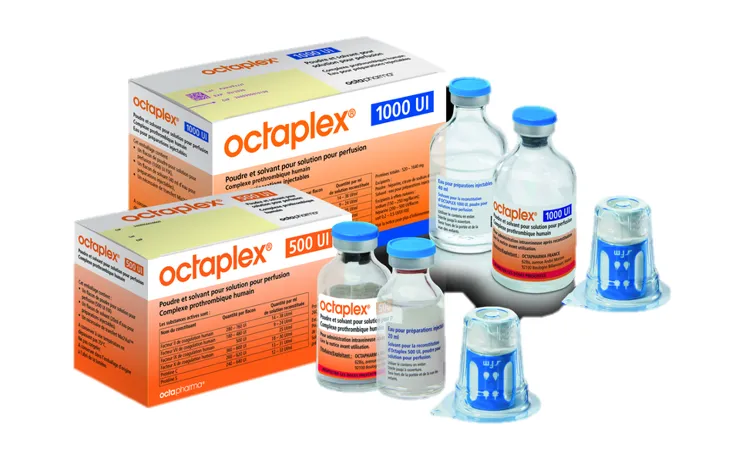
Table of Contents
PACKAGE LEAFLET: INFORMATION FOR THE USER
Octaplex, 500 IU, powder and solvent for solution for infusion
Human prothrombin complex concentrate
Octaplex, 1000 IU, powder and solvent for solution for infusion
Human prothrombin complex concentrate
Please read carefully the entire leaflet before using this medicine, as it contains
important information for the patient.
- Keep this leaflet, so that you can read it again if necessary.
- If you have any questions, ask your doctor, pharmacist, or nurse.
- This medicine has been prescribed for a specific individual. Do not pass it on to others. This medicine may harm others, even if their symptoms are the same.
- If you experience any adverse reactions, including any not listed in this leaflet, inform your doctor, pharmacist, or nurse. See section 4.
Contents of the leaflet:
- What Octaplex is and what it is used for
- Important information before using Octaplex
- How to use Octaplex
- Possible side effects
- How to store Octaplex
- Contents of the pack and other information
1. WHAT OCTAPLEX IS AND WHAT IT IS USED FOR
Octaplex belongs to a group of medicines called clotting factors. It contains vitamin K-dependent human clotting factors II, VII, IX, and X.
Octaplex is used to treat and prevent bleeding:
- caused by vitamin K antagonists (such as warfarin). These medicines block the action of vitamin K and cause a deficiency of vitamin K-dependent clotting factors. Octaplex is used when rapid correction of this deficiency is required;
- in patients born with a deficiency of vitamin K-dependent clotting factors II and X. It is administered when a purified product of the specific clotting factor is not available.
2. IMPORTANT INFORMATION BEFORE USING OCTAPLEX
When not to use Octaplex:
- if the patient is allergic to any of the ingredients of this medicine (listed in section 6),
- if the patient has an allergy to heparin or has ever previously experienced a drop in platelet count following heparin administration,
- if the patient has IgA deficiency with antibodies against IgA.
Warnings and precautions
- Specialist advice should be sought from a physician experienced in the treatment of coagulation disorders during administration of Octaplex.
- In patients with acquired deficiency of vitamin K-dependent coagulation factors (e.g. caused by vitamin K antagonists), Octaplex should only be used when rapid correction of the prothrombin complex level is required, such as in cases of major bleeding or emergency surgery. In other cases, reducing the dose of vitamin K antagonists and/or administering vitamin K is usually sufficient.
- Patients receiving vitamin K antagonists (such as warfarin) may have an increased risk of thrombosis. In such cases, treatment with Octaplex may further increase this risk.
- In congenital deficiency of a specific vitamin K-dependent coagulation factor, a specific product containing that factor should be used if available.
- If an allergic or anaphylactic reaction occurs, the infusion must be stopped immediately and appropriate treatment initiated.
- There is a risk of thrombosis or disseminated intravascular coagulation (DIC) (a serious condition involving clot formation throughout the body) in patients receiving Octaplex (especially when administered regularly). Patients receiving human prothrombin complex should be closely monitored for signs and symptoms of DIC and thrombosis. This is particularly important in patients with a history of ischemic heart disease, liver disease, those awaiting surgery, and when Octaplex is administered to young children.
- There are no data available regarding the use of Octaplex in cases of perinatal bleeding due to vitamin K deficiency in newborns.
Viral safety
- For medicinal products derived from human blood or plasma, appropriate measures are applied to prevent transmission of infections to patients. These include strict selection of blood and plasma donors to exclude infected carriers, and testing of individual donations and plasma pools for specific viral markers. Manufacturers of these products also incorporate appropriate methods into the manufacturing process intended to inactivate or remove viruses. Nevertheless, when administering products derived from human blood or plasma, the possibility of transmitting an infectious agent cannot be completely ruled out. This also applies to infections caused by unknown or emerging viruses or other types of pathogens. The methods used are considered effective against enveloped viruses such as human immunodeficiency virus (HIV), hepatitis B virus (HBV), and hepatitis C virus (HCV). The methods may have limited effectiveness against non-enveloped viruses such as hepatitis A virus (HAV) or parvovirus B19. Parvovirus B19 may be harmful to pregnant women (fetal infection) and to patients with immunodeficiency or certain types of anemia (e.g. sickle cell anemia or hemolytic anemia). It is recommended to record the product name and batch number each time Octaplex is administered in order to trace the batch used.
- Appropriate vaccinations (against hepatitis A and B) are recommended for patients receiving regular or repeated administration of human plasma-derived prothrombin complex products.
Children and adolescents
Data on the use of Octaplex in children and adolescents are not available.
Octaplex and other medicines
Octaplex must not be mixed with other medicinal products.
Octaplex neutralizes the effect of vitamin K antagonist therapy, but no interactions with other
medicinal products are known.
Octaplex may affect the results of coagulation tests that are heparin-dependent.
Inform your doctor or pharmacist about all medicines currently or recently taken, as well as any medicines you plan to take.
Pregnancy and breastfeeding
Octaplex should be used during pregnancy and breastfeeding only if strictly indicated. Consult a doctor or pharmacist before using the product.
Driving and operating machinery
The effect of Octaplex on the ability to drive or operate machinery is unknown.
Important information about certain ingredients of Octaplex
- Heparin may cause allergic reactions and a decrease in blood cells responsible for blood clotting. Patients with a history of heparin-induced allergic reactions should avoid using medicines containing heparin.
- The medicine contains 75–125 mg (500 IU vial) or 150–250 mg (1000 IU vial) of sodium (the main component of table salt) per vial. This corresponds to 3.8–6.3% or 7.5–12.5% of the maximum recommended daily dietary sodium intake for adults.
3. HOW TO USE OCTAPLEX
Treatment with Octaplex should be initiated under the supervision of a physician specialized in the treatment of coagulation disorders.
- First, the powder should be dissolved in water for injections.
- Then, the solution should be administered intravenously (intravenous route).
The dose of Octaplex and duration of treatment depend on:
- severity of the disease;
- site and severity of bleeding, and
- the patient's general condition.
Use of a higher than recommended dose of Octaplex
In case of overdose, the risk increases of:
- thromboembolic complications (such as myocardial infarction and venous or pulmonary thrombosis),
- disseminated intravascular coagulation (a serious condition characterized by clotting throughout the body).
4. POSSIBLE ADVERSE REACTIONS
Like all medicines, this medicine can cause adverse reactions, although not everyone will experience them.
Common (may affect up to 1 in 10 people)
Blood clots in blood vessels.
Uncommon (may affect up to 1 in 100 people)
Anxiety, increased blood pressure, asthma-like symptoms, haemoptysis, nosebleeds, burning sensation at injection site, clots in the device.
Rare (may affect up to 1 in 1,000 people)
Hypersensitivity-type reactions may occur. A temporary increase in liver function tests (transaminases) has rarely been observed.
In patients treated with Octaplex in replacement therapy, neutralizing antibodies (inhibitors) against any of the coagulation factors contained may develop. If such inhibitors appear, replacement therapy will no longer be highly effective.
Very rare (may affect up to 1 in 10,000 people)
Cases of increased body temperature (fever) have been observed.
There is a risk of thrombosis following administration of this medicine.
Frequency not known (frequency cannot be estimated from available data)
Severe allergic reactions and shock, hypersensitivity, tremor, heart failure, tachycardia, circulatory disturbances, drop in blood pressure, respiratory failure, breathing disorders, nausea, urticaria, rash, chills.
Heparin contained in the product may cause a sudden decrease in platelet count. This is an allergic reaction known as "heparin-induced thrombocytopenia type II". In rare cases, this decrease in platelet count may occur 6–14 days after starting treatment in patients without prior hypersensitivity to heparin. In patients with known hypersensitivity to heparin, this reaction may occur within a few hours of starting treatment.
Treatment with Octaplex must be discontinued immediately in patients exhibiting such an allergic reaction. These patients must not be given medicinal products containing heparin in the future.
For information regarding viral safety, see section 2.
Reporting of adverse reactions
If any adverse reactions occur, including any adverse reactions not listed in this leaflet, inform your doctor, pharmacist, or nurse. Adverse reactions can be reported directly to the Department of Monitoring of Adverse Drug Reactions of the Office for Medicinal Products, Medical Devices and Biocidal Products,
Al. Jerozolimskie 181C, 02-222 Warsaw,
Tel: +48 22 4921 301, Fax: +48 22 4921 309
Email: [email protected].
Reporting adverse reactions helps to provide more information on the safety of this medicine.
5. HOW TO STORE OCTAPLEX
Keep this medicine out of sight and reach of children.
Do not use this medicine after the expiry date stated on the container. The expiry date refers to the last day of the stated month.
Do not store above 25°C. Do not freeze. Store in the original packaging to protect from light.
The powder must be dissolved only immediately before injection. The solution has been shown to be stable for up to 8 hours at 25°C. However, to avoid contamination, the solution should be used immediately and only once.
6. CONTENTS OF THE PACKAGE AND OTHER INFORMATION
What Octaplex contains in the vial and after reconstitution with 20 ml (500 IU)/40 ml (1000 IU) of solvent
The active substances are:
| Active substance name | Octaplex Content per vial 500 IU | Octaplex Content per vial 1000 IU | Octaplex Content in 1 ml of reconstituted solution |
| Total protein: | 260–820 mg | 520–1640 mg | 13 - 41 mg/ml |
| Active substances | |||
| Human blood coagulation Factor II | 280–760 IU | 560–1520 IU | 14 - 38 IU/ml |
| Human blood coagulation Factor VII | 180–480 IU | 360–960 IU | 9 - 24 IU/ml |
| Human blood coagulation Factor IX | 500 IU | 1000 IU | 25 IU/ml |
| Human blood coagulation Factor X | 360–600 IU | 720–1200 IU | 18 - 30 IU/ml |
| Additional active substances | |||
| Protein C | 260–620 IU | 520–1240 IU | 13 - 31 IU/ml |
| Protein S | 240–640 IU | 480–1280 IU | 12 - 32 IU/ml |
The specific activity of the product is ≥ 0.6 IU/mg, expressed as factor IX activity.
Other components are:
heparin, trisodium citrate dihydrate, water for injections.
What Octaplex looks like and contents of the pack
Octaplex is available as a powder and solvent for solution for infusion. It is a hygroscopic, white or slightly coloured powder or friable mass in a glass vial.
The solvent is water for injections supplied in a glass vial. The reconstituted solution is clear to slightly opalescent and may be slightly coloured.
Octaplex is supplied in a single carton containing:
- 1 vial of powder for solution for infusion
- 1 vial of solvent, water for injections
- 1 Nextaro transfer set.
Marketing Authorisation Holder and Manufacturer
Octapharma (IP) SPRL
Allée de la Recherche 65
1070 Anderlecht
Belgium
For further information, please contact the local representative of the Marketing Authorisation Holder:
Octapharma Poland Sp. z o.o.
ul. Domaniewska 39a
02-135 Warsaw
tel. (22) 415-51-42
Manufacturers:
Octapharma Pharmazeutika Produktionsges.m.b.H.
Oberlaaer Str. 235
1100 Vienna
Austria
Octapharma Lingolsheim S.A.S.
72 Rue du Maréchal Foch
67380 Lingolsheim
France
This medicinal product is authorised for marketing in the European Economic Area countries under the following names:
Austria, Belgium, Bulgaria, Croatia, Cyprus, Denmark, Estonia, Finland, France, Germany, Hungary, Iceland, Ireland, Latvia, Lithuania, Luxembourg, Malta, Netherlands, Norway, Poland, Portugal, Slovenia, Slovakia, Spain, United Kingdom: Octaplex
Czech Republic, Sweden: Ocplex
Italy, Romania: Pronativ
INFORMATION FOR HEALTHCARE PROFESSIONALS
General information on the use of Octaplex is provided in section 3.
The following information is intended exclusively for healthcare professionals:
Instructions for treatment
Read all instructions carefully and follow them precisely!
Sterility must be maintained during the procedures described below.
The product dissolves rapidly at room temperature.
The reconstituted solution should be clear or slightly opalescent.
Do not use solutions that are cloudy or contain particulate matter.
Before administration, visually inspect the solution for presence of particulate matter or discoloration.
After reconstitution, the solution should be used immediately.
Any unused product or waste material should be disposed of in accordance with local regulations.
Dosage
Bleeding and prevention of bleeding in treatment of vitamin K antagonists:
The dose depends on the INR prior to treatment and on body weight. The table provides approximate doses (in units/kg body weight of reconstituted product).
| INR before treatment | 2 - < 4 | 4 - 6 | > 6 |
| Octaplex medicinal product dose (units† of factor IX) / kg body weight | 25 | 35 | 50 |
The dose is based on a body weight of up to, but not exceeding, 100 kg. Therefore, in patients with a body weight above 100 kg, the maximum single dose (in IU of factor IX) should not exceed 2,500 IU for INR values of 2–<4, 3,500 IU for INR values of 4–6, and 5,000 IU for INR values >6.
The dosing recommendations provided are based on experimental data, and recovery and duration of effect may vary; therefore, INR monitoring during treatment is mandatory.
Bleeding and bleeding prophylaxis during surgical procedures in congenital deficiencies of vitamin K-dependent clotting factors II and X, when a specific factor concentrate is not available:
The required dose is calculated based on experimental data indicating that approximately 1 IU of factor II or factor X per kg of body weight increases plasma factor II or factor X activity by approximately 0.02 or 0.017 IU/mL, respectively.
- Required number of units = body weight (kg) × desired increase in factor X (IU/mL) × 60, where 60 (mL/kg) represents the assumed recovery coefficient.
- Required doses for factor II: Required number of units = body weight (kg) × desired increase in factor II (IU/mL) × 50. If individual recovery values are known, they should be used for calculations.
Reconstitution instructions:
- If necessary, allow the vial of solvent (water for injections) and the vial of powder to reach room temperature. This temperature should be maintained during reconstitution. If a water bath is used for warming, care should be taken to avoid contact of water with the rubber stoppers or caps of the vials. The water bath temperature should not exceed 37°C.
- Remove the flip-off caps from both the vial of powder and the vial of solvent, and disinfect the rubber stoppers appropriately.
- Remove the outer cap of the Nextaro set. Place the solvent vial on a flat surface and hold it firmly. Without removing the outer packaging, place the blue part of the Nextaro onto the top of the solvent vial and press down firmly until it clicks into place (Fig. 1). Do not twist while attaching! Holding the solvent vial, carefully remove the outer packaging from the Nextaro set, taking care to keep the Nextaro firmly attached to the solvent vial (Fig. 2).
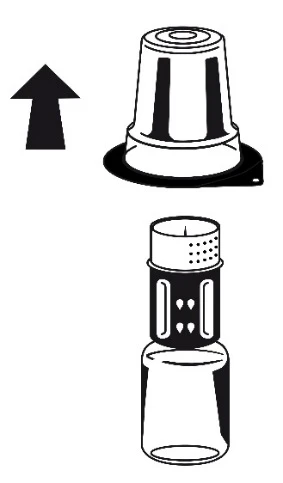
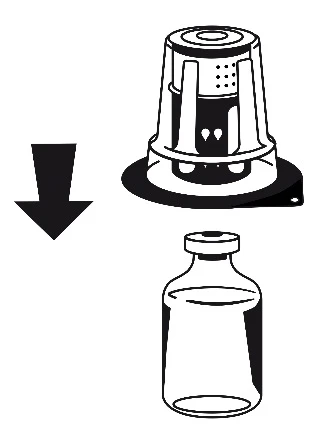
Fig. 2
Fig. 1
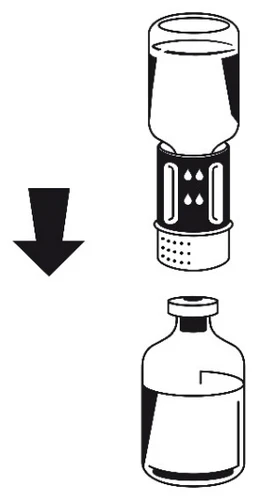
- Place the powder vial on a flat surface and hold it firmly. Take the solvent vial with the attached Nextaro®Mix2Vial™ and turn it upside down. Place the transparent white part of the Nextaro connector onto the top of the powder vial and press down firmly until it clicks into place (Fig. 3). Do not twist while attaching! The solvent will automatically transfer into the powder vial.
Fig. 3
- With both vials still connected, gently rotate the powder vial until the product is fully dissolved.
Octaplex dissolves rapidly at room temperature, yielding a solution that is clear to slightly blue.
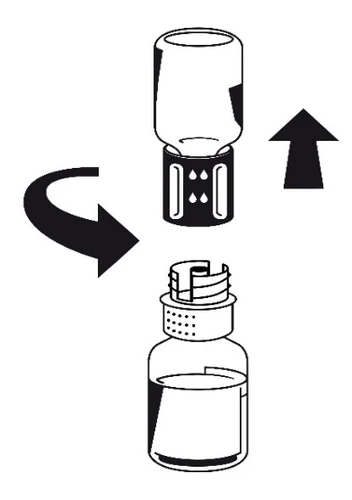
Unscrew the Nextaro into two parts (Fig. 4). Discard the empty solvent vial with the blue part of the Nextaro.
Fig. 4
If the powder is not completely dissolved or if a precipitate forms, do not use the product.
Infusion instructions:
As a precaution, assess the patient's pulse rate before and during factor IX infusion. If a significant increase in pulse rate occurs, reduce the infusion rate or discontinue administration.
- Attach a 20 mL syringe (for the 500 IU vial) or a 40 mL syringe (for the 1000 IU vial) to the Luer-lock connector on the white part of the Nextaro. Turn the vial upside down and draw the solution into the syringe. After transferring the solution, firmly hold the syringe plunger (keeping it downward) and remove the syringe from the Nextaro. Discard the Nextaro and the empty vial.
- Disinfect the injection site appropriately.
- Administer the solution intravenously at a rate of 0.12 mL/kg/min (~3 units/kg/min), up to a maximum of 8 mL/min (~210 units/min), under aseptic conditions.
Blood should not enter the syringe due to the risk of fibrin clot formation.
The Nextaro set is intended for single use only.