Nystatin
Poland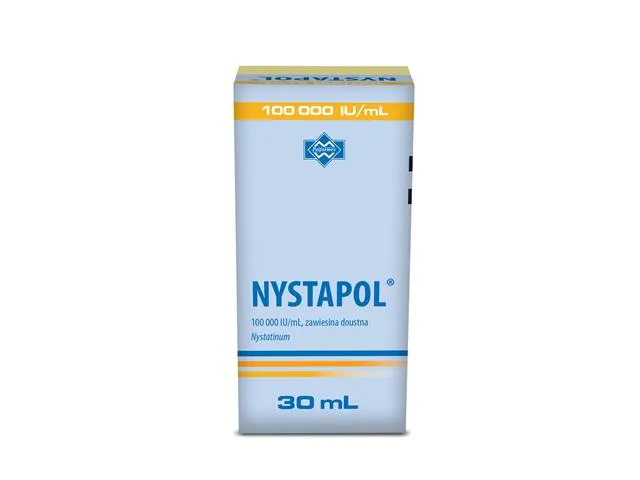
Table of Contents
Package leaflet: Information for the patient
NYSTAPOL, 100,000 IU/mL oral suspension
Nystatin
Please read all of this leaflet carefully before taking this medicine, because it contains
important information for you.
- Keep this leaflet, as you may need to read it again.
- If you have any further questions, ask your doctor or pharmacist.
- This medicine has been prescribed for a specific individual. Do not pass it on to others. It may harm other people, even if their symptoms are the same.
- If you experience any adverse reactions, including any not listed in this leaflet, inform your doctor or pharmacist. See section 4.
Table of contents
- What Nystapol is and what it is used for
- Important information before taking Nystapol
- How to take Nystapol
- Possible side effects
- How to store Nystapol
- Contents of the pack and other information
1. What Nystapol is and what it is used for
The active substance in Nystapol is nystatin — a polyene antibiotic with antifungal activity — fungistatic or fungicidal (due to damage to the fungal cell membrane).
Nystatin is active against many strains of yeasts and yeast-like fungi, particularly Candida species (including Candida albicans).
Indications:
Prophylaxis and treatment of oral, oesophageal, and gastrointestinal candidiasis.
2. Important information before using Nystapol
When not to use Nystapol:
- if the patient is allergic to nystatin or any of the other ingredients of this medicine (listed in section 6).
Warnings and precautions
Before starting treatment with Nystapol, consult your doctor.
Oral forms of nystatin should not be used in the treatment of systemic fungal infections, e.g. of the lungs or skin.
In patients with renal impairment, nystatin may exceptionally appear in small concentrations in the blood.
Nystapol and other medicines
Inform your doctor or pharmacist about all medicines currently taken, recently taken, or planned to be taken.
Pregnancy and breastfeeding
It is not known whether the medicine harms the foetus, passes into breast milk, or affects fertility. If the patient is pregnant or breastfeeding, suspects she may be pregnant, or is planning to have a child, she should consult her doctor before using this medicine.
Driving and operating machinery
The effect of the medicine on the ability to drive and operate machinery is unknown.
Nystapol contains methyl parahydroxybenzoate, propyl parahydroxybenzoate, sucrose, glycerol (excipients) and sodium.
Due to the presence of methyl parahydroxybenzoate (E 218) and propyl parahydroxybenzoate (E 216), this medicine may cause allergic reactions (delayed-type reactions possible).
This medicine contains less than 1 mmol (23 mg) of sodium per 1 mL, which means it can be considered sodium-free.
Due to the presence of sucrose (400 mg per 1 mL), if the patient has previously been diagnosed with intolerance to certain sugars, the patient should consult a doctor before taking this medicine.
3. How to use Nystapol
This medicine should always be used as directed by the physician. If in doubt, consult your doctor or pharmacist.
Shake the bottle well before use. Use the pipette (applicator) provided in the package, marked with 1 mL, to measure the medicinal dose.
The pipette (applicator) should be washed by hand in warm water. Do not scald or immerse in hot water. Do not wash in a dishwasher.
1 mL of suspension contains 100,000 IU of nystatin.
Doses should be evenly spaced throughout the day.
Adults
Treatment of oral candidiasis: 100,000 IU four times daily. The suspension should be held in the mouth as long as possible before swallowing.
Treatment of gastrointestinal fungal infections: 500,000 IU every six hours.
Use in infants and children
Treatment of oral and gastrointestinal fungal infections: 100,000 IU four times daily. The suspension should be administered directly into the mouth.
The longer the suspension remains in contact with the infected area in the mouth before swallowing, the greater the effectiveness of the medicine.
For newborns, the recommended prophylactic dose is 1 mL once daily.
Nystatin treatment should continue for at least 48 hours after symptoms have resolved.
If infection symptoms do not improve after 14 days of treatment, consult your doctor for reassessment and appropriate adjustments to therapy.
Overdose of Nystapol
Nystatin is practically not absorbed from the gastrointestinal tract, and overdose or accidental ingestion does not cause systemic toxic effects.
In case of ingestion of a higher than recommended dose, seek immediate advice from a doctor or pharmacist.
Missed dose of Nystapol
If a dose is missed, take it as soon as possible. If it is almost time for the next dose, take the next dose at the scheduled time. Do not take a double dose to make up for a missed dose.
Discontinuation of Nystapol
If you have any further doubts regarding the use of this medicine, consult your doctor or pharmacist.
4. Possible adverse reactions
Like all medicines, this medicine can cause adverse reactions, although not everybody gets them.
If a sensation of irritation or an allergic reaction occurs, stop using the medicine.
Contact your doctor immediately if any of the following adverse reactions occur, such as:
- hypersensitivity reactions, angioedema (swelling of the lips or tongue), including facial swelling;
- Stevens-Johnson syndrome (a serious condition characterized by blistering of the skin, mouth, eyes, and genital organs), which occurs very rarely;
- rash, urticaria, occurring rarely.
Other adverse reactions.
Occasional cases of nausea have been reported.
Large doses of nystatin have sometimes caused diarrhoea, gastric and intestinal discomfort, nausea, and vomiting.
Reporting of adverse reactions
If any adverse effects occur, including any adverse effects not listed in this leaflet, inform your doctor or pharmacist. Adverse reactions can be reported directly to the Department of Monitoring of Adverse Drug Reactions at the Office for Registration of Medicinal Products, Medical Devices and Biocidal Products:
Al. Jerozolimskie 181C, 02-222 Warsaw
Tel.: + 48 22 49 21 301
Fax: + 48 22 49 21 309
Website: https://smz.ezdrowie.gov.pl
Adverse reactions can also be reported to the marketing authorization holder.
Reporting adverse reactions helps to provide more information on the safety of the medicine.
5. How to store Nystapol
Store below 25°C.
Keep the medicine in a place invisible and inaccessible to children.
Do not use this medicine after the expiry date stated on the box and bottle after: "EXP". The expiry date refers to the last day of the stated month.
Medicines should not be disposed of via wastewater or household waste. Ask your pharmacist how to properly dispose of medicines no longer in use. This will help protect the environment.
6. Contents of the package and other information
What the medicine Nystapol contains
- The active substance is nystatin. 1 mL of the prepared suspension contains 100,000 IU of nystatin.
- Other ingredients are: methyl parahydroxybenzoate (E 218), propyl parahydroxybenzoate (E 216), sucrose (E 473), glycerol (E 422), sodium carboxymethylcellulose, disodium hydrogen phosphate dihydrate, sodium hydroxide (for pH adjustment), banana flavour liquid (containing propylene glycol, isoamyl acetate, orange oil, hexyl acetate, vanillin), vanilla flavour liquid (containing propylene glycol, vanillin).
What Nystapol looks like and contents of the pack
Nystapol is a yellow to beige oral suspension with a characteristic banana-vanilla taste.
The pack consists of a brown glass bottle (Type III) with an aluminium cap with tamper-evident ring and a PE insert, containing 24 mL, 30 mL, 48 mL, or 60 mL of suspension, together with a PS/LDPE pipette (graduated in 1 mL increments) and an LDPE adapter, packed in a cardboard box.
Marketing Authorisation Holder and Manufacturer
Polfarmex S.A.
ul. Józefów 9
99-300 Kutno
Poland
Tel.: 24 357 44 44
Fax: 24 357 45 45
e-mail: [email protected]