Nyscandin
Poland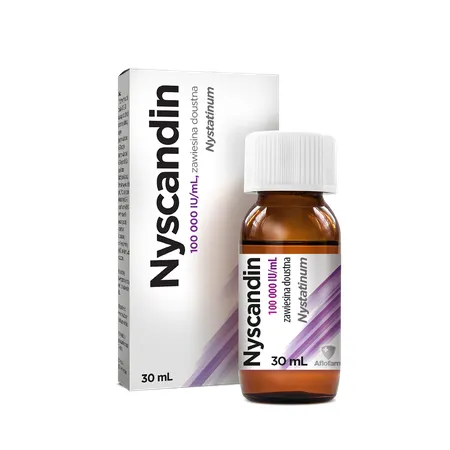
Table of Contents
Package leaflet: Information for the patient
Nyscandin, 100,000 IU/mL, oral suspension
Nystatin
Please read all of this leaflet carefully before taking this medicine, because it contains
important information for the patient.
- Keep this leaflet, as you may need to read it again.
- If you have any further questions, please ask your doctor or pharmacist.
- This medicine has been prescribed for a specific individual. Do not pass it on to others. It may harm other people, even if their symptoms are the same.
- If you experience any adverse reactions, including any not listed in this leaflet, tell your doctor or pharmacist. See section 4.
Contents of the leaflet
- What Nyscandin is and what it is used for
- Important information before taking Nyscandin
- How to take Nyscandin
- Possible side effects
- How to store Nyscandin
- Contents of the pack and other information
1. What Nyscandin is and what it is used for
Nystatin is a polyene antifungal antibiotic with fungistatic or fungicidal activity (due to damage of the fungal cell membrane). Nystatin is active against many strains of yeasts and yeast-like fungi, particularly Candida species (including Candida albicans).
The drug is not absorbed into body fluids and acts only at the site of administration.
Indications:
- Treatment of yeast infections of the gastrointestinal tract, including the oral cavity (e.g. oral mucosal thrush affecting the gums, tongue, and vermilion border of the lips) and oesophagus;
- Prophylactic use in patients receiving high-dose antibiotics or corticosteroids;
- Prophylactic use in newborns with birth weight below 1500 g, in whom the first-choice drug cannot be used.
2. Important information before using Nyscandin
When not to use Nyscandin
- if the patient is allergic to nystatin or any of the other ingredients of this medicine (listed in section 6).
Warnings and precautions
Before starting treatment with Nyscandin, discuss this with your doctor or pharmacist.
Do not use oral formulations of nystatin for the treatment of systemic fungal infections (fungal infections of internal organs or skin).
In patients with renal impairment, nystatin may exceptionally appear in blood in low concentrations.
Nyscandin and other medicines
Tell your doctor or pharmacist about all medicines the patient is currently taking or has recently taken, as well as any medicines the patient plans to take.
There are no data available on the interaction of nystatin with other medicines.
Pregnancy, breastfeeding and fertility
If the patient is pregnant or breastfeeding, suspects she may be pregnant, or is planning to have a baby, she should consult her doctor before using this medicine.
It is unknown whether the medicine may have harmful effects on the fetus.
Nyscandin is not recommended during pregnancy.
This medicine must not be used during breastfeeding.
Driving and operating machinery
The effect of the medicine on the ability to drive and operate machinery is unknown.
Nyscandin contains sucrose, methyl parahydroxybenzoate, propyl parahydroxybenzoate, propylene glycol and sodium
Sucrose
The medicine contains 489.22 mg of sucrose in each 1 mL of suspension.
This should be taken into account in patients with diabetes.
If the patient has previously been diagnosed with intolerance to certain sugars, the patient should consult a doctor before taking this medicine.
Methyl and propyl parahydroxybenzoate
The medicine may cause allergic reactions (including delayed-type reactions).
Propylene glycol
The medicine contains 5.62 mg of propylene glycol in each 1 mL of suspension. Concurrent administration with other substrates of alcohol dehydrogenase, such as ethanol, may cause severe adverse effects in newborns.
Sodium
The medicine contains less than 1 mmol (23 mg) of sodium per 1 mL of suspension, meaning the medicine is considered "sodium-free".
3. How to use Nyscandin
This medicine should always be used according to the doctor's instructions. If in doubt, consult
your doctor or pharmacist.
1 mL of the suspension contains 100,000 IU of nystatin.
Adults
Treatment of oral and pharyngeal candidiasis:
400,000 to 600,000 IU, corresponding to 4 mL to 6 mL of suspension, 4 times daily every 6 hours.
The suspension should be held in the mouth as long as possible before swallowing.
Treatment of gastrointestinal candidiasis:
500,000 IU to 1,000,000 IU, corresponding to 5 mL to 10 mL of suspension, 4 times daily every 6 hours.
Prophylactic use (during antibiotic therapy):
500,000 IU, corresponding to 5 mL of suspension, 3 times daily every 8 hours.
Use in infants, children, and adolescents
Treatment of oral candidiasis:
Oral thrush: 100,000 IU, corresponding to 1 mL of suspension, 4 times daily every 6 hours.
The longer the suspension remains in contact with the infected area in the mouth before swallowing,
the greater the effectiveness of the medicine.
Treatment of gastrointestinal candidiasis:
50,000 IU to 500,000 IU, corresponding to 0.5 mL to 5 mL of suspension, 4 times daily every 6 hours.
Prophylaxis of candidiasis in newborns with birth weight below 1500 g:
100,000 IU, corresponding to 1 mL of suspension, 3 times daily every 8 hours, for 6 weeks.
The medicine may also be used topically for brushing the oral cavity 2 to 3 times daily. The
medicinal product should be applied to affected areas using a swab moistened with the suspension.
Method of administration
Oral administration.
The bottle must be shaken well before each use. An oral syringe with adapter is supplied with the
package to facilitate dosing.
Instructions for using the syringe dosing device are provided at the end of this leaflet.
Use of a higher than recommended dose of Nyscandin
Nystatin is practically not absorbed from the gastrointestinal tract, and overdose or accidental
ingestion does not cause systemic toxic effects.
If a higher than recommended dose of the medicine has been taken, consult your doctor or
pharmacist immediately.
Missed dose of Nyscandin
If a dose has been missed, take it as soon as possible. If it is almost time for the next dose, take the
next dose at the scheduled time. Do not take a double dose to make up for a missed dose.
If you have any further doubts regarding the use of this medicine, consult your doctor or pharmacist.
4. Possible adverse effects
Like all medicines, this medicine can cause adverse effects, although not everyone will experience them.
Nystatin is well tolerated, even during long-term use.
The adverse effects listed below are categorized according to their frequency of occurrence.
Rare (occur in 1 to 10 out of 10,000 people):
- nausea;
- vomiting;
- diarrhoea;
- allergic reactions (e.g. rash, urticaria).
Very rare (occur in fewer than 1 out of 10,000 patients):
- Stevens-Johnson syndrome – appearance of blisters on the skin and/or mucous membranes, which, when ruptured, form painful sores; fever, muscle pain and joint pain often occur simultaneously.
Reporting of adverse effects
If any adverse effects occur, including any adverse effects not listed in this leaflet, please inform your doctor or pharmacist.
Adverse effects can be reported directly to the Department of Monitoring Adverse Drug Reactions of the Office for Registration of Medicinal Products, Medical Devices and Biocidal Products
Al. Jerozolimskie 181C, 02-222 Warsaw
Tel.: +48 22 49 21 301
Fax: +48 22 49 21 309
Website: https://smz.ezdrowie.gov.pl
Adverse effects can also be reported to the marketing authorization holder.
Reporting adverse effects helps to collect more information on the safety of the medicine.
5. How to store the medicine Nyscandin
Keep the medicine out of sight and reach of children.
Store below 30°C. Do not store in the refrigerator or freeze.
Do not use this medicine after the expiry date stated on the carton and label. The expiry date refers to the last day of the stated month.
Shelf life after first opening the bottle: 3 months.
Medicines should not be disposed of via wastewater or household waste. Ask your pharmacist how to dispose of medicines no longer in use. This will help protect the environment.
6. Contents of the packaging and other information
What Nyscandin contains
- The active substance is nystatin. 1 mL of suspension contains 100,000 IU of nystatin.
- The other ingredients are: sucrose, methyl parahydroxybenzoate (E 218), propyl parahydroxybenzoate (E 216), glycerol (E 422), xanthan gum, hydroxypropylcellulose, citric acid (to adjust pH 6.0–7.0), sodium citrate (to adjust pH 6.0–7.0), raspberry flavour AR0320 (Himbeere fl. (a mixture of flavouring substances and solvent), cis-3-hexenol, vanillin, 1,2-propylene glycol), purified water.
What Nyscandin looks like and contents of the pack
Nyscandin is a yellow oral suspension with a sweet-bitter taste and raspberry odour.
The packaging consists of a brown glass bottle (type III), with a PP/HDPE/LDPE child-resistant cap, an oral syringe of 5 mL made of LDPE/PS with 0.1 mL graduations, and an adapter made of LDPE, all contained in a cardboard box.
The pack contains 30 mL or 70 mL of suspension.
Marketing Authorisation Holder
Aflofarm Farmacja Polska Sp. z o.o.
ul. Partyzancka 133/151
95-200 Pabianice
tel. (42) 22-53-100
Manufacturer
Aflofarm Farmacja Polska Sp. z o.o.
ul. Krzywa 2
95-030 Rzgów
Instructions for using the dosing device (oral syringe with adapter)
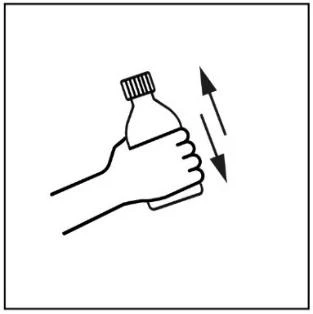
- Shake the bottle well before each use.
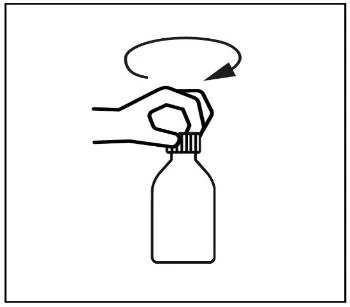
- Unscrew the bottle cap.
- Insert the provided adapter into the neck opening of the bottle.
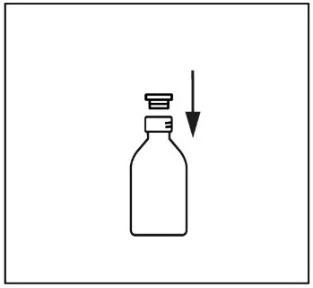
- Press the syringe firmly into the recess of the adapter.
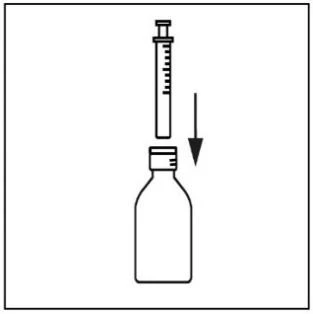
- To fill the syringe, turn the bottle upside down, then slowly pull the plunger down to draw the suspension up to the desired mark on the syringe scale.
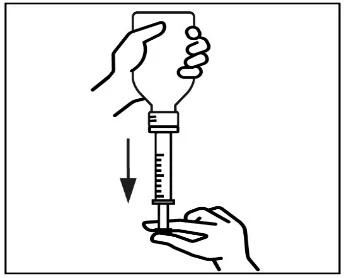
- Return the bottle to upright position and carefully remove the syringe.
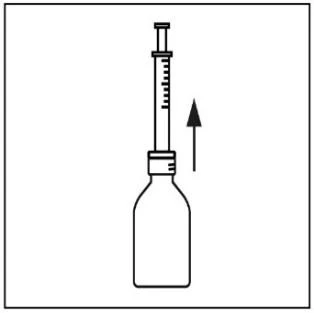
- Place the tip of the syringe into the mouth, then slowly depress the plunger to administer the suspension gently, avoiding choking.
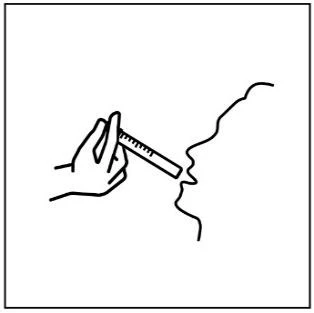
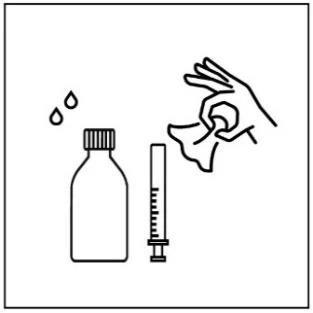
- After administering the medicine, close the bottle tightly. Wash and dry the dosing device.