Nutrineal pd4 (with 1.1% amino acid solution)
Poland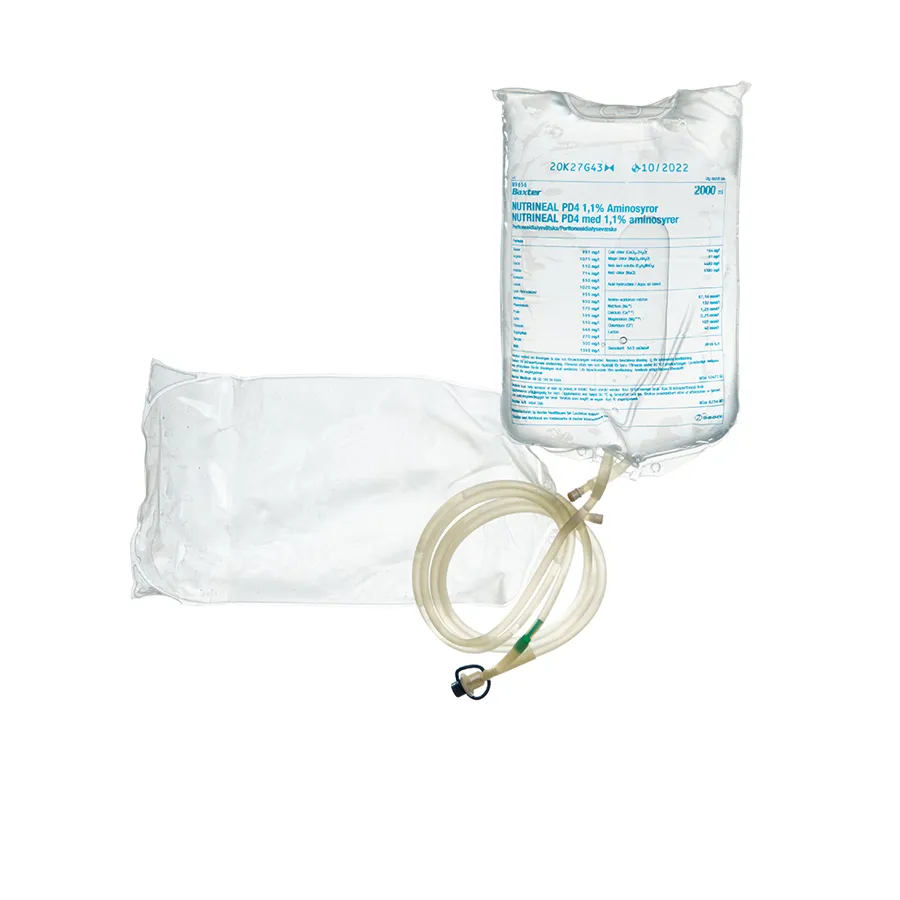
Table of Contents
Package leaflet: Information for the user
Nutrineal PD4 (with 1.1% amino acid solution) solution for peritoneal dialysis
Please read all of this leaflet carefully before using this medicine because it contains
important information for you.
- Keep this leaflet, as you may need to read it again.
- If you have any further questions, please consult your doctor.
- If any side effects worsen or if you experience any side effects not listed in this leaflet, inform your doctor.
Contents of the leaflet:
- What Nutrineal is and what it is used for
- Important information before using Nutrineal
- How to use Nutrineal
- Possible side effects
- How to store Nutrineal
- Contents of the pack and other information
1. What Nutrineal is and what it is used for
Nutrineal is a glucose-free solution for peritoneal dialysis. It enables the removal of water and excess waste products from the blood, and helps correct imbalances in various blood components.
Nutrineal may be prescribed in the following cases:
- if you have kidney failure requiring peritoneal dialysis;
- particularly, if you are malnourished.
2. Important information before using Nutrineal
Your doctor will assess whether Nutrineal is the appropriate solution for peritoneal dialysis treatment in your case. The doctor will consider all factors from your medical history that might contraindicate the use of peritoneal dialysis solutions.
When not to use Nutrineal
DO NOT use Nutrineal in the following cases:
- if the patient is allergic to any amino acid or to any of the other ingredients of this medicine (listed in section 6);
- if blood urea concentration exceeds 38 mmol/l;
- if the patient has a disorder affecting the metabolism of any amino acid;
- if blood potassium concentration is too low;
- if the patient has symptoms of uraemia, such as loss of appetite, nausea or vomiting;
- if blood bicarbonate concentration is too low;
- if the patient has liver failure;
- if the patient has severe lactic acidosis (excessively high acid concentration in the blood);
- if the patient has abnormalities affecting the abdominal wall or peritoneal cavity that cannot be surgically corrected, or conditions that increase the risk of intra-abdominal infections.
Warnings and precautions
Consult your doctor:
- If the patient experiences loss of appetite, nausea or vomiting. The doctor may decide to reduce the number of exchanges using Nutrineal or discontinue treatment with Nutrineal.
- If the patient has abdominal pain or if the drained fluid appears cloudy, non-transparent or contains particles. This may indicate peritonitis or infection. Contact the medical team immediately. Record the product batch number and show it to the medical team along with the bag containing the drained fluid. The medical team will decide whether treatment should be stopped or corrective therapy initiated. For example, if an infection occurs, the doctor may perform certain tests to best select the appropriate antibiotic. Until the type of infection is identified, the doctor may prescribe an antibiotic effective against many different bacteria. This is known as a broad-spectrum antibiotic.
- If the patient experiences hypersensitivity (allergic reaction) – see also section 4. The doctor may decide to discontinue treatment with Nutrineal.
- During peritoneal dialysis, loss of proteins, amino acids and vitamins from the body may occur. The doctor will assess whether supplementation is required.
- If the patient has abnormalities affecting the abdominal wall or peritoneal cavity. For example, if the patient has a hernia, chronic inflammatory condition, or infection affecting the intestines.
- If the patient has undergone arterial grafting in the aortic region.
- If the patient suffers from severe lung disease, e.g. pulmonary emphysema.
- If the patient has respiratory disorders.
- If the patient is using insulin or other medications to correct hyperglycaemia. The doctor may decide to adjust the dosage of these medications.
- If the patient is undergoing treatment for secondary hyperparathyroidism, the doctor will decide whether a dialysis solution with low calcium content can be used.
- It should also be noted that encapsulating peritoneal sclerosis (EPS) is a known, rare complication of peritoneal dialysis treatment. The patient and doctor should be aware of the possibility of this complication. EPS causes:
- inflammation within the abdomen;
- growth of fibrous tissue layers covering and binding internal organs, disrupting their normal movement. In rare cases, this may be fatal.
- The doctor will regularly monitor the patient's potassium levels. If levels drop too low, the doctor may administer potassium chloride to correct the deficiency.
- The doctor will provide the patient with detailed information regarding individual precautions. The doctor will regularly monitor blood test results and ensure they remain within appropriate ranges during treatment.
- The patient – as far as possible in consultation with the doctor – should maintain a written record of dietary protein intake, fluid balance, and body weight.
Other medicines and Nutrineal
- Inform your doctor about all medicines currently taken or recently used, as well as any medicines the patient plans to take.
- If the patient is taking other medicines, the doctor may need to increase their doses. This is due to the fact that peritoneal dialysis treatment enhances the excretion of certain drugs.
- Exercise caution if the patient is taking cardiac medications known as cardiac glycosides (e.g. digoxin). These medications may be less effective or their toxicity may increase. The patient may:
- require potassium and calcium supplementation;
- develop cardiac arrhythmias. During treatment, the patient will be under close medical supervision, with particular monitoring of potassium, calcium and magnesium levels.
Pregnancy and breastfeeding
Nutrineal is not recommended during pregnancy or breastfeeding unless otherwise directed by a doctor.
Driving and operating machinery
This type of treatment may cause fatigue, malaise or reduced fluid volume in the body (hypovolemia). Do not drive or operate machinery if experiencing such symptoms.
3. How to use Nutrineal
Nutrineal is intended for administration into the peritoneal cavity. This is the space within the abdominal cavity (abdomen) between the skin and the peritoneum. The peritoneum is the membrane surrounding internal organs such as the intestines and liver.
Nutrineal is not intended for intravenous use.
Always use this medicine exactly as instructed by your healthcare team specialized in peritoneal dialysis. If in doubt, contact them.
If damaged, discard the bag.
Dosage and frequency of administration
Your doctor will prescribe the appropriate number of bags to be used. Usually, this ranges from one 2.0-liter bag to one 2.5-liter bag per day.
Use in children and adolescents
If the patient is under 18 years of age, the doctor will carefully evaluate the recommendation for using Nutrineal.
If there is no improvement in nutritional status after 3 months, the doctor will reassess the treatment approach.
Method of administration
Before administration:
- Warm the bag to 37°C using a heating pad specifically designed for this purpose. Never immerse the bag in water to warm it. Never use a microwave oven to heat the solution.
- Remove the outer protective bag and use immediately.
- Use only if the solution is clear and the packaging is undamaged.
- Each bag is for single use only.
- Any unused portion of the solution must be discarded.
During the entire administration procedure, maintain aseptic techniques as per your training.
Compatibility with other medicines
Your doctor may prescribe additional medications in injectable form to be added directly into the Nutrineal bag. In such cases, add the medication through the medication port. After adding medication, use the product immediately. If in doubt, contact your doctor again.
Using more than one Nutrineal bag within 24 hours
If too much Nutrineal fluid is administered, the following may occur:
- Abdominal distension
- Feeling of fullness
Contact your doctor immediately. The doctor will advise on further management.
Discontinuing Nutrineal treatment
Do not stop peritoneal dialysis without your doctor's approval. Discontinuing treatment may be life-threatening.
4. Possible adverse reactions
Like all medicines, this medicine can cause adverse reactions, although not everybody will experience them.
If any adverse symptoms occur, including any possible adverse reactions not listed in this leaflet, consult a doctor.
If any of the symptoms listed below occur, notify your doctor or the centre managing your peritoneal dialysis treatment immediately:
- abdominal pain
Very common adverse reactions (occurring in more than 1 in 10 patients using Nutrineal):
- nausea, vomiting
- anorexia (a long-term eating disorder due to loss of appetite)
- gastritis
- feeling of weakness
- increased volume of body fluids (hypervolemia)
- high levels of acidic substances in the body (acidosis)
Common adverse reactions (occurring in more than 1 in 100 patients using Nutrineal):
- anaemia
- depression
- shallow breathing
- abdominal pain
- decreased volume of body fluids (hypovolemia)
- low blood potassium levels (hypokalaemia)
- infection
Other reported adverse reactions (frequency unknown in patients using Nutrineal):
- peritonitis
- dialysate clouding
- abdominal discomfort
- fever
- malaise
- itching
- hypersensitivity reaction (allergic reaction)
- severe allergic reactions causing swelling of the face and throat (angioedema)
Other reported adverse reactions associated with the peritoneal dialysis procedure:
- infection around the catheter exit site
- complications related to the presence of the catheter
- low blood calcium levels (hypocalcaemia)
Reporting of adverse reactions
If any adverse reactions occur, including any adverse reactions not listed in this leaflet, inform your doctor, pharmacist, or nurse. Adverse reactions can be reported directly to the Department of Monitoring Adverse Drug Reactions of the Office for Registration of Medicinal Products, Medical Devices and Biocidal Products
Al. Jerozolimskie 181C
PL 02-222 Warsaw
Tel.: +48 22 49 21 301
Fax: +48 22 49 21 309
Website: https://smz.ezdrowie.gov.pl
Adverse reactions can also be reported to the marketing authorisation holder.
Reporting adverse reactions helps to provide more information on the safety of this medicine.
5. How to store Nutrineal
Keep this medicine out of the sight and reach of children.
Store in the original packaging.
Store below 30°C. Protect from light.
Do not use this medicine after the expiry date. The expiry date is stated on the carton and on the bag following the words "Expiry date" and the symbol . The expiry date refers to the last day of the stated month.
Nutrineal must be disposed of in accordance with the instructions provided during training.
6. Contents of the pack and other information
This leaflet does not contain all the information about this medicine. If you have any further questions or doubts,
please consult your doctor.
What Nutrineal PD4 (with 1.1% amino acid solution) contains
The ingredients of the medicine are as follows:
| Nutrineal PD4 (with 1.1% amino acid solution) Content in mg/l | |
| Amino acid mixture: Alanine Arginine Glycine Histidine Isoleucine Leucine Lysine hydrochloride Methionine Phenylalanine Proline | 951 1071 510 714 850 1020 955 850 570 595 |
| Serine Threonine Tryptophan Tyrosine Valine | 510 646 270 300 1393 |
| Sodium chloride | 5380 |
| Calcium chloride dihydrate | 184 |
| Magnesium chloride hexahydrate | 51 |
| Sodium lactate | 4480 |
| Composition in mmol/l | |
| Amino acids | 87.16 |
| Sodium | 132 |
| Calcium | 1.25 |
| Magnesium | 0.25 |
| Lactate | 40 |
| Chloride | 105 |
Other ingredients are:
- water for injections;
- hydrochloric acid (concentrated).
What Nutrineal looks like and contents of the pack
Nutrineal is packed in a plastic bag made of PVC, containing 1.5 litres, 2.0 litres or 2.5 litres of solution.
Each bag is packed in an outer protective bag and supplied in cardboard boxes.
1.5 l – 6 single bags in a cardboard box
1.5 l – 6 double bags in a cardboard box
2.0 l – 5 single bags in a cardboard box
2.0 l – 5 double bags in a cardboard box
2.0 l – 6 single bags in a cardboard box
2.0 l – 6 double bags in a cardboard box
2.0 l – 8 single bags in a cardboard box
2.0 l – 8 double bags in a cardboard box
2.5 l – 4 single bags in a cardboard box
2.5 l – 4 double bags in a cardboard box
Not all pack sizes may be marketed.
Marketing Authorisation Holder
Vantive Belgium SRL
Boulevard d’Angleterre 2
1420 Braine-l’Alleud
Belgium
Manufacturer
Vantive Manufacturing Limited
Moneen Road
Castlebar - County Mayo
Ireland
Vantive and Nutrineal are trademarks of Vantive Health LLC or its affiliates.