Nurofen ultima
Poland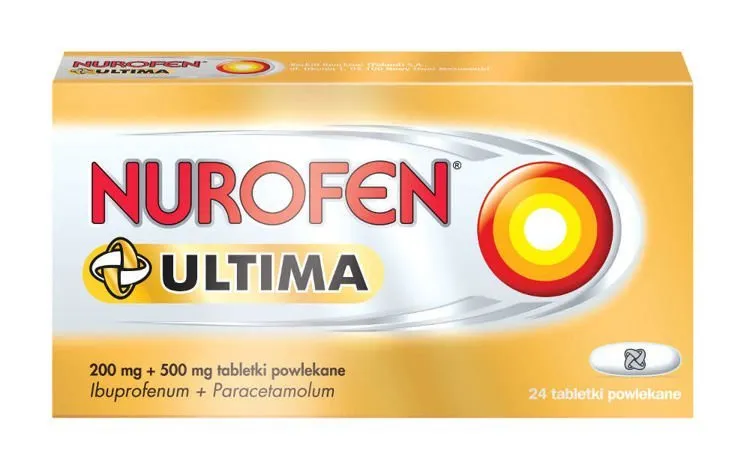
Table of Contents
Package leaflet: Information for the user
Nurofen Ultima
200 mg + 500 mg, coated tablets
Ibuprofenum / Paracetamolum
Please read all of this leaflet carefully before taking this medicine, because it contains
important information for the patient.
This medicine should always be used exactly as described in this patient leaflet or as directed by the
physician or pharmacist.
- Keep this leaflet so that you can read it again if necessary.
- If you need advice or further information, please consult your pharmacist.
- If you experience any adverse reactions, including any not listed in this leaflet, inform your doctor or pharmacist. See section 4.
- If there is no improvement after 3 days, or if you feel worse, you should consult your doctor.
Table of contents of the leaflet
- What Nurofen Ultima is and what it is used for
- Important information before taking Nurofen Ultima
- How to take Nurofen Ultima
- Possible side effects
- How to store Nurofen Ultima
- Contents of the pack and other information
1. What Nurofen Ultima is and what it is used for
This medicine contains two active substances (the components responsible for the effect of the medicine): ibuprofen and paracetamol. Ibuprofen belongs to a group of medicines known as non-steroidal anti-inflammatory drugs (NSAIDs). NSAIDs work by reducing pain and inflammation. Paracetamol is a pain-relieving medicine that acts differently from ibuprofen to relieve pain.
Nurofen Ultima is intended for use in adults only, for the short-term symptomatic treatment of mild to moderate pain associated with migraine, headache, back pain, menstrual pain, toothache, muscle pain, pain related to cold and flu, and sore throat.
This medicine is particularly suitable for pain that cannot be relieved by ibuprofen or paracetamol alone.
2. Important information before using Nurofen Ultima
When not to use Nurofen Ultima
- if the patient is allergic to ibuprofen, paracetamol, or any of the other ingredients of this medicine (listed in section 6).
- if the patient is taking other products containing paracetamol.
- if the patient is taking any other pain-relieving medicines, such as ibuprofen, high-dose acetylsalicylic acid (above 75 mg per day), or other non-steroidal anti-inflammatory drugs (NSAIDs), including cyclo-oxygenase-2 (COX-2) inhibitors.
- if the patient is allergic to acetylsalicylic acid or other pain-relieving medicines from the NSAID group.
- if the patient currently has or has previously had ulcers or bleeding in the stomach or duodenum (small intestine).
- if the patient has blood clotting disorders.
- if the patient has heart, liver, or kidney failure.
- if the patient is in the last 3 months of pregnancy.
- in individuals under 18 years of age.
Warnings and precautions
Before starting to use Nurofen Ultima, discuss this with your doctor or pharmacist if:
- the patient has an infection – see section "Infections" below.
- in elderly individuals.
- if the patient has asthma or a history of asthma.
- if the patient has kidney, heart, liver, or intestinal function disorders. If the patient has impaired kidney or liver function, a lower dose or longer intervals between doses may be necessary.
- if the patient has low body weight (less than 50 kg), is malnourished, or has alcoholic liver disease.
- if the patient has been diagnosed with a condition known as haemolytic anaemia (low red blood cell count) or lacks a certain enzyme (a protein called glucose-6-phosphate dehydrogenase).
- if the patient has systemic lupus erythematosus (SLE) – an autoimmune disease affecting connective tissue, causing joint pain, skin changes, and organ dysfunction – or another mixed connective tissue disease.
- if the patient has gastrointestinal disorders or chronic inflammatory bowel diseases (e.g. ulcerative colitis, Crohn's disease).
- during the first 6 months of pregnancy or while breastfeeding.
- if the patient plans to become pregnant.
While using Nurofen Ultima, inform your doctor immediately if the patient develops severe illnesses, including severe kidney dysfunction or sepsis (when bacteria and their toxins circulate in the blood, leading to organ damage), malnutrition, chronic alcoholism, or if the patient is also taking flucloxacillin (an antibiotic).
Cases of a serious condition called metabolic acidosis (abnormality in blood and body fluids) have been reported in patients taking paracetamol regularly for prolonged periods or taking paracetamol together with flucloxacillin. Symptoms of metabolic acidosis may include: severe breathing difficulties, including rapid deep breathing, drowsiness, nausea, and vomiting.
Infections
This medicine may mask symptoms of infection, such as fever and pain. Therefore, this medicine may delay appropriate treatment of infection and consequently increase the risk of complications. This has been observed in bacterial pneumonia and bacterial skin infections associated with chickenpox. If the patient takes this medicine during an infection and infection symptoms persist or worsen, seek immediate medical advice.
Skin reactions
Severe skin reactions have occurred with the use of ibuprofen, such as exfoliative dermatitis, erythema multiforme, Stevens-Johnson syndrome, toxic epidermal necrolysis, drug reaction with eosinophilia and systemic symptoms (DRESS), and acute generalized exanthematous pustulosis (AGEP). If the patient experiences any of the symptoms related to these severe skin reactions described in section 4, stop taking Nurofen Ultima immediately and seek medical help.
Taking anti-inflammatory/pain-relieving medicines such as ibuprofen may be associated with a small increased risk of heart attack or stroke, especially when used at high doses. Do not exceed the recommended dose or duration of treatment.
Before using this medicine, the patient should discuss treatment with a doctor or pharmacist if:
- the patient has heart conditions such as heart failure, angina (chest pain), history of heart attack, coronary artery bypass surgery, peripheral arterial disease (poor blood circulation in the legs due to narrowed or blocked arteries), or has had any stroke (including mini-stroke or transient ischaemic attack – TIA).
- the patient has high blood pressure, diabetes, high cholesterol levels, a family history of heart disease or stroke, or if the patient smokes.
Allergic reactions to ibuprofen have occurred, including breathing difficulties, facial and neck swelling (angioedema), and chest pain. If any of these symptoms occur, stop taking Nurofen Ultima immediately and contact a doctor or emergency medical services without delay.
Children and adolescents
This medicine is not intended for use in children and adolescents under 18 years of age.
Nurofen Ultima and other medicines:
Do not take Nurofen Ultima with:
- other products containing paracetamol
- other products containing NSAIDs, such as acetylsalicylic acid, ibuprofen.
Exercise special caution, as some medicines may interact with this medicine, for example:
- corticosteroids in tablet form
- antibiotics (e.g. chloramphenicol or quinolones)
- antiemetics (e.g. metoclopramide, domperidone)
- anticoagulant medicines (i.e. blood thinners/preventing blood clots) (e.g. warfarin, acetylsalicylic acid, ticlopidine)
- medicines that stimulate heart function (e.g. cardiac glycosides)
- medicines used in patients with high cholesterol (e.g. cholestyramine)
- diuretics (medicines that help eliminate excess water)
- medicines that lower blood pressure (e.g. ACE inhibitors such as captopril, beta-blockers such as atenolol, angiotensin II receptor antagonists such as losartan)
- medicines that suppress the immune response (e.g. methotrexate, cyclosporine, tacrolimus)
- medicines used in mania or depression (e.g. lithium or SSRIs)
- mifepristone (a medicine used to terminate pregnancy)
- medicines used in the treatment of HIV (e.g. zidovudine)
Inform your doctor or pharmacist if the patient is taking:
- flucloxacillin (an antibiotic), due to the serious risk of blood and body fluid disorders (called metabolic acidosis with increased anion gap), which require immediate treatment (see section 2).
Before taking Nurofen Ultima with other medicines, always consult a doctor or pharmacist. Some other medicines may be affected by or may affect treatment with this medicine. Therefore, always consult a doctor or pharmacist before using this medicine with other medicines.
Nurofen Ultima with food and drink
To reduce the likelihood of adverse effects, this medicine should be taken with food.
Pregnancy, breastfeeding, and fertility
If the patient is pregnant, breastfeeding, suspects she may be pregnant, or plans to become pregnant, she should consult a doctor or pharmacist before using this medicine.
Pregnancy
Do not take Nurofen Ultima during the last 3 months of pregnancy, as it may harm the unborn child or cause complications during delivery. Use of Nurofen Ultima may cause kidney and heart problems in the unborn child. It may also affect bleeding tendencies in both mother and child and may delay or prolong labour.
Do not take Nurofen Ultima during the first 6 months of pregnancy unless absolutely necessary and recommended by a doctor. If treatment is required during this period or when trying to conceive, use the lowest dose for the shortest possible time. Taking Nurofen Ultima for more than a few days after the 20th week of pregnancy may cause kidney problems in the unborn child and lead to reduced amniotic fluid levels surrounding the baby (oligohydramnios), or narrowing of a blood vessel (ductus arteriosus) in the baby's heart. If longer-term treatment is required, the doctor may recommend additional monitoring tests.
Breastfeeding
Ibuprofen and its metabolites may pass into breast milk in small amounts. The medicine may be used during breastfeeding if taken at the recommended dose and for the shortest possible duration.
Female fertility
This medicine may cause difficulties in becoming pregnant. Ibuprofen belongs to a group of medicines that may adversely affect female fertility. This effect is reversible upon discontinuation of the medicine. Inform your doctor if the patient plans to become pregnant or experiences difficulties conceiving.
Driving and operating machinery
This medicine may cause dizziness, concentration disturbances, and drowsiness. If such side effects occur, do not drive or operate machinery.
Nurofen Ultima contains sodium
The medicine contains less than 1 mmol (23 mg) of sodium per dose, meaning the medicine is considered "sodium-free".
3. How to use Nurofen Ultima
This medicine should always be used exactly as described in this patient leaflet or as directed by a doctor or pharmacist.
If in doubt, consult a doctor or pharmacist.
Do not use this medicine for longer than 3 days.
This medicine is for oral use and is intended for short-term use only (not longer than 3 days).
If symptoms worsen or persist, or if continued use of the medicine is required for more than 3 days, consult a doctor.
Use the lowest effective dose for the shortest duration necessary to relieve symptoms.
In case of infection, contact a doctor immediately if symptoms (such as fever and pain) persist or worsen (see section 2).
To reduce the likelihood of adverse effects, take this medicine with food and drink.
Recommended dose:
Adults
1 tablet with food and drink, up to 3 times daily. At least a 6-hour interval must be maintained between doses.
If symptoms are not relieved after taking one tablet, a maximum of two tablets may be taken up to three times daily.
Do not take more than six tablets within 24 hours (corresponding to 1200 mg of ibuprofen and 3000 mg of paracetamol per day).
Use in children and adolescents
Do not use in children and adolescents under 18 years of age.
Overdose of Nurofen Ultima
If a patient takes more than the recommended dose of Nurofen Ultima or if a child accidentally ingests the medicine, always consult a doctor or go to the nearest hospital for advice on possible health risks and actions to take.
Symptoms of overdose may include nausea, stomach pain, vomiting (possibly with blood), headache, tinnitus, confusion, and nystagmus. After a large dose, drowsiness, chest pain, palpitations, loss of consciousness, seizures (mainly in children), weakness, dizziness, blood in urine, low blood potassium levels, feeling cold, and breathing difficulties have occurred.
In case of overdose, seek medical advice immediately, even if the patient feels well, due to the risk of delayed, severe liver damage. Some patients are at increased risk of liver damage from paracetamol overdose. These include patients with liver disease, elderly individuals or children, those undergoing long-term treatment with antiepileptic drugs (such as carbamazepine, phenobarbital, phenytoin, and primidone), medicines used to treat tuberculosis (rifampicin and isoniazid), and St. John’s wort (a herbal remedy used to treat depression). Patients who consume excessive amounts of alcohol, patients with eating disorders, cystic fibrosis (a lung disease), HIV infection, malnutrition, or significant weight loss are also at increased risk of liver damage.
Missed dose of Nurofen Ultima
Do not take a double dose to make up for a missed dose. If a dose is missed, take it as soon as remembered, then take the next dose no sooner than 6 hours after.
4. Possible adverse effects
Like all medicines, this medicine can cause adverse effects, although not everyone will experience them.
STOP TAKING the medicine and contact your doctor immediately if any of the following occur:
- Heartburn, indigestion.
- Symptoms of gastrointestinal bleeding (severe abdominal pain, vomiting blood or dark particles resembling coffee grounds, blood in stool, black tarry stools).
- Symptoms of meningitis such as neck stiffness, headache, nausea or vomiting, fever, or feeling confused.
- Symptoms of severe allergic reaction (swelling of the face, tongue or throat, difficulty breathing or worsening of asthma).
- Red, flat, target-like or circular spots on the trunk, often with blisters in the centre, peeling skin, mouth ulcers, lesions in the throat, nose, genitals and eyes. These severe skin rashes may be preceded by fever and flu-like symptoms (skin exfoliation, erythema multiforme, Stevens-Johnson syndrome, toxic epidermal necrolysis).
- Widespread rash, high fever and swollen lymph nodes (DRESS syndrome).
- Red, scaly rash with subcutaneous nodules and blisters, accompanied by fever. Symptoms usually appear at the beginning of treatment (acute generalized exanthematous pustulosis).
Other possible adverse effects
Common (occur in less than 1 in 10 people):
- Abdominal pain or discomfort, nausea or vomiting, diarrhoea, indigestion.
- Excessive sweating.
- Swelling.
- Increased alanine aminotransferase, gamma-glutamyl transferase activity and abnormal liver function tests with paracetamol. Increased blood creatinine and urea levels.
Uncommon (occur in less than 1 in 100 people):
-
Headache and dizziness.
-
Flatulence and constipation, rash.
-
Skin rash, facial swelling and itching.
-
Peptic ulcer, exacerbation of ulcerative colitis and Crohn's disease, gastrointestinal perforation or bleeding, vomiting blood, gastric mucosal inflammation and pancreatitis.
-
Decreased red blood cell count or increased platelet count (responsible for blood clotting).
-
Increased aspartate aminotransferase activity, increased alkaline phosphatase blood concentration, increased creatine kinase blood concentration, decreased haemoglobin concentration and increased platelet count.
Rare (occur in less than 1 in 1,000 people):
- Tingling, numbness or itching (feeling of needles pricking the skin).
Very rare (occur in less than 1 in 10,000 people):
- Haematopoietic disorders such as decreased blood cell counts (manifesting as sore throat, oral cavity ulcers, flu-like symptoms, severe fatigue, unexplained bleeding, bruising and nosebleeds).
- Severe hypersensitivity reactions.
- Visual disturbances, tinnitus, confusion.
- Disorientation, depression, hallucinations.
- Meningitis, optic neuritis and drowsiness.
- Respiratory system reactivity, including asthma, worsening of asthma, bronchospasm, shortness of breath.
- Fatigue, general malaise.
- Cases of severe skin reactions such as blister formation have been reported.
- High blood pressure, fluid retention.
- Liver function disorders (manifesting as yellowing of the skin and whites of the eyes).
- Kidney function disorders (manifesting as increased or decreased urine output, swelling of the legs).
- Heart function disorders (causing shortness of breath).
Frequency not known (frequency cannot be estimated from available data):
- Severe skin reactions known as DRESS syndrome may occur. Symptoms of DRESS syndrome include: skin rash, fever, swollen lymph nodes and increased eosinophil count (a type of white blood cells).
- Red, scaly rash with subcutaneous nodules and blisters, mainly located in skin folds, trunk and upper limbs, with fever occurring at the beginning of treatment (acute generalized exanthematous pustulosis). If such symptoms occur, stop taking this medicine and seek medical help immediately. See also section 2.
- Chest pain, which may be a symptom of a potentially serious allergic reaction called Kounis syndrome.
- Skin becomes sensitive to light.
- A serious condition which may cause the blood to become more acidic (so-called metabolic acidosis), in patients with severe disease taking paracetamol (see section 2).
Medicines such as this one may be associated with a small increased risk of heart attack ("myocardial infarction") or stroke (see section 2).
Reporting of adverse effects
If any adverse effects occur, including any not listed in this leaflet, tell your doctor, pharmacist or nurse. Adverse effects can be reported directly to the Department of Monitoring Adverse Drug Reactions of the Office for Registration of Medicinal Products, Medical Devices and Biocidal Products:
Al. Jerozolimskie 181C, 02-222 Warsaw, tel.: 22 49-21-301, fax: 22 49-21-309, website:
https://smz.ezdrowie.gov.pl
Adverse effects can also be reported to the marketing authorisation holder.
Reporting adverse effects helps provide more information on the safety of the medicine.
5. How to store Nurofen Ultima
Keep this medicine out of the sight and reach of children.
Do not use this medicine after the expiry date stated on the blister and outer packaging following EXP.
The expiry date refers to the last day of the stated month.
No special storage instructions apply.
Medicines must not be disposed of via the sewage system or household waste. Ask your pharmacist how to dispose of medicines no longer in use. This will help protect the environment.
6. Contents of the packaging and other information
What Nurofen Ultima contains
- The active substances are ibuprofen and paracetamol. Each coated tablet contains 200 mg of ibuprofen and 500 mg of paracetamol.
- Other ingredients: sodium croscarmellose, microcrystalline cellulose, colloidal anhydrous silica (E 551), magnesium stearate, stearic acid. The tablet coating contains: polyvinyl alcohol (E 1203), titanium dioxide (E 171), talc (E 553b), macrogol/PEG 4000 (E 1521), potassium aluminium silicate (E 555), polysorbate (E 433).
What Nurofen Ultima looks like and contents of the pack
Nurofen Ultima tablets are white to almost white, oval-shaped, film-coated tablets with a pearly sheen and an embossed helix identification mark.
The tablets are available in blister packs containing 6, 8, 10, 12, 16, 20, 24, or 32 tablets. Not all pack sizes may be marketed.
Marketing Authorisation Holder
Reckitt Benckiser (Poland) S.A.
ul. Okunin 1
05-100 Nowy Dwór Mazowiecki
Patient information line number: +48 22 211 26 92
Importer
RB NL Brands B.V.
WTC Schiphol Airport,
Schiphol Boulevard 207,
1118 BH Schiphol,
The Netherlands