Nurofen for children
Poland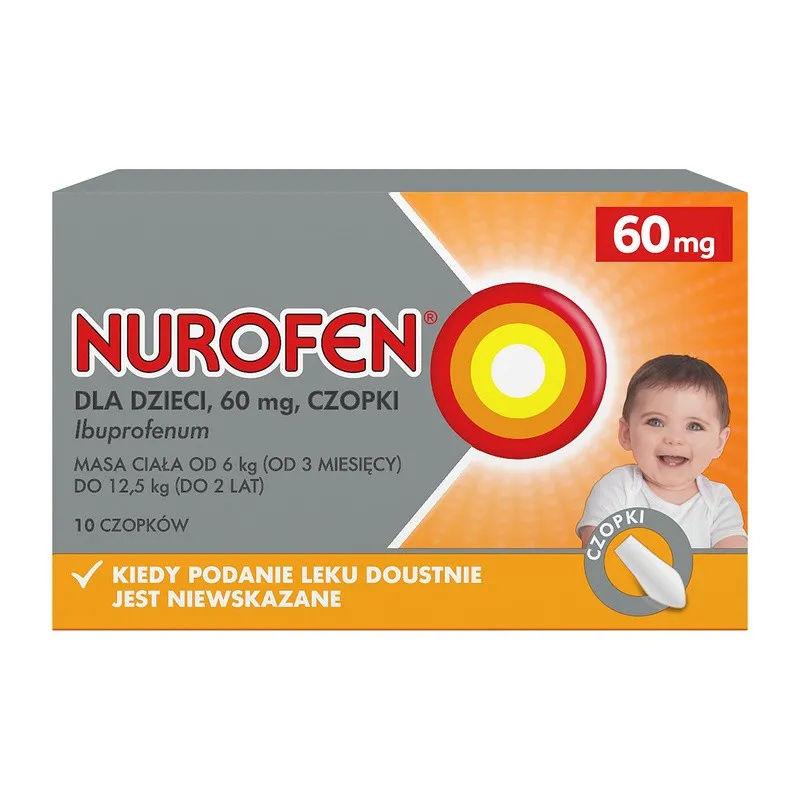
Table of Contents
- Patient Information Leaflet: Information for the User
- 1. What is Nurofen pentru copii and what is it used for
- 2. Important information before using Nurofen for Children
- 3. How to use Nurofen dla dzieci
- 4. Possible adverse reactions
- 5. How to store Nurofen for Children
- 6. Contents of the pack and other information
Patient Information Leaflet: Information for the User
Warning! Keep this leaflet! Information on the immediate packaging in a foreign language
Nurofen pentru copii 125 mg (Nurofen dla dzieci 125 mg), 125 mg, suppositories
Ibuprofenum
Nurofen dla dzieci and Nurofen pentru copii 125 mg are different trade names for the same medicine.
Please read this leaflet carefully before using the medicine, as it contains
important information for the patient.
This medicine should always be used exactly as described in this patient leaflet or as directed by a
doctor or pharmacist.
- Keep this leaflet for future reference.
- If you need advice or further information, please consult your pharmacist.
- If you experience any adverse reactions, including any possible side effects not listed in this leaflet, inform your doctor or pharmacist. See section 4.
- Contact your doctor if symptoms worsen or do not improve after 3 days.
Table of Contents
- What is Nurofen pentru copii and what is it used for
- Important information before using Nurofen pentru copii
- How to use Nurofen pentru copii
- Possible side effects
- How to store Nurofen pentru copii
- Contents of the pack and other information
1. What is Nurofen pentru copii and what is it used for
Nurofen pentru copii is an analgesic, antipyretic and anti-inflammatory medicine belonging to the group of non-steroidal anti-inflammatory drugs (NSAIDs).
The clinical efficacy of ibuprofen has been demonstrated in the treatment of mild to moderate pain such as teething pain and toothache, headache, earache, sore throat, postoperative pain, soft tissue injury pain, fever including fever due to post-vaccination reactions, as well as fever and pain associated with colds and influenza.
Nurofen pentru copii suppositories are indicated when oral administration is not possible or causes vomiting.
2. Important information before using Nurofen for Children
When not to use Nurofen for Children
- If the patient is allergic to ibuprofen or other non-steroidal anti-inflammatory drugs (NSAIDs), or to any of the other ingredients listed in section 6.
- If the patient has previously experienced hypersensitivity reactions (e.g. bronchospasm, asthma, rhinitis, or urticaria) after taking ibuprofen, acetylsalicylic acid, or other NSAIDs.
- If the patient currently has or has had a peptic ulcer or (and) duodenal ulcer, or gastrointestinal bleeding (two or more confirmed episodes of ulceration or bleeding).
- If the patient has severe liver or kidney failure, or uncontrolled heart failure.
- If the patient is in the last three months of pregnancy (see section 4).
Warnings and precautions
Important information before taking Nurofen for Children:
Allergic reactions to ibuprofen, including difficulty breathing, facial and neck swelling (angioedema), and chest pain, have been reported during treatment with this medicine.
If any of these symptoms occur, Nurofen for Children must be discontinued immediately and medical advice or emergency medical services should be sought without delay.
Particular caution should be observed when using Nurofen for Children:
- In patients with infections – see below, section titled "Infections",
- In patients with connective tissue disorders (systemic lupus erythematosus) or who are taking other NSAIDs,
- In patients with gastrointestinal disorders, including chronic inflammatory bowel disease, duodenal ulcer, Crohn’s disease, or anorectal disorders,
- In patients with hypertension and (or) heart failure,
- In patients with renal impairment – dehydrated children are at risk of impaired kidney function,
- In patients with hepatic dysfunction.
Serious skin reactions such as exfoliative dermatitis, erythema multiforme, Stevens-Johnson syndrome, toxic epidermal necrolysis, drug reaction with eosinophilia and systemic symptoms (DRESS), and acute generalized exanthematous pustulosis (AGEP) have been reported during ibuprofen use. If any of the symptoms associated with serious skin reactions described in section 4 occur, Nurofen for Children must be discontinued immediately and medical help should be sought.
The use of the medicinal product at the lowest effective dose for the shortest duration necessary to relieve symptoms reduces the risk of adverse effects (see effects on the gastrointestinal tract and cardiovascular system below).
Elderly patients are more susceptible to adverse effects.
There is a risk of gastrointestinal bleeding or ulceration/perforation, which may occur without warning symptoms and may affect patients with or without a history of gastrointestinal disorders. If gastrointestinal bleeding or ulceration occurs, the drug must be discontinued immediately and a physician should be consulted.
Bronchospasm may occur in patients with bronchial asthma, chronic rhinitis, sinusitis, nasal polyps, or a history of allergy.
The use of medicines such as Nurofen for Children may be associated with a small increased risk of heart attack (myocardial infarction) or stroke. This risk increases with prolonged use of high doses. Doses higher than recommended or treatment longer than recommended (3 days) should not be used.
If the patient has heart problems, has had a stroke, or is suspected of being at risk of such conditions (e.g. high blood pressure, diabetes, high cholesterol, smoking), the treatment should be discussed with a doctor or pharmacist.
This medicine belongs to a group of medicines (non-steroidal anti-inflammatory drugs) that may adversely affect female fertility. This effect is reversible and resolves upon discontinuation of treatment.
Very rarely, severe and sometimes fatal skin reactions have been reported after NSAID use, including exfoliative dermatitis, Stevens-Johnson syndrome, and toxic epidermal necrolysis. Patients appear to be at higher risk of such reactions early in treatment, with most cases occurring within the first month of therapy. Ibuprofen should be discontinued at the first appearance of symptoms such as skin rash, mucosal lesions, or other hypersensitivity symptoms.
Particular caution is required in patients immediately after major surgical procedures.
Infections
Nurofen for Children may mask symptoms of infection such as fever and pain. Therefore, Nurofen for Children may delay appropriate treatment of infection and consequently increase the risk of complications. This has been observed in bacterial pneumonia and bacterial skin infections associated with varicella. If this medicine is taken during an existing infection, appropriate monitoring is advised.
In patients with heart, kidney, or liver failure, who are receiving diuretics or who have significant fluid loss due to major surgery, a physician may consider monitoring kidney function.
The use of ibuprofen is not recommended in patients with varicella. Varicella may trigger severe skin infections and soft tissue complications. A potential aggravating effect of ibuprofen on these infections cannot currently be excluded.
Nurofen for Children and other medicines
Inform your doctor about all medicines you are currently taking, including those obtained without a prescription.
Concomitant use of ibuprofen with the following medicines should be avoided:
- Acetylsalicylic acid, except for low-dose acetylsalicylic acid (not more than 75 mg per day) prescribed by a doctor, due to the possible increased risk of adverse effects;
- Other NSAIDs, including selective cyclooxygenase-2 (COX-2) inhibitors.
Caution is advised when using ibuprofen concomitantly with the following medicines:
- Anticoagulants – limited data suggest an increased risk of bleeding.
- Antihypertensive drugs and diuretics – NSAIDs may reduce their effectiveness. There is an increased risk of adverse renal effects such as hyperkalemia. Physicians may recommend high fluid intake in patients who develop such disorders.
- Corticosteroids – increased risk of gastrointestinal ulceration or bleeding.
- Antiplatelet agents and selective serotonin reuptake inhibitors (SSRIs) – increased risk of gastrointestinal bleeding.
- Cardiac glycosides – NSAIDs may exacerbate heart failure, reduce glomerular filtration rate (GFR), and increase serum glycoside levels.
- Lithium – NSAIDs may increase serum lithium levels.
- Methotrexate – NSAIDs may increase serum methotrexate levels.
- Tacrolimus – increased risk of kidney damage.
- Cyclosporine – NSAIDs may increase the risk of kidney damage.
- Mifepristone – NSAIDs should not be used during the 8–12 days following mifepristone administration, as they may reduce the effectiveness of mifepristone.
- Zidovudine – NSAIDs may increase the risk of prolonged bleeding time.
- Quinolone antibiotics – animal studies suggest that NSAIDs may increase the risk of seizures associated with quinolone antibiotics. Patients taking both NSAIDs and quinolones may be at increased risk of seizures.
Pregnancy, breastfeeding, and effects on fertility
This medicine is intended for children. The information below refers to the active substance, ibuprofen.
Pregnancy
Do not take Nurofen for Children during the last three months of pregnancy, as it may harm the unborn child or cause complications during delivery. Use of Nurofen for Children may cause kidney and heart problems in the unborn child. It may also affect bleeding tendency in both mother and child and may delay or prolong labor. Nurofen for Children should not be taken during the first 6 months of pregnancy unless clearly necessary and recommended by a doctor. If treatment is required during this period or during attempts to conceive, the lowest effective dose should be used for the shortest possible time.
Prolonged use of Nurofen for Children for more than a few days beyond the 20th week of pregnancy may cause kidney dysfunction in the unborn child, leading to reduced amniotic fluid levels (oligohydramnios) or narrowing of a blood vessel (ductus arteriosus) in the child’s heart. If longer-term treatment is required, the doctor may recommend additional monitoring tests.
Inhibition of prostaglandin synthesis may adversely affect pregnancy and (or) embryonic or fetal development. Epidemiological data suggest an increased risk of miscarriage and congenital heart defects and gastroschisis following the use of prostaglandin synthesis inhibitors in early pregnancy. The absolute risk of cardiovascular malformations increases from less than 1% to about 1.5%. The risk is considered to increase with dose and duration of treatment.
In animal studies, administration of prostaglandin synthesis inhibitors has been shown to increase the frequency of pre- and post-implantation pregnancy loss and embryo-fetal death. Furthermore, in animals receiving prostaglandin synthesis inhibitors during organogenesis, an increased incidence of various developmental abnormalities, including cardiovascular malformations, has been reported.
Breastfeeding
Consult a doctor before using this medicine. Ibuprofen may pass into breast milk in small amounts. No harmful effects on the breastfed infant have been reported to date; therefore, during short-term use of ibuprofen at the recommended dose, interruption of breastfeeding is usually not necessary.
Effects on fertility
Ibuprofen may impair female fertility. This effect is reversible upon discontinuation of the drug.
Driving and operating machinery
During short-term use, Nurofen for Children does not affect the ability to drive or operate machinery.
3. How to use Nurofen dla dzieci
Use the lowest effective dose for the shortest duration necessary to relieve symptoms. If symptoms of infection (such as fever and pain) persist or worsen, consult a doctor immediately (see section 2).
If you have any doubts about using Nurofen dla dzieci, contact your doctor.
Method of administration: Administer rectally.
Remove the suppository from the aluminium foil blister and insert it into the rectum, preferably after the child has passed a stool. To facilitate insertion, the suppository may be warmed in the hand or briefly immersed in warm water.
Nurofen dla dzieci suppositories should be administered at a dose of 20 mg to 30 mg of ibuprofen per kilogram of body weight, divided into 3 to 4 doses according to the following dosing schedule:
For children weighing 12.5 kg to 17 kg (aged 2 to 4 years): Initial dose is 1 suppository. If needed, administer another 1 suppository every 6 to 8 hours. Do not exceed 3 suppositories (375 mg of ibuprofen) in 24 hours.
For children weighing 17 kg to 20.5 kg (aged 4 to 6 years): Initial dose is 1 suppository. If needed, administer another 1 suppository every 6 hours. Do not exceed 4 suppositories (500 mg of ibuprofen) in 24 hours.
Nurofen dla dzieci should not be used in children weighing less than 12.5 kg, as lower-dose ibuprofen products are recommended for these children.
Patients with impaired kidney or liver function should consult a doctor before using Nurofen dla dzieci.
If fever or pain does not subside or worsens despite treatment, contact a doctor.
Use of a higher than recommended dose of Nurofen dla dzieci
If a patient uses more than the recommended dose of Nurofen dla dzieci, or if a child accidentally ingests the medicine, always contact a doctor or go to the nearest hospital for assessment of potential health risks and advice on necessary actions.
Symptoms of overdose may include nausea, stomach pain, vomiting (possibly with blood), headache, tinnitus, confusion, and nystagmus. After ingestion of a large dose, drowsiness, chest pain, palpitations, loss of consciousness, seizures (especially in children), weakness, dizziness, blood in urine, low blood potassium levels, feeling cold, and breathing difficulties may occur.
Other possible symptoms include dizziness, visual disturbances, and kidney failure.
Additionally, low blood pressure and slowed breathing may occur.
There is no specific antidote.
Missed dose of Nurofen dla dzieci
Do not take a double dose to make up for a missed dose.
4. Possible adverse reactions
Like any medicine, Nurofen dla dzieci in suppository form may cause adverse reactions.
The adverse reactions listed below have been observed in patients who have taken ibuprofen
for short-term treatment of mild to moderate pain or fever. Other adverse reactions may occur
when ibuprofen is used for other indications or over a prolonged period.
Adverse reactions are listed according to frequency using the following terms:
Not very common: occur in less than 1 in 100 but more than 1 in 1,000 patients.
- Hypersensitivity with urticaria and itching.
- Headache.
- Abdominal pain, nausea, and dyspepsia.
- Skin rash.
Rare: occur in less than 1 in 1,000 but more than 1 in 10,000 patients.
- Diarrhea, flatulence, constipation, vomiting.
Very rare: occur in less than 1 in 10,000 patients.
- Skin infection.
- Blood disorders.
- Severe hypersensitivity reactions, including facial, tongue, and throat swelling, dyspnea, tachycardia, and hypotension (anaphylaxis, angioedema, or severe shock).
- Aseptic meningitis.
- Bullous reactions, including Stevens-Johnson syndrome, erythema multiforme, and toxic epidermal necrolysis.
- Acute renal failure.
- Decreased hemoglobin concentration, decreased urea clearance.
- Liver function disorders.
- Peptic ulcer, gastrointestinal perforation or bleeding, tarry stools, and bloody vomiting, oral ulceration, and gastritis.
Frequency not known: frequency cannot be estimated from available data.
- Heart failure and edema.
- Hypertension.
- Respiratory tract reactivity, including asthma, bronchospasm, or dyspnea.
- Exacerbation of colitis and Crohn's disease.
- Skin becomes sensitive to light.
If any of the following symptoms occur in a patient, ibuprofen should be discontinued immediately and medical help should be sought:
- Red, non-raised, target-like or round spots on the trunk, often with blisters in the center, skin peeling, oral, pharyngeal, nasal, genital, or ocular ulcers. These severe skin rashes may be preceded by fever and flu-like symptoms (exfoliative dermatitis, erythema multiforme, Stevens-Johnson syndrome, toxic epidermal necrolysis);
- Widespread rash, high fever, and swollen lymph nodes (DRESS syndrome);
- Red, scaly rash with subcutaneous nodules and blisters, predominantly in skin folds, trunk, and upper limbs, accompanied by fever occurring at the beginning of treatment (acute generalized exanthematous pustulosis);
- Chest pain, which may be a symptom of a potentially serious allergic reaction called Kounis syndrome.
In some individuals, other adverse reactions may occur during treatment with Nurofen dla dzieci in suppository form. If any adverse reactions not listed in this leaflet occur, they should be reported to a doctor or pharmacist.
Reporting of adverse reactions
If any adverse reactions occur, including any not listed in this leaflet, inform your doctor or pharmacist. Adverse reactions can be reported directly to the Department of Monitoring of Adverse Drug Reactions, Office for Registration of Medicinal Products, Medical Devices and Biocidal Products, Al. Jerozolimskie 181C, 02-222 Warsaw, tel.: +48 22 49 21 301, fax: +48 22 49 21 309, website: https://smz.ezdrowie.gov.pl .
Reporting adverse reactions helps to provide more information on the safety of the medicine.
5. How to store Nurofen for Children
Keep this medicine out of sight and reach of children.
Do not use this medicine after the expiry date stated on the packaging. The expiry date refers to the last day of the stated month.
Store below 25°C.
Medicines must not be disposed of via the sewage system or household waste. Ask your pharmacist how to dispose of medicines no longer required. This will help protect the environment.
6. Contents of the pack and other information
What Nurofen dla dzieci contains
1 suppository contains
Active substance: 125 mg of ibuprofen
Excipient: semisynthetic glycerides.
What Nurofen dla dzieci looks like and contents of the pack
The suppositories are almost white or yellowish-white in colour and cylindrical in shape.
Pack contains 10 suppositories.
For more detailed information, please contact the responsible party or the parallel importer.
Marketing Authorisation Holder in Romania, country of export:
Reckitt Benckiser (România) SRL
Bulevardul Iancu de Hunedoara, No. 48, Crystal Tower Building, 11th Floor
Sector 1, Bucharest, Romania
Manufacturer:
Famar A.V.E.
Avlon Plant
49th km National Road, Athens-Lamia
190 11 Avlona, Attica, Greece
Parallel Importer:
InPharm Sp. z o.o.
ul. Strumykowa 28/11
03-138 Warsaw, Poland
Repackaged by:
InPharm Sp. z o.o. Services sp. k.
ul. Chełmżyńska 249
04-458 Warsaw, Poland
Marketing Authorisation Number in Romania, country of export: 7718/2015/01
Parallel Import Licence Number: 239/25