Nuodil
PolandTable of Contents
Package leaflet: Information for the patient
Nuodil, 18 micrograms per metered dose, inhalation powder in hard capsule
Tiotropium
Please read this leaflet carefully before using the medicine, as it contains
important information for the patient.
- Keep this leaflet so that you can read it again if necessary.
- If you have any questions, please consult your doctor or pharmacist.
- This medicine has been prescribed for a specific individual. Do not pass it on to others. The medicine may harm another person, even if their symptoms are the same.
- If the patient experiences any adverse reactions, including any adverse reactions not listed in this leaflet, inform your doctor or pharmacist. See section 4.
Table of contents
- What Nuodil is and what it is used for
- What you need to know before using Nuodil
- How to use Nuodil
- Possible side effects
- How to store Nuodil
- Contents of the pack and other information
1. What Nuodil is and what it is used for
Nuodil contains the active substance tiotropium and belongs to a group of medicines used in the treatment of obstructive respiratory diseases, specifically inhaled anticholinergic medicines.
Nuodil helps people with chronic obstructive pulmonary disease (COPD) to breathe more easily.
COPD is a chronic lung disease that causes breathlessness and cough. The term COPD refers to chronic bronchitis and emphysema. COPD is a chronic condition, therefore Nuodil must be taken daily, not only when breathing problems or other COPD symptoms occur.
Nuodil is a long-acting bronchodilator that helps widen the airways and allows air to flow in and out of the lungs more easily. Regular use of Nuodil may also help reduce persistent breathlessness associated with the disease and help lessen the impact of the disease on daily life. Daily use of Nuodil also helps prevent sudden, short-term worsening of COPD symptoms, which may last for several days. The effect of the medicine lasts for 24 hours; therefore, Nuodil should be taken only once daily.
Information on the correct dosage of Nuodil can be found later in this leaflet, in section 3, "How to use Nuodil" and in the "Instructions for use" at the end of the leaflet.
2. Important information before using Nuodil
When not to use Nuodil
- if the patient is allergic (hypersensitive) to tiotropium or any of the other ingredients of this medicine (listed in section 6).
- if the patient is allergic (hypersensitive) to atropine or its derivatives, such as ipratropium or oxytropium.
Warnings and precautions
Before starting treatment with Nuodil, discuss this with your doctor or pharmacist.
- Consult your doctor if the patient has narrow-angle glaucoma, problems with the prostate gland, or difficulty passing urine.
- If the patient has kidney function impairment, consult your doctor.
- Nuodil is indicated for maintenance treatment in patients with chronic obstructive pulmonary disease (COPD). It should not be used to treat sudden attacks of breathlessness or wheezing.
- Immediately after using Nuodil, immediate allergic reactions such as rash, swelling, itching, wheezing, or shortness of breath may occur. In such a case, contact your doctor immediately.
- Shortly after inhaling medicines such as Nuodil, a feeling of chest tightness, cough, wheezing, or shortness of breath may occur. In such a case, contact your doctor immediately.
- Care should be taken to avoid getting the powder into the eyes during inhalation, as this may cause the onset or worsening of symptoms of narrow-angle glaucoma, an eye condition. Eye pain or discomfort, blurred vision, seeing halos around lights, or changes in color vision, together with red eyes, may be signs of acute narrow-angle glaucoma. Eye disturbances may be accompanied by headache, nausea, and vomiting. If symptoms of narrow-angle glaucoma occur, discontinue tiotropium and contact your doctor immediately, preferably an ophthalmologist.
- Dryness of the oral mucosa, which may occur during treatment with Nuodil due to its anticholinergic effect, may lead to dental caries over time; therefore, maintaining good oral hygiene is important.
- If the patient has had a myocardial infarction within the last 6 months, or has experienced unstable or life-threatening cardiac arrhythmia or severe heart failure within the last year, inform the doctor. It is important to make an appropriate decision on whether Nuodil can be used in the patient.
- Nuodil should not be used more than once daily.
Children and adolescents
Nuodil is not recommended for children and adolescents under 18 years of age.
Nuodil with other medicines
Tell your doctor or pharmacist about all medicines the patient is currently using, has recently used, or plans to use.
Inform your doctor or pharmacist about other medicines used for lung disease, such as ipratropium or oxytropium.
No adverse effects have been reported when Nuodil is taken together with other medicines used in the treatment of COPD, such as: short-acting inhaled medicines, e.g., salbutamol, methylxanthines, e.g., theophylline, and/or oral and inhaled steroids, e.g., prednisolone.
Pregnancy and breastfeeding
If the patient is pregnant or breastfeeding, suspects she may be pregnant, or is planning to have a baby, she should consult her doctor or pharmacist before using this medicine.
Do not use this medicine unless advised by a doctor.
Driving and using machines
If dizziness, blurred vision, or headache occur, these conditions may affect the ability to drive or operate machinery.
Nuodil contains lactose
When used as recommended, i.e., one capsule per day, each dose of the medicine delivers 5.2 mg of monohydrate lactose.
If the patient has previously been diagnosed with intolerance to certain sugars, the patient should contact the doctor before taking this medicine.
3. How to use Nuodil
This medicine should always be used as directed by a physician or pharmacist. If in doubt,
consult a doctor or pharmacist.
The recommended dose is one inhalation of the contents of one capsule (18 micrograms of tiotropium) once daily.
Two inhalations should be taken from the same capsule (see the "Instructions for use" section at the end of this leaflet).
Do not use a higher dose than recommended.
Nuodil is not recommended for children and adolescents under 18 years of age.
The capsule should be taken at the same time each day. This is important because Nuodil works for 24 hours.
The capsules are for inhalation use only and must not be taken orally. Do not swallow the capsules.
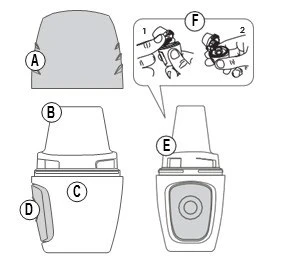
The Vertical-Haler inhaler, into which the Nuodil capsule is placed, pierces the capsule, allowing the powder inside to be inhaled.
Patients should ensure they have the inhaler and know how to use it correctly. Instructions for using the inhaler are provided later in this leaflet.
Make sure not to exhale into the Vertical-Haler inhaler.
If any difficulties arise when using the Vertical-Haler inhaler, contact a doctor, nurse, or pharmacist for guidance on the correct use.
The Vertical-Haler inhaler should be cleaned once a week. Cleaning instructions are provided later in this leaflet.
When using Nuodil, care should be taken to avoid getting the powder into the eyes. This may cause blurred vision, eye pain, and/or eye redness. Immediately rinse the eyes with warm water and contact a doctor without delay.
If breathing difficulties worsen, contact a doctor immediately.
Taking more Nuodil than recommended
If more than one capsule of Nuodil is taken per day, contact a doctor immediately. The risk of adverse effects may increase, such as dry mouth, constipation, difficulty in urination, rapid heartbeat, or blurred vision.
Missing a dose of Nuodil
If a dose of Nuodil is missed, it should be taken as soon as remembered.
Never take two doses at the same time or on the same day. The next dose should be taken at the usual time.
Stopping Nuodil treatment
Before stopping Nuodil, consult a doctor or pharmacist. Symptoms of COPD may worsen after discontinuing Nuodil.
If there are any further doubts about using this medicine, consult a doctor or pharmacist.
4. Possible adverse reactions
Like all medicines, this medicine can cause adverse reactions, although not everyone will experience them.
The adverse reactions described below have been reported by patients during treatment with this
medicine. The adverse reactions are listed according to their frequency of occurrence: common, uncommon,
rare or frequency not known.
Common (may affect up to 1 in less than 10 patients):
- dryness of the oral mucosa: usually mild in severity
Uncommon (may affect up to 1 in less than 100 patients):
- dizziness
- headache
- taste disturbances
- blurred vision
- irregular heartbeat (atrial fibrillation)
- sore throat (pharyngitis)
- hoarseness (dysphonia)
- cough
- heartburn (gastroesophageal reflux disease)
- constipation
- fungal infections of the mouth and throat (oral and pharyngeal candidiasis)
- rash
- difficulty in passing urine (urinary retention)
- painful urination
Rare (may affect up to 1 in less than 1,000 patients):
- difficulty sleeping (insomnia)
- seeing rainbow-colored halos around light sources or altered colour vision, accompanied by redness of the eyes (glaucoma)
- increased eye pressure (intraocular pressure)
- irregular heartbeat (supraventricular tachycardia)
- increased heart rate (tachycardia)
- sensation of rapid heartbeat (palpitations)
- chest tightness associated with cough, wheezing or shortness of breath occurring immediately after inhalation of the medicine (bronchospasm)
- nosebleeds
- laryngitis
- sinusitis
- intestinal blockage or absence of intestinal peristalsis (intestinal obstruction, including paralytic ileus)
- gingivitis
- glossitis
- difficulty swallowing (dysphagia)
- stomatitis
- nausea
- allergic (hypersensitivity) reactions, including immediate reactions
- severe allergic reaction which may cause swelling of the face or throat (angioedema)
- urticaria
- itching (pruritus)
- urinary tract infection
Frequency not known (frequency cannot be estimated from the available data):
- decreased amount of water in the body (dehydration)
- dental caries
- severe allergic reactions (anaphylactic reactions)
- skin infections or skin ulceration
- dry skin
- joint swelling
Severe adverse reactions such as allergic reactions, which may cause swelling of the face or throat (angioedema), or other hypersensitivity reactions (such as sudden drop in blood pressure or dizziness) may occur alone or as part of a severe allergic reaction (anaphylactic reaction) after administration of Nuodil. Additionally, as with other inhaled medicines, some patients may experience unexpected chest tightness, cough, wheezing or shortness of breath immediately after inhalation (bronchospasm). If any of these symptoms occur, contact a doctor immediately.
Reporting of adverse reactions
If any adverse reactions occur, including any adverse reactions not listed in this leaflet, inform a doctor, pharmacist or nurse.
Adverse reactions can be reported directly to the Department of Monitoring Adverse Drug Reactions of the Office for Registration of Medicinal Products, Medical Devices and Biocidal Products:
Al. Jerozolimskie 181C
02-222 Warsaw
tel.: + 48 22 49 21 301
fax: + 48 22 49 21 309
website: https://smz.ezdrowie.gov.pl
Adverse reactions can also be reported to the responsible entity.
Reporting adverse reactions helps provide more information on the safety of this medicine.
5. How to store Nuodil
Keep this medicine out of sight and reach of children.
Do not use this medicine after the expiry date stated on the outer carton or on the
blister after: EXP. The expiry date refers to the last day of the stated month.
The marking on the packaging after the abbreviation EXP indicates the expiry date, and after the abbreviation Lot indicates the batch number.
Dispose of the Vertical-Haler inhaler 90 days after first use.
Do not store above 30°C.
Medicines should not be disposed of via wastewater or household waste. Ask your pharmacist how to dispose of medicines no longer required. These measures will help protect the environment.
6. Contents of the package and other information
What Nuodil contains
- The active substance is tiotropium. Each capsule contains 22.5 micrograms of tiotropium bromide monohydrate, equivalent to 18 micrograms of tiotropium.
- The delivered dose during inhalation, measured at the mouthpiece of the Vertical-Haler inhaler, contains 10 micrograms of tiotropium.
- Other ingredients are: lactose monohydrate, gelatin, purified water, macrogol 4000, titanium dioxide (E 171), yellow iron oxide (E 172), and brilliant blue FCF (E 133).
What Nuodil looks like and contents of the pack
Nuodil is an inhalation powder in hard capsules. It consists of opaque green gelatin hard capsules containing a white powder.
The capsules are packed in blisters placed in a cardboard box, with or without an inhalator.
The Vertical-Haler is a single-dose inhaler with an orange mouthpiece and a white body. It is made of acrylonitrile-butadiene-styrene copolymer (ABS) plastic and stainless steel.
Materials that come into direct contact with the medicine during inhalation are: stainless steel 304 (piercing needles), and acrylonitrile-butadiene-styrene (ABS) (components of the mouthpiece through which the medicine is released and the capsule chamber).
Available pack sizes:
- Cardboard box containing 30 capsules and a dry powder inhaler
- Cardboard box containing 60 capsules and a dry powder inhaler
- Cardboard box containing 90 capsules and a dry powder inhaler
- Cardboard box containing 30 capsules
- Cardboard box containing 60 capsules
Not all pack sizes may be marketed.
Marketing Authorisation Holder
Zakłady Farmaceutyczne POLPHARMA S.A.
ul. Pelplińska 19,
83-200 Starogard Gdański
tel. +48 22 364 61 01
Manufacturer
Pharmadox Healthcare Limited
Kw20a Kordin Industrial Park
Paola, PLA 3000
Malta
This medicinal product is authorised in the European Economic Area under the following names:
Czech Republic - Tiotropium Polpharma
Poland - Nuodil
Instructions for use
Medical device: Dry powder inhaler
 | 1) Removing the cap
When using the inhaler, hands must
be clean and dry.
Firmly hold the base of the inhaler
and remove the cap from the side, as shown below.
(Fig. 1).
2) Opening the Vertical-Haler inhaler
To open the inhaler, firmly hold it by the base.
Press upwards with the fingertip on the area marked
with the symbol “ ” (Fig. 2).
3) Removing the capsule
Peel off the protective foil to remove the capsule
from the blister (Fig. 3).
4) Placing the capsule
Hold the open inhaler vertically.
Place the capsule into the chamber (Fig. 4).
Fig. 4 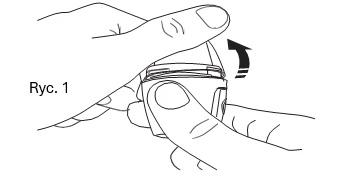  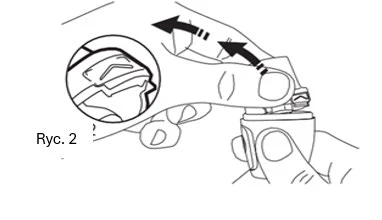 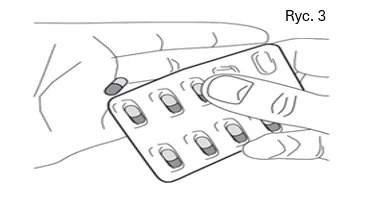 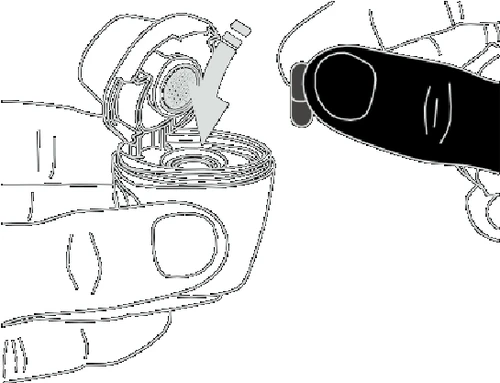 |
5) Checking correct capsule placement
The capsule should be positioned in the recess
of the chamber (Fig. 5).
6) Closing the Vertical-Haler inhaler
Hold the Vertical-Haler inhaler vertically
and close the mouthpiece. An audible "click"
confirms that the Vertical-Haler inhaler has been
properly closed (Fig. 6).
7) Piercing the capsule
Hold the inhaler vertically (Fig. 7)
and firmly press the side button
until resistance is felt. Slight resistance
confirms correct capsule piercing (Fig. 8).
If repeating step 5 is necessary, open the
capsule chamber (Fig. 2) to ensure the capsule
is correctly positioned in the recess (Fig. 5).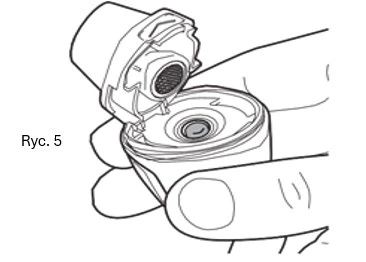 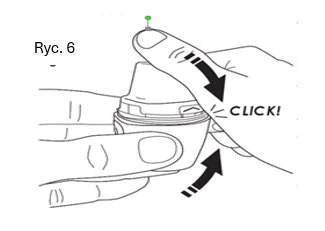 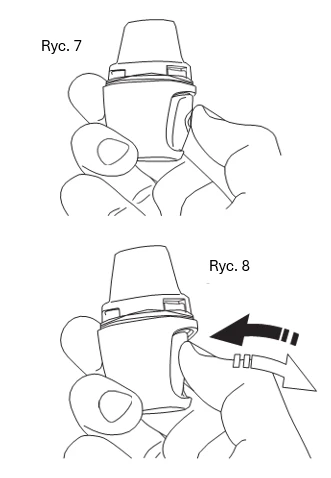 | 8) Performing a deep exhalation
Hold the inhaler away from the mouth
and perform a calm, deep exhalation
(Fig. 9). Hold your breath.
DO NOT blow into the inhaler. Moist air
blown into the inhaler may reduce
the inhaled dose.
9) Inhalation
Place the mouthpiece between the teeth
and seal lips tightly around it.
Inhale slowly and as deeply as possible (Fig. 11).
A vibrating sound confirms correct performance.
DO NOT cover the air inlets located directly
below the mouthpiece. Otherwise, optimal
drug release will not be ensured.
The vibrating sound confirms correct inhalation.
DO NOT press the side button during inhalation,
as this will block drug release. The vibrating sound
confirms correct inhalation.
Fig. 11 Fig. 12
10) Breath-holding
Hold your breath for at least 10 seconds.
Remove the inhaler from the mouth, then
breathe normally (Fig. 9).
This ensures drug deposition in the lungs.
Repeat steps 8–10 to ensure the full dose
has been delivered.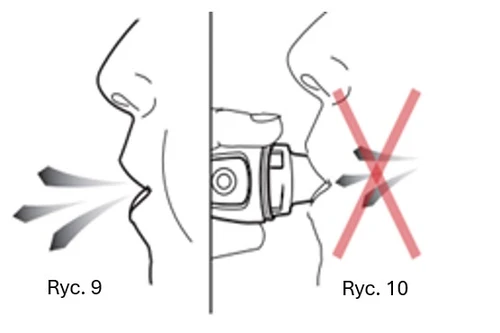 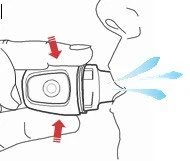 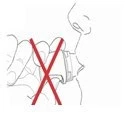 |
11) Checking the emptied capsule
Open the Vertical-Inhaler and check whether
any medicinal powder remains in the capsule.
If powder remains, repeat steps 8–11.
12) Emptying the Vertical-Haler inhaler
Remove the empty capsule (Fig. 13). The capsule
may have cracked into small fragments that could
have entered the oral cavity or throat. Do not
be concerned, as the capsule component is edible
and harmless.
13) Cleaning the Vertical-Haler inhaler
Clean the Vertical-Haler inhaler once a week.
Wipe the mouthpiece and capsule chamber
with a clean, dry cloth. Alternatively, use a soft,
clean brush to remove any residue remaining
inside the inhaler. Close the Vertical-Haler inhaler.
Replace the cap on the mouthpiece to protect
the device from contamination.
DO NOT use water or other aggressive
detergents to clean the device.
14) Rinsing the mouth
Rinse the mouth with water; do not swallow the water.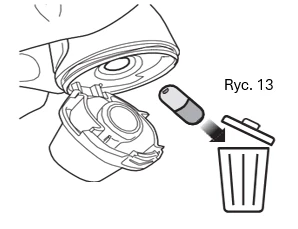 | 15) Disposal of the device The Vertical-Inhaler is intended for use only with the accompanying drug and no other. If the patient receives a new package with a new Vertical-Haler inhaler, remember to dispose of the old inhaler. Additional precautions: DO NOT share the Vertical-Haler inhaler with others. There is a serious risk of cross-infection. It may be disposed of with regular household waste. Use the inhaler only with the specified drug, as directed. DO NOT open the capsule or touch the powder. DO NOT place more than one capsule in the inhaler chamber or insert two different drugs. Background noise may interfere with hearing whether the device is functioning properly. It is recommended to use the inhaler in a quiet room. For additional information on inhaler use, contact your doctor or pharmacist. DO NOT disassemble the inhaler. If any problems occur during use of the medical device (inhaler), the patient should return it to the responsible entity or its representative in packaging ensuring physical integrity. All serious incidents occurring after use of the medical device must be reported to the responsible entity holding the marketing authorization and to the relevant national supervisory authority. |