Novothyral 75
Poland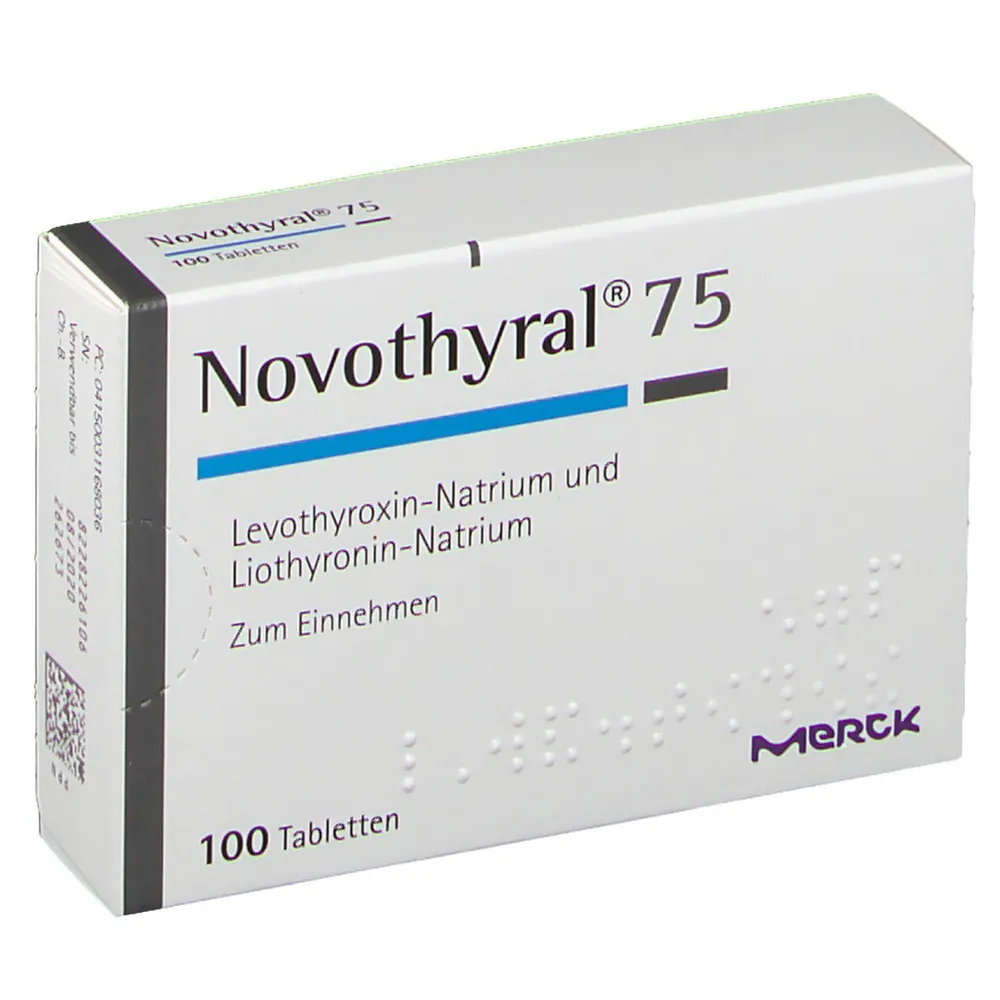
Table of Contents
Package leaflet: Information for the patient
Novothyral 75, 75 µg + 15 µg, tablets
Levothyroxinum natricum + Liothyroninum natricum
Please read this leaflet carefully before using the medicine, as it contains important information for the patient.
- Keep this leaflet for future reference.
- If you have any questions, consult your doctor or pharmacist.
- This medicine has been prescribed for a specific individual. Do not share it with others. This medicine may harm other people, even if their symptoms are the same.
- If you experience any adverse reactions, including those not listed in this leaflet, inform your doctor or pharmacist immediately. See section 4.
Table of contents
- What Novothyral 75 is and what it is used for
- Important information before taking Novothyral 75
- How to take Novothyral 75
- Possible side effects
- How to store Novothyral 75
- Contents of the package and other information
1. What Novothyral 75 is and what it is used for
The thyroid hormones contained in Novothyral 75 have the same action as natural hormones produced by the thyroid gland. Thyroid hormones influence growth, development, and metabolism of the body. Novothyral 75 is used in the following cases:
- Replacement therapy in hypothyroidism of any origin:
- Primary hypothyroidism (hereditary or acquired, e.g. after surgical procedures, radiotherapy, or drug treatment),
- Secondary hypothyroidism;
- In euthyroid state:
- Prevention of recurrent goiter after its resection,
- Treatment of non-toxic goiter;
- Suppressive and replacement therapy in malignant thyroid tumors, especially after thyroidectomy.
2. Important information before using Novothyral 75
When not to use Novothyral 75
Do not use Novothyral 75:
- if the patient is allergic to sodium levothyroxine, sodium liothyronine, or any of the other ingredients of this medicine (listed in section 6);
- if the patient has untreated hypopituitarism or hyperthyroidism;
- if the patient has adrenal insufficiency and is not receiving appropriate replacement therapy.
Treatment with Novothyral 75 must not be initiated in cases of myocardial infarction,
acute myocarditis, or acute pericarditis.
During pregnancy, concomitant administration of levothyroxine/liothyronine
and antithyroid drugs is contraindicated.
Warnings and precautions
Before starting to take Novothyral 75, consult a doctor or pharmacist.
Thyroid hormones should not be used for weight reduction. Taking them will not reduce body weight if thyroid hormones are maintained at appropriate levels. Increasing the dose of the medicine without consulting a doctor may lead to severe and life-threatening adverse reactions. It is not recommended to take high doses of levothyroxine in combination with certain weight-loss medicines such as amfepramone, cathine, and phenylpropanolamine due to the possible increased risk of severe and life-threatening adverse reactions.
Before starting treatment, the following conditions should be excluded or appropriately treated: coronary insufficiency, angina pectoris, atherosclerosis, arterial hypertension, hypopituitarism or adrenal insufficiency, and autonomous thyroid function.
If psychotic symptoms occur, the doctor may recommend more frequent monitoring and appropriate dose adjustment.
In patients with coronary insufficiency, heart failure, or tachyarrhythmias, even slight drug-induced hyperthyroidism should be avoided. In such cases, thyroid hormone levels should be monitored frequently (see dosing recommendations).
Before starting treatment with Novothyral 75, inform the doctor if the patient has adrenal insufficiency.
In cases of secondary hypothyroidism, the cause should be clarified before initiating replacement therapy, and, if necessary, appropriate replacement therapy should be started in case of coexisting adrenal insufficiency.
If autonomous thyroid function is suspected, the doctor will order a TRH test or a scintigraphy test with thyroid function suppression.
In the treatment of levothyroxine/liothyronine in postmenopausal women with hypothyroidism who are at increased risk of osteoporosis, thyroid function should be closely monitored to avoid levothyroxine/liothyronine concentrations exceeding physiological levels.
Levothyroxine/liothyronine must not be used in patients with hyperthyroidism, except in combination therapy with antithyroid drugs for the treatment of hyperthyroidism.
When initiating levothyroxine treatment in preterm infants with very low birth weight, blood pressure should be monitored regularly, as a sudden drop in blood pressure (so-called circulatory collapse) may occur.
When switching from one levothyroxine-containing medicine to another, thyroid hormone balance may be disturbed. Consult a doctor if the patient has any questions regarding changing medicines. Close monitoring of clinical and biochemical parameters is required during the transition period. Inform the doctor if any adverse reactions occur, as dose adjustment may be necessary.
If laboratory tests assessing thyroid hormone levels are to be performed, the patient should inform the doctor or laboratory staff about current or recent biotin intake (also known as vitamin H, vitamin B7, or vitamin B8). Biotin may affect laboratory test results. Depending on the type of test, results may be falsely elevated or falsely decreased due to biotin intake. The doctor may advise the patient to discontinue biotin before laboratory testing. It should also be remembered that other products taken by the patient, such as multivitamin preparations or supplements for hair, skin, and nails, may also contain biotin. This may affect laboratory test results. If the patient takes such products, they should inform the doctor or laboratory staff (see information in section “Novothyral 75 with other medicines”).
Novothyral 75 contains lactose monohydrate and sodium
One tablet contains 65.91 mg of lactose monohydrate. If the patient has previously been diagnosed with intolerance to certain sugars, they should consult a doctor before taking this medicine.
The medicine contains less than 1 mmol (23 mg) of sodium per tablet, meaning the medicine is considered “sodium-free”.
Advice for diabetic patients and patients treated with anticoagulant medicines is provided in the section Novothyral 75 with other medicines.
Novothyral 75 and other medicines
Inform the doctor about all medicines currently or recently used, as well as any medicines the patient plans to use.
If the patient is currently or has recently taken biotin, they must inform the doctor or laboratory staff if thyroid hormone laboratory tests are to be performed. Biotin may affect laboratory test results (see “Warnings and precautions”).
Antidiabetic medicines (medicines that lower blood sugar levels)
Thyroid hormones may reduce the effectiveness of antidiabetic medicines; therefore, in diabetic patients, blood glucose levels should be monitored regularly, especially at the beginning of thyroid hormone therapy, and the dose of blood sugar-lowering medicine should be adjusted if necessary.
Anticoagulant medicines (coumarin derivatives)
Levothyroxine/liothyronine may enhance the effect of anticoagulant medicines by displacing them from plasma protein binding, thereby increasing the risk of bleeding into the central nervous system and gastrointestinal tract, especially in elderly patients. Therefore, coagulation parameters should be monitored regularly at the beginning of treatment (or when changing dose) and during combination therapy. If necessary, the doctor will adjust the dose of the anticoagulant medicine.
Protease inhibitors
Protease inhibitors (e.g. ritonavir, indinavir, lopinavir) may affect the action of levothyroxine. Close monitoring of thyroid hormone levels is recommended. If necessary, the doctor will adjust the dose of Novothyral 75.
The following medicines enhance the effect of thyroid hormones
Salicylates, dicumarol, furosemide, clofibrate
Salicylates, dicumarol, high-dose furosemide (250 mg), clofibrate, and other substances may displace levothyroxine/liothyronine from plasma protein binding, leading to increased fT levels.
Phenytoin
Phenytoin may affect the action of levothyroxine by displacing it from plasma protein binding, thereby increasing fT and fT levels. Phenytoin accelerates the metabolism of levothyroxine in the liver. Close monitoring of thyroid parameters is recommended.
Rapid intravenous administration of phenytoin may lead to increased serum levels of free levothyroxine and liothyronine, and in individual cases, may increase the risk of cardiac arrhythmias.
The following medicines reduce the effect of thyroid hormones
Proton pump inhibitors
Proton pump inhibitors (such as omeprazole, esomeprazole, pantoprazole, rabeprazole, and lansoprazole) are used to reduce gastric acid production, which may impair levothyroxine absorption from the intestine and reduce its effectiveness. If the patient is taking levothyroxine during treatment with proton pump inhibitors, the doctor should monitor thyroid function and, if necessary, modify the dose of Novothyral 75.
Orlistat
If the patient is taking orlistat (a medicine used in the treatment of obesity), or if treatment with orlistat is discontinued or changed, inform the doctor, as more frequent monitoring and appropriate dose adjustment of Novothyral 75 may be necessary. Concomitant use of Novothyral 75 and orlistat may cause hypothyroidism and/or worsening control of hypothyroidism.
Sevelamer
Sevelamer may reduce levothyroxine absorption; therefore, patients should be monitored for changes in thyroid function at the beginning or end of concomitant treatment with these medicines, and the dose of Novothyral 75 should be adjusted if necessary.
Tyrosine kinase inhibitors
Tyrosine kinase inhibitors (e.g. imatinib, sunitinib) may reduce the effectiveness of levothyroxine. Therefore, patients should be monitored for changes in thyroid function at the beginning or end of concomitant treatment with these medicines, and the dose of Novothyral 75 should be adjusted if necessary.
Cholestyramine, colestipol
Cholestyramine or colestipol inhibit the absorption of thyroid hormones. Therefore, Novothyral 75 should be taken 4 to 5 hours before taking these products.
Antacids (used to relieve indigestion), sucralfate (used to treat gastric and intestinal ulcers), other aluminium-containing medicines, iron-containing medicines, calcium-containing medicines:
Novothyral 75 should be taken at least 2 hours before taking such medicines, as otherwise they may reduce the effectiveness of Novothyral 75.
Propylthiouracil, glucocorticosteroids, β-adrenergic blockers, amiodarone, and iodine-containing contrast agents
These substances inhibit the conversion of T to T in peripheral tissues.
Due to its high iodine content, amiodarone may cause both hyperthyroidism and hypothyroidism. Particular caution is advised in cases of nodular goitre with possible undiagnosed autonomous thyroid function.
Sertraline, chloroquine/proguanil
These substances reduce the effectiveness of thyroid hormones and cause increased TSH levels in serum.
Medicines causing hepatic enzyme induction
Medicines causing hepatic enzyme induction, such as barbiturates (sedative, hypnotic medicines), carbamazepine (an antiepileptic medicine also used to relieve certain types of pain and control mood disorders), and medicines containing St. John's wort (some herbal medicines), may increase hepatic clearance of levothyroxine, leading to decreased thyroid hormone levels in serum.
Oestrogens
During the use of oestrogen-containing contraceptives or postmenopausal hormone replacement therapy, the requirement for thyroid hormones may increase.
Novothyral 75 with food and drink
The full daily dose should be taken in the morning on an empty stomach, half an hour before breakfast, without chewing the tablet, with a small amount of liquid (e.g. half a glass of water).
Soy products
Soy products may reduce the intestinal absorption of Novothyral 75. Therefore, dose adjustment of Novothyral 75 may be necessary, especially at the beginning or after discontinuation of soy-containing products.
Pregnancy and breastfeeding
If the patient is pregnant or breastfeeding, suspects she may be pregnant, or plans to have a child, she should consult a doctor before using this medicine.
The decision on whether to use this medicine during pregnancy or breastfeeding will be made by the doctor.
Treatment with levothyroxine should be continued consistently, especially during pregnancy and breastfeeding.
Pregnancy
During pregnancy, an increase in the dose of the medicine may be required. Pregnant women should monitor TSH levels during each trimester of pregnancy.
Excessively high thyroid hormone levels during pregnancy may have a negative effect on the fetus and postnatal development.
Novothyral 75 is a combination medicine containing levothyroxine and liothyronine.
The use of liothyronine during pregnancy is not recommended. If the patient plans to become pregnant or becomes pregnant, the doctor will change the treatment to levothyroxine alone, if possible.
Breastfeeding
Levothyroxine/liothyronine passes into human milk during breastfeeding; however, the concentration achieved during recommended therapeutic doses is not sufficient to cause hyperthyroidism or suppress TSH secretion in the infant.
Driving and operating machinery
No studies have been conducted on the effect on the ability to drive vehicles and operate machinery. However, since levothyroxine and liothyronine are identical to naturally occurring hormones, it is not expected that Novothyral 75 would have any effect on the ability to drive vehicles and operate machinery.
3. How to use Novothyral 75
This medicine should always be taken as directed by the physician. In case of doubt, consult your doctor or pharmacist.
Individual patients may differ in their response to thyroid hormones regarding both efficacy and tolerance; therefore, clinical observation of the patient and monitoring of hormone levels are crucial for successful treatment (liothyronine, TSH).
If adverse effects occur, the physician may reduce the daily dose or temporarily discontinue the medication for several days.
As soon as the adverse effects subside, treatment may be continued with caution.
The following dosage recommendations are provided as a general guide.
Hypothyroidism
Children aged 4 to 12 years: ½ - 1 tablet of Novothyral 75 per day.
Adolescents and adults: ½ - 2 tablets of Novothyral 75 per day.
The usual starting dose is ½ tablet of Novothyral 75 per day. Depending on individual tolerance, the daily dose may be increased every two weeks by ½ tablet of Novothyral 75.
In children and patients at risk, Novothyral 75 should be administered with extreme caution.
The physician should prescribe a low initial dose and gradually increase it over longer intervals, frequently monitoring thyroid hormone levels.
The following dosage recommendations apply to adolescents and adults:
Treatment of non-neoplastic goiter
½ - 1 tablet of Novothyral 75 per day.
Prevention of goiter recurrence after resection
½ - 1 tablet of Novothyral 75 per day.
Postoperative state following malignant thyroid tumor surgery
2 - 3 tablets of Novothyral 75 per day.
Elderly patients, those with low body weight, and patients with large nodular goiter generally require lower total doses.
In elderly patients, a higher dose of levothyroxine and a lower dose of liothyronine than usual should be considered.
The longer the duration of hypothyroidism and the older the patient, the more cautiously substitution therapy should be initiated, as in individual cases this may exacerbate symptoms of angina pectoris in coronary artery disease or lead to the development of cardiac arrhythmias.
In patients with coronary artery disease, heart failure, or tachyarrhythmias, hyperthyroidism—even of mild degree—induced by pharmacotherapy must be strictly avoided. Therefore, in such cases, frequent clinical and laboratory monitoring is essential.
The total daily dose should be taken in the morning on an empty stomach, half an hour before breakfast, without chewing the tablet, with a small amount of liquid.
In cases of hypothyroidism and after thyroidectomy due to malignant thyroid tumor, treatment is usually lifelong. In cases of euthyroid goiter and prevention of goiter recurrence, treatment duration varies from several months to lifelong, depending on individual circumstances.
Use of a higher than recommended dose of Novothyral 75
If a dose higher than recommended is taken, seek immediate medical advice from a physician or pharmacist.
Overdosage may cause a significant increase in metabolic activity. Typical symptoms are described in section 4. In predisposed patients, isolated seizures have been reported when the individual tolerance threshold is exceeded.
There have been reports of sudden cardiac death in individuals who chronically abused levothyroxine over many years.
If an overdose is taken, symptoms such as tachycardia, anxiety, agitation, and hyperkinesis may occur.
Overdosage may induce hyperthyroidism and lead to symptoms of acute psychosis.
Missed dose of Novothyral 75
Do not take a double dose to make up for a missed dose of Novothyral 75.
If a dose of Novothyral 75 is missed, contact your doctor.
4. Possible adverse reactions
Like all medicines, Novothyral 75 may cause adverse reactions, although not everyone will experience them.
If Novothyral 75 is used according to recommendations and clinical and laboratory parameters are monitored regularly, adverse reactions are not expected to occur.
Treatment should be discontinued and immediate medical advice sought from a doctor or by visiting the nearest hospital emergency department if sudden symptoms of hypersensitivity to the components of Novothyral 75 occur: allergic reactions (rash, urticaria); angioedema (a severe allergic reaction involving swelling of the face, tongue or throat, which may cause difficulty swallowing or breathing). The frequency of these adverse reactions is unknown.
If intolerance to the administered dose or overdosage occurs, particularly if the dose is increased too rapidly at the beginning of treatment, symptoms typical of hyperthyroidism may appear, such as cardiac rhythm disturbances (including atrial fibrillation and extrasystoles), tachycardia (excessively rapid heart rate), palpitations, angina attacks, headache, weakness and muscle cramps, hot flushes, fever, vomiting, menstrual disorders, pseudotumour cerebri, tremors, motor restlessness, insomnia, excessive sweating, weight loss, diarrhoea.
If any of the above adverse reactions occur, contact a doctor as soon as possible. The doctor will decide whether to interrupt treatment for several days or reduce the daily dose until symptoms resolve. After the adverse reactions have subsided, treatment may be continued cautiously with careful dose adjustment.
Reporting adverse reactions
If any adverse symptoms occur, including any adverse symptoms not listed in this leaflet, inform a doctor, pharmacist or nurse. Adverse reactions can be reported directly to the Department of Monitoring Adverse Drug Reactions, Office for Registration of Medicinal Products, Medical Devices and Biocidal Products
Al. Jerozolimskie 181C
02-222 Warsaw
Phone: +48 22 49 21 301
Fax: +48 22 49 21 309
Website: https://smz.ezdrowie.gov.pl
Adverse reactions can also be reported to the marketing authorization holder.
Reporting adverse reactions helps to provide more information on the safety of the medicine.
5. How to store Novothyral 75
Keep this medicine out of the sight and reach of children.
Do not use Novothyral 75 after the expiry date stated on the packaging following:
Expiry date (EXP). The expiry date refers to the last day of the stated month.
Do not store above 25°C.
To protect from light and moisture, keep in the outer packaging.
Medicines must not be disposed of via wastewater or household waste. Ask your pharmacist how to dispose of medicines no longer required. Such measures help protect the environment.
6. Contents of the pack and other information
What Novothyral 75 contains
- The active substances in Novothyral 75 are sodium levothyroxine and sodium liothyronine. Each tablet of Novothyral 75 contains 75 micrograms of sodium levothyroxine and 15 micrograms of sodium liothyronine.
- Other ingredients: monohydrate lactose, corn starch, gelatin, sodium croscarmellose, magnesium stearate.
What Novothyral 75 looks like and contents of the pack
Novothyral 75 is a white, round tablet with a bisecting score line on both sides. On the upper surface of the tablet is embossed the marking: EM 44. The pack contains 50 or 100 tablets.
Marketing Authorisation Holder
Merck Sp. z o.o.
Al. Jerozolimskie 142B
02-305 Warsaw, Poland
tel. + 48 22 53 59 700
Logo of the marketing authorisation holder
Manufacturer
Merck Healthcare KGaA
Frankfurter Strasse 250
64293 Darmstadt, Germany