Normatens
Poland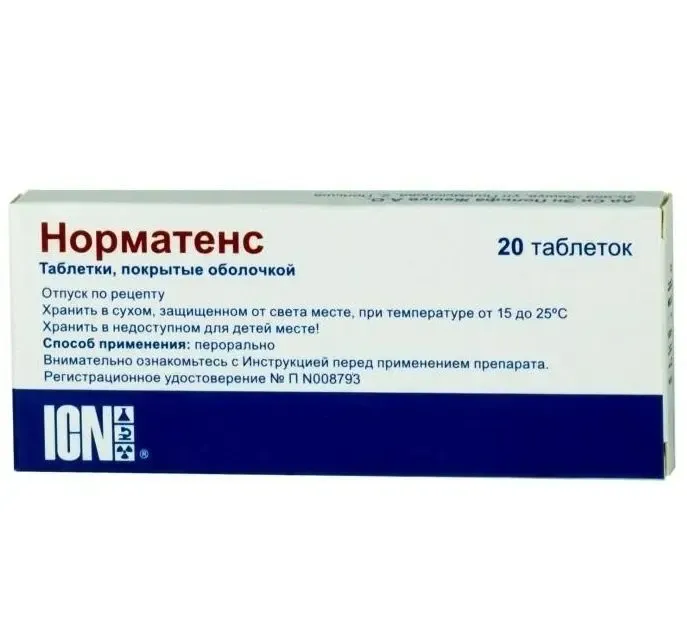
Table of Contents
PACKAGE LEAFLET: INFORMATION FOR THE USER
Warning! Keep the leaflet. Information on the immediate packaging in a foreign language!
Normatens
5 mg + 0.5 mg + 0.1 mg, coated tablets
Clopamidum + Dihydroergocristinum + Reserpinum
Please read the entire leaflet carefully before using this medicine, as it contains
important information for the patient.
- Keep this leaflet for future reference.
- If you have any doubts, consult your doctor or pharmacist.
- This medicine has been prescribed for a specific individual. Do not pass it on to others. The medicine may harm another person, even if their symptoms are identical.
- If the patient experiences any adverse reactions, including those not listed in this leaflet, inform your doctor or pharmacist. See section 4.
Table of contents:
- What Normatens is and what it is used for
- What you need to know before taking Normatens
- How to take Normatens
- Possible side effects
- How to store Normatens
- Contents of the pack and other information
1. What Normatens is and what it is used for
Normatens is a medicine containing three active substances that reduce arterial blood pressure: reserpine, clopamide, and dihydroergocristine (in the form of dihydroergocristine mesylate). The combination of these three substances in a single tablet allows for lower individual doses, reduces the risk of adverse effects, and simplifies dosing.
Reserpine lowers arterial blood pressure by affecting the transmission of certain impulses in the nervous system. It causes vasodilation (resulting in reduced blood pressure) and slows heart rate.
Clopamide is a diuretic substance. It increases the excretion of water and sodium from the body, thereby reducing arterial blood pressure.
Dihydroergocristine acts on the central nervous system, reducing the tone of blood vessel muscles, thus lowering arterial blood pressure.
Because Normatens provides a sustained reduction in arterial blood pressure, it is used in all forms of hypertension where treatment with a single active substance does not achieve adequate blood pressure reduction.
2. Important information before using Normatens
When not to use Normatens
- if the patient is allergic to clopamide, reserpine, dihydroergocristine, sulfonamides, ergot alkaloids, or any of the other ingredients of this medicine (listed in section 6),
- if the patient has low serum potassium levels,
- if the patient is pregnant or breastfeeding.
Warnings and precautions
Before starting treatment with Normatens, discuss with your doctor or pharmacist:
- if the patient has diabetes or impaired glucose tolerance, as the medicine may increase blood glucose levels (blood glucose levels should be monitored periodically and, if necessary, the dose of antidiabetic medication adjusted),
- if the patient has gout (the medicine should be avoided, as it may increase serum uric acid levels),
- if the patient has kidney failure (the medicine may damage the kidneys and its effect may be reduced; Normatens is not recommended in patients with severe liver or kidney impairment),
- if the patient experiences blurred vision or eye pain. These may be symptoms of fluid accumulation in the avascular membrane surrounding the eye (excessive accumulation of fluid between choroid and sclera) or increased intraocular pressure – these may occur from several hours to weeks after taking Normatens. If left untreated, they may lead to permanent vision loss. Patients who previously experienced allergy to penicillin or sulfonamides may be at increased risk of developing these symptoms.
Normatens may reduce potassium levels in the blood. Patients taking this medicine should follow a diet rich in potassium (fruits, vegetables, fish) and have their blood potassium levels monitored regularly.
It should be noted that the full effect of Normatens, as with many other antihypertensive medicines, may take several days, or even 2 to 4 weeks after starting treatment. Therefore, at the beginning of treatment the medicine may seem ineffective.
Children and adolescents
Normatens must not be used in children and adolescents.
Interaction of Normatens with other medicines
Inform your doctor about all medicines currently used, recently used, or planned for use.
Some medicines may alter the effect of Normatens. These include:
- all medicines that lower blood pressure (medicines used to treat hypertension),
- corticosteroids (e.g. hydrocortisone, methylprednisolone, dexamethasone) and non-steroidal anti-inflammatory drugs (e.g. cold medicines available without prescription). Conversely, Normatens may alter the effect of other medicines, including:
- products containing lithium (e.g. Lithium carbonicum),
- oral anticoagulants (e.g. acenocoumarol, ticlopidine, acetylsalicylic acid),
- medicines with central nervous system depressant effects (e.g. phenobarbital, diazepam, nitrazepam),
- medicines belonging to the so-called MAO inhibitors (e.g. moclobemide); if Normatens is to be used after discontinuation of such a medicine, the first dose should not be administered earlier than 2 weeks after the last dose of an MAO inhibitor,
- levodopa (a medicine used in Parkinson's disease). Therefore, before taking any new medicine (including those available without prescription), consult your doctor.
Normatens with food, drink and alcohol
Normatens should be taken during or immediately after a meal.
Patients taking Normatens should not consume alcoholic beverages.
It should be remembered that Normatens enhances the harmful effects of alcohol on the brain (therefore, alcohol should not be consumed during treatment with Normatens).
Pregnancy, breastfeeding and fertility
If the patient is pregnant or breastfeeding, suspects she may be pregnant, or is planning to have a child, she should consult her doctor or pharmacist before using this medicine.
Pregnancy
The product is contraindicated in pregnant women, as both animal studies and human observations indicate a significant risk to the fetus, which clearly outweighs any potential benefit to the mother.
Breastfeeding
Do not use during breastfeeding, as reserpine and dihydroergocristine, components of Normatens, pass into breast milk and may adversely affect breastfed infants.
Driving and operating machinery
During the initial phase of treatment, fatigue and orthostatic hypotension (dizziness and weakness upon changing position from lying to standing) may occur. Therefore, patients taking this medicine should not drive or operate machinery during this period.
Normatens contains lactose and sucrose
One Normatens coated tablet contains 44.8 mg of sucrose and 44.9 mg of monohydrated lactose.
If the patient has previously been diagnosed with intolerance to certain sugars, the patient should consult a doctor before taking this medicine.
3. How to use Normatens
This medicine should always be taken exactly as directed by your doctor or pharmacist. If in doubt,
consult your doctor or pharmacist.
The dosage is determined individually by the doctor for each patient.
Recommended dosage:
Dosing in adults:
Treatment usually starts with 1 coated tablet per day. Depending on the response and tolerability,
this dose may be increased up to a maximum of 3 coated tablets per day, administered in divided doses.
WARNING: The dosage may only be increased on the advice of a doctor.
After the desired effect has been achieved, maintenance therapy usually requires only 1 coated tablet
once daily, and in some cases even 1 coated tablet every other day. However, in some cases it may be
necessary to administer 2 coated tablets per day in divided doses, and exceptionally 3 coated tablets
per day in divided doses (higher doses should not be used).
Coated tablets should be taken during or immediately after a meal.
Dosing in elderly patients:
Dosage adjustment is not required; however, due to the increased susceptibility of this patient group
to fluctuations in arterial blood pressure and to the occurrence of water-electrolyte imbalances,
particular caution is recommended during treatment.
Dosing in patients with renal or hepatic impairment:
The use of Normatens is not recommended in patients with severe hepatic or renal insufficiency.
Use in children and adolescents
Normatens should not be used in children and adolescents.
Use of a higher than recommended dose of Normatens
If an excessive amount of Normatens is taken, life-threatening symptoms may occur,
such as a sudden drop in arterial blood pressure, loss of consciousness, and breathing disturbances.
Other symptoms that may occur following overdose include: nausea, vomiting,
diarrhea, headache, feeling of warmth and thirst, decreased blood potassium concentration,
muscle weakness, slowed heart rate, cardiac arrhythmias, depression, and coma.
In case of overdose, immediate medical attention is required.
Missed dose of Normatens
If a dose of Normatens is missed, it should be taken as soon as possible. However, if the time for the next
dose is approaching, the missed dose should be skipped. Do not take a double dose to make up for
the missed dose.
Discontinuation of Normatens
Premature discontinuation of Normatens treatment may lead to an increase in
arterial blood pressure.
If you have any further questions about the use of this medicine, consult your
doctor or pharmacist.
4. Possible adverse reactions
Like any medicine, this medicine can cause adverse reactions, although they do not occur in everyone.
The following adverse effects have been observed during the use of Normatens:
Frequency unknown – cannot be estimated from the available data:
- nausea and vomiting
- hypokalaemia (reduced potassium levels in the blood)
- orthostatic hypotension (reduced arterial blood pressure upon changing body position from lying to standing)
- myasthenia (muscle weakness)
- catarrh
- increased levels of glucose and uric acid in the blood
- feeling of excessive weakness
- thrombocytopenia (reduced number of blood platelets)
- depression
- visual disturbances or eye pain due to increased pressure (possible symptoms of fluid accumulation in the vascular membrane surrounding the eye – excessive fluid buildup between the choroid and sclera – or acute closed-angle glaucoma)
Reporting of adverse reactions
If any adverse reactions occur, including any not listed in this leaflet, inform your doctor or pharmacist. Adverse reactions can be reported directly to the Department of Monitoring Adverse Drug Reactions of the Office for Registration of Medicinal Products, Medical Devices and Biocidal Products, Al. Jerozolimskie 181C, 02-222 Warsaw, Tel: +48 22 49 21 301, Fax: +48 22 49 21 309,
Website: https://smz.ezdrowie.gov.pl
Reporting adverse reactions enables further collection of information on the safety of the medicine.
5. How to store Normatens
Store below 25°C.
Keep in the original packaging to protect from light and moisture.
Store out of sight and reach of children.
Do not use Normatens after the expiry date stated on the packaging. The expiry date refers to the last day of the stated month.
Medicines must not be disposed of via wastewater or household waste. Ask your pharmacist how to dispose of medicines no longer in use. This will help protect the environment.
6. Contents of the package and other information
What Normatens contains
- The active substances are: clopamide, dihydroergocristine (in the form of dihydroergocristine mesilate), reserpine.
- Other components are: core: monohydrate lactose, potato starch, povidone, talc, magnesium stearate; coating: sucrose, talc, gum arabic, white wax, Carnauba wax.
What Normatens looks like and contents of the pack
Blister packs made of PVC/Aluminum foil in a cardboard box.
20 coated tablets (1 blister containing 20 tablets).
For more detailed information, please contact the responsible party or the parallel importer.
Marketing Authorisation Holder in Latvia, country of export:
SIA Meda Pharma
Mūkusalas 101
Riga LV-1004
Latvia
Manufacturer:
ICN Polfa Rzeszów S. A.
Przemysłowa 2
35-959 Rzeszów
Poland
Parallel importer:
Medezin Sp. z o.o.
Zbąszyńska 3
91-342 Łódź
Repackaged in:
CEFEA Sp. z o.o. Sp. komandytowa
Działkowa 56
02-234 Warsaw
Pharma Innovations Sp. z o.o.
Jagiellońska 76
03-301 Warsaw
Laboratorium Galenowe Olsztyn Sp. z o.o.
Spółdzielcza 25A
11-001 Dywity
Synoptis Industrial Sp. z o.o.
Szosa Bydgoska 58
87-100 Toruń
IVA Pharm Sp. z o.o.
Drawska 14/1
02-202 Warsaw
CANPOLAND SPÓŁKA AKCYJNA
Beskidzka 190
91-610 Łódź
Medezin Sp. z o.o.
Zbąszyńska 3
91-342 Łódź
Marketing Authorisation number in Latvia, country of export: 96-0576
Parallel import licence number: 426/19