Noradrenaline kabi
Poland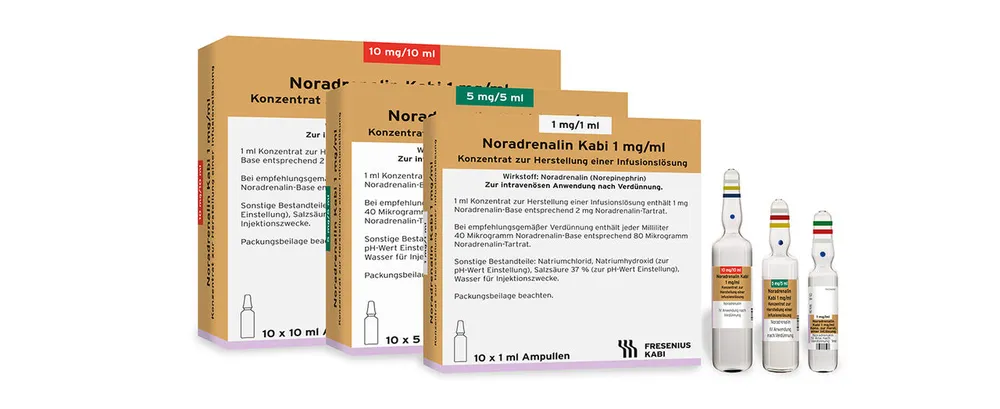
Table of Contents
- Package leaflet: Information for the user
- 1. What Noradrenaline Kabi is and what it is used for
- 2. Important information before using Noradrenaline Kabi
- 3. How to use Noradrenaline Kabi
- 4. Possible adverse reactions
- 5. How to store Noradrenaline Kabi
- 6. Contents of the pack and other information
- Information intended exclusively for healthcare professionals:
Package leaflet: Information for the user
Noradrenaline Kabi, 1 mg/ml, concentrate for solution for infusion
Noradrenalinum (Norepinephrinum)
Please read all of this leaflet carefully before the medicine is administered, because it contains
important information for the patient.
- Keep this leaflet, as you may need to read it again.
- If you have any questions, please consult your doctor or nurse.
- This medicine has been prescribed for a specific individual. Do not pass it on to others. The medicine may harm other people, even if their symptoms are the same.
- If any adverse reactions occur in the patient, including any adverse reactions not listed in this leaflet, inform your doctor or nurse. See section 4.
Contents of the leaflet
- What Noradrenaline Kabi is and what it is used for
- Important information before Noradrenaline Kabi is administered
- How Noradrenaline Kabi is administered
- Possible side effects
- How to store Noradrenaline Kabi
- Contents of the pack and other information
1. What Noradrenaline Kabi is and what it is used for
Noradrenaline Kabi contains noradrenaline (norepinephrine) and acts as a vasoconstrictor (causes narrowing of blood vessels).
Noradrenaline Kabi is indicated for use in adult patients in emergency situations to increase arterial blood pressure to normal levels.
2. Important information before using Noradrenaline Kabi
When not to use Noradrenaline Kabi
- if the patient is allergic to noradrenaline or to any of the other ingredients of this medicine (listed in section 6);
- if the patient has low blood pressure caused by reduced blood volume;
- if the patient is receiving certain inhaled anaesthetics, such as halothane or cyclopropane (which may increase the risk of heart rhythm disturbances).
Warnings and precautions
Before starting treatment with Noradrenaline Kabi, discuss this with the doctor or nurse if the patient:
- has diabetes;
- has impaired liver or kidney function;
- has high blood pressure;
- has hyperthyroidism;
- has low oxygen levels in the blood;
- has high carbon dioxide levels in the blood;
- has increased intracranial pressure (intracranial pressure);
- has blood clots or blockage of blood vessels supplying blood to the heart, intestines, or other parts of the body;
- has low blood pressure due to myocardial infarction;
- has angina pectoris (chest pain), particularly Prinzmetal's angina;
- has severe left ventricular dysfunction;
- has recently suffered a myocardial infarction;
- has heart rhythm disorders (too fast, too slow, or irregular heartbeat), in which case the dose may need to be reduced;
- is an elderly patient.
During noradrenaline infusion, the doctor will continuously monitor blood pressure, heart function (pulse), and the infusion site.
Children and adolescents
The safety and efficacy of noradrenaline have not been established in children under 18 years of age.
Therefore, use of this medicine is not recommended in this age group.
Noradrenaline Kabi and other medicines
Tell the doctor about all medicines the patient is currently taking or has recently taken, as well as any medicines the patient plans to take.
This is particularly important if the patient is taking or has recently taken any of the following medicines:
- medicines used to treat depression called "monoamine oxidase inhibitors" (MAOIs), currently used or used within the last 14 days;
- medicines used to treat depression called "tricyclic antidepressants" (e.g. imipramine or desipramine);
- linezolid (an antibiotic);
- anaesthetics (especially inhaled anaesthetics such as cyclopropane, halothane, chloroform, enflurane);
- medicines affecting adrenergic and serotonergic receptors, e.g. used in the treatment of asthma and heart diseases;
- medicines used to treat high blood pressure (e.g.: guanethidine, reserpine, methyldopa, alpha- and beta-blockers);
- rauwolfia alkaloids;
- medicines used to treat heart rhythm disorders;
- cardiac glycosides (used in the treatment of heart diseases);
- levodopa (used in the treatment of Parkinson's disease);
- thyroid hormones;
- oxytocin (used to enhance uterine contractions);
- antihistamines (used to treat allergies, e.g.: chlorpheniramine hydrochloride, tripelennamine hydrochloride);
- amphetamine;
- doxapram (used in respiratory disorders);
- mazindol (used in the treatment of obesity);
- medicines used to treat migraine (ergot alkaloids);
- lithium (used in the treatment of certain psychiatric disorders);
- vasopressin, desmopressin (antidiuretics, reducing urine output).
Concomitant use of noradrenaline with propofol (an anaesthetic) may lead to the development of propofol infusion syndrome (PRIS), a serious condition occurring in patients receiving propofol in intensive care. In such cases, the doctor may detect metabolic disturbances through blood tests, which may lead to kidney failure, heart failure, and even death.
Pregnancy and breastfeeding
If the patient is pregnant or breastfeeding, suspects she may be pregnant, or is planning to have a baby, she should consult a doctor before using this medicine.
Noradrenaline Kabi may have harmful effects on the unborn child. It is unknown whether this medicine passes into human milk. The doctor will decide whether Noradrenaline Kabi should be administered.
Driving and operating machinery
Do not drive or operate machinery while under the influence of Noradrenaline Kabi.
Noradrenaline Kabi contains sodium
This medicine contains 3.4 mg of sodium (the main component of table salt) per ml of concentrate. This corresponds to 0.17% of the maximum recommended daily dietary sodium intake for adults.
3. How to use Noradrenaline Kabi
Noradrenaline Kabi is administered in a hospital by a doctor or nurse. This medicine is first diluted,
then given as an intravenous infusion.
The recommended dose of noradrenaline will depend on the patient's condition. The usual dose ranges from
0.4 mg to 0.8 mg of noradrenaline per hour. The doctor will determine the appropriate dose for the patient. After the initial dose is given, the doctor will assess the patient's response to the medicine and adjust the dose accordingly.
Use of a higher than recommended dose of Noradrenaline Kabi
Use of a higher than recommended dose is unlikely, as this medicine is administered in a hospital. However, you should contact a doctor or nurse if you have any concerns.
Symptoms that may occur if the patient receives too high a dose of noradrenaline include: very
high blood pressure, slow heart rate, severe headache, bleeding into the brain, sensitivity
to light, chest pain, pallor, high fever, intense sweating, vomiting, and fluid in the lungs causing breathlessness.
If you have any further questions about the use of this medicine, consult your doctor or nurse.
4. Possible adverse reactions
Like all medicines, this medicine can cause adverse reactions, although not everyone will experience them.
The frequency of the listed adverse reactions is unknown (frequency cannot be estimated from the available data).
You must immediately inform the doctor if the patient experiences:
- sudden onset of itchy rash (urticaria), swelling of hands, feet, ankles, face, lips, mouth or throat (which may cause difficulty in swallowing or breathing), feeling faint;
- pain and (or) swelling at the injection site.
You should inform the doctor as soon as possible if the following occur:
- anxiety, insomnia, confusion, weakness, psychotic state;
- headache, tremor;
- increased eye pressure (acute glaucoma);
- decreased or rapid heartbeat;
- heart rhythm disorders;
- abnormal ECG findings;
- potentially life-threatening type of circulatory failure, so-called "cardiogenic shock";
- myocardial weakness due to severe physical or emotional stress, palpitations, increased myocardial contractility, acute heart failure;
- high blood pressure, reduced oxygen supply to certain organs (hypoxia);
- reduced blood flow to hands and feet (cold extremities, pallor and (or) limb pain);
- tissue necrosis (tissue death);
- decreased blood plasma volume;
- breathing difficulties;
- nausea, vomiting;
- pallor, skin scarring, bluish skin discoloration, hot flushes or skin redness, skin rash, urticaria or itching;
- urinary retention;
- irritation or ulceration (cell damage leading to cell death in tissue) at the injection site.
The doctor will monitor blood pressure and blood volume.
Reporting of adverse reactions
If any adverse symptoms occur, including any adverse effects not listed in this leaflet, you should inform your doctor, pharmacist or nurse. Adverse reactions can be reported directly to the Department of Monitoring Adverse Drug Reactions of the Office for Registration of Medicinal Products, Medical Devices and Biocidal Products
Al. Jerozolimskie 181C
02-222 Warsaw
Phone: +48 22 49 21 301
Fax: +48 22 49 21 309
Website: https://smz.ezdrowie.gov.pl
Adverse reactions can also be reported to the marketing authorization holder.
Reporting adverse reactions allows the collection of further information on the safety of the medicine.
5. How to store Noradrenaline Kabi
Keep the medicine out of the sight and reach of children.
Do not store above 25°C.
Store in the outer packaging to protect from light.
Do not use this medicine if it is brown in colour or contains visible solid particles.
Do not use this medicine after the expiry date stated on the ampoule and carton: EXP.
The expiry date refers to the last day of the stated month.
Medicines should not be disposed of via wastewater or household waste. Ask your pharmacist how to dispose of medicines no longer required. These measures will help protect the environment.
6. Contents of the pack and other information
What Noradrenaline Kabi contains
- The active substance is noradrenaline (norepinephrine). Each 1 ml of concentrate for solution for infusion contains 1 mg of noradrenaline, equivalent to 2 mg of noradrenaline bitartrate. Each ampoule containing 1 ml of concentrate for solution for infusion contains 1 mg of noradrenaline, equivalent to 2 mg of noradrenaline bitartrate. Each ampoule containing 4 ml of concentrate for solution for infusion contains 4 mg of noradrenaline, equivalent to 8 mg of noradrenaline bitartrate. Each ampoule containing 5 ml of concentrate for solution for infusion contains 5 mg of noradrenaline, equivalent to 10 mg of noradrenaline bitartrate. Each ampoule containing 8 ml of concentrate for solution for infusion contains 8 mg of noradrenaline, equivalent to 16 mg of noradrenaline bitartrate. Each ampoule containing 10 ml of concentrate for solution for infusion contains 10 mg of noradrenaline, equivalent to 20 mg of noradrenaline bitartrate.
- Other components: sodium chloride, sodium hydroxide (for pH adjustment), hydrochloric acid concentrated (for pH adjustment), water for injections.
What Noradrenaline Kabi looks like and contents of the pack
This medicine is available as a concentrate for solution for infusion. A clear, colourless to pale yellow solution.
Clear glass ampoules containing:
1 ml concentrate (packs of 5, 10 or 50);
4 ml, 5 ml, 8 ml or 10 ml concentrate (packs of 5 or 10).
Not all pack sizes may be marketed.
Marketing Authorisation Holder and Manufacturer
Marketing Authorisation Holder
Fresenius Kabi Polska Sp. z o.o.
Al. Jerozolimskie 134
02-305 Warsaw
Manufacturer
Labesfal - Laboratórios Almiro, S.A
Zona Industrial do Lagedo
3465-157 Santiago de Besteiros
Portugal
This medicinal product is authorised in the European Economic Area and in the United Kingdom (Northern Ireland) under the following names:
| Austria | Noradrenalin Kabi 1 mg/ml concentrate for solution for infusion |
| Belgium | Noradrenaline Kabi 1 mg/ml solution to be diluted for infusion Noradrenaline Kabi 1 mg/ml concentrate for solution for infusion Noradrenaline Kabi 1 mg/ml concentrate for infusion |
| Cyprus | Noradrenaline/Kabi 1mg/ml concentrate for solution for infusion |
| Czech Republic | Norepinephrine Kabi |
| Germany | Noradrenalin Kabi 1 mg/ml concentrate for solution for infusion |
| Denmark | Noradrenalin Fresenius Kabi |
| Estonia | Norepinephrine Kabi |
| Greece | Noradrenaline/Kabi Fresenius |
| Spain | Noradrenalina Kabi 1 mg/ml concentrate for solution for infusion EFG |
| Finland | Noradrenalin Fresenius Kabi 1 mg/ml concentrate for infusion solution |
| France | NORDRENALINE (TARTRATE) KABI 2 mg/ml, solution to be diluted for infusion |
| Croatia | Noradrenalin Kabi 1 mg/ml concentrate for infusion solution |
| Hungary | Noradrenaline Kabi 1 mg/ml concentrate for infusion solution |
| Ireland | Noradrenaline (Norepinephrine) Kabi 1 mg/ml concentrate for solution for infusion |
| Italy | Noradrenalina Kabi |
| Lithuania | Norepinephrine Kabi 1 mg/ml concentrate for infusion solution |
| Latvia | Norepinephrine Kabi 1 mg/ml concentrate for preparation of infusion solution |
| Netherlands | Noradrenaline Kabi 1 mg/ml concentrate for solution for infusion |
| Norway | Noradrenalin Fresenius Kabi |
| Poland | Noradrenaline Kabi |
| Portugal | Noradrenalina Kabi |
| Romania | Noradrenalină Kabi 1 mg/ml concentrate for perfusion solution |
| Sweden | Noradrenalin Fresenius Kabi |
| Slovenia | Noradrenalin Kabi 1 mg/ml concentrate for infusion solution |
| Slovakia | Norepinephrine Kabi 1 mg/ml |
| United Kingdom (Northern Ireland) | Noradrenaline (Norepinephrine) Kabi 1 mg/ml concentrate for solution for infusion |
Information intended exclusively for healthcare professionals:
Intravenous administration only, after dilution.
The infusion rate must be controlled using a syringe pump, infusion pump, or drip counter.
Noradrenaline Kabi is administered as a diluted solution via a central venous access.
If a central venous access is not used, noradrenaline should whenever possible be infused into a large vein, particularly the antecubital vein, to minimize the risk of ischemic necrosis (skin, limbs).
If possible, immobilization of the catheter should be avoided, as reduced blood flow around the catheter may cause stasis and increase the local concentration of the medicinal product.
Incompatibilities
Incompatibilities have been reported between the infusion solution containing tartaric acid of noradrenaline and the following substances: iron salts, alkalizing and oxidizing compounds, barbiturates, chlorpheniramine, chlorothiazide, nitrofurantoin, novobiocin, phenytoin, sodium bicarbonate, sodium iodide, streptomycin, sulfadiazine, sulfafurazole.
Reconstitution instructions
When administering via a syringe pump, add 2 ml of concentrate to 48 ml of diluent. When administering using a drip counter, add 20 ml of concentrate to 480 ml of diluent. In both cases, the final concentration of the infusion solution will be 40 mg/l of noradrenaline (equivalent to 80 mg/l of noradrenaline tartrate).
The medicinal product may also be diluted to concentrations other than 40 mg/l of noradrenaline (see section 4.2). If diluted to a concentration other than 40 mg/l of noradrenaline, the infusion rate must be carefully recalculated before starting treatment.
The following diluents may be used for dilution:
- Sodium chloride 9 mg/ml (0.9% w/v) solution in glucose 50 mg/ml (5% w/v),
- Glucose 50 mg/ml (5% w/v) solution,
- Sodium chloride 9 mg/ml (0.9% w/v) solution.
Any unused medicinal product or waste material should be disposed of in accordance with local regulations.
Shelf-life after opening the ampoule:
The medicinal product should be used immediately after opening.
Shelf-life after dilution:
Chemical and physical stability has been demonstrated for 24 hours at 25°C.
From a microbiological standpoint, the product should be used immediately. If not used immediately, the user is responsible for storage conditions and duration, which must not exceed 24 hours at 2 to 8°C, provided that dilution was carried out under controlled and validated aseptic conditions.