Noradrenaline kalceks
Poland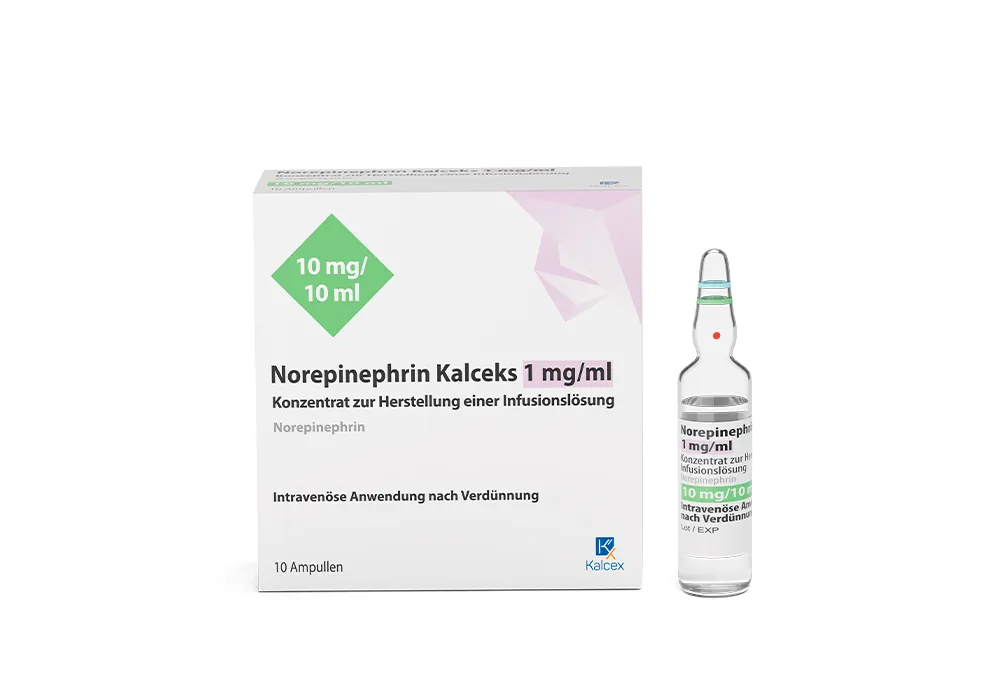
Table of Contents
- Patient Information Leaflet
- 1. What Noradrenalin Kalceks is and what it is used for
- 2. Important information before using Noradrenalin Kalceks
- 3. How to use Noradrenalin Kalceks
- 4. Possible adverse reactions
- 5. How to store Noradrenalin Kalceks
- 6. Contents of the package and other information
- Information intended exclusively for medical professionals:
Patient Information Leaflet
Noradrenalin Kalceks, 1 mg/ml, concentrate for solution for infusion
Noradrenalinum
Please read all of this leaflet carefully before this medicine is administered, because it contains
important information for the patient.
- Keep this leaflet, as you may need to read it again. If you have any further questions, please ask your doctor or nurse.
- If you experience any side effects, including any not listed in this leaflet, tell your doctor or nurse. See section 4.
Contents of the leaflet
- What Noradrenalin Kalceks is and what it is used for
- Important information before administration of Noradrenalin Kalceks
- How to use Noradrenalin Kalceks
- Possible side effects
- How to store Noradrenalin Kalceks
- Contents of the pack and other information
1. What Noradrenalin Kalceks is and what it is used for
Noradrenalin Kalceks contains noradrenaline and acts as a vasoconstrictor (causes narrowing of blood vessels).
Noradrenalin Kalceks is indicated for use in adults during emergency conditions to increase arterial blood pressure to normal levels.
2. Important information before using Noradrenalin Kalceks
When not to use Noradrenalin Kalceks
- if the patient is allergic to noradrenaline or to any of the other ingredients of this medicine (listed in section 6)
- if the patient has low blood pressure caused by reduced blood volume
- if the patient is receiving certain anaesthetic medicines, such as halothane or cyclopropane (which may increase the risk of heart rhythm disorders).
Warnings and precautions
Before starting treatment with Noradrenalin Kalceks, discuss with a doctor or nurse if the patient:
- has diabetes
- has liver failure
- has severe kidney function impairment
- has high blood pressure
- has hyperthyroidism
- has low blood oxygen levels
- has high blood carbon dioxide levels
- has increased intracranial pressure (intracranial pressure)
- has blood clots or blocked blood vessels supplying blood to the heart, intestines, or other parts of the body
- has low blood pressure due to heart attack
- has a type of angina (chest pain) called Prinzmetal's angina
- has severe left ventricular dysfunction (heart disease)
- has recently suffered a myocardial infarction
- has heart rhythm disorders (too fast, too slow, or irregular heartbeat), in which case a lower dose may be required
- is an elderly person
Children and adolescents
The safety and efficacy of noradrenaline in children under 18 years of age have not been established. Therefore, the use of this medicine is not recommended in this age group.
Noradrenalin Kalceks and other medicines
Tell your doctor or nurse about all medicines the patient is currently taking, has recently taken, or plans to take. This is especially important if the patient is taking or has recently taken any of the following medicines:
- medicines used to treat depression called "monoamine oxidase inhibitors" (MAOIs), taken currently or within the last 14 days
- medicines used to treat depression called "tricyclic antidepressants", such as imipramine or desipramine
- medicines affecting adrenergic and serotonergic receptors, for example used in the treatment of asthma and heart diseases
- linezolid (an antibiotic)
- anaesthetics (especially inhaled anaesthetics such as cyclopropane, halothane, chloroform, enflurane)
- medicines used to treat high blood pressure (e.g. guanethidine, reserpine, methyldopa, alpha- and beta-blockers)
- medicines used to treat heart rhythm disorders
- cardiac glycosides (used in the treatment of heart diseases)
- levodopa (used in the treatment of Parkinson's disease)
- thyroid hormones
- oxytocin (used to enhance uterine contractions)
- antihistamines (used in the treatment of allergies)
- amphetamine
- doxapram (used in respiratory disorders)
- mazindol (used in the treatment of obesity)
- medicines used to treat migraine (ergot alkaloids)
- lithium (used in the treatment of certain psychiatric disorders)
Concomitant use of noradrenaline with propofol (an anaesthetic medicine) may lead to the development of propofol infusion syndrome (PRIS) – a severe condition occurring in patients anaesthetized with propofol in intensive care units. In such cases, the doctor may detect metabolic abnormalities in blood tests, which may lead to kidney failure, heart failure, and even death.
Pregnancy and breastfeeding
If the patient is pregnant or breastfeeding, suspects she may be pregnant, or is planning to have a child, she should consult a doctor before using this medicine. Noradrenaline may have harmful effects on the unborn child. The doctor will decide whether noradrenaline should be administered.
It is not known whether this medicine passes into human milk. Since many medicines pass into human milk, caution should be exercised when administering noradrenaline to breastfeeding women.
Driving and operating machinery
There is no available information; therefore, driving vehicles or operating machinery is not recommended.
Noradrenalin Kalceks contains sodium
Ampoules containing 1 ml, 2 ml, 4 ml, or 5 ml of concentrate for solution for infusion contain less than 1 mmol (23 mg) of sodium per ampoule, meaning the medicine is considered "sodium-free".
Each ampoule containing 8 ml of concentrate for solution for infusion contains 26.4 mg of sodium (main component of table salt). This corresponds to 1.32% of the maximum recommended daily dietary sodium intake for adults.
Each ampoule containing 10 ml of concentrate for solution for infusion contains 33 mg of sodium (main component of table salt). This corresponds to 1.65% of the maximum recommended daily dietary sodium intake for adults.
3. How to use Noradrenalin Kalceks
Noradrenaline is administered in a hospital setting by a doctor or nurse. The medicine is first diluted and then given as an intravenous infusion.
The initial dose of noradrenaline will depend on the patient's condition. The usual dose ranges from 0.4 mg to 0.8 mg of noradrenaline per hour. The doctor will determine the appropriate dose for the patient.
After the initial dose is given, the doctor will assess the patient's response to the medicine and adjust the dose accordingly.
The doctor will monitor the patient's blood pressure and blood volume.
Use of a higher than recommended dose of Noradrenalin Kalceks
Use of a higher than recommended dose is unlikely, as this medicine is administered in a hospital.
However, if you have any concerns, you should contact a doctor or nurse.
Symptoms that may occur if the patient receives too high a dose of noradrenaline include: very high arterial pressure, slow heart rate, severe headache, light sensitivity, chest pain, cerebral hemorrhage, pallor, fever, intense sweating, vomiting, and fluid in the lungs causing shortness of breath.
4. Possible adverse reactions
Like all medicines, this medicine can cause adverse reactions, although not everyone will experience them.
You should inform the doctor or nurse immediately if the patient experiences:
-
sudden onset of itchy rash (urticaria), swelling of hands, feet, ankles, face, lips, mouth or throat (which may cause difficulty in swallowing or breathing), feeling faint
-
pain and (or) swelling at the injection site.
You should inform the doctor or nurse as soon as possible if any of the following occur:
- anxiety, insomnia, confusion, weakness, psychotic state
- headache, tremor
- slow or fast heartbeat
- heart rhythm disorders
- abnormal ECG recording
- a potentially life-threatening type of circulatory failure, so-called "cardiogenic shock"
- heart muscle weakness due to severe physical or emotional stress, palpitations, increased myocardial contractility
- high blood pressure, reduced oxygen supply to certain organs (hypoxia)
- reduced blood flow to hands and feet (cold extremities, pallor and (or) limb pain)
- tissue death (necrosis)
- reduced blood plasma volume
- breathing difficulties
- pallor, skin fibrosis, bluish skin discoloration, hot flushes or skin redness, skin rash, urticaria or itching
- nausea, vomiting
- urinary retention
- irritation or ulceration at the injection site
In case of hypersensitivity or overdose, the following adverse reactions may occur more frequently: very high blood pressure, unusual sensitivity to light or light intolerance, chest pain, sore throat, pallor, excessive sweating and vomiting.
Reporting of adverse reactions
If any adverse reactions occur, including any adverse reactions not listed in this leaflet, inform the doctor or nurse. Adverse reactions can be reported directly to the Department of Monitoring of Adverse Drug Reactions at the Office for Registration of Medicinal Products, Medical Devices and Biocidal Products
Al. Jerozolimskie 181C
PL-02 222 Warsaw
Tel.: + 48 22 49 21 301
Fax: + 48 22 49 21 309
Website: https://smz.ezdrowie.gov.pl
Adverse reactions can also be reported to the marketing authorization holder.
Reporting adverse reactions helps to provide more information on the safety of this medicine.
5. How to store Noradrenalin Kalceks
Keep the medicine out of the sight and reach of children.
Do not store above 25°C.
Store the ampoules in the outer packaging to protect from light.
Shelf-life after first opening of the ampoule
After opening, the diluted solution should be prepared immediately.
Stability after dilution
Chemical and physical in-use stability has been demonstrated for 48 hours at 25°C and between 2 and
8°C, following dilution to 4 mg/litre and 40 mg/litre of noradrenaline in sodium chloride solution 9 mg/ml
(0.9%) or glucose solution 50 mg/ml (5%), or sodium chloride 9 mg/ml (0.9%) with glucose solution
50 mg/ml (5%).
From a microbiological standpoint, the diluted solution should be used immediately. If not used immediately, the user is responsible for the storage conditions and duration prior to use, which should generally not exceed 24 hours at 2 to 8°C, provided that dilution has taken place under controlled and validated aseptic conditions.
Do not use this medicine after the expiry date stated on the carton and on the EXP label of the ampoule. The expiry date refers to the last day of the stated month.
Medicines should not be disposed of via wastewater or household waste. Ask your pharmacist how to dispose of medicines no longer required. Such measures will help protect the environment.
6. Contents of the package and other information
What Noradrenalin Kalceks contains
The active substance is noradrenaline.
Each 1 ml of concentrate for solution for infusion contains noradrenaline tartrate equivalent to 1 mg of noradrenaline.
Each 2 ml ampoule of concentrate for solution for infusion contains noradrenaline tartrate equivalent to 2 mg of noradrenaline.
Each 4 ml ampoule of concentrate for solution for infusion contains noradrenaline tartrate equivalent to 4 mg of noradrenaline.
Each 5 ml ampoule of concentrate for solution for infusion contains noradrenaline tartrate equivalent to 5 mg of noradrenaline.
Each 8 ml ampoule of concentrate for solution for infusion contains noradrenaline tartrate equivalent to 8 mg of noradrenaline.
Each 10 ml ampoule of concentrate for solution for infusion contains noradrenaline tartrate equivalent to 10 mg of noradrenaline.
Other ingredients are: sodium chloride, hydrochloric acid concentrated (for pH adjustment), water for injections.
What Noradrenalin Kalceks looks like and contents of the pack
A clear, colourless or slightly yellow solution, practically free from visible solid particles.
1 ml, 2 ml, 4 ml, 5 ml, 8 ml or 10 ml of solution in ampoules made of colourless type I glass with one break ring. The ampoules are placed in a carton box with an insert.
Pack sizes: 5 or 10 ampoules.
Not all pack sizes may be marketed.
Marketing Authorisation Holder and Manufacturer
AS KALCEKS
Krustpils iela 71E
LV-1057 Rīga
Latvia
This medicinal product is authorised in the following European Economic Area (EEA) countries and in the United Kingdom (Northern Ireland) under the following names:
Denmark Noradrenalin Kalceks
Austria Norepinephrin Kalceks 1 mg/ml Konzentrat zur Herstellung einer Infusionslösung
Belgium Noradrenaline (Norepinephrine) Kalceks 1 mg/ml concentraat voor oplossing voor infusie / solution à diluer pour perfusion / Konzentrat zur Herstellung einer Infusionslösung
Czech Republic Norepinephrine Kalceks
Estonia Norepinephrine Kalceks
Finland Noradrenalin Kalceks
France NORADRENALINE TARTRATE KALCEKS 1 mg/mL, solution à diluer pour perfusion
Germany Norepinephrin Kalceks 1 mg/ml Konzentrat zur Herstellung einer Infusionslösung
Hungary Norepinephrine Kalceks 1 mg/ml koncentrátum oldatos infúzióhoz
Ireland Noradrenaline (Norepinephrine) 1 mg/ml concentrate for solution for infusion
Italy Norepinefrina Kalceks
Latvia Norepinephrine Kalceks 1 mg/ml koncentrāts infūziju šķīduma pagatavošanai
Lithuania Norepinephrine Kalceks 1 mg/ml koncentratas infuziniam tirpalui
Norway Noradrenalin Kalceks
Poland Noradrenalin Kalceks
Portugal Noradrenalina Kalceks
Romania Noradrenalină Kalceks 1 mg/ml concentrat pentru soluţie perfuzabilă
Slovakia Norepinephrine Kalceks 1 mg/ml infúzny koncentrát
Spain Noradrenalina Kalceks 1 mg/ml concentrado para solución para perfusión EFG
Sweden Noradrenalin Kalceks
Netherlands Noradrenaline Kalceks 1 mg/ml concentraat voor oplossing voor infusie
United Kingdom (Northern Ireland) Noradrenaline (Norepinephrine) 1 mg/ml concentrate for solution for infusion
Information intended exclusively for medical professionals:
Method of administration
Intravenous administration after dilution.
Administer as a diluted solution via central venous access. The infusion rate must be controlled using a syringe pump, infusion pump, or drip counter.
Do not use the undiluted medicinal product.
Pharmaceutical incompatibilities
Solutions for infusion containing noradrenaline bitartrate have been found to be incompatible with the following substances: iron salts, alkalizing and oxidizing agents, barbiturates, chlorpheniramine, chlorothiazide, nitrofurantoin, novobiocin, phenytoin, sodium bicarbonate, sodium iodide, streptomycin, sulfadiazine, sulfafurazole.
This medicinal product must not be mixed with other medicinal products except those listed below.
Dilution instructions
For single use only. Any unused contents of the ampoule must be discarded.
Inspect the solution before use. Do not use if visible particles or solids are present. Do not use the infusion solution if it is brown in color.
Dilute before use with one of the following:
- Glucose 50 mg/ml (5%) solution, or
- Sodium chloride 9 mg/ml (0.9%) solution, or
- Sodium chloride 9 mg/ml (0.9%) solution with glucose 50 mg/ml (5%) solution.
Add 2 ml of concentrate to 48 ml of glucose 50 mg/ml (5%) solution (or any of the above diluents) for administration via syringe pump,
or add 20 ml of concentrate to 480 ml of glucose 50 mg/ml (5%) solution (or any of the above diluents) for administration via drip counter.
In both cases, the final concentration of the infusion solution is 40 mg/liter of noradrenaline (equivalent to 80 mg/liter of noradrenaline bitartrate).
Other dilutions of noradrenaline different from 40 mg/liter may also be used. When using dilutions other than 40 mg/liter of noradrenaline, the infusion rate must be carefully calculated before starting treatment.
The product is compatible with infusion bags made of polyvinyl chloride (PVC), ethylene-vinyl acetate (EVA), or polyethylene (PE).
Instructions for opening ampoules
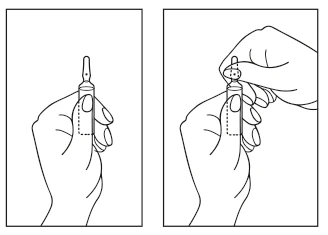
- Turn the ampoule with the colored dot facing upwards. If solution is present in the upper part of the ampoule, gently tap with the finger to move all the solution to the lower part.
- Use both hands to open the ampoule: hold the lower part of the ampoule in one hand and, with the other hand, snap off the top part of the ampoule away from the colored dot (see images below).
Any unused medicinal product or waste material should be disposed of in accordance with local regulations.