Nolpaza control
Poland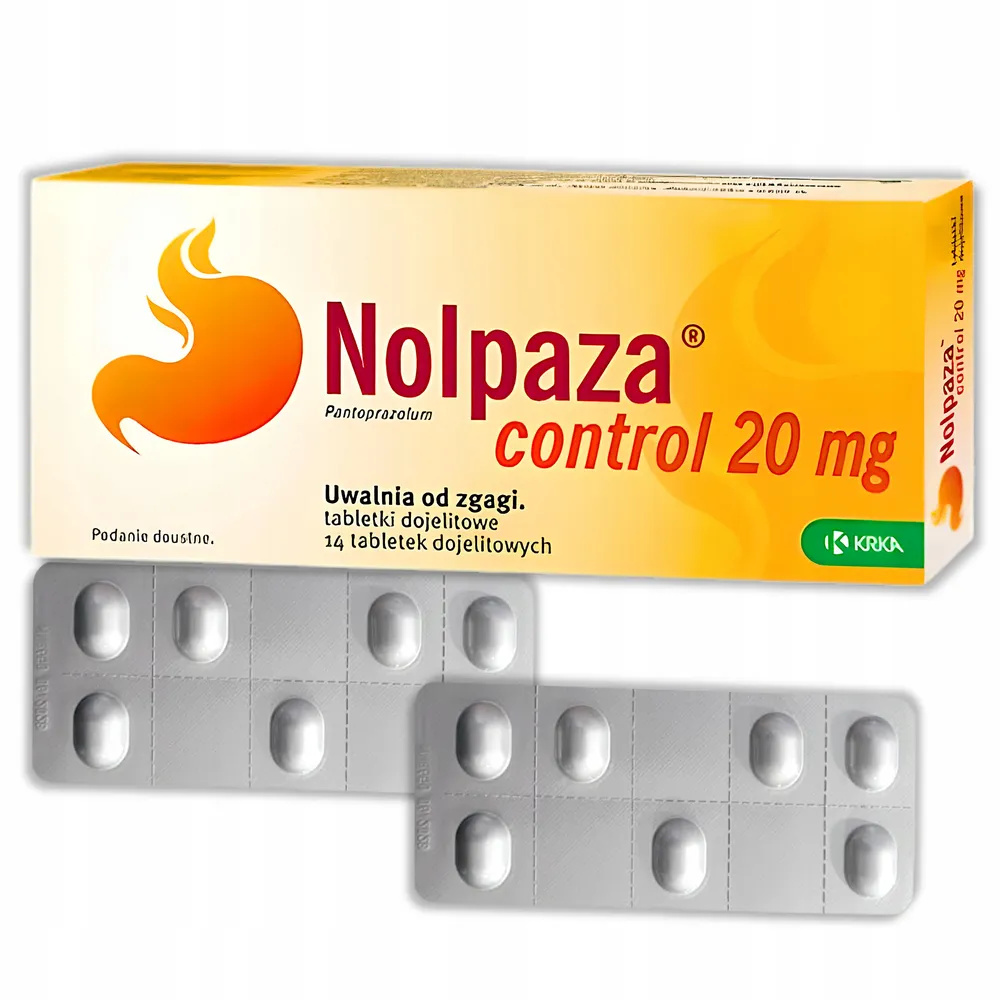
Table of Contents
PACKAGE LEAFLET: INFORMATION FOR THE USER
Warning! Keep the leaflet – information on the immediate packaging is in a foreign language!
Nolpaza control (Nolpaza 20 mg)
20 mg, enteric-coated tablets
Pantoprazole
Nolpaza control and Nolpaza 20 mg are different trade names for the same medicine.
Please read this leaflet carefully before using the medicine, as it contains
important information for the patient.
This medicine should always be taken exactly as described in this patient leaflet or as directed by
your doctor or pharmacist.
- Keep this leaflet, as you may need to read it again.
- If you need advice or further information, please consult your pharmacist.
- If you experience any adverse effects, including any possible side effects not listed in this leaflet, inform your doctor or pharmacist. See section 4.
- If there is no improvement after 14 days, or if your symptoms worsen, consult your doctor.
- Do not take Nolpaza control for longer than 4 weeks without consulting a doctor.
Contents of the leaflet:
- What Nolpaza control is and what it is used for
- Important information before taking Nolpaza control
- How to take Nolpaza control
- Possible side effects
- How to store Nolpaza control
- Contents of the pack and other information
1. What Nolpaza control is and what it is used for
The active substance in Nolpaza control is pantoprazole, which blocks the enzyme responsible for producing stomach acid. In this way, the medicine reduces the amount of acid in the stomach.
Nolpaza control is used for the short-term treatment of symptoms of gastro-oesophageal reflux disease (such as heartburn, acid regurgitation) in adults.
Reflux refers to the backflow of acid from the stomach into the oesophagus, which may lead to inflammation of the oesophagus and cause pain. Other symptoms may include painful burning sensation in the chest rising up to the throat (heartburn), sour taste in the mouth (acid regurgitation).
Nolpaza control may relieve symptoms associated with reflux disease (such as heartburn, acid regurgitation) as early as the first day of treatment, but it is not intended for immediate relief of symptoms.
To achieve complete symptom relief, it may be necessary to take the tablets for 2–3 consecutive days.
If there is no improvement after 14 days, or if you feel worse, you should consult your doctor.
2. Important information before using Nolpaza control
When not to use Nolpaza control
- If the patient is allergic to the active substance or any of the other ingredients of this medicine (listed in section 6);
- If the patient is taking HIV protease inhibitors such as atazanavir, nelfinavir (used in the treatment of HIV infection). See "Nolpaza control and other medicines".
Warnings and precautions
Before starting treatment with Nolpaza control, consult a doctor if the patient:
- has been treated for heartburn or indigestion continuously for 4 or more weeks;
- is over 55 years old and regularly uses over-the-counter medicines for indigestion;
- is over 55 years old and has noticed new or changing symptoms of reflux disease;
- has a history of peptic ulcer disease or has undergone stomach surgery;
- has liver problems or jaundice (yellowing of the skin and eyes);
- is under ongoing medical supervision due to other serious conditions or diseases;
- is scheduled for an endoscopic examination or urease test;
- has ever experienced a skin reaction while using a medicine similar to Nolpaza control that reduces gastric acid secretion;
- is scheduled for a specific blood test (chromogranin A levels);
- is taking HIV protease inhibitors such as atazanavir or nelfinavir (used in the treatment of HIV infection) together with pantoprazole; in such cases, please ask the doctor for detailed advice.
Do not take this medicine for longer than 4 weeks without consulting a doctor. If symptoms of reflux disease (heartburn or acid regurgitation) persist for more than 2 weeks, consult a doctor, who will decide whether long-term treatment is necessary.
Long-term use of Nolpaza control may be associated with additional risks, such as:
- reduced absorption of vitamin B12 and vitamin B12 deficiency in case of low vitamin B12 levels in the body;
- hip, wrist or spine fractures, especially if the patient already has osteoporosis (reduced bone density) or if the doctor has informed the patient about an increased risk of developing osteoporosis (e.g. if the patient is taking steroid medicines);
- decreased magnesium levels in blood (possible symptoms: fatigue, involuntary muscle spasms, disorientation, seizures, dizziness, rapid heartbeat). Low magnesium levels may also lead to reduced potassium and calcium levels in blood. If the medicine is used for longer than 4 weeks, consult a doctor. The doctor may recommend regular blood tests to monitor magnesium levels.
Immediately inform the doctor before or after using this medicine if the patient notices the appearance of the following symptoms, which may indicate other, more serious diseases:
- unintentional weight loss (not related to diet or exercise);
- vomiting, especially recurrent;
- vomiting blood, which may look like dark coffee grounds;
- blood in stool, black or tarry stools;
- difficulty swallowing or pain during swallowing;
- paleness and weakness (anaemia);
- chest pain;
- abdominal pain;
- severe and/or persistent diarrhoea (because use of Nolpaza control is associated with a slightly increased risk of infectious diarrhoea);
- if the patient develops a skin rash, especially in areas exposed to sunlight, they should inform the doctor as soon as possible, as discontinuation of Nolpaza control may be necessary. Also report any other adverse reactions such as joint pain.
The doctor may decide that additional tests are necessary.
If the patient is scheduled for blood tests, they should inform the doctor about taking this medicine.
The patient may notice improvement in reflux and heartburn symptoms as early as one day after starting Nolpaza control. However, this is not a medicine intended for immediate relief of symptoms.
Nolpaza control should not be used preventively.
If the patient has been suffering from recurrent heartburn or indigestion symptoms for some time, they should remain under regular medical supervision.
Children and adolescents
Nolpaza control should not be used in children and adolescents under 18 years of age due to lack of safety data in this age group.
Nolpaza control and other medicines
Tell the doctor or pharmacist about all medicines the patient is currently taking, has recently taken, or plans to take.
Nolpaza control may reduce the effectiveness of other medicines. Inform the doctor or pharmacist about all medicines being taken, especially those containing any of the following active substances:
- HIV protease inhibitors such as atazanavir, nelfinavir (used in the treatment of HIV infection). Nolpaza control must not be used together with HIV protease inhibitors. See "When not to use Nolpaza control";
- ketoconazole (used for fungal infections);
- warfarin and phenprocoumon (affect blood clotting and prevent thrombosis). Additional blood testing may be required;
- methotrexate (used in the treatment of rheumatoid arthritis, psoriasis, and cancer diseases). When methotrexate is used, the doctor may temporarily discontinue Nolpaza control, as pantoprazole may increase methotrexate levels in blood.
Do not use Nolpaza control together with medicines that reduce the amount of acid produced in the stomach, such as other proton pump inhibitors (omeprazole, lansoprazole or rabeprazole) or H2 antagonists (e.g. ranitidine, famotidine).
Nolpaza control may be used if necessary together with antacids (e.g. magaldrate, alginic acid, sodium bicarbonate, aluminium hydroxide, magnesium carbonate or their combinations).
Pregnancy and breastfeeding
Do not use Nolpaza control if the patient is pregnant or breastfeeding.
If the patient is pregnant or breastfeeding, suspects she may be pregnant, or is planning to have a child, she should consult a doctor or pharmacist before using this medicine.
Driving and operating machinery
If the patient experiences adverse effects such as dizziness or visual disturbances, they should not drive or operate machinery.
Nolpaza control contains sorbitol
If the patient has been previously diagnosed with intolerance to certain sugars, they should consult a doctor before taking this medicine.
Nolpaza control contains sodium
The medicine contains less than 1 mmol (23 mg) of sodium per tablet, meaning the medicine is considered "sodium-free".
3. How to use Nolpaza control
This medicine should always be taken exactly as described in the patient leaflet or as directed by a doctor or pharmacist. If in doubt, consult a doctor or pharmacist.
The recommended dose is 1 tablet per day. The daily dose should not exceed 20 mg.
The medicine should be taken for at least 2–3 consecutive days. Treatment with Nolpaza control should be discontinued after complete resolution of symptoms. Relief of reflux and heartburn symptoms may occur as early as one day after starting Nolpaza control; however, it should be noted that this medicine is not intended for immediate relief of symptoms.
Consult a doctor if symptoms do not improve after taking this medicine for a full 2 weeks.
Do not take Nolpaza control for longer than 4 weeks without consulting a doctor.
Tablets should be taken before a meal, at the same time each day. Tablets must be swallowed whole, not chewed or divided, with plenty of water.
Taking more Nolpaza control than recommended
Immediately inform a doctor or pharmacist if an overdose has been taken. If possible, bring the medicine and the package leaflet with you.
Missed dose of Nolpaza control
Do not take a double dose to make up for a missed dose. Take the next scheduled dose at the usual time the following day.
If you have any further questions about the use of this medicine, consult your doctor or pharmacist.
4. Possible adverse reactions
Like all medicines, this medicine can cause adverse reactions, although not everyone experiences them.
You should immediately inform your doctor or contact the nearest hospital emergency department if any of the following serious adverse reactions occur.
You should also stop taking this medicine and bring the package leaflet and (or) tablets with you.
-
Serious allergic reactions (rare (may occur in 1 in 1,000 treated patients)): Hypersensitivity reactions, so-called anaphylactic reactions, anaphylactic shock, angioedema. Typical symptoms include: swelling of the face, lips, mouth, tongue and (or) throat, which may cause difficulty in swallowing or breathing, urticaria, severe dizziness with rapid heartbeat and profuse sweating;
-
Serious skin reactions (frequency unknown (frequency cannot be estimated from available data)): the patient may notice one or more of the following symptoms – rash with swelling, blisters or peeling of the skin, sheet-like peeling of the skin, bleeding from the eyes, nose, mouth or genital area, and rapid deterioration in general condition. Skin rash after exposure to sunlight. Joint pain or flu-like symptoms may also occur, fever, gland swelling (e.g. under the arms), and blood tests may show changes in certain white blood cells or liver enzymes.
-
Other serious reactions (frequency unknown): yellowing of the skin and whites of the eyes (due to severe liver damage), kidney problems manifested by painful urination, pain in the lower back accompanied by fever.
Other adverse reactions include:
- Common (may occur in 1 in 10 treated patients): benign gastric polyps;
- Uncommon (may occur in 1 in 100 treated patients): headache, dizziness, diarrhoea, nausea, vomiting, flatulence and bloating, constipation, dry mouth, abdominal pain and discomfort, skin rash or urticaria, itching, weakness, fatigue or malaise, sleep disturbances, increased liver enzyme activity in blood tests, fracture of the hip, wrist or spine;
- Rare (may occur in 1 in 1,000 treated patients): disturbances or complete loss of taste sensation, visual disturbances such as blurred vision, joint pain, muscle pain, changes in body weight, elevated body temperature, limb swelling, depression, increased bilirubin and lipid levels in blood (detected in blood tests), gynaecomastia (breast enlargement in males), high fever and sudden decrease in circulating granulocytes – white blood cells (detected in blood tests);
- Very rare (may occur in less than 1 in 10,000 treated patients): disturbances in orientation, decreased platelet count, which may lead to increased tendency to bleed and development of skin petechiae (bruises), decreased white blood cell count, which may predispose to more frequent infections, concurrent abnormal reduction in red blood cells, white blood cells and platelets (detected in blood tests);
- Frequency unknown (frequency cannot be estimated from available data): hallucinations; confusion (especially in patients who have previously experienced such symptoms), decreased concentration of sodium, magnesium, calcium or potassium in blood (see section 2), sensations of tingling, pricking, numbness, burning or stinging, inflammation of the large intestine causing persistent watery diarrhoea, rash which may be associated with joint pain.
Reporting of adverse reactions
If any adverse symptoms occur, including any adverse effects not listed in this leaflet, you should inform your doctor or pharmacist. Adverse reactions can be reported directly to the Department of Monitoring of Adverse Drug Reactions at the Office for Registration of Medicinal Products, Medical Devices and Biocidal Products
Al. Jerozolimskie 181C, 02-222 Warsaw
Tel.: + 48 22 49 21 301
Fax: + 48 22 49 21 309
Website: https://smz.ezdrowie.gov.pl
By reporting adverse reactions, additional information on the safety of the medicine can be collected.
5. How to store Nolpaza control
Keep this medicine out of the sight and reach of children.
Do not use this medicine after the expiry date stated on the packaging. The expiry date refers to the last day of the stated month.
Store in the original packaging to protect from moisture.
Medicines must not be disposed of via wastewater or household waste. Ask your pharmacist how to dispose of medicines no longer required. This will help protect the environment.
6. Contents of the pack and other information
What Nolpaza control contains
- The active substance is pantoprazole. One enteric-coated tablet contains 20 mg of pantoprazole (as sodium pantoprazole sesquihydrate).
- The other ingredients are: in the tablet core: mannitol, crospovidone (type B), sodium carbonate, sorbitol (E 420), calcium stearate; in the tablet coating: hypromellose, povidone (K 25), titanium dioxide (E 171), yellow iron oxide (E 172), propylene glycol, macrogol 6000, talc, and methacrylic acid and ethyl acrylate copolymer (1:1), dispersion 30% containing: sodium lauryl sulfate, polysorbate 80. See section 2 "Nolpaza control contains sorbitol and sodium".
What Nolpaza control looks like and contents of the pack
Light brownish-yellow, oval, slightly convex on both sides, enteric-coated tablets.
Packaging: 10 or 15 enteric-coated tablets in blisters OPA/Al/PVC/Al, in a cardboard box.
For more detailed information, please contact the Marketing Authorisation Holder or Parallel Importer.
Marketing Authorisation Holder in Romania, country of export:
KRKA, d.d., Novo mesto
Šmarješka cesta 6, 8501 Novo mesto
Slovenia
Manufacturer:
Krka d.d., Novo mesto
Šmarješka cesta 6, 8501 Novo mesto
Slovenia
TAD Pharma GmbH
Heinz-Lohmann Str. 5 Cuxhaven, D-27472
Germany
Parallel Importer:
Medezin Sp. z o.o.
ul. Zbąszyńska 3
91-342 Łódź
Repackaged in:
Medezin Sp. z o.o.
ul. Zbąszyńska 3
91-342 Łódź
CEFEA Sp. z o.o. Sp. komandytowa
ul. Działkowa 56
02-234 Warszawa
SHIRAZ PRODUCTIONS Sp. z o.o.
ul. Tymiankowa 24/28
95-054 Ksawerów
CANPOLAND SPÓŁKA AKCYJNA
ul. Beskidzka 190
91-610 Łódź
Marketing Authorisation numbers in Romania, country of export: 10738/2018/03
10738/2018/05
10738/2018/07
10738/2018/09
Parallel Import Licence numbers: 156/23
The following lifestyle recommendations and dietary changes may also help relieve heartburn
or other symptoms related to gastric acid.
- Avoid large meals.
- Eat slowly.
- Stop smoking.
- Limit alcohol and caffeine intake.
- Reduce body weight (if overweight).
- Avoid tight clothing or belts.
- Avoid eating meals less than three hours before lying down.
- Sleep with the head elevated (in case of nocturnal symptoms).
- Limit consumption of foods that usually trigger heartburn, such as: chocolate, peppermint, spearmint, fatty and fried foods, spicy and acidic foods, citrus fruits and fruit juices, tomatoes.