Nodom combi
Poland
Table of Contents
Package leaflet: Information for the patient
Nodom Combi, 20 mg/ml + 5 mg/ml, eye drops, solution
Dorzolamide + Timolol
Please read this leaflet carefully before using the medicine, because it contains
important information for the patient.
- Keep this leaflet so that you can read it again if necessary.
- If you have any questions, please consult your doctor or pharmacist.
- This medicine has been prescribed for a specific individual. Do not give it to others. The medicine may harm another person, even if their symptoms are the same.
- If you experience any adverse reactions, including any adverse reactions not listed in this leaflet, inform your doctor or pharmacist. See section 4.
Table of contents
- What Nodom Combi is and what it is used for
- Important information before using Nodom Combi
- How to use Nodom Combi
- Possible side effects
- How to store Nodom Combi
- Contents of the pack and other information
1. What Nodom Combi is and what it is used for
Nodom Combi contains two active substances: dorzolamide and timolol.
- Dorzolamide belongs to a group of medicines called "carbonic anhydrase inhibitors".
- Timolol belongs to a group of medicines called "beta-blockers". Together, these medicines reduce intraocular pressure through two different mechanisms.
Nodom Combi is used to reduce elevated intraocular pressure in the treatment of glaucoma
when treatment with eye drops containing only a beta-blocker is insufficient.
2. Important information before using Nodom Combi
When not to use Nodom Combi:
- if the patient is allergic to dorzolamide hydrochloride, timolol maleate, or any of the other ingredients of this medicine (listed in section 6);
- if the patient has a respiratory disease such as asthma (current or in the past) or chronic obstructive pulmonary disease (a severe lung disease causing wheezing, breathing difficulties and/or long-lasting cough);
- if the patient has a slow heart rate, severe heart failure, or cardiac arrhythmias (irregular heartbeat);
- if the patient has severe kidney disease or disorders, or has previously experienced kidney stones;
- if the patient has excessive blood acidification due to accumulation of chloride ions in the blood (hyperchloremic acidosis).
If in doubt whether Nodom Combi can be used, consult a doctor or pharmacist.
Warnings and precautions
Before starting treatment with Nodom Combi, discuss this with your doctor.
Inform your doctor about any eye disorders or medical conditions currently present or experienced in the past, especially if the patient has:
- ischemic heart disease (symptoms may include chest pain or pressure, shortness of breath, or a choking sensation), heart failure, or low blood pressure;
- heart rate disorders, such as bradycardia (slow heart rate);
- breathing problems, asthma, or chronic obstructive pulmonary disease;
- disorders related to poor blood circulation (such as Raynaud's disease or Raynaud's syndrome);
- diabetes, because timolol may mask the subjective and objective symptoms of low blood sugar;
- hyperthyroidism, because timol combust may mask the subjective and objective symptoms of hyperthyroidism.
Before undergoing surgery, inform the doctor about using Nodom Combi, as timolol may alter the effects of certain anesthetic drugs.
Also inform the doctor about any allergies or allergic reactions, such as hives, facial swelling, swelling of the lips, tongue, and/or throat, which may cause difficulty in breathing or swallowing.
Inform the doctor if the patient experiences muscle weakness or has been diagnosed with myasthenia gravis.
If any eye irritation or new eye problems occur, such as eye redness or eyelid swelling, contact the doctor immediately.
If an allergic reaction or hypersensitivity to Nodom Combi is suspected (e.g. skin rash, severe skin reaction, or eye redness and itching), discontinue use of this medicine and contact the doctor immediately.
Inform the doctor about any eye infection or injury, eye surgery, or occurrence of other reactions or worsening of symptoms.
After instilling Nodom Combi into the eye, systemic effects of the drug may occur.
If the patient wears soft contact lenses, consult a doctor before using this medicine.
Use in children
Experience with the use of Nodom Combi in infants and children is limited.
Use in elderly patients
In clinical studies using Nodom Combi, the effect of the medicine in elderly patients was similar to that in younger patients.
Use in patients with liver function disorders
Inform the doctor if the patient currently has or has previously had liver disorders.
Nodom Combi and other medicines
Nodom Combi may affect the action of other medicines, or other medicines taken by the patient may affect the action of Nodom Combi, including other eye drops used in the treatment of glaucoma. Inform the doctor if the patient is using or plans to use medicines for lowering blood pressure, heart medications, or medicines used in the treatment of diabetes.
Inform the doctor or pharmacist about any medicines currently taken or taken in the past, as well as any medicines the patient plans to use. This is particularly important if the patient:
- is taking medicines to lower high blood pressure or medicines used to treat certain heart diseases (such as calcium channel blockers, beta-blockers, or digoxin);
- is taking medicines to treat cardiac arrhythmias or irregular heartbeat (such as calcium channel blockers, beta-blockers, or digoxin);
- is using other eye drops containing beta-blockers;
- is taking other carbonic anhydrase inhibitors, such as acetazolamide;
- is taking monoamine oxidase inhibitors (MAOIs) for the treatment of depression;
- is taking parasympathomimetic drugs prescribed to facilitate urination; parasympathomimetic drugs also include a type of medicine sometimes used to restore normal intestinal motility;
- is taking opioid medicines (such as morphine) used to treat moderate or severe pain;
- is taking medicines for diabetes;
- is taking antidepressants, including fluoxetine and paroxetine;
- is taking sulfonamide medicines;
- is taking quinidine (used in the treatment of heart diseases and certain types of malaria).
Pregnancy and breastfeeding
If the patient is pregnant, breastfeeding, suspects she may be pregnant, or is planning to become pregnant, she should consult a doctor or pharmacist before using this medicine.
Do not use Nodom Combi during pregnancy.
Do not use Nodom Combi while breastfeeding. Nodom Combi may pass into breast milk. During breastfeeding, consult a doctor before taking any medicine.
Before using any medicine, consult a doctor or pharmacist.
Driving and using machines
Studies on the effect on the ability to drive vehicles or operate machinery have not been conducted. Some adverse effects associated with the use of Nodom Combi, such as blurred vision, may affect the ability to drive vehicles and/or operate machinery. Patients who feel unwell or have blurred vision should not drive or operate machinery until these symptoms resolve.
Nodom Combi contains benzalkonium chloride
The medicine contains 0.075 mg of benzalkonium chloride per 1 ml of solution.
Benzalkonium chloride may be absorbed by soft contact lenses and may change their color. Remove contact lenses before instillation and wait at least 15 minutes before reinserting them. Benzalkonium chloride may also cause eye irritation, especially in individuals with dry eye syndrome or corneal disorders (the transparent layer at the front of the eye). If abnormal sensations, stinging, or eye pain occur after using the medicine, contact the doctor.
3. How to use Nodom Combi
This medicine should always be used as directed by the physician. If in doubt, consult
your doctor or pharmacist.
Your doctor will determine the appropriate dosage and duration of treatment.
The recommended dose is one drop into the affected eye(s) twice daily, for example in the
morning and evening.
If using Nodom Combi together with other eye drops, an interval of at least 10 minutes should be maintained between the administration of Nodom Combi and the other eye medication.
Do not change the dose without consulting your doctor.
Do not touch the eye or surrounding areas with the dropper tip. It may become contaminated
with bacteria which could cause an eye infection leading to serious eye damage or even loss of vision. To avoid contamination of the dropper, do not let the tip touch any surface. If you suspect the medicine has become contaminated or if you develop an eye infection, contact your doctor immediately regarding further use of this bottle.
To ensure proper dosing, do not enlarge the dropper tip.
Instructions for proper use:
It is recommended to wash your hands before administering the drops.
Administering eye drops may be easier when done in front of a mirror.
- Before first use, check that the tamper-evident ring on the neck of the bottle is intact. In a new package, a gap between the bottle and cap is normal.
- Unscrew the cap.
- Tilt your head backward and gently pull down the lower eyelid to create a pouch between the eyelid and the eyeball.
- Invert the bottle and squeeze to release one drop into the eye. DO NOT TOUCH THE EYE OR EYELID WITH THE DROPPER TIP.
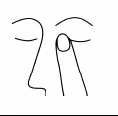
- Close the eye and press gently on the inner corner of the eye with your finger for about two minutes. This helps prevent the medicine from draining into the rest of the body (see illustration below).
- Repeat steps 3, 4, and 5 in the other eye if directed by your doctor.
- Immediately after use, replace and tighten the cap.
If the drop misses the eye, repeat the instillation.
Use of more than the recommended dose of Nodom Combi
If too many drops are instilled into the eye or if the contents of the bottle are swallowed, symptoms such as dizziness, breathing difficulties, or a sensation of slowed heart rate may occur.
Seek immediate medical attention.
Missed dose of Nodom Combi
It is important to use Nodom Combi exactly as prescribed by your doctor.
If you miss a dose, take it as soon as possible. However, if it is almost time for the next dose, skip the missed dose and return to your regular dosing schedule.
Do not use a double dose to make up for a missed dose.
Stopping Nodom Combi
If you wish to discontinue using this medicine, discuss it with your doctor first.
If you have any further questions about the use of this medicine, consult your doctor or pharmacist.
4. Possible adverse reactions
Like all medicines, this medicine can cause adverse reactions, although not everyone will experience them.
The use of drops should be continued unless severe adverse reactions occur. If the patient
has any doubts, they should contact their doctor or pharmacist. Do not discontinue
treatment with Nodom Combi without consulting a doctor.
Generalised allergic reactions include subcutaneous swelling, which may occur in areas such as
the face and limbs, and may narrow the airways, causing difficulty in swallowing or breathing, urticaria or itchy rash, localised and generalised rash, itching,
severe, sudden, life-threatening allergic reaction.
The following adverse reactions have been reported following administration of Nodom Combi or one of its components during clinical trials or after market introduction:
Very common (may occur in more than 1 in 10 patients):
Burning and stinging sensation in the eye(s), altered taste perception.
Common (may occur in less than 1 in 10 patients):
Redness of the eye(s) or around the eye(s), tearing or itchy sensation in the eye(s), corneal erosions (damage to the front layer of the eyeball), swelling or irritation of the eye(s) or around the eye(s), foreign body sensation in the eye, reduced corneal sensitivity (lack of sensation that something has entered the eye and lack of pain sensation), eye pain, dry eye sensation, blurred vision, headache, sinusitis (feeling of pressure and fullness in the nose), nausea, weakness and fatigue.
Uncommon (may occur in less than 1 in 100 patients):
Dizziness, depression, uveitis, visual disturbances, including refractive changes (in some cases due to discontinuation of miotic drugs), bradycardia (slowed heart rate), loss of consciousness, breathing difficulties (apnoea), dyspepsia, kidney stones (often with sudden onset of severe, colicky pain in the lower back or side, groin, or abdomen).
Rare (may occur in less than 1 in 1000 patients):
Systemic lupus erythematosus (an autoimmune disease that may cause inflammation of internal organs), tingling and numbness of hands or feet, sleep disturbances, nightmares, memory loss, worsening of myasthenia symptoms (a muscle disorder), decreased libido, detachment of the layer of the eye located under the retina and containing blood vessels after filtration procedures (which may cause visual disturbances), ptosis (drooping eyelid causing the eye to be half-closed), double vision, eyelid sticking, corneal edema (causing visual disturbances), low intraocular pressure, tinnitus, hypotension (low blood pressure), changes in heart rate or rhythm, chest pain, palpitations (accelerated and/or irregular heartbeat), myocardial infarction, Raynaud's phenomenon, swelling (fluid accumulation), cerebral ischemia (reduced blood flow to the brain), chest pain, palpitations (rapid and/or irregular heartbeat), congestive heart failure (heart disease presenting with shortness of breath and swelling of feet and legs due to fluid retention), edema (fluid accumulation), cerebral ischemia (reduced blood flow to the brain), chest pain, palpitations (rapid and/or irregular heartbeat), myocardial infarction, Raynaud's phenomenon, swelling of hands or cold hands and feet, reduced blood flow in the hands and feet, leg muscle cramps or leg pain while walking (claudication), shortness of breath, feeling of breathlessness, nasal discharge or nasal congestion, nosebleeds, narrowing of airways in the lungs causing breathing difficulties, cough, throat irritation, dry mouth, diarrhea, contact dermatitis, hair loss, silvery-white skin rash (psoriasis-like rash), Peyronie's disease (which may cause penile curvature), allergic reactions such as rash, urticaria, itching, in rare cases possible swelling of lips, eyes and mouth, wheezing or severe skin reactions (Stevens-Johnson syndrome, toxic epidermal necrolysis).
Like other medicines administered locally to the eyes, timolol is absorbed into the bloodstream, which may result in adverse reactions similar to those observed after oral administration of beta-adrenergic receptor blocking agents. Adverse reactions occur less frequently with topical ophthalmic administration than with systemic administration, for example orally or by injection.
Among the additional adverse reactions listed above are those typical of the therapeutic class of beta-adrenolytic agents used in ophthalmic disorders.
Frequency not known (cannot be estimated from available data):
Low blood glucose levels, heart failure, cardiac arrhythmias, abdominal pain, vomiting, muscle pain unrelated to physical exertion, sexual dysfunction, shortness of breath, foreign body sensation in the eye (feeling that something is in the eye), hallucinations, strong heartbeat which may be rapid or irregular (palpitations), increased heart rate, increased blood pressure.
Reporting of adverse reactions
If any adverse reactions occur, including any not listed in this leaflet, inform your doctor, pharmacist, or nurse. Adverse reactions can be reported directly to the Department of Monitoring Adverse Reactions of Medicinal Products, Office for Registration of Medicinal Products, Medical Devices and Biocidal Products
Al. Jerozolimskie 181C
02-222 Warsaw
Tel.: + 48 22 49 21 301
Fax: + 48 22 49 21 309
Website: https://smz.ezdrowie.gov.pl
Adverse reactions can also be reported to the marketing authorization holder.
Reporting adverse reactions helps to provide more information on the safety of the medicine.
5. How to store Nodom Combi
Keep this medicine out of the sight and reach of children.
Do not use this medicine after the expiry date stated on the bottle and carton after: EXP. The expiry date refers to the last day of the stated month.
The marking on the packaging after the abbreviation EXP indicates the expiry date, and after the abbreviation Lot indicates the batch number.
No special storage temperature requirements apply to this medicinal product.
The shelf life after first opening the bottle is 28 days. Therefore, the bottle should be discarded 4 weeks after first opening, even if some solution remains. To help remember the date the bottle was opened, write it down on the carton.
Medicines must not be disposed of via wastewater or household waste. Ask your pharmacist how to dispose of medicines no longer in use. Such measures will help protect the environment.
6. Contents of the pack and other information
What Nodom Combi contains
- The active substances are dorzolamide and timolol. Each millilitre contains 20 mg dorzolamide (as dorzolamide hydrochloride 22.26 mg) and 5 mg timolol (as timolol maleate 6.83 mg).
- Other ingredients: mannitol, hydroxyethylcellulose, benzalkonium chloride solution 50%, sodium citrate, sodium hydroxide 1N (for pH adjustment), water for injections.
What Nodom Combi looks like and contents of the pack
Nodom Combi is a sterile, clear, slightly viscous, colourless aqueous solution.
It is available in MDPE bottles with an LDPE dropper insert and HDPE screw cap with a tamper-evident seal, containing 5 ml of ophthalmic solution.
Pack sizes: 1, 3 or 6 bottles of 5 ml.
Not all pack sizes may be marketed.
Marketing Authorisation Holder
Zakłady Farmaceutyczne POLPHARMA S.A.
ul. Pelplińska 19, 83-200 Starogard Gdański
tel. + 48 22 364 61 01
Manufacturer
Famar S.A., Plant A
63 Agiou Dimitriou Street, 174 56 Alimos
Greece
Pharmathen S.A.
6 Dervenakion str., 15351 Pallini, Attiki
Greece
Zakłady Farmaceutyczne POLPHARMA S.A.
ul. Pelplińska 19, 83-200 Starogard Gdański