Nizoral
Poland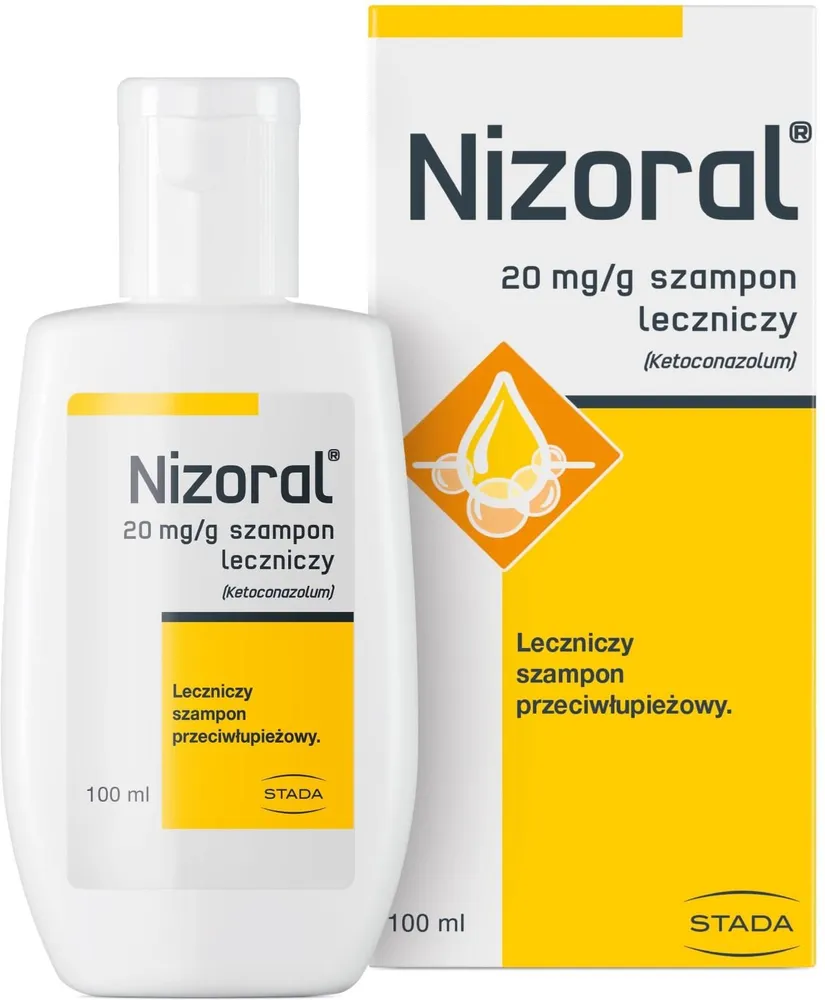
Table of Contents
Package leaflet: Information for the user
Warning! Keep this leaflet! Information on the immediate packaging in a foreign language.
Nizoral
20 mg/g, medicated shampoo
Ketoconazole
Please read this leaflet carefully because it contains important information for the patient.
This medicine should always be used as described in this patient leaflet or as directed by a doctor or pharmacist.
- Keep this leaflet, as you may need to read it again.
- Consult your pharmacist if you need advice or further information.
- If any adverse reactions occur, including any not listed in this leaflet, inform your doctor or pharmacist. See section 4.
- If symptoms do not improve or worsen, contact your doctor.
Table of contents
- What Nizoral is and what it is used for
- Important information before using Nizoral
- How to use Nizoral
- Possible side effects
- How to store Nizoral
- Contents of the pack and other information
1. What Nizoral is and what it is used for
Nizoral medicated shampoo is an antifungal medicine for topical application to the skin. The medicine contains the active substance ketoconazole.
Indications
Nizoral is indicated for the treatment and prevention of the following skin conditions caused by Malassezia yeasts (previously called Pityrosporum ):
- Dandruff (scaling of the scalp skin in the form of white, easily detachable flakes).
- Seborrhoeic dermatitis (brownish-red patches on the chest and face, which flake off as white or yellowish scales).
Nizoral is also indicated for the treatment of:
- Pityriasis versicolor (small white spots on the skin of the chest) caused by Pityriasis versicolor.
2. Important information before using Nizoral
When not to use Nizoral
- if the patient is allergic to ketoconazole or any of the other ingredients of this medicine (listed in section 6).
Warnings and precautions
Before starting to use Nizoral, consult a doctor or pharmacist.
Consult a doctor even if the warnings below refer to conditions that occurred in the past.
If there has been prior prolonged topical treatment with corticosteroids, to avoid worsening of symptoms after stopping their use, the doctor will recommend gradually discontinuing corticosteroid treatment (over 2 to 3 weeks). Skin may react to too rapid withdrawal of corticosteroids with redness and itching.
Any doubts should be clarified with a doctor.
Avoid contact of the medicine with the eyes. If contact occurs, rinse eyes thoroughly with water.
Seborrhoeic dermatitis and pityriasis are often accompanied by increased hair loss, which may also occur, although rarely, during treatment with Nizoral.
Nizoral and other medicines
No data available.
Inform your doctor or pharmacist about all medicines you are currently taking or have recently taken, as well as any medicines you plan to take.
Pregnancy and breastfeeding
During pregnancy, breastfeeding, if pregnancy is suspected, or when planning a pregnancy, consult a doctor or pharmacist before using this medicine.
Nizoral may be used during pregnancy and breastfeeding if, in the opinion of the doctor, it is clearly necessary.
3. How to use Nizoral
This medicine should always be used according to the instructions in the package leaflet or as directed by a physician or pharmacist. If in doubt, consult a physician or pharmacist.
The medicine is intended for topical use on the skin in adolescents (over 12 years of age) and adults.
Dosage
Unless otherwise prescribed by a physician, Nizoral is usually used as described below.
- Apply a small amount of shampoo to the affected skin – usually a handful of the product is sufficient for a single application (hair may be previously washed with regular shampoo).
- Using a small amount of water, spread the shampoo evenly over the skin. In the case of long hair, only the scalp needs to be washed.
- Massage the shampoo into the skin until a lather forms.
- Leave the lather on the skin for 3 to 5 minutes, then rinse thoroughly.
- A regular shampoo may be used daily.
Treatment:
Pityriasis versicolor: apply once daily for one day.
Seborrhoeic dermatitis and dandruff: apply twice a week for 2 to 4 weeks.
Prophylaxis:
Seborrhoeic dermatitis and dandruff: apply once a week or once every two weeks.
If you have any further doubts regarding the use of this medicine, consult your physician or pharmacist.
Children
Do not use in children under 12 years of age.
The safety and efficacy of Nizoral in infants and children under 12 years of age have not been established.
Use of more than the recommended dose of Nizoral
Topical use of Nizoral according to the recommended indications and method of use does not pose a risk of overdose.
In case of accidental ingestion, contact a physician immediately.
To avoid aspiration of gastric contents, do not perform gastric lavage or induce vomiting.
4. Possible adverse reactions
Like all medicines, this medicine can cause adverse reactions, although not everyone will experience them.
The following adverse reactions may occur during treatment with Nizoral:
Uncommon (in more than 1 in 1,000 and less than 1 in 100 patients) at the application site:
erythema, irritation, hypersensitivity, pruritus, reaction and pustules. Uncommonly, eye irritation and increased lacrimation may occur, as well as hypersensitivity, folliculitis, acne, hair loss, contact dermatitis, dry skin, abnormal hair structure, rash, burning sensation and skin disorders, epidermal desquamation, and taste disturbances.
Since Nizoral has been marketed, very rare cases (in less than 1 in 10,000 patients) of urticaria, angioedema, and hair discoloration have been reported.
Reporting of adverse reactions
If any adverse reactions occur, including any adverse reactions not listed in this leaflet, inform your doctor or pharmacist. Adverse reactions can be reported directly to the Department of Monitoring Adverse Drug Reactions of the Office for Registration of Medicinal Products, Medical Devices and Biocidal Products, Al. Jerozolimskie 181C, 02-222 Warsaw, tel.: + 48 22 49 21 301, fax: + 48 22 49 21 309, website: https://smz.ezdrowie.gov.pl.
Reporting adverse reactions helps to provide more information on the safety of the medicine.
5. How to store Nizoral medicine
Keep the medicine out of sight and reach of children.
Do not store above 25°C.
Keep the bottle tightly closed.
Do not use this medicine after the expiry date stated on the packaging. The expiry date refers to the last day of the stated month.
Medicines must not be disposed of via wastewater or household waste. Ask your pharmacist how to dispose of medicines no longer in use. This will help protect the environment.
6. Contents of the package and other information
What Nizoral contains
- The active substance is ketoconazole. 1 g of medicated shampoo contains 20 mg of ketoconazole.
- The other ingredients are: sodium lauryl sulfonate ether, disodium monolauryl sulfosuccinate ether, coco fatty acid diethanolamide, laurdimonium hydrolysed animal collagen, polyglyceryl-120 methylglucosyl dioleate, sodium chloride, imidourea, sodium hydroxide, concentrated hydrochloric acid, sodium erythrosine (E 127), purified water.
What Nizoral looks like
The medicine is a pink, viscous medicated shampoo.
Packaging:
HDPE bottle containing 120 ml of shampoo, in a cardboard box.
For more detailed information, please contact the responsible party or parallel importer.
Responsible party in Ireland, country of export:
Clonmel Healthcare Ltd.
Clonmel, Co. Tipperary
Ireland
Manufacturer:
Janssen Pharmaceutica NV
Turnhoutseweg 30
B-2340 Beerse
Belgium
McGregor Cory Ltd
Middleton Close, Banbury
Oxon OX16 4RS
United Kingdom
Clonmel Healthcare Ltd.
Clonmel, Co. Tipperary
Ireland
STADA Arzneimittel AG
Stadastrasse 2-18,
D-61118, Bad Vilbel
Germany
Parallel importer:
InPharm Sp. z o.o.
ul. Strumykowa 28/11
03-138 Warsaw
Repackaged in:
InPharm Sp. z o.o. Services sp. k.
ul. Chełmżyńska 249
04-458 Warsaw
Marketing authorisation number in Ireland, country of export: PA 126/315/002
Parallel import authorisation number: 422/22