Nitresan 10 mg
Poland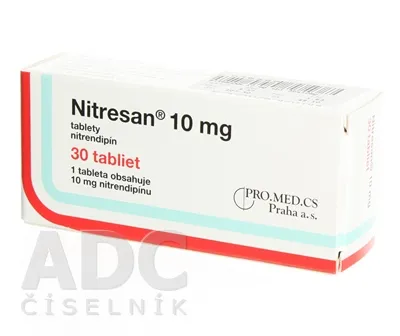
Table of Contents
Package leaflet: Information for the user
Nitresan 10 mg tablets
Nitrendipine
Please read all of this leaflet carefully before taking this medicine, because it contains
important information for the patient.
- Keep this leaflet, as you may need to read it again.
- If you have any further questions, ask your doctor or pharmacist.
- This medicine has been prescribed for a specific individual. Do not pass it on to others. It may harm someone else, even if their symptoms are the same.
- If you experience any adverse reactions, including any not listed in this leaflet, tell your doctor or pharmacist. See section 4.
Contents of the leaflet:
- What Nitresan 10 mg is and what it is used for
- What you need to know before taking Nitresan 10 mg
- How to take Nitresan 10 mg
- Possible side effects
- How to store Nitresan 10 mg
- Contents of the pack and other information
1. What Nitresan 10 mg is and what it is used for
Nitrendipine, the active substance in Nitresan 10 mg tablets, belongs to a group of medicines called calcium antagonists. It helps reduce tension and dilate blood vessels. As blood vessels are dilated, blood pressure decreases.
Your doctor has prescribed this medicine to reduce high blood pressure.
2. What you need to know before taking Nitresan 10 mg
Do not take Nitresan 10 mg:
- if you are allergic to nitrendipine, to another calcium antagonist of the 1,4-dihydropyridine type, or to any of the other ingredients of this medicine (listed in section 6),
- if you have cardiogenic shock (very weak pulse and low blood pressure),
- if you have severe aortic valve stenosis or subaortic stenosis,
- if you have had a myocardial infarction within the last 4 weeks,
- if you have unstable angina pectoris (chest pain caused by ischemic heart disease, occurring both at rest and with minimal exertion),
- if you are taking rifampicin,
- during pregnancy.
Warnings and precautions
Before starting treatment with Nitresan 10 mg, discuss with your doctor or pharmacist:
- if you have liver disease, blood pressure may decrease more significantly,
- your doctor may consider reducing the dose if you have impaired heart function or cardiac arrhythmias.
Regular medical monitoring is necessary during treatment with Nitresan 10 mg.
Children and adolescents
This medicine is not recommended for use in children and adolescents.
Nitresan 10 mg and other medicines
Tell your doctor or pharmacist about all medicines you are currently taking, have recently taken, or plan to take.
The following medicines or groups of medicines, when taken concomitantly, may affect the action of Nitresan 10 mg:
- Rifampicin, an antituberculosis medicine, must not be used together with Nitresan 10 mg, as it may reduce its effectiveness.
- The following medicines may enhance the effect of Nitresan 10 mg:
o Macrolide antibiotics (erythromycin, troleandomycin, clarithromycin, roxithromycin)
o Medicines used in HIV infection (protease inhibitors such as ritonavir)
o Antifungal medicines (azole antifungals such as ketoconazole)
o Nefazodone and fluoxetine (antidepressants)
o Quinupristin and dalfopristin (antibiotics)
o Valproic acid (a medicine used in epilepsy treatment)
o Cimetidine and ranitidine (medicines used in peptic ulcer disease) - The following medicines may reduce the effect of Nitresan 10 mg:
o Phenytoin, phenobarbital, and carbamazepine (antiepileptic medicines) - Nitresan 10 mg may affect the action of other medicines:
o Medicines that lower blood pressure: Nitresan 10 mg may enhance the blood pressure-lowering effect of concomitantly administered antihypertensive medicines such as:
- Diuretics (medicines that increase water excretion)
- β-blockers
- ACE inhibitors
- Angiotensin II receptor antagonists (AT_)
- Other calcium antagonists
- Alpha-adrenergic receptor blockers
- PDE-5 inhibitors (enzyme inhibitors used in the treatment of erectile dysfunction and pulmonary hypertension)
- Alpha-methyldopa o Digoxin (a cardiac medicine). The effect of digoxin may be enhanced. o Certain muscle relaxants (pancuronium). The effect of this medicine may be enhanced and prolonged.
When Nitresan 10 mg is used concomitantly with any of the above-mentioned medicines, your doctor should closely monitor blood pressure and, if necessary, adjust treatment.
Nitresan 10 mg with food and drink
Grapefruit juice inhibits the metabolism of nitrendipine. Therefore, grapefruit juice should not be consumed during treatment with Nitresan 10 mg.
Pregnancy, breastfeeding and fertility
If you are pregnant, breastfeeding, think you may be pregnant, or are planning to have a baby, you should consult your doctor or pharmacist before taking this medicine.
The use of Nitresan 10 mg during pregnancy is contraindicated.
Experimental studies using nitrendipine have shown developmental disorders in the fetus.
Data on use in pregnant women are insufficient.
Nitrendipine passes into human milk in small amounts. The effect of nitrendipine on newborns and breastfed infants is unknown.
Nitrendipine may impair fertility in men. In men who have repeatedly and unsuccessfully attempted to father children through assisted reproductive techniques without a clear cause, nitrendipine use should be considered as a possible reason for failure. If pregnancy is planned, alternative treatment should be considered.
Driving and using machines
During treatment for high blood pressure, the patient should be under medical supervision.
Treatment of high blood pressure may affect the ability to drive motor vehicles and operate mechanical equipment.
This is particularly likely at the beginning of treatment, when increasing the dose, when switching from one medicine to another, or when consuming alcohol concomitantly.
Nitresan 10 mg contains lactose monohydrate
If you have been previously diagnosed with intolerance to certain sugars, you should consult your doctor before taking this medicine.
Nitresan 10 mg contains sodium
The medicine contains less than 1 mmol (23 mg) of sodium per tablet, meaning the medicine is considered "sodium-free".
3. How to take Nitresan 10 mg
This medicine should always be taken as directed by the physician. In case of doubts, consult your doctor or pharmacist.
Since the medicine is light-sensitive, tablets should be stored in the original packaging (see also section 5).
The recommended dose for adults is 1 tablet twice daily (in the morning and evening), corresponding to 20 mg of nitrendipine per day.
If blood pressure reduction is inadequate, the daily dose may be increased to 2 tablets twice daily (corresponding to 40 mg of nitrendipine per day).
The maximum daily dose of nitrendipine is 40 mg.
Tablets should be taken after meals (in the morning and evening), with sufficient fluid. Do not take the tablets with grapefruit juice, as Nitresan 10 mg may then have an excessive effect.
Treatment of high blood pressure is long-term. Your doctor will inform you how long the medicine should be taken.
Use in children and adolescents
Nitresan 10 mg is not indicated for use in children and adolescents; there is insufficient experience with the use of this medicine in this age group.
Patients with liver function disorders
Patients with impaired liver function may be more sensitive to the effects of Nitresan 10 mg. The doctor will prescribe the lowest dose that allows control of blood pressure.
Patients with kidney function disorders
There is no need to adjust the dose in patients with impaired kidney function.
Elderly patients
The doctor will prescribe the lowest effective dose and monitor the patient's condition.
Taking more Nitresan 10 mg than recommended
Symptoms of acute poisoning include:
sudden reddening of the skin, headache, reduction in blood pressure (with circulatory collapse), and changes in heart rate (fast or slow pulse).
In case of overdose, consult a doctor immediately.
Missing a dose of Nitresan 10 mg
Do not take a double dose to make up for a missed dose.
Take the next tablet at the usual time.
Stopping Nitresan 10 mg treatment
If the patient wishes to discontinue treatment, e.g. due to adverse effects, they should first consult their doctor.
Do not stop treatment without medical advice.
If you have any further questions about the use of this medicine, consult your doctor.
4. Possible adverse effects
Like all medicines, this medicine can cause adverse effects, although not everyone will experience them.
Common (may occur in up to 1 in 10 people):
- headache
- anxiety reactions
- palpitations
- swelling of ankles and legs
- vasodilation
- sudden flushing of the face and redness of the skin
- sensation of warmth (flushing)
- bloating
- general feeling of discomfort, illness or fatigue
Uncommon (may occur in up to 1 in 100 people):
- allergic reactions, including skin reactions and allergic swelling/angioedema
- central dizziness
- fatigue
- migraine
- decreased sensitivity to touch
- sleep disorders
- visual disturbances
- tinnitus
- peripheral dizziness
- angina pectoris
- increased heart rate (tachycardia)
- heart rhythm disorders
- chest pain
- low blood pressure
- shortness of breath
- nosebleeds
- nausea, vomiting, stomach, intestinal and abdominal pain, diarrhoea, constipation
- gingival hyperplasia
- dryness of the oral mucosa
- dyspepsia
- gastritis and enteritis
- liver function disorders (increased activity of certain liver enzymes)
- muscle pain
- increased volume of urine excreted (polyuria)
- unusual pain
Frequency not known
- myocardial infarction
Reporting of adverse effects
If any adverse effects occur, including any adverse effects not listed in this leaflet, inform your doctor or pharmacist. Adverse effects can be reported directly to the Department of Monitoring Adverse Drug Reactions of the Office for Registration of Medicinal Products, Medical Devices and Biocidal Products: Al. Jerozolimskie 181C, 02-222 Warsaw, tel.: 22 49-21-301, fax: 22 49-21-309, Website: https://smz.ezdrowie.gov.pl
Adverse effects can also be reported to the marketing authorization holder.
Reporting adverse effects helps to gather more information on the safety of the medicine.
5. How to store Nitresan 10 mg
Keep this medicine out of sight and reach of children.
Do not store above 25°C. Store in the original packaging to protect from light.
Do not use this medicine after the expiry date stated on the packaging after "EXP". The expiry date refers to the last day of the stated month.
Medicines must not be disposed of via the sewage system or household waste. Ask your pharmacist how to dispose of medicines no longer required. Such measures help protect the environment.
6. Contents of the package and other information
What Nitresan 10 mg contains
The active substance is nitrendipine. Each tablet contains 10 mg of nitrendipine.
Other ingredients are: lactose monohydrate, corn starch, microcrystalline cellulose,
povidone K-25, sodium docusate, magnesium stearate.
What Nitresan 10 mg looks like and contents of the pack
Yellow, flat tablets with a central dividing groove on one side and strength identification on the other,
7 mm in diameter.
The dividing line on the tablet is not intended for splitting the tablet.
Pack sizes: 20, 30, 50, 60 or 100 tablets.
Not all pack sizes may be marketed.
Marketing Authorisation Holder and Manufacturer
PRO.MED. CS. Praha a.s., Telčská 377/1, Michle, 140 00 Praha 4, Czech Republic
This medicinal product is authorised in the European Economic Area countries under the following names:
Estonia: Nitresan 10 mg
Lithuania: Nitresan 10 mg
Latvia: Nitresan 10 mg
Poland: Nitresan 10 mg
Slovakia: NITRESAN 10 mg
Czech Republic: Nitresan