Niquitin transparent
Poland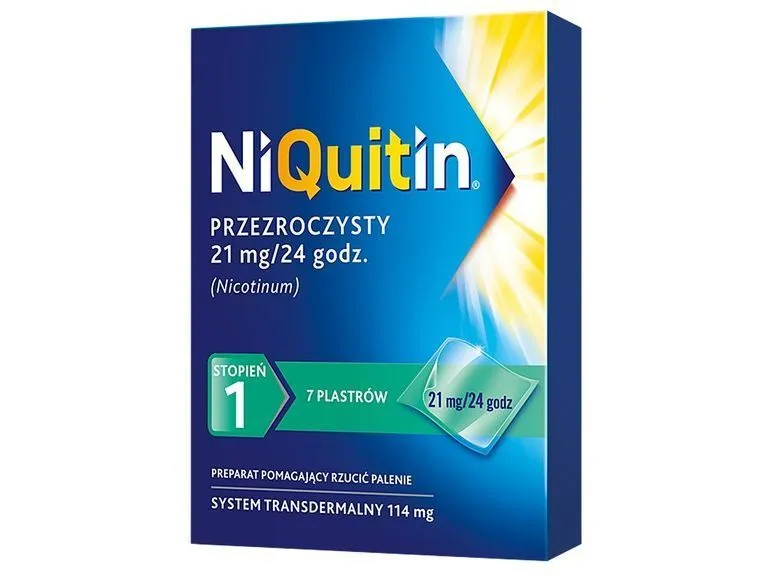
Table of Contents
- Package leaflet: Information for the user
- 1. What NiQuitin Transparent is and what it is used for
- 2. Important information before using NiQuitin Transparent
- 3. How to use NiQuitin Transparent
- 4. Possible adverse reactions
- 5. How to store NiQuitin Transparent
- 6. Contents of the pack and other information
Package leaflet: Information for the user
Warning! Keep this leaflet. The information on the immediate packaging is in a foreign language.
NiQuitin Transparent (NiQuitin)
114 mg; 21 mg/24 hours, transdermal system, patch
Nicotinum
NiQuitin Transparent and NiQuitin are different trade names for the same medicinal product authorized
for marketing in Poland and Lithuania, the country of export.
Please read this leaflet carefully before using the medicine, as it contains
important information for the patient.
This medicine should always be used exactly as described in this patient leaflet or as advised by
your doctor, pharmacist, or nurse.
- Keep this leaflet, as you may need to read it again.
- If you need advice or further information, please consult your pharmacist.
- If you experience any adverse reactions, including any possible adverse reactions not listed in this leaflet, inform your doctor, pharmacist, or nurse. See section 4.
- If your condition does not improve or if you feel worse, please consult your doctor.
Contents of the leaflet:
- What NiQuitin Transparent is and what it is used for
- Important information before using NiQuitin Transparent
- How to use NiQuitin Transparent
- Possible side effects
- How to store NiQuitin Transparent
- Contents of the pack and other information
1. What NiQuitin Transparent is and what it is used for
NiQuitin Transparent is a medicine in the form of transparent, square patches applied
to the skin, which helps in quitting smoking.
NiQuitin Transparent continuously delivers a steady dose of nicotine to the body over 24 hours.
During the course of treatment, which lasts either ten or eight weeks (see section How to use NiQuitin Transparent), the body's need for nicotine is gradually reduced. NiQuitin Transparent patches are available in three strengths:
- 114 mg, delivering 21 mg of nicotine over 24 hours;
- 78 mg, delivering 14 mg of nicotine over 24 hours;
- 36 mg, delivering 7 mg of nicotine over 24 hours. This allows for a gradual reduction of nicotine doses during treatment, leading to a progressive release from dependence.
NiQuitin Transparent is indicated to relieve symptoms associated with nicotine withdrawal, such as: craving for nicotine, nervousness, restlessness, irritability, mood disturbances, sleep disturbances, difficulty concentrating, increased appetite, and mild somatic symptoms (headache, muscle aches, constipation, fatigue), related to stopping smoking.
If possible, when quitting smoking, NiQuitin Transparent should be used in conjunction with a psychological support program to help stop smoking.
NiQuitin Transparent patches may be used alone or in combination with other oral forms of NiQuitin (see section How to use NiQuitin Transparent).
2. Important information before using NiQuitin Transparent
When not to use NiQuitin Transparent
- if the patient is allergic to nicotine or any of the other ingredients of this medicine (listed in section 6),
- in children,
- in non-smokers or occasional smokers.
Warnings and precautions
Consult a doctor before use in cases of: cardiovascular diseases (e.g. unstable angina pectoris, Prinzmetal's angina, heart failure, uncontrolled hypertension, severe arrhythmia), recent myocardial infarction or ischaemic stroke, cerebral circulatory disorders, conditions involving vasoconstriction, severe peripheral vascular disease, atopic dermatitis or eczema (due to local hypersensitivity to the patch), moderate to severe renal or hepatic impairment, peptic ulcer disease of the stomach or duodenum, hyperthyroidism, diabetes, phaeochromocytoma.
Combination therapy (using NiQuitin Transparent together with other oral forms of NiQuitin (1.5 mg/2 mg/4 mg)) should not be used in patients with diagnosed cardiovascular disease without prior risk/benefit assessment by qualified medical personnel.
Patients hospitalised due to recent myocardial infarction, severe cardiac arrhythmias or stroke should attempt to quit smoking without using nicotine replacement therapy, unless a doctor authorises its use. After discharge from hospital, normal use of nicotine replacement therapy is possible.
Patients who have ever experienced seizures should consult a doctor, pharmacist or nurse before using the medicine.
Diabetic patients using NiQuitin Transparent patches should monitor their blood glucose levels more frequently than usual. Recommendations regarding insulin or antidiabetic medication may need adjustment.
NiQuitin Transparent may cause contact irritation. The product should be used with caution and contact of the patch with eyes and nose should be particularly avoided. After applying the patch, hands should be thoroughly washed with water only, without soap, as soap may increase nicotine absorption.
Smoking during therapy with NiQuitin Transparent patches poses a potential risk of adverse effects due to additive nicotine exposure from tobacco and the patch.
The amount of nicotine present in used and unused patches may be harmful to children. Therefore, the medicine should be stored out of reach of children and used patches should be disposed of carefully.
Unwanted reactions may occur in patients with skin inflammation after application of the patch.
If severe local reactions at the application site persist for more than 4 days (e.g. severe erythema, itching or swelling) or generalised skin reactions (urticaria, generalised rash) occur, the patch should be discontinued and a doctor should be consulted.
Use with caution in patients with gastric ulcer, peptic ulcer, oesophagitis (inflammation of the oesophagus connecting the mouth and stomach), stomatitis, pharyngitis or gastritis, as nicotine replacement therapy may exacerbate symptoms.
There is a risk of dependence when using this medicine.
NiQuitin Transparent and other medicines
Inform your doctor about all medicines you have recently taken, including those available without prescription.
Both quitting smoking and using nicotine replacement products reduce nicotine levels in the body, which may affect the action of other medicines.
Particular caution is required when using nicotine together with adenosine, as nicotine may potentially enhance the haemodynamic effects of adenosine, i.e. increase in blood pressure and heart rate, and increase the pain response (chest pain typical of angina) induced by adenosine administration.
Pregnancy, breastfeeding and effects on fertility
Stopping smoking is the single most effective intervention to improve the health of both a pregnant woman and her unborn child. The earlier abstinence is achieved, the better.
Pregnant and breastfeeding women should try to quit smoking without using nicotine replacement products. If quitting smoking in this way is unsuccessful, patients should consult a doctor who may recommend using NiQuitin Transparent.
For the foetus, the risk of using NRT is lower than the expected risk associated with continued smoking, due to lower maximum nicotine plasma concentrations and absence of additional exposure to polycyclic aromatic hydrocarbons and carbon monoxide.
However, since nicotine crosses the placenta, affecting foetal breathing movements and exerting a dose-dependent effect on placental/foetal circulation, the decision to use NRT should be made as early as possible in pregnancy. NRT use should be limited to a period of 2-3 months.
Products with intermittent dosing are preferred, as they usually provide a lower daily nicotine dose compared to patches. However, patches may be suitable if the woman experiences nausea during pregnancy.
Nicotine from smoking and NRT passes into breast milk. However, the amount of nicotine to which the infant is exposed due to NRT therapy is relatively small and less hazardous than passive smoking, to which the infant would otherwise be exposed.
Compared to patches, using intermittently dosed NRT products may minimise the amount of nicotine in human milk, as the time interval between NRT administration and breastfeeding can be maximised. Women should try to breastfeed immediately before taking the NRT product.
Due to lack of specific studies, combination therapy with patches and oral NRT forms is not recommended during pregnancy and lactation, unless qualified medical personnel consider it necessary to ensure abstinence.
Driving and operating machinery
NiQuitin Transparent patches have no effect or have negligible influence on the ability to drive and operate machinery.
3. How to use NiQuitin Transparent
This medicine should always be used exactly as described in the patient information leaflet or as
advised by your doctor, pharmacist, or nurse. If in doubt, consult your doctor,
pharmacist, or nurse.
Use in adults
Smoking must be stopped before starting treatment. Smoking even a small amount of tobacco
while trying to quit may lead to relapse. During treatment, smoking cigarettes should not be allowed, as this may result in nicotine overdose. In some cases, it may be beneficial to use oral forms of nicotine replacement therapy (such as lozenges, tablets for sucking, or chewing gum) in combination with NiQuitin Transparent, to use when a strong urge to smoke occurs.
For smokers of more than 10 cigarettes per day, the nicotine dose is reduced in three
stages according to the following dosing schedule:
| Step 1 NiQuitin Transparent 21 mg/24 hours | Step 2 NiQuitin Transparent 14 mg/24 hours | |
| 6 weeks | ||
| 2 weeks | Step 3 NiQuitin Transparent 7 mg/24 hours | |
| 2 weeks | ||
| initial treatment period | dose-reduction treatment period | |
For individuals smoking no more than 10 cigarettes per day, the nicotine dose should be reduced in 2
stages according to the following dosing schedule:
| Step 2 NiQuitin Clear 14 mg/24 hours | |
| 6 weeks | Step 3 NiQuitin Clear 7 mg/24 hours |
| 2 weeks | |
| initial treatment period | treatment period with reduced dose |
For best results, complete the full 10-week or 8-week treatment course, as withdrawal symptoms may persist for several weeks.
The product should not be used for longer than 10 weeks. If the treatment has not achieved the desired outcome (e.g. the patient has not stopped smoking or has resumed smoking), consult a doctor to determine further treatment.
Patients using patches for longer than 12 months should consult a doctor.
Using patches in combination with other oral forms
If a patient experiences strong cravings to smoke, combining patches with oral forms of nicotine-containing medicines may provide a greater chance of successfully quitting smoking compared to patch therapy alone.
The same dosing regimen as for patch-only therapy is recommended. If the patient feels a strong urge to smoke, they should take a lozenge, oromucosal tablet, or chewing gum of NiQuitin – on average 5–6 units per day. When using combination therapy, the maximum daily dose for all oral forms is 10 units for 4 mg, and 15 units for 1.5 mg/2 mg.
The patient should use oral forms of NiQuitin for 2–3 months, after which the dose should be gradually reduced. Treatment should be discontinued when the patient is taking only 1 to 2 oral units per day.
| Stage | Patches* | NiQuitin oral forms |
| Stage 1: 6 weeks | NiQuitin Clear 21 mg/24 hours | Average: 5 to 6 pieces/24 hours ** |
| Stage 2: 2 weeks | NiQuitin Clear 14 mg/24 hours | Continue using lozenges/tablets for sucking/chewing gum if necessary. |
| Stage 3: 2 weeks | NiQuitin Clear 7 mg/24 hours | Continue using lozenges/tablets for sucking/chewing gum if necessary. |
| After 8–10 weeks | Discontinue use of NiQuitin Clear | Gradually reduce the number of oral forms taken. Treatment should be stopped when the patient is using 1 to 2 oral forms per day. |
*Depending on the number of cigarettes smoked (see recommendations for monotherapy).
** Patients who smoke more than 20 cigarettes per day should use the 4 mg oral dosage form for the first 6 weeks, then reduce the dose. The maximum daily dose for all oral forms is 10 units for 4 mg tablets and 15 units for 1.5 mg/2 mg tablets.
If the patient requires further information, they should consult the patient leaflet included with the NiQuitin lozenges/sucking tablets/chewing gum.
Use in children and adolescents
Adolescents aged 12 to 17 years
The medicinal product may be used in adolescents aged 12 to 17 years only on medical advice.
Children under 12 years of age
NiQuitin Transparent Patch must not be used in children under 12 years of age.
Instructions for use:
To ensure proper adhesion of the patch to the skin, it should be applied to clean, dry, and non-hairy skin. Avoid areas where the skin folds (e.g., joints) or where creases form during movement. Do not apply the patch to reddened, damaged, or irritated skin.
The NiQuitin Transparent Patch should be applied immediately after removal from the sachet.
- To open the sachet, cut along the dotted line, taking care not to damage the patch inside.
- Carefully remove the patch. The patch should be applied with the adhesive side, which is covered by a transparent protective film.
- Peel off half of the protective film, starting from the center, then hold the patch in such a way as to minimize contact with the adhesive surface while peeling off the second half of the film.
- After removing the protective film, apply the patch to the skin with the adhesive side down. Press firmly with the hand for at least 10 seconds. Ensure that the patch adheres well to the skin, especially at the edges.
- After applying the NiQuitin Transparent Patch, avoid touching the eyes or nose. Wash hands with water without using soap.
Water does not adversely affect the patch if it is properly applied; therefore, bathing is permitted during treatment.
NiQuitin Transparent Patches should be changed once daily, always at the same time and as soon as possible after waking up.
The patch must not be left on the skin for longer than 24 hours. A new patch must not be applied to the same site until at least 7 days have passed.
Do not use two patches simultaneously, as excessive nicotine doses may be harmful.
If the patch detaches, apply a new one to another clean, dry, non-hairy area of skin. Continue treatment as before.
Used patches should be folded in half with the adhesive sides together, sealed, and placed in the empty packaging of the patch to be applied next, then disposed of in a place inaccessible to children and pets.
Use of a higher than recommended dose of NiQuitin Transparent Patch
If a higher than recommended dose is used or if the product is accidentally ingested, contact a doctor immediately.
Symptoms similar to acute nicotine poisoning may occur, such as: pallor, sweating, nausea, salivation, vomiting, stomach pain, diarrhea, headache, dizziness, hearing and vision disturbances, tremors, confusion (disorientation), and weakness. In cases of significant overdose, cardiovascular collapse and respiratory disturbances may occur.
If symptoms of overdose occur, the NiQuitin Transparent Patch should be removed immediately. The skin surface may be washed with water and dried. Do not use soap, as this may increase nicotine absorption, which continues to be delivered into the circulation for several hours after patch removal.
Even a small dose of nicotine may be dangerous for children and may result in death. In case of suspected poisoning, contact a doctor immediately.
In case of accidental ingestion of the patch, a doctor may recommend administration of activated charcoal.
In nicotine poisoning, a doctor may administer atropine, diazepam, or barbiturates (for seizure treatment). In respiratory failure, respiratory support should be provided; in arterial hypotension and cardiovascular collapse, fluid administration is indicated.
Missed dose of NiQuitin Transparent Patch
If the patient forgets to change the patch, they should apply a new one as soon as possible and continue treatment as before. Do not use a double dose to make up for the missed dose.
Discontinuation of NiQuitin Transparent Patch
If there are any further questions regarding the use of this medicinal product, consult a doctor, pharmacist, or nurse.
4. Possible adverse reactions
Like all medicines, this product may cause adverse reactions, although not everyone will experience them.
No serious adverse reactions have been observed with the recommended dosage of Niquitin Transparent when used as directed.
Simply stopping smoking may cause symptoms such as weakness, dizziness, headache, cough, and flu-like symptoms. Mood changes, insomnia, depression, irritability, anxiety, drowsiness, restlessness, nervousness, anxiety, sleep disturbances, and difficulty concentrating may also result from stopping smoking.
Other adverse reactions are listed below, grouped according to their likelihood of occurrence:
Very common (occurring in more than 1 in 10 patients)
- Skin reactions at the site of patch application
- Sleep disturbances, including insomnia and nightmares
- Nausea, vomiting
- Headache
- Dizziness
- Palpitations
Common (occurring in less than 1 in 10 but more than 1 in 100 patients)
- Nervousness
- Tremor
- Shortness of breath
- Cough
- Sore throat
- Indigestion
- Abdominal pain
- Diarrhea
- Constipation
- Increased sweating
- Dryness of the mouth
- Joint, muscle, chest or limb pain
- Fatigue/malaise or weakness
Uncommon (occurring in less than 1 in 100 but more than 1 in 1,000 patients)
- Allergic reactions (hypersensitivity)
- Tachycardia (increased heart rate)
- Flu-like symptoms
Rare (occurring in less than 1 in 10,000 patients)
- Skin reactions
- Photosensitivity (increased sensitivity to sunlight)
- Severe allergic reactions, presenting as sudden onset of wheezing or chest tightness, skin rash, or feeling faint
Adverse reactions with unknown frequency:
- Seizures (in patients receiving anticonvulsant treatment or with a history of epilepsy)
At the site of patch application, transient rash, itching, burning, tingling, swelling, and pain may occur. These symptoms usually resolve quickly after removing the patch. More pronounced reactions at the application site may rarely occur. In such cases, discontinue use of the product and consult a doctor.
If any of the listed symptoms worsen or if other adverse reactions not mentioned in this leaflet occur, inform your doctor or pharmacist.
Reporting of adverse reactions
If any adverse reactions occur, including those not listed in this leaflet, inform your doctor, pharmacist, or nurse. Adverse reactions can be reported directly to the Department of Monitoring of Adverse Drug Reactions, Office for Registration of Medicinal Products, Medical Devices and Biocidal Products, Al. Jerozolimskie 181C, 02-222 Warsaw, Phone: +48 22 49-21-301, Fax: +48 22 49-21-309, Website: https://smz.ezdrowie.gov.pl
Reporting adverse reactions helps to improve the safety information available for this medicinal product.
5. How to store NiQuitin Transparent
Store below 30°C.
Keep the medicine out of the sight and reach of children.
Do not use this medicine after the expiry date stated on the packaging. The expiry date refers to the last day of the stated month.
Do not use NiQuitin Transparent patches if the sachets appear damaged or open.
If you have any questions or doubts, consult your doctor or pharmacist.
Medicines must not be disposed of via wastewater or household waste. Ask your pharmacist how to dispose of medicines no longer required. This will help protect the environment.
6. Contents of the pack and other information
What NiQuitin Transparent contains
- The active substance is nicotine. One 22 cm² transdermal patch containing 114 mg of nicotine as the active substance delivers 21 mg of nicotine over 24 hours.
- Other ingredients are: ethylene vinyl acetate copolymer, polyethylene terephthalate and ethylene vinyl acetate, high-density polyethylene film, polyisobutylene laminate, white ink (3015Z).
What NiQuitin Transparent looks like and contents of the pack
NiQuitin Transparent is a transparent, square patch presented in individual sachets.
The carton contains 7 patches.
For more detailed information, please contact the responsible party or parallel importer.
Marketing Authorisation Holder in Lithuania, country of export:
Richard Bittner AG
Reisnerstraße 55-57
A-1030 Vienna
Austria
Manufacturer:
FAMAR A.V.E. AVLON PLANT (48th)
48th km National Road
Athens-Lamia
Avlona Attiki
Greece
LTS Lohmann Therapie-Systeme AG
Lohmannstrasse 2
56626 Andernach
Germany
Parallel importer:
Delfarma Sp. z o.o.
ul. Św. Teresy od Dzieciątka Jezus 111
91-222 Łódź
Repackaged in:
Delfarma Sp. z o.o.
ul. Św. Teresy od Dzieciątka Jezus 111
91-222 Łódź
Marketing Authorisation numbers in Lithuania, country of export: LT/1/99/0366/005
LT/1/99/0366/006
Parallel import licence number: 307/19