Netaxen
PolandTable of Contents
Package leaflet: Information for the user
Netaxen 3 mg/mL + 1 mg/mL,
eye drops, solution
netilmicin + dexamethasone
Please read all of this leaflet carefully before using this medicine, because it
contains important information for you.
- Keep this leaflet, as you may need to read it again.
- If you have any further questions, please ask your doctor or pharmacist.
- This medicine has been prescribed for a specific individual. Do not pass it on to others. It may harm other people, even if their symptoms are the same.
- If any side effects occur, including any not listed in this leaflet, inform your doctor or pharmacist. See section 4.
Leaflet contents
- What Netaxen is and what it is used for
- Important information before using Netaxen
- How to use Netaxen
- Possible side effects
- How to store Netaxen
- Contents of the pack and other information
1. What Netaxen is and what it is used for
Netaxen contains two active substances: netilmicin and dexamethasone.
- Netilmicin is an antibiotic that kills bacteria.
- Dexamethasone is a steroid medicine that reduces inflammation.
Netaxen is used in adults to reduce inflammation and kill bacteria in the eye when there is swelling and irritation, and when a bacterial infection is likely to have occurred.
If there is no improvement or if your condition worsens after treatment, you should contact your doctor.
2. Important information before using Netaxen
Netaxen may be used in adults, including elderly patients.
Netaxen is not recommended for use in individuals under 18 years of age.
When not to use Netaxen:
- if the patient is allergic to netilmicin, dexamethasone, aminoglycoside antibiotics (such as tobramycin, kanamycin, amikacin, gentamicin, etc.) or any of the other ingredients of this medicine (listed in section 6);
- if the doctor has informed the patient that the eye pressure is too high;
- if the patient suspects a viral or fungal infection in or around the eye;
- if the patient currently has or has previously had a viral eye infection caused by herpes simplex virus;
- if the doctor has informed the patient of having an eye infection caused by mycobacteria.
Warnings and precautions
Before starting treatment with Netaxen, discuss it with a doctor or pharmacist.
Talk to a doctor if swelling or weight gain around the trunk and face occurs, as these are usually the first signs of a condition called Cushing's syndrome. After discontinuation of prolonged or intensive treatment with Netaxen, adrenal suppression may occur. The patient should not stop using the medicine without first discussing it with a doctor. These risks are particularly relevant in children and patients treated with ritonavir or cobicistat.
If blurred vision or other visual disturbances occur, contact a doctor.
If the patient uses Netaxen for a prolonged period:
- intraocular pressure may increase, leading to damage of the optic nerves and subsequent vision problems. If Netaxen is used for longer than 15 days, the doctor should regularly monitor intraocular pressure;
- cataract may develop;
- wounds may heal more slowly;
- the body may be less effective in fighting other types of eye infections, such as fungal or viral infections;
- eye infections associated with significant purulent discharge may worsen after corticosteroid use, or it may become more difficult to identify the type of bacteria causing the infection;
- the steroid in Netaxen may cause thinning of the eye surface, and even perforation;
- the patient may develop hypersensitivity to the antibiotic in the eye drops.
Before starting treatment with Netaxen, tell the doctor if:
- the patient has glaucoma or a family history of glaucoma;
- the patient has corneal problems;
- the patient is taking any other medicines containing phosphates. The doctor will want to regularly examine the patient's cornea;
- the patient wears contact lenses. Patients wearing contact lenses may use Netaxen, provided they follow the instructions described in section 3.
Children and adolescents
Netaxen is not recommended for use in children and adolescents (from birth to 18 years of age).
For external use only.
Netaxen should be applied only to the surface of the eye. This medicine must never be injected or swallowed.
Netaxen and other medicines
Netaxen may interact with other medicines. Inform the doctor or pharmacist if the patient is taking or has recently taken any ophthalmic products or other medicines, including over-the-counter medicines. Netaxen may be used with other ophthalmic products provided the instructions described in section 3 are followed.
Tell the doctor or pharmacist if the patient is taking:
- other antibiotics, particularly polymyxin B, colistin, viomycin, streptomycin, vancomycin, or cephaloridine; concomitant use of Netaxen with other antibiotics may increase the risk of kidney or hearing problems, or may affect the efficacy of other antibiotics;
- cisplatin (a medicine used in cancer treatment);
- diuretics (medicines that prevent fluid retention), such as ethacrynic acid and furosemide;
- anticholinergic medicines (medicines that suppress glandular secretions), such as atropine;
- ritonavir or cobicistat, as these may increase the blood levels of dexamethasone;
- other medicines containing phosphates. The doctor will regularly examine the patient's cornea.
Pregnancy and breastfeeding
If the patient is pregnant, breastfeeding, suspects she may be pregnant, or is planning to have a child, she should consult a doctor or pharmacist before using this medicine.
Use during pregnancy
Use of Netaxen is not recommended during pregnancy unless considered necessary by the doctor.
Use during breastfeeding
Netaxen should not be used during breastfeeding.
Driving and operating machinery
Blurred vision may occur temporarily after using Netaxen. Do not drive or operate machinery until vision clears.
Netaxen contains benzalkonium chloride and phosphates.
This medicine contains 0.05 mg of benzalkonium chloride per mL.
Benzalkonium chloride may be absorbed by soft contact lenses and may alter their color. Contact lenses must be removed before instilling the drops and at least 15 minutes should be waited before reinserting them.
Benzalkonium chloride may also cause eye irritation, particularly in patients with dry eye syndrome or corneal disorders (the transparent front layer of the eye). If abnormal sensations, stinging, or pain in the eye occur after using the medicine, contact a doctor.
This medicine contains 0.18 mg of phosphates per drop, equivalent to 3.66 mg/mL. If the patient has severe damage to the transparent front layer of the eye (cornea), phosphates may, in very rare cases, during treatment, cause corneal clouding due to calcium accumulation.
3. How to use Netaxen
This medicine should always be used as directed by a physician or pharmacist. If in
doubt, consult a physician or pharmacist.
The recommended dose is one drop into the affected eye four times daily, or as
directed by the physician. The usual duration of treatment is between 5 and 14 days.
Do not change the dose of eye drops without consulting your doctor.
Use in children and adolescents
Netaxen is not recommended for use in children and adolescents (from birth to 18 years of age).
Contact lenses
If the patient wears contact lenses, they should be removed before using Netaxen eye drops.
After applying Netaxen, wait 15 minutes before reinserting contact lenses.
If it is necessary to use Netaxen while wearing contact lenses, use Netaxen in single-dose
containers without preservatives.
However, contact lenses should not be worn during treatment with corticosteroid eye drops
due to an increased risk of infection. Contact lenses are also strongly discouraged during
ocular infections or inflammatory conditions.
Using Netaxen with other eye drops
Wait at least 10 minutes between applying Netaxen and using other eye drops or ointments.
Eye ointments should be used last.
Instructions for use
Check that the bottle is intact.
- Wash your hands and sit comfortably.
- Screw the cap tightly to pierce the tip of the bottle. Unscrew the cap.
- Tilt your head backward.
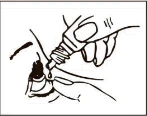
- Using a finger, gently pull down the lower eyelid of the affected eye.
- Turn the bottle upside down and hold the dropper tip close to the eye, but do not touch the eye. Do not touch the eye or eyelid with the dropper tip.
- Gently squeeze the bottle to release only one drop, then release the lower eyelid.
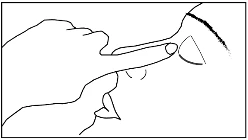
- Close the eye and press with a finger on the inner corner near the nose from the side of the affected eye. Hold for 2 minutes.
- Repeat in the other eye, if directed by the physician.
- Close the bottle with the cap.
Improperly used eye drops may become contaminated with bacteria, which could lead to
eye infections. Using contaminated eye drops may cause serious eye damage and subsequent
loss of vision.
Use of a higher than recommended dose of Netaxen
Problems are unlikely to occur if more than the recommended amount of medicine is used.
Apply the next dose as usual.
If the entire contents of Netaxen are ingested, seek immediate medical advice, as adverse
effects may occur.
Missed dose of Netaxen
Do not use a double dose to make up for a missed dose.
Apply the next dose as usual.
Stopping treatment with Netaxen
If you have any further questions about the use of this medicine, consult your physician or pharmacist.
4. Possible adverse reactions
Like all medicines, this medicine can cause adverse reactions, although not everyone will experience them.
The frequency of occurrence of individual reactions listed below cannot be determined based on available data.
Eye disorders
Increased intraocular pressure, development of cataract during long-term treatment, blurred vision, occurrence or worsening of viral eye infection caused by herpes simplex virus or fungal infection, delayed healing of wounds.
In very rare cases (less than 1 in 10,000), some patients with severe damage to the clear front layer of the eye (cornea) developed corneal clouding due to calcium deposits during treatment.
Immune system disorders
Local allergic reactions: conjunctival redness, burning, itching.
Endocrine disorders
Excessive body hair growth (especially in women), muscle weakness and atrophy, purple stretch marks on the skin, elevated blood pressure, irregular menstruation or absence of menstruation, changes in protein and calcium levels in the body, growth suppression in children and adolescents, and swelling with weight gain and facial changes (Cushing's syndrome) (see section 2, "Warnings and precautions").
In all the above cases, discontinuation of treatment is recommended.
Reporting of adverse reactions
If any adverse symptoms occur, including any adverse effects not listed in this leaflet, inform your doctor or pharmacist. Adverse reactions can be reported directly to the Department of Monitoring Adverse Drug Reactions, Office for Registration of Medicinal Products, Medical Devices and Biocidal Products, Al. Jerozolimskie 181C, PL-02-222 Warsaw, Tel.: +48 22 4921301, Fax: +48 22 4921309,
website: https://smz.ezdrowie.gov.pl
Adverse reactions can also be reported to the marketing authorization holder.
Reporting adverse reactions enables continued monitoring of the medicine's safety and helps provide more information on the safe use of the medicine.
5. How to store Netaxen medicine
Keep this medicine out of sight and reach of children.
Do not use this medicine after the expiry date stated on the carton and bottle
after: EXP. The expiry date refers to the last day of the stated month.
Store below 30°C.
Period of use after first opening the bottle: 28 days.
Medicines must not be disposed of via wastewater or household waste. Ask your pharmacist how to dispose of medicines you no longer use. This will help protect the environment.
6. Contents of the pack and other information
What Netaxen contains
- The active substances in this medicine are netilmicin and dexamethasone. Each mL of solution contains 4.55 mg of netilmicin sulfate (equivalent to 3 mg of netilmicin) and 1.32 mg of dexamethasone sodium phosphate (equivalent to 1 mg of dexamethasone).
- The other ingredients are: sodium citrate, monosodium dihydrogen phosphate monohydrate, disodium phosphate dodecahydrate, benzalkonium chloride, purified water.
What Netaxen looks like and contents of the pack
Netaxen is a clear, colourless or slightly yellow solution.
LDPE bottle with a cap in a cardboard box. 1 bottle contains 5 mL of Netaxen eye drops, solution.
Marketing Authorisation Holder and Manufacturer
SIFI S.p.A.
Via Ercole Patti 36
95025 Aci S. Antonio (CT)
Italy
[email protected]
This medicine is authorised for sale in the European Economic Area countries under the following names:
Bulgaria, Germany, Latvia: Netildex
Greece, Spain: NETDEX
Cyprus, Czech Republic, Lithuania, Slovakia: Netaxan
Portugal: Dexamethasone + Netilmicin SIFI
France: NETAXEN
Poland: Netaxen
Detailed information on this medicine is available on the website of the Office for Registration of Medicinal Products, Medical Devices and Biocidal Products – www.urpl.gov.pl.