Nephrotect
Poland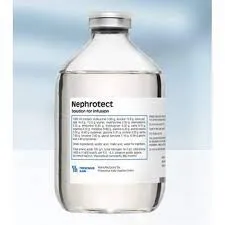
Table of Contents
- Package leaflet: Information for the user
- 1. What Nephrotect is and what it is used for
- 2. Important information before using Nephrotect
- 3. How to use Nephrotect
- 4. Possible adverse reactions
- 5. How to store Nephrotect
- 6. Contents of the pack and other information
- Information intended exclusively for medical professionals:
Package leaflet: Information for the user
Nephrotect
0.1 g/ml (10%), solution for infusion
Please read all of this leaflet carefully before using this medicine, as it contains
important information for you.
Keep this leaflet, as you may need to read it again.
If you have any further questions, please ask your doctor, pharmacist, or nurse.
This medicine has been prescribed for a specific individual. Do not pass it on to others. It may harm
other people, even if their symptoms are the same as yours.
If you experience any side effects, including any not listed in this leaflet, please inform your doctor,
pharmacist, or nurse. See section 4.
Contents of the leaflet
- What Nephrotect is and what it is used for
- Important information before using Nephrotect
- How to use Nephrotect
- Possible side effects
- How to store Nephrotect
- Contents of the pack and other information
1. What Nephrotect is and what it is used for
Nephrotect is an amino acid solution intended for parenteral nutrition. It should be used as a component of parenteral nutrition in combination with appropriate amounts of carbohydrate solutions, fat emulsions, electrolytes, vitamins, and trace elements.
The medicine is administered by intravenous infusion.
Indications:
Nephrotect is indicated as a source of amino acids in parenteral nutrition for patients with renal insufficiency in whom oral or enteral nutrition is impossible, inadequate, or contraindicated. Nephrotect may also be used in patients undergoing dialysis.
2. Important information before using Nephrotect
When not to use Nephrotect
Do not use this medicine if:
- the patient is allergic to the active substances or to any of the other ingredients of this medicine (listed in section 6);
- the patient has amino acid metabolism disorders;
- the patient has severe kidney disease without possibility of dialysis;
- the patient is experiencing acute shock;
- the patient has excess body water (overhydration);
- the patient has fluid in the lungs (pulmonary edema);
- the patient has untreated heart failure;
- the patient has a deficiency of body water (hypotonic dehydration);
- the patient has severe liver disease.
The use of Nephrotect is not recommended in children.
Warnings and precautions
Inform the doctor if the patient has:
- low sodium levels in the blood (hyponatremia);
- elevated levels of substances such as electrolytes, proteins, or sugar (glucose).
During treatment with Nephrotect, the doctor will order blood tests (to measure levels of electrolytes, glucose, proteins, creatinine, urea, and ammonia, as well as liver function tests).
The doctor will also monitor fluid balance (the amount of fluid taken in and excreted from the body) and acid-base balance (the appropriate ratio of acidic and alkaline compounds in the body).
Nephrotect with other medicines
Tell the doctor or nurse about all medicines the patient is currently taking or has recently taken, as well as any medicines the patient plans to take.
No interactions between Nephrotect and other medicines have been reported.
Pregnancy and breastfeeding
If the patient is pregnant or breastfeeding, suspects she may be pregnant, or is planning to have a baby, she should consult a doctor or pharmacist before using this medicine.
There is no data available on the use of Nephrotect in pregnant or breastfeeding women. The doctor will decide whether to use this medicine in pregnant or breastfeeding women only after carefully considering the benefit-risk ratio.
Driving and operating machinery
Not applicable.
3. How to use Nephrotect
The dosage is determined individually by a physician for each patient, depending on body weight and test results.
Nephrotect is administered exclusively by medical personnel.
Administration of a higher than recommended dose of Nephrotect
It is unlikely that a patient will receive an excessive dose of Nephrotect, as this medicine is administered by trained medical staff.
Symptoms of overdose may include:
- nausea;
- vomiting;
- fever;
- chills;
- skin redness.
If the patient experiences any of the above symptoms or believes they have received more than the recommended dose of Nephrotect, they should immediately inform their doctor or nurse.
If there are any further doubts regarding the use of this medicine, consult a doctor or nurse.
4. Possible adverse reactions
Like all medicines, this medicinal product may cause adverse reactions, although not everybody will experience them.
No adverse reactions are known when the medicine is used as directed.
Reporting of adverse reactions
If any adverse reactions occur, including any not listed in this leaflet, inform your doctor, pharmacist or nurse. Adverse reactions can be reported directly to the Department of Monitoring Adverse Drug Reactions, Office for Registration of Medicinal Products, Medical Devices and Biocidal Products
Al. Jerozolimskie 181C, 02-222 Warsaw
Phone: +48 22 49 21 301, Fax: +48 22 49 21 309
Website: https://smz.ezdrowie.gov.pl
Adverse reactions can also be reported to the marketing authorization holder.
Reporting adverse reactions helps provide more information on the safety of this medicine.
5. How to store Nephrotect
Keep the medicine out of the sight and reach of children.
Store below 25°C. Keep the bottle in the outer packaging to protect from light.
Do not use this medicine after the expiry date stated on the packaging. The expiry date refers to the last day of the stated month.
Do not use this medicine if solid particles are visible or if the packaging is damaged.
The packaging must not be stored after opening. Any unused portion of the medicine is not suitable for further use.
Medicines must not be disposed of via wastewater or household waste. Ask your pharmacist how to dispose of medicines no longer required. Such measures help protect the environment.
6. Contents of the pack and other information
What Nephrotect contains
The active substances of the medicine are:
1000 ml of infusion solution contains:
L-isoleucine 5.80 g
L-leucine 12.80 g
L-lysine acetate 16.90 g
(corresponds to L-lysine 12.00 g)
L-methionine 2.00 g
L-phenylalanine 3.50 g
L-threonine 8.20 g
L-tryptophan 3.00 g
L-valine 8.70 g
L-arginine 8.20 g
L-histidine 9.80 g
L-alanine 6.20 g
N-acetyl-L-cysteine 0.54 g
(corresponds to L-cysteine 0.40 g)
glycine 5.31 g
L-proline 3.00 g
L-serine 7.60 g
L-tyrosine 0.60 g
N-glycyl-L-tyrosine, hydrated substance 3.16 g
(calculated as anhydrous substance
glycine/L-tyrosine 0.994 g/2.40 g)
Other components (excipients) are glacial acetic acid, L-malic acid, water for injections.
Total amino acid content 100 g/l
Total nitrogen content 16.3 g/l
Total energy value 1600 kJ/l = 400 kcal/l
pH 5.5 - 6.5
Solution acidity approximately 60 mmol NaOH/l
Theoretical osmolarity 960 mOsm/l
What Nephrotect looks like and contents of the pack
The medicine is a solution for infusion.
The medicine pack consists of a colourless glass bottle containing 250 ml or 500 ml of solution.
Marketing Authorisation Holder and Manufacturer
Marketing Authorisation Holder
Fresenius Kabi Deutschland GmbH
D-61346 Bad Homburg v.d.H.
Germany
Manufacturer
Fresenius Kabi Austria GmbH
Hafnerstrasse 36
A-8055 Graz
Austria
For further information, please contact the representative of the Marketing Authorisation Holder:
Fresenius Kabi Polska Sp. z o.o.
Al. Jerozolimskie 134
02-305 Warsaw
tel.: +48 22 345 67 89
Information intended exclusively for medical professionals:
Dosage and administration
The medicinal product should be administered by continuous intravenous infusion.
Dosage should be adjusted according to individual patient requirements.
In the absence of other recommendations, in patients with acute or chronic renal failure the following doses are used:
- in non-dialyzed patients: 0.6 to 0.8 g amino acids/kg body weight/day = 6 to 8 ml/kg body weight/day
- in dialyzed patients: 0.8 to 1.2 g amino acids/kg body weight/day = 8 to 12 ml/kg body weight/day
- in nutrition administered during dialysis in patients undergoing long-term hemodialysis: 0.5 to 0.8 g amino acids/kg body weight/dialysis session = 5 to 8 ml/kg body weight/dialysis session
Maximum recommended daily dose:
0.8 to 1.2 g amino acids/kg body weight
= 8 to 12 ml/kg body weight or 560 to 840 ml for a patient weighing 70 kg
Maximum recommended infusion rate:
- parenteral nutrition: 0.1 g amino acids/kg body weight/hour
- nutrition administered during dialysis: 0.2 g amino acids/kg body weight/hour
Amino acids should be used in combination with infusion solutions providing adequate caloric support during parenteral nutrition.
Nephrotect may be used as a component of total parenteral nutrition in combination with appropriate amounts of carbohydrate solutions, fat emulsions, electrolytes, vitamins, and trace elements.
Nephrotect may be administered via central or peripheral veins after proper mixing with other nutritional components.
Nephrotect may be administered through separate infusion lines together with other nutritional components (multi-bag or single-bag method), or may be mixed in a single container with other solutions to obtain a total parenteral nutrition mixture containing all required components.
In nutrition administered during dialysis, Nephrotect may be injected directly into the venous drip chamber of the dialysis apparatus.
Amino acid solutions, including Nephrotect, are generally administered together with carbohydrates and fats to ensure anabolic utilization of amino acids. An exception is the administration of amino acids during dialysis, during which glucose-containing dialysate may be used.
Duration of treatment depends on the patient's clinical condition.
If serum creatinine concentration decreases below 300 \μ mol/l, standard amino acid solutions may be used.
There are no clinical data on the use of Nephrotect in children.
Overdose
Main symptoms of overdose or infusion at a rate exceeding the recommended may include nausea, fever, chills, skin flushing, vomiting, hyperammonemia, hyperaminoacidemia, and acidosis. If any of these symptoms occur, the infusion should be stopped immediately.
Preparation for use
Nephrotect should be administered using a sterile infusion set immediately after opening the container.
Any unused portion of the solution should be discarded.
According to therapeutic requirements, Nephrotect should be used in combination with appropriate amounts of carbohydrate solutions, fat emulsions, electrolytes, vitamins, and trace elements, preferably administered via central veins (preferably as a continuous infusion over 24 hours).
In nutrition administered during dialysis, Nephrotect may be injected directly into the venous part of the dialysis apparatus; therefore, intravenous infusion is not required.
Data on the chemical and physical stability of specific mixtures are available upon request from the responsible entity's representative.
All additives should be mixed with the product under aseptic conditions.
Only clear, undamaged bottles with clear solutions should be used.
Multiple doses should not be withdrawn from a single bottle.
Pharmaceutical incompatibilities
To Nephrotect only those medicinal products essential for parenteral nutrition should be added, such as carbohydrate solutions, fat emulsions, electrolytes, trace elements, and vitamins, provided their pharmaceutical compatibility has been established.
After addition of other substances, the solution should be thoroughly mixed.
See section 6.4 of the Summary of Product Characteristics.
Storage conditions
Store below 25°C. Protect from light by keeping the bottle in its outer packaging.
Disposal of unused medicinal product
Any unused portions or waste material should be disposed of in accordance with local regulations.