Neofuragina max
Poland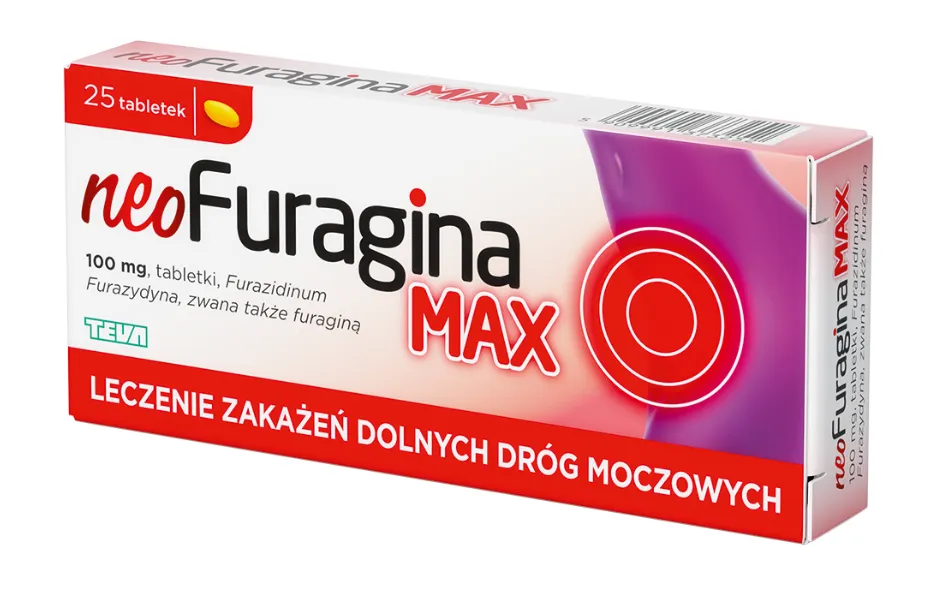
Table of Contents
Package leaflet: Information for the patient
neoFuragina, 100 mg, tablets
Furazidinum
Please read all of this leaflet carefully before taking this medicine, because it contains
important information for the patient.
This medicine should always be taken exactly as described in this patient leaflet or as directed by
the doctor or pharmacist.
- Keep this leaflet so that you can read it again if necessary.
- If you need advice or further information, please consult your pharmacist.
- If any adverse reactions occur, including any possible adverse reactions not listed in this leaflet, inform your doctor or pharmacist. See section 4.
- If there is no improvement after 7–8 days, or if the patient feels worse, medical advice should be sought.
Contents of the leaflet
- What neoFuragina is and what it is used for
- Important information before taking neoFuragina
- How to take neoFuragina
- Possible side effects
- How to store neoFuragina
- Contents of the package and other information
1. What neoFuragina is and what it is used for
neoFuragina is available as oral tablets. It contains as the active substance furazidinum, also known as furagin. Furazidinum is a nitrofuran derivative which inhibits the growth of bacteria causing urinary tract infections.
The indication for use of neoFuragina is:
- treatment of lower urinary tract infections.
2. Important information before using the medicine neoFuragina
When not to use the medicine neoFuragina:
- if the patient is allergic to furazidin, nitrofuran derivatives, or any of the other ingredients of this medicine (listed in section 6)
- if the patient has peripheral neuropathy (a condition involving damage to the peripheral nerves, which may manifest as motor or sensory disturbances, or other neurological disorders), e.g. in diabetic patients
- if the patient has glucose-6-phosphate dehydrogenase deficiency (a disease caused by genetically determined enzyme deficiency involved in red blood cell metabolism)
- if the patient has renal failure (in laboratory tests creatinine clearance below 60 ml/min or elevated serum creatinine levels)
- in newborns, infants, children and adolescents
- during the first three months of pregnancy (first trimester)
- during term pregnancy (from week 38) and childbirth, due to the risk of hemolytic anemia (anemia associated with the destruction of red blood cells) in the newborn.
Warnings and precautions
If any of the circumstances described below apply to the patient (see also section 4), the use of neoFuragina should be discussed with a doctor.
- If the patient has diabetes, kidney or liver dysfunction, neurological disorders, electrolyte imbalances (abnormal blood ion concentrations), anemia, deficiency of B vitamins or folic acid, or lung diseases, particular caution should be exercised when using this medicine, as there is an increased risk of developing peripheral neuropathy (damage to peripheral nerves). This disorder, in severe cases, may be irreversible and life-threatening. Therefore, neoFuragina should be discontinued if neurological symptoms occur (tingling, numbness, sensation of electric shocks).
- If the patient develops fever, chills, cough, chest pain, or shortness of breath. These may be symptoms of acute pulmonary reactions, which are sometimes observed in patients treated with nitrofuran derivatives. If such symptoms occur, the medicine should be discontinued immediately. Chronic pulmonary reactions have been reported in patients taking furazidin for longer than 6 months. Chronic pulmonary reactions may occur especially in elderly patients.
- If the medicine is used long-term. Blood tests may then be necessary to monitor white blood cell count, as well as kidney and liver function.
- Alcohol consumption should be avoided during treatment with furazidin (see separate section below).
Rarely, liver function disorders may occur (yellowing of the whites of the eyes, skin and mucous membranes, skin itching, pale stools, dark urine, abdominal pain, vomiting, nausea, loss of appetite, persistent fatigue and weight loss), including cholestatic jaundice (caused by obstruction of bile flow) and chronic hepatitis. If liver function disorders are detected, treatment with furazidin should be stopped immediately.
Children and adolescents
neoFuragina must not be used in children and adolescents (see "When not to use the medicine neoFuragina" in section 2).
neoFuragina with other medicines
Inform your doctor or pharmacist about all medicines currently taken or recently taken, as well as any medicines you plan to use.
Particular caution is required when using the following medicines concomitantly:
- ristomycin, chloramphenicol, sulfonamides, chloramphenicol (antibacterial chemotherapeutic agents) – increase the toxic effect of furazidin on the hematopoietic system;
- quinolone derivatives, e.g. nalidixic acid, norfloxacin, oxolinic acid (antibacterial agents) – furazidin may inhibit their antibacterial activity;
- probenecid and sulfinpyrazone (medicines increasing urinary excretion of uric acid) – may reduce furazidin excretion and lead to its accumulation in the body, increasing its toxicity and reducing its concentration in urine, which may weaken its effectiveness;
- carbonic anhydrase inhibitors (sulfonamides) and medicines that increase urine pH (alkalinizing agents) – may reduce the antibacterial activity of nitrofurans;
- vitamin B – increases the absorption of nitrofuran derivatives;
- atropine (a spasmolytic and pupil-dilating agent) – may delay the absorption of furazidin, but the total amount absorbed does not change;
- antacids containing magnesium trisilicate – reduce the absorption of furazidin and may reduce its antibacterial effect.
Effect on laboratory tests
During treatment with furazidin, urine glucose tests using Benedict's or Fehling's solutions may give false positive results. Urine glucose tests performed by enzymatic methods are usually accurate.
neoFuragina with food or alcohol
See section 3.
Alcohol consumption should be avoided during treatment with neoFuragina due to the possibility of a so-called disulfiram-like reaction, with symptoms such as flushing, abdominal pain, nausea, vomiting, and sinus tachycardia.
Pregnancy, breastfeeding and effect on fertility
If the patient is pregnant or breastfeeding, suspects she may be pregnant, or is planning to become pregnant, she should consult a doctor or pharmacist before using this medicine.
Pregnancy
neoFuragina should not be used during the first three months of pregnancy (first trimester) or in women during term pregnancy (from week 38) and during childbirth.
Particular caution is required during use in the last three months of pregnancy (third trimester), as furazidin may cause hemolytic anemia in the newborn (anemia associated with the destruction of red blood cells).
Breastfeeding
neoFuragina should not be used during breastfeeding. Furazidin passes into breast milk and may harm the breastfed infant.
Effect on fertility
Nitrofuran derivatives may adversely affect testicular function, slightly or moderately reducing the total sperm count in semen.
Driving and operating machinery
There is no data on the effect of furazidin on the ability to drive vehicles or operate machinery. However, some patients may experience adverse effects that could affect their ability to drive or operate machinery (headache, dizziness, drowsiness, visual disturbances; see also section 4).
neoFuragina contains monohydrate lactose and sucrose
If the patient has previously been diagnosed with intolerance to certain sugars, the patient should consult a doctor before taking this medicine.
3. How to use the medicine neoFuragina
This medicine should always be taken exactly as described in this patient leaflet or as directed by the doctor or pharmacist. In case of doubt, consult your doctor or pharmacist.
Use in adults
Day 1: 1 tablet (100 mg) 4 times daily.
Days 2–8: 1 tablet (100 mg) 3 times daily.
Treatment usually lasts 7–8 days. If necessary, treatment may be repeated after 10–15 days.
Method of administration
The medicine is taken orally. The tablet score line is intended only to facilitate tablet breaking for easier swallowing and does not indicate equal dosing.
neoFuragina should be taken during meals. At the same time, a protein-rich diet should be followed. The medicine should be taken with plenty of fluids.
If one or more doses have been missed, continue treatment with the previously prescribed doses. Do not take a double dose to make up for a missed dose.
Use in children and adolescents
neoFuragina must not be used in children and adolescents (see "When not to use the medicine neoFuragina" in section 2).
Taking more than the recommended dose of neoFuragina
If a dose higher than recommended is taken, symptoms such as nausea, vomiting, headache, dizziness, allergic reactions, and anemia may occur. If any disturbing symptoms occur, seek immediate medical advice from a doctor, pharmacist, or the nearest hospital emergency department, as specialist treatment may be necessary. Gastric lavage and administration of large amounts of fluids to increase urinary excretion of the drug are recommended. Blood morphology, liver function laboratory tests, and monitoring of lung function are advised. In severe cases, hemodialysis should be performed.
Due to the renal excretion of the drug, the risk of overdose is increased in patients with impaired kidney function.
Missed dose of neoFuragina
If one or more doses have been missed, continue treatment with the previously prescribed doses. Do not take a double dose to make up for a missed dose.
Stopping treatment with neoFuragina
Discontinuing treatment with neoFuragina during therapy may result in failure to cure lower urinary tract infection.
If you have any further doubts regarding the use of this medicine, consult your doctor or pharmacist.
4. Possible adverse reactions
Like all medicines, this medicine can cause adverse reactions, although not everyone will experience them.
You must immediately stop using this medicine and contact a doctor or go to the
nearest hospital if any of the following occur:
(rare: may affect 1 in 1,000 patients):
- allergic reactions: rash, itching, urticaria, anaphylactic reactions (sudden local or systemic allergic reactions with symptoms such as:
- swelling of the face, lips, tongue or throat
- difficulty breathing or swallowing
- urticaria, itching, including life-threatening anaphylactic shock), angioedema (a severe allergic reaction - sudden swelling of the face, limbs or joints without itching or pain). Swelling in the head and neck area may cause difficulty in swallowing and breathing;
- severe skin reactions (exfoliative dermatitis, erythema multiforme, Stevens-Johnson syndrome - bullous erythema multiforme);
- symptoms of drug-induced hepatitis (yellowing of the whites of the eyes, skin and mucous membranes, skin itching, pale stools, dark urine, abdominal pain, vomiting, nausea, loss of appetite, persistent fatigue and weight loss), cholestatic jaundice (caused by obstruction of bile flow), liver necrosis (usually during long-term use); (frequency unknown):
- asthmatic reactions (shortness of breath) in patients with asthma; hypersensitivity reactions affecting the respiratory system, including:
- acute reactions - manifested, among others, by fever, chills, cough, chest pain, shortness of breath - usually resolve quickly after discontinuation of the drug
- chronic reactions - including changes in the lungs (e.g. pulmonary fibrosis, pneumonia) - severity and reversibility of symptoms after discontinuation of the drug depend on the duration of treatment after onset of the first adverse symptoms; upon detection of an adverse reaction, immediate discontinuation of the drug is required; lung function impairment may be irreversible
- cyanosis due to methemoglobinemia, which may additionally manifest as fatigue, shortness of breath, headache, dizziness, increased heart rate, drowsiness and coma;
- pseudomembranous colitis (a severe disease of the small or large intestine manifested by diarrhea, headache and fever);
- peripheral nerve damage (including acute or irreversible forms, especially in patients with impaired kidney function, anemia, diabetes, electrolyte disturbances or vitamin B deficiency).
Other adverse reactions of neoFuragina may include:
Common (may affect 1 in 10 patients):
- nausea, excessive flatulence;
- headache.
Frequency unknown (frequency cannot be determined from available data):
- dizziness, drowsiness, visual disturbances;
- vomiting, constipation, diarrhea, dyspeptic symptoms, abdominal pain, sialadenitis, pancreatitis;
- hair loss (transient);
- infections with microorganisms resistant to furazidin, fever, chills, malaise;
- in patients with glucose-6-phosphate dehydrogenase deficiency, the use of furazidin may lead to megaloblastic anemia (due to vitamin B or folic acid deficiency) or hemolytic anemia (caused by rapid breakdown of red blood cells), with symptoms such as: easy fatigue, general weakness, concentration problems, headache and dizziness, feeling of breathlessness.
Reporting of adverse reactions
If any adverse reactions occur, including any not listed
in this leaflet, inform your doctor or pharmacist. Adverse reactions can be reported
directly to: Department of Monitoring of Adverse Drug Reactions
Office for Registration of Medicinal Products, Medical Devices and Biocidal Products
Al. Jerozolimskie 181C
02-222 Warsaw
Tel.: + 48 22 49 21 301
Fax: + 48 22 49 21 309
website: https://smz.ezdrowie.gov.pl
Adverse reactions can also be reported to the marketing authorization holder.
Reporting adverse reactions helps to provide more information on the safety of the medicine.
5. How to store neoFuragina
Keep this medicine out of sight and reach of children.
There are no special storage instructions for this medicine.
Do not use this medicine after the expiry date stated on the packaging after: EXP.
The expiry date refers to the last day of the specified month.
Medicines must not be disposed of via wastewater or household waste. Ask your pharmacist how to dispose of medicines you no longer use. This will help protect the environment.
6. Contents of the packaging and other information
What neoFuragina contains
- The active substance is furazidinum (furazidin). Each tablet contains 100 mg of furazidinum, also known as furagin.
- Other components: lactose monohydrate, potato starch, sucrose, Polysorbate 80, stearic acid.
What neoFuragina looks like and contents of the packaging
neoFuragina is a yellow or yellow-orange, oval, biconvex tablet with a uniform surface, 3.6 – 4.4 mm thick and 9.3 – 9.7 mm long, scored on one side. The score line is intended only to facilitate breaking the tablet for easier swallowing and does not indicate division into equal doses.
The cardboard box contains 15, 25 or 30 tablets in blisters and a patient leaflet.
Marketing Authorisation Holder
Teva Pharmaceuticals Polska Sp. z o.o.
Emilii Plater 53
00-113 Warsaw
tel.: (22) 345 93 00
Manufacturer
Teva Operations Poland Sp. z o.o.
Mogilska 80
31-546 Kraków