Neisvac-c
Poland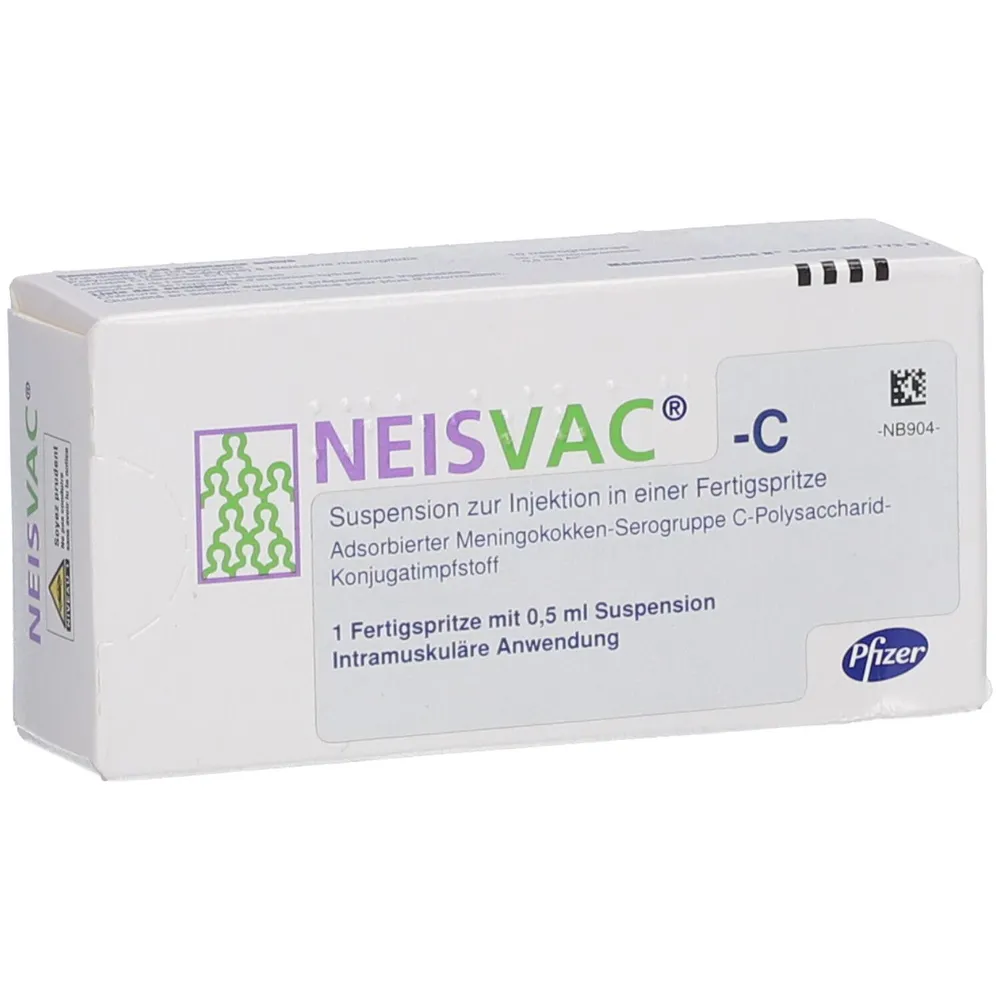
Table of Contents
- Package leaflet: Information for the user
- 1. What NeisVac-C vaccine is and what it is used for
- 2. Information before receiving NeisVac-C vaccine
- 3. How to use NeisVac-C vaccine
- 4. Possible adverse reactions
- 5. How to store NeisVac-C vaccine
- 6. Contents of the pack and other information
- Information intended exclusively for healthcare professionals:
Package leaflet: Information for the user
NeisVac-C, 0.5 ml, injection suspension in prefilled syringe
Meningococcal group C polysaccharide conjugate vaccine, adsorbed
Please read all of this leaflet carefully before receiving the vaccine, as it contains
important information for the patient.
Keep this leaflet, as you may need to read it again.
If you have any further questions, please consult your doctor, pharmacist or nurse.
This vaccine has been prescribed for a specific individual. Do not pass it on to others.
If you experience any adverse reactions, including any not listed in this leaflet, inform your doctor,
pharmacist or nurse. See section 4.
Contents of the leaflet
- What NeisVac-C vaccine is and what it is used for
- Important information before receiving NeisVac-C vaccine
- How to use NeisVac-C vaccine
- Possible side effects
- How to store NeisVac-C vaccine
- Contents of the pack and other information
1. What NeisVac-C vaccine is and what it is used for
NeisVac-C is a vaccine intended to prevent invasive meningococcal disease caused by Neisseria meningitidis group C bacteria. This bacterial strain can cause severe, and sometimes life-threatening infections, such as meningitis and sepsis (blood infection).
NeisVac-C vaccine is administered to children from the age of 2 months onwards, adolescents and adults. The vaccine stimulates the body to produce its own protective immune response (antibodies) against group C bacteria.
The vaccine protects only against diseases caused by Neisseria meningitidis group C. It does not provide protection against infections caused by other Neisseria meningitidis groups or by other microorganisms causing meningitis or blood infection.
As with other vaccines, NeisVac-C may not provide complete protection against Neisseria meningitidis group C infection in all vaccinated individuals.
2. Information before receiving NeisVac-C vaccine
When not to use NeisVac-C vaccine
Do not use NeisVac-C vaccine if the vaccinated person has ever had an allergic reaction to a previous dose of this vaccine or to any component of the vaccine, including tetanus toxoid (listed in section 6). Symptoms of an allergic reaction include skin rash, swelling of the face and throat, difficulty breathing, bluish discoloration of the tongue or lips, low blood pressure, and collapse.
Do not use NeisVac-C vaccine if the vaccinated person has ever had an allergic reaction to another vaccine against infections caused by group C meningococci.
Warnings and precautions
Talk to your doctor, pharmacist, or nurse before receiving NeisVac-C vaccine if the person being vaccinated:
- has haemophilia, is taking blood-thinning medicines, or has another disease causing blood clotting disorders
- has a severe infection with fever. In such a case, speak to a doctor or nurse about postponing vaccination
- has an autoimmune disease, or for any reason has a weakened immune system. In such cases, the vaccine may still be given, but it may provide reduced protection against Neisseria meningitidis group C bacteria. For example:
- if the patient has impaired antibody production
- if the patient is taking medicines that reduce resistance to infections (e.g. anticancer drugs or high-dose corticosteroids)
- if the patient has had their spleen removed or has a diagnosed spleen dysfunction
- if the patient was born very prematurely (at or before 28 weeks of pregnancy). Breathing pauses longer than normal may occur within 2 or 3 days after vaccination, which may require monitoring
- if the patient is over 65 years of age.
This vaccine cannot cause disease caused by group C meningococci. If the patient develops any of the following symptoms of meningococcal infection:
- neck pain
- neck stiffness
- photophobia (light sensitivity)
- drowsiness
- altered consciousness
- red or purple spots resembling bruises that do not fade under pressure,
seek immediate medical advice from a doctor, nurse, or the nearest emergency facility.
This vaccine contains less than 1 mmol (23 mg) of sodium per dose, meaning the medicine is considered "sodium-free".
NeisVac-C and other medicines
Tell your doctor, pharmacist, or nurse about all medicines the patient is currently taking or has recently taken, including those available without a prescription, as well as any other vaccines recently received.
Your doctor or nurse will decide whether the patient can receive NeisVac-C at the same time as other injectable vaccines.
The NeisVac-C vaccine can be administered simultaneously, but via separate injections at different sites, with vaccines protecting against:
- poliomyelitis (Heine-Medin disease)
- measles, mumps, and rubella (MMR)
- diphtheria, tetanus, and pertussis (whooping cough)
- Haemophilus influenzae type b (Hib)
- Streptococcus pneumoniae (pneumococci)
NeisVac-C vaccine may be given simultaneously to infants with certain types of hepatitis B virus vaccines. Your doctor, pharmacist, or nurse will decide whether this is necessary and which vaccines are appropriate.
NeisVac-C may also be administered at the same time as oral rotavirus vaccines.
Pregnancy, breastfeeding, and fertility
If the patient is pregnant or breastfeeding, suspects she may be pregnant, or is planning to have a child, she should consult a doctor, pharmacist, or nurse before using this vaccine.
However, the doctor, pharmacist, or nurse may still administer the NeisVac-C vaccine if there is a high risk of infection.
Driving and operating machinery
No studies have been conducted on the effect of NeisVac-C vaccine on the ability to drive or operate machinery. However, some of the adverse reactions listed in section 4, "Possible side effects," may temporarily affect the patient. In such cases, wait until the adverse reactions have subsided before driving or operating machinery.
3. How to use NeisVac-C vaccine
One dose of NeisVac-C vaccine has a volume of 0.5 ml (a very small amount of liquid).
The NeisVac-C vaccine is administered intramuscularly. It is usually injected into the thigh in infants and into the arm in older children, adolescents, and adults.
Infants aged from completed 2 months to completed 4 months of life
Two doses of NeisVac-C vaccine should be given, with an interval of at least two months between doses.
Infants aged over 4 months of age, older children, adolescents, and adults
One dose should be administered.
Infants aged from completed 2 months to completed 12 months of life
A booster dose should be given at approximately 12–13 months of age, at least 6 months after the last administration of NeisVac-C vaccine in the primary vaccination series.
Administration of a higher than recommended dose of NeisVac-C vaccine
There is no experience with overdose of NeisVac-C vaccine. Overdosing is very unlikely, as the vaccine is supplied in a single-dose pre-filled syringe and is administered by a doctor or nurse.
Missed dose or interruption of the vaccination schedule
Your doctor or nurse will inform you about the vaccination schedule. Missing a recommended dose or interrupting the vaccination series may result in incomplete protection.
If you have any further doubts regarding the use of this vaccine, please consult your doctor, pharmacist, or nurse.
4. Possible adverse reactions
Like any vaccine, NeisVac-C may cause adverse reactions, although they do not occur
in everyone.
As with all injectable vaccines, allergic reactions may occur. Although very rare, such reactions can be
serious. For this reason, individuals vaccinated should remain under observation for an appropriately
long period after vaccination and should have immediate access to appropriate medical equipment
and treatments.
Symptoms of serious allergic reactions include:
swelling of the lips, mouth and throat, which may cause difficulty in swallowing or
breathing;
rash and swelling of the hands, feet and ankles;
loss of consciousness due to low blood pressure.
These symptoms usually develop immediately after injection, while the affected person is still at the
hospital or clinic. If these symptoms occur after leaving the vaccination site, seek medical advice from
a doctor or nurse IMMEDIATELY.
The following adverse reactions have been reported in clinical trials:
Very common (may occur in more than 1 in 10 individuals)
- In all age groups:
- Redness, swelling, tenderness and pain at the injection site
- In infants and toddlers:
- Fever, irritability, fatigue, drowsiness, lethargy, crying, vomiting, decreased appetite, hardening at the injection site
- In children and adults:
- Headache
Common (may occur in up to 1 in 10 individuals)
- In infants, toddlers and children:
- Sore throat, runny nose, cough, diarrhoea
- In infants and toddlers:
- Sleep disturbances, irritability, rash, excessive sweating
- In children and adults:
- Fever, malaise, vomiting
- In children:
- Fatigue, drowsiness, lethargy, dizziness, nausea, abdominal pain, pain in arms or legs, itching, bruising, skin inflammation
- In adults:
- Muscle pain
Uncommon (may occur in up to 1 in 100 individuals)
- In infants, toddlers and children:
- Local swelling, sudden redness, chills
- In infants and toddlers:
- Abdominal pain, indigestion, malaise, pain in arms or legs, skin redness, skin inflammation
- In children and adults:
- Enlarged lymph nodes
- In children:
- Allergic reactions (including breathing difficulties), decreased appetite, hyperactivity and/or restlessness, abnormal or reduced sensation, fainting, crying, convulsions, eyelid swelling, nasal congestion, excessive sweating, rash, muscle and joint stiffness, neck pain, muscle pain, joint pain, back pain, irritability, weakness
- In adults:
- Influenza-like symptoms
Rare (may occur in up to 1 in 1000 individuals)
- In infants and toddlers:
- Allergic reactions (including breathing difficulties), eyelid swelling, bruising, muscle and joint stiffness
- In infants, toddlers and children:
- Fainting
- In children:
- Influenza-like symptoms
The following adverse reactions have also been reported:
- Decreased platelet count, leading to bruising of the skin and mucous membranes
- Febrile seizures
- Meningeal irritation
- Loss of muscle tone or muscle floppiness in infants
- Abnormal pauses between breaths
- Widespread skin rashes covering most of the body, leading to blistering and peeling of the skin. The rash may also affect the inside of the mouth and the eye conjunctiva
- Red or purple skin spots caused by bleeding
- Urticaria (hives)
If a patient has previously been diagnosed with nephrotic syndrome, there may be an increased risk
that this condition will recur within a few months after vaccination. Nephrotic syndrome is a kidney
disease that may cause swelling, particularly of the face or around the eyes, presence of protein in the
urine (which makes it frothy) and/or weight gain. If similar symptoms are observed after vaccination,
inform a doctor or nurse.
If any of these adverse reactions worsen, or if any adverse reactions not listed in this leaflet occur,
inform a doctor, pharmacist or nurse.
Reporting of adverse reactions
If any adverse reactions occur, including any adverse reactions not listed in this leaflet, inform a
doctor, pharmacist or nurse. Adverse reactions can be reported directly to the Department of
Monitoring of Adverse Drug Reactions of the Office for Registration of Medicinal Products, Medical
Devices and Biocidal Products
Al. Jerozolimskie 181C
02-222 Warsaw
Tel.: + 48 22 49 21 301
Fax: + 48 22 49 21 309
Website: https://smz.ezdrowie.gov.pl
Reporting adverse reactions helps to provide more information on the safety of the vaccine.
Adverse reactions can also be reported to the marketing authorisation holder or the representative of
the marketing authorisation holder.
5. How to store NeisVac-C vaccine
Keep the vaccine out of the sight and reach of children.
Do not use this vaccine after the expiry date stated on the carton following: EXP. If no specific day is indicated, the expiry date refers to the last day of the stated month.
Store in a refrigerator (2°C – 8°C). Do not freeze. Keep the pre-filled syringe in the outer packaging to protect from light.
This vaccine may be stored at room temperature (up to 25°C) for a single period of up to nine months within the vaccine's shelf life. During this time, the vaccine may be returned to refrigerated storage (2°C – 8°C). The date when room temperature storage was initiated and the calculated new expiry date should be recorded on the vaccine packaging. Under no circumstances should the calculated new expiry date for room temperature storage exceed the original expiry date corresponding to the total shelf life of the vaccine. At the end of this period, the vaccine must be used or discarded.
Medicines must not be disposed of via sewage or household waste. Ask your pharmacist how to dispose of medicines no longer required. Such measures help protect the environment.
6. Contents of the pack and other information
What NeisVac-C vaccine contains
The active substance in one dose (0.5 millilitres) of the vaccine is 10 micrograms of polysaccharide
(deacetylated) from Neisseria meningitidis group C (strain 11). This is conjugated to
10–20 micrograms of a protein called tetanus toxoid and adsorbed onto hydrated
aluminium hydroxide (0.5 milligrams Al).
The other ingredients are: sodium chloride (common salt), water for injections, and hydrated
aluminium hydroxide. Hydrated aluminium hydroxide, included in this vaccine as an adsorbent,
is intended to enhance and/or prolong the protective effect of the vaccine.
What NeisVac-C looks like and contents of the pack
NeisVac-C is a semi-transparent, white or almost white, injectable suspension supplied
in a pre-filled syringe.
Pack sizes containing 1, 10 or 20 pre-filled syringes are available. However, not all pack sizes
may be marketed.
Marketing Authorisation Holder and Manufacturer
Marketing Authorisation Holder
Pfizer Europe MA EEIG
Boulevard de la Plaine 17
1050 Bruxelles
Belgium
Manufacturer
Pfizer Manufacturing Belgium NV
Rijksweg 12
2870 Puurs-Sint-Amands
Belgium
For further information about this vaccine, please contact the local representative of the Marketing Authorisation Holder:
Pfizer Polska Sp. z o.o.
Tel: +48 22 335 61 00
This vaccine is authorised for marketing in the European Economic Area and in the United Kingdom (Northern Ireland)
under the following names:
Austria NeisVac-C
Belgium NeisVac-C
France NeisVac
Germany NeisVac-C
Greece NeisVac-C
Hungary NeisVac-C
Ireland NeisVac-C
Luxembourg NeisVac-C
Netherlands NeisVac-C
Poland NeisVac-C
Portugal NeisVac-C
Spain NeisVac-C
United Kingdom (Northern Ireland) NeisVac-C
Information intended exclusively for healthcare professionals:
The vaccine is intended for intramuscular administration only. It must not be administered subcutaneously or intravenously.
When administering more than one vaccine simultaneously, injections should be given at different sites.
NeisVac-C vaccine must not be mixed with other vaccines in the same syringe.
It has not yet been established whether booster doses are required for individuals aged 12 months and older at the time of first dose administration.
During storage, a white sediment and clear supernatant may form.
Therefore, before administration, the vaccine should be shaken to obtain a homogeneous suspension.
If foreign particulate matter or discoloration is observed in the vaccine, it must be discarded by a healthcare professional.
Each pre-filled syringe is packaged in a blister. The intentional opening in the blister seal allows for moisture equilibration during recommended warming prior to vaccine administration.
To remove the pre-filled syringe from the blister, peel off the foil covering the blister. Do not push the pre-filled syringe out of the blister.
The package containing 1 pre-filled syringe may include two needles of different sizes. When two needles are provided, it is recommended to use the smaller needle for injections in children and the larger needle for adults. The immediate packaging does not contain latex.
Any unused portions of the medicinal product or waste materials should be disposed of in accordance with local regulations.