Nedal
Poland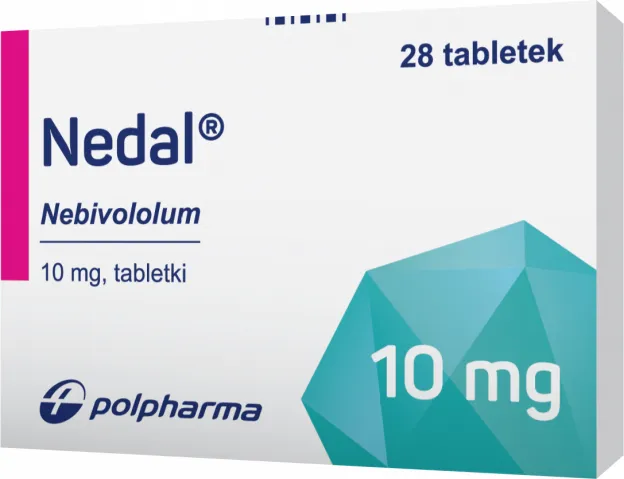
Table of Contents
Patient Information Leaflet
Nedal, 10 mg, tablets
Nebivololum
Please read this leaflet carefully before taking the medicine, as it contains
important information for the patient.
- Keep this leaflet, as you may need to read it again.
- If you have any questions, please consult your doctor or pharmacist.
- This medicine has been prescribed for a specific individual. Do not share it with others. This medicine may harm other people, even if their symptoms are the same.
- If you experience any adverse reactions, including any not listed in this leaflet, inform your doctor or pharmacist. See section 4.
Leaflet Contents
- What Nedal is and what it is used for
- Important information before taking Nedal
- How to take Nedal
- Possible side effects
- How to store Nedal
- Contents of the pack and other information
1. What Nedal is and what it is used for
Nedal contains nebivolol, which is a selective beta-adrenolytic agent with vasodilating properties.
This medicine is used for the treatment of high blood pressure (hypertension).
Nedal is also used in the treatment of chronic heart failure in patients aged 70 years or older.
Nedal may also be used in the treatment of symptomatic stable angina pectoris.
2. Important information before using Nedal
When not to use Nedal
- if the patient is allergic to nebivolol or any of the other ingredients of this medicine (listed in section 6);
- in case of low blood pressure (systolic or "upper" blood pressure is less than 90 mm Hg);
- in case of poor blood circulation in the limbs;
- in case of very slow heart rate (less than 60 beats per minute before starting this medicine);
- if the patient has been diagnosed with heart conduction disorders (such as sick sinus syndrome or atrioventricular block) and does not have a pacemaker implanted;
- in case of acute heart failure or intravenous treatment (via intravenous infusion) to support heart function;
- in case of breathing difficulties or wheezing;
- if the patient has untreated chromaffin cell tumour of the adrenal gland called phaeochromocytoma;
- if the patient has severe liver disease or impaired liver function;
- in case of metabolic acidosis (such as in patients with diabetes when blood sugar levels become too high and blood pH becomes too acidic);
- if the patient is taking medicines containing floctafenic or sultopride.
Warnings and precautions
Before starting treatment with Nedal, consult a doctor or pharmacist.
If the patient has or develops any of the following conditions:
- untreated heart failure (inability of the heart to pump sufficient blood to meet the body's needs);
- irregular, very slow heartbeat;
- mild (first-degree) atrioventricular heart block;
- chest pain caused by coronary artery spasm (so-called Prinzmetal's angina or nocturnal angina);
- poor circulation in the limbs, e.g. Raynaud's disease or syndrome, muscle cramp-like pain during walking;
- long-term breathing problems;
- diabetes, because nebivolol may mask symptoms of low blood sugar (hypoglycaemia) and may increase the risk of severe hypoglycaemia when used with certain types of antidiabetic medicines called sulfonylureas (such as glipizide, glyburide, glimepiride, tolbutamide, gliclazide or glipizide);
- hyperthyroidism, because Nedal may mask abnormally rapid heart rate associated with this condition;
- allergy, because allergic reactions may be more severe and may require higher doses of medication for treatment;
- skin changes known as psoriasis, because Nedal may worsen symptoms;
- wearing contact lenses, because Nedal may reduce tear production and cause dry eyes.
In such cases, the doctor may adjust treatment or monitor the patient more frequently.
If surgery is planned and anaesthesia is required, it is important that the patient informs the surgeon or dentist about taking this medicine.
This medicine should not be used for the treatment of heart failure in patients with severe kidney dysfunction. Inform your doctor about this.
At the beginning of treatment for chronic heart failure, the patient should remain under continuous medical supervision (see section 3).
Do not stop taking Nedal suddenly without prior consultation and recommendation from a doctor (see section 3).
Children and adolescents
Nedal is not recommended for use in children and adolescents due to lack of data on safety and efficacy in this age group.
Nedal and other medicines
Tell your doctor or pharmacist about all medicines you are currently taking or have recently taken, as well as any medicines you plan to take, including over-the-counter medicines, herbal remedies, vitamins and high-dose mineral supplements.
Always inform your doctor or pharmacist if you are taking any of the following medicines together with Nedal:
- diltiazem or verapamil (used to treat high blood pressure or other heart conditions); verapamil must not be administered intravenously during treatment with Nedal;
- other medicines known as calcium channel blockers used to treat high blood pressure or other heart conditions, such as amlodipine, felodipine, lacidipine, nifedipine, nicardipine, nimodipine, nitrendipine;
- other antihypertensive medicines or organic nitrates used to treat chest pain;
- clonidine, guanfacine, moxonidine, methyldopa, rilmenidine used to treat high blood pressure;
- medicines used to treat heart rhythm disorders (irregular heartbeat), such as quinidine, hydroquinidine, amiodarone, cibenzoline, flecainide, disopyramide, lidocaine, mexiletine, propafenone;
- tricyclic antidepressants (used to treat depression), phenothiazines (used to treat psychosis) or barbiturates (used to treat epilepsy);
- diabetes medicines such as insulin or oral antidiabetic agents;
- digoxin or other medicines known as digitalis glycosides (used to treat heart failure);
- non-steroidal anti-inflammatory drugs (NSAIDs) used for pain and inflammation;
- medicines used to treat asthma, nasal congestion, or certain eye disorders such as glaucoma (increased eye pressure) or pupil dilation;
- anaesthetics: always inform the anaesthesiologist that you are taking Nedal before undergoing anaesthesia;
- cimetidine (used to treat stomach acidity) – Nedal should be taken with food, while antacids should be taken between meals;
- medicines affecting nebivolol metabolism, i.e. paroxetine, fluoxetine, thioridazine (used to treat depression);
- amifostine (a protective agent used during chemotherapy or radiotherapy);
- baclofen (a muscle relaxant);
- medicines affecting nebivolol metabolism, i.e. terbinafine (used for fungal or yeast infections), bupropion (used to help stop smoking), chloroquine (used to treat malaria or rheumatoid arthritis), levomepromazine (used to treat psychosis);
- mefloquine (an antimalarial medicine).
Nedal with food and drink
Nedal can be taken before, during or after meals, or without food. The tablet or its parts should be swallowed with sufficient fluid (e.g. one glass of water).
Pregnancy and breastfeeding
If the patient is pregnant or breastfeeding, suspects she may be pregnant, or plans to become pregnant, she should consult a doctor or pharmacist before using this medicine.
Pregnancy
Do not use Nedal during pregnancy unless otherwise directed by a doctor.
Breastfeeding
Women taking Nedal should not breastfeed.
Driving and operating machinery
This medicine may cause dizziness and fatigue. In such cases, do not drive or operate machinery.
Nedal contains lactose and sodium
This medicine contains lactose. If the patient has previously been diagnosed with intolerance to certain sugars, the patient should consult a doctor before taking this medicine.
This medicine contains less than 1 mmol (23 mg) of sodium per tablet, meaning it is considered "sodium-free".
3. How to use Nedal
This medicine should always be taken exactly as directed by your doctor. If in doubt, consult your doctor or pharmacist again.
Treatment of high blood pressure (hypertension)
- The usual dose is 5 mg (half a tablet) once daily.
- For elderly patients and patients with impaired kidney function, the initial dose is usually 2.5 mg (one quarter of a tablet) once daily.
- It may take up to 4 weeks before the medicine starts to work fully.
Treatment of chronic heart failure
- Treatment must be initiated and monitored by an experienced physician.
- Treatment starts with an initial dose of 1.25 mg once daily (this dose cannot be obtained using the 10 mg Nedal tablet – alternative medicines or Nedal 5 mg tablets should be used, which can be divided into four doses of 1.25 mg each). This dose may be increased after 1–2 weeks to 2.5 mg (one quarter of a tablet) once daily, then to 5 mg (half a tablet) once daily, and subsequently to 10 mg (one tablet) once daily, until the appropriate dose for the patient is reached.
- The maximum recommended dose is 10 mg (one tablet) once daily.
- The patient must be monitored by an experienced physician for 2 hours after starting treatment and each time the dose is increased.
- If necessary, the doctor may reduce the dose. Do not stop treatment suddenly, as this may worsen heart failure.
- Patients with severe kidney impairment should not take this medicine.
Treatment of symptomatic stable coronary artery disease
- Treatment must be initiated and monitored by an experienced physician.
- Treatment starts with an initial dose of 1.25 mg once daily (this dose cannot be obtained using the 10 mg Nedal tablet – alternative medicines or Nedal 5 mg tablets should be used, which can be divided into four doses of 1.25 mg each). This dose may be increased according to the patient's tolerance after 1–2 weeks to 2.5 mg (one quarter of a tablet) once daily, then to 5 mg (half a tablet) once daily, and subsequently to 10 mg (one tablet) once daily, until the appropriate dose for the patient is reached.
- The maximum recommended dose is 10 mg (one tablet) once daily.
- Patients with severe kidney impairment should not take this medicine.
The tablet should be taken once daily, preferably at the same time each day.
The tablet can be divided into four equal doses.
If your doctor has instructed you to take one quarter or half a tablet per day, please follow the tablet-splitting instructions shown below.
- Place the tablet on a flat, hard surface (e.g., a table or countertop), with the scored side facing up.
- Break the tablet along the vertical line by pressing down with the index fingers of both hands, as shown in Figures 1 and 2.
- To obtain quarters, break each half in the same manner, as shown in Figures 3 and 4.
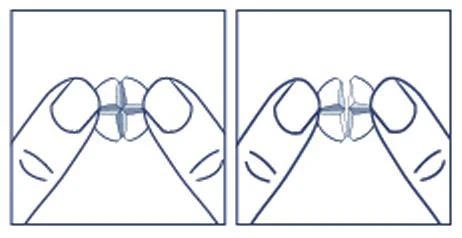
Fig. 1 Fig. 2
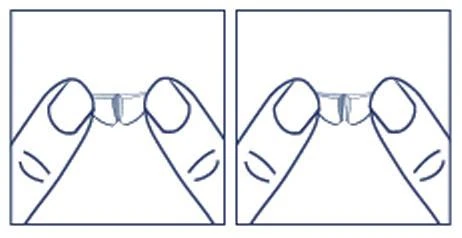
Fig. 3 Fig. 4
Your doctor may decide to prescribe Nedal tablets together with another medicine appropriate for your condition.
Use in children and adolescents
Nedal is not recommended for use in children and adolescents.
Taking more Nedal than prescribed
If you accidentally take too many tablets (overdose), symptoms may include slow heart rate, low blood pressure, other heart-related problems, breathing difficulties, or wheezing. Seek immediate medical attention at the nearest hospital or contact your doctor or pharmacist right away.
If you forget to take Nedal
If you forget to take your dose but remember shortly afterwards, take the missed dose as soon as possible. However, if a significant delay has occurred (e.g., several hours or a full day), skip the missed dose and take the next dose at your usual time the following day. Do not take a double or increased dose to make up for the missed dose. Avoid repeatedly missing doses.
Stopping Nedal
Do not stop taking Nedal without first consulting your doctor. Do not stop Nedal suddenly. Abrupt discontinuation may cause dangerous worsening of symptoms, especially in patients with angina pectoris.
If you have any further questions about the use of this medicine, consult your doctor or pharmacist.
4. Possible adverse effects
Like all medicines, this medicine can cause adverse effects, although not everyone will experience them.
During treatment with nebivolol for high blood pressure, the following adverse effects have been reported:
Common (affects less than 1 in 10 people):
- headache,
- dizziness,
- fatigue,
- unusual itching or tingling sensation,
- diarrhoea,
- constipation,
- nausea,
- shortness of breath,
- swelling, e.g. of hands or feet.
Uncommon (affects less than 1 in 100 people):
- slow heart rate or other heart-related disorders,
- low blood pressure,
- painful leg cramps during walking (or worsening of existing cramps),
- blurred vision,
- impotence (difficulty achieving erection),
- depression,
- indigestion, gas in the stomach or intestines, vomiting,
- skin rash, itching,
- chest tightness, breathing difficulties or wheezing,
- nightmares.
Rare (affects less than 1 in 10,000 people):
- fainting,
- worsening of psoriasis (a skin disease with scaly, red patches).
Frequency not known (cannot be estimated from available data):
- angioedema: swelling of the facial skin or limbs, lips, tongue, mucous membranes of the throat and airways, causing breathing difficulties or swallowing problems – seek immediate medical advice!
- systemic allergic reactions with generalized skin changes (hypersensitivity reactions),
- urticaria (hives).
In a clinical trial involving chronic heart failure, the following adverse effects were observed:
Very common (affects more than 1 in 10 people):
- slowing of heart rate,
- dizziness.
Common (affects less than 1 in 10 people):
- worsening of heart failure,
- low blood pressure (e.g. feeling faint upon sudden standing),
- drug intolerance,
- mild disturbance in the heart's electrical conduction affecting heart rhythm (first-degree atrioventricular block),
- swelling (e.g. swelling around the ankles).
Reporting of adverse effects
If any adverse effects occur, including those not listed in this leaflet, inform your doctor or pharmacist. Adverse effects can be reported directly to the Department of Monitoring Adverse Drug Reactions, Office for Registration of Medicinal Products, Medical Devices and Biocidal Products
Al. Jerozolimskie 181C
02-222 Warszawa
Tel.: +48 22 49 21 301
Fax: +48 22 49 21 309
Website: https://smz.ezdrowie.gov.pl
Adverse effects can also be reported to the marketing authorization holder.
Reporting adverse effects helps to provide more information on the safety of the medicine.
5. How to store Nedal
Keep this medicine out of sight and reach of children.
There are no special storage instructions for this medicine.
Do not use this medicine after the expiry date stated on the carton and blister pack.
The expiry date refers to the last day of the stated month.
The marking on the packaging following the abbreviation EXP indicates the expiry date, and following the abbreviation Lot/LOT indicates the batch number.
Medicines must not be disposed of via wastewater or household waste. Ask your pharmacist how to dispose of medicines no longer required. These measures will help protect the environment.
6. Contents of the pack and other information
What Nedal contains
- The active substance is nebivolol. Each tablet contains 10 mg of nebivolol, equivalent to 10.90 mg of nebivolol hydrochloride.
- Other ingredients: lactose monohydrate, maize starch, sodium croscarmellose, hypromellose, polysorbate 80, microcrystalline cellulose, anhydrous colloidal silica, magnesium stearate.
What Nedal looks like and contents of the pack
Nedal tablets are white or almost white, round, biconvex with four bevelled edges and crossed division lines on both sides of the tablet. On each quarter of one side of the tablet, the letter "N" is embossed. The tablet has a diameter of approximately 11 mm.
Nedal tablets can be divided into four equal parts.
Nedal is available in aluminium/PVC/PVDC blisters containing 28 or 56 tablets, packed in a cardboard carton.
Marketing Authorisation Holder and Manufacturer
Marketing Authorisation Holder
Zakłady Farmaceutyczne POLPHARMA S.A.
ul. Pelplińska 19, 83-200 Starogard Gdański
tel. + 48 22 364 61 01
Manufacturer
Zakłady Farmaceutyczne POLPHARMA S.A.
ul. Pelplińska 19, 83-200 Starogard Gdański
Zakłady Farmaceutyczne POLPHARMA S.A.
Production Site in Nowa Dęba
ul. Metalowca 2, 39-460 Nowa Dęba