Nebilet hct
Poland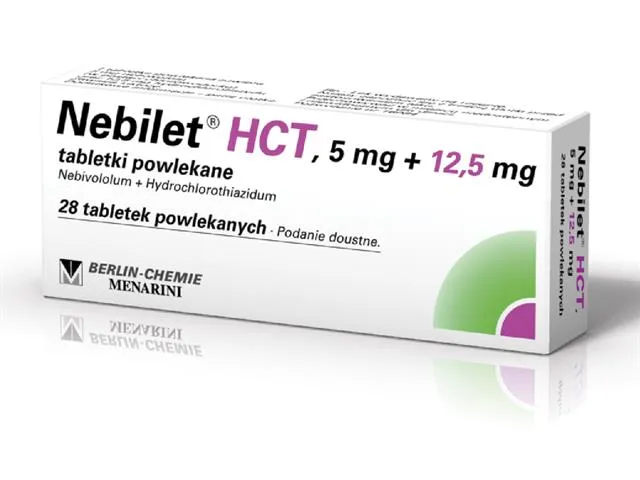
Table of Contents
Package leaflet: Information for the user
NEBILET HCT, 5 mg + 12.5 mg, coated tablets
Nebivololum + Hydrochlorothiazidum
Please read all of this leaflet carefully before taking this medicine because it contains important information for you.
- Keep this leaflet. You may need to read it again.
- Please consult your doctor or pharmacist if you have any further questions.
- This medicine has been prescribed for you personally. Do not pass it on to others.
- It may harm other people, even if their symptoms are the same as yours.
- If any of the side effects worsens, or if you notice any side effects not listed in this leaflet, inform your doctor, pharmacist or nurse. See section 4.
Contents of the leaflet:
- What NEBILET HCT is and what it is used for
- What you need to know before taking NEBILET HCT
- How to take NEBILET HCT
- Possible side effects
- How to store NEBILET HCT
- Contents of the pack and other information
1. What NEBILET HCT is and what it is used for
NEBILET HCT contains as active substances nebivolol and hydrochlorothiazide.
- Nebivolol is a cardiovascular medicine belonging to the group of selective beta-adrenolytic agents (i.e. agents selectively affecting the cardiovascular system). It prevents the heart from beating too fast and controls the force of heart contractions. It also dilates blood vessels, which helps lower blood pressure.
- Hydrochlorothiazide is a diuretic (water tablet) which works by increasing the amount of urine produced.
NEBILET HCT is a combination medicine containing nebivolol and hydrochlorothiazide in a single tablet, used for the treatment of high blood pressure (arterial hypertension). It is used instead of two separate medicines in patients who have previously been treated with both of these medicines taken together.
2. Important information before using the medicine NEBILET HCT
When not to use NEBILET HCT
- If the patient is allergic to nebivolol or hydrochlorothiazide or any of the other ingredients of this medicine (listed in section 6),
- If the patient is allergic (hypersensitive) to other sulfonamide derivatives (medicines similar to hydrochlorothiazide, which is a sulfonamide derivative),
- If the patient has one or more of the following conditions:
- very slow heart function (less than 60 beats per minute),
- certain other severe heart rhythm disorders (e.g. sick sinus syndrome, sinoatrial block, second- or third-degree atrioventricular block),
- heart failure which has recently developed or worsened, or if the patient is receiving intravenous treatment supporting heart function due to cardiogenic shock in acute heart failure,
- low blood pressure,
- severe circulatory disorders in the upper or lower limbs,
- untreated phaeochromocytoma: a tumour located on top of the kidneys (in the adrenal glands),
- severe kidney disorders, complete absence of urine (anuria),
- metabolic disorders (metabolic acidosis), e.g. diabetic ketoacidosis,
- asthma or wheezing (currently or in the past),
- liver function disorders,
- high calcium levels in blood, low potassium levels in blood, low sodium levels in blood, which persist and do not resolve with treatment,
- high uric acid levels with symptoms of gout.
Warnings and precautions
Before starting to take NEBILET HCT, consult a doctor or pharmacist.
- Inform the doctor if the patient has or develops any of the following conditions:
- chest pain caused by spontaneous spasm of the coronary arteries (Prinzmetal's angina),
- first-degree heart block (mild conduction disorder in the heart affecting heart rhythm),
- abnormally slow heart rate,
- untreated chronic heart failure,
- systemic lupus erythematosus (an immune system disorder),
- psoriasis (a skin disease characterised by scaly, pink patches) or history of psoriasis,
- hyperthyroidism: NEBILET HCT may mask symptoms of abnormally fast heart rate occurring in this disease,
- circulatory disorders in hands or legs, e.g. Raynaud's disease or syndrome, cramping pain while walking,
- allergies: NEBILET HCT may worsen reactions to pollen or other allergens,
- persistent breathing difficulties,
- diabetes: NEBILET HCT may mask warning symptoms of low blood sugar (e.g. palpitations, rapid heartbeat) and may increase the risk of severe hypoglycaemia when used with certain types of antidiabetic medicines called sulfonylureas (such as gliclazide, glimepiride, glipizide, glyburide, tolbutamide or repaglinide); the doctor may recommend more frequent blood sugar monitoring while taking NEBILET HCT, as dose adjustment of antidiabetic medicines may be necessary,
- kidney function disorders: the doctor will monitor kidney function to ensure it does not worsen; NEBILET HCT should not be used in case of severe kidney function disorders (see section "When not to use NEBILET HCT"),
- tendency to low potassium levels in blood, especially in case of prolonged QT interval syndrome (abnormal ECG pattern) or when taking cardiac glycosides (to support heart contraction); the risk of low potassium levels is higher in liver cirrhosis, rapid fluid loss due to intensive diuretic treatment, or insufficient potassium intake through food and drinks,
- planned surgical procedure – always inform the anaesthetist about taking NEBILET HCT before anaesthesia,
- if the patient previously had skin cancer or if unexpected skin changes occur during treatment. Treatment with hydrochlorothiazide, especially in high doses over a long period, may increase the risk of certain types of skin and lip cancers (non-melanoma skin cancer). While taking Nebilet HCT, protect the skin from sunlight and UV radiation,
- if the patient experiences blurred vision or eye pain. These may be symptoms of fluid accumulation in the vascular layer surrounding the eye (excessive fluid accumulation between choroid and sclera) or increased intraocular pressure – these may occur within hours or weeks after taking Nebilet HCT. This may lead to permanent vision loss if not treated. Patients previously allergic to penicillin or sulfonamides may be at higher risk of developing this condition,
- if the patient previously experienced breathing or lung problems (including pneumonia or fluid accumulation in the lungs) after taking hydrochlorothiazide. If severe shortness of breath or breathing difficulties occur after taking Nebilet HCT, seek immediate medical help.
- NEBILET HCT may increase blood levels of fats and uric acid. It may affect blood levels of certain chemicals called electrolytes: the doctor will periodically check their levels through blood tests.
- Hydrochlorothiazide, an ingredient of NEBILET HCT, may cause skin hypersensitivity to sunlight or artificial UV radiation. Discontinue NEBILET HCT and consult a doctor if rash, itchy spots or skin hypersensitivity occur during treatment (see also section 4).
- Anti-doping test: NEBILET HCT may cause a positive result in an anti-doping test.
Children and adolescents
Do not administer NEBILET HCT to children and adolescents due to lack of data
on its use in this age group.
Other medicines and NEBILET HCT
Inform the doctor or pharmacist about all medicines currently taken or recently taken,
and about any medicines the patient plans to take.
Always inform the doctor about taking any of the following medicines
concurrently with NEBILET HCT:
- Medicines which, like NEBILET HCT, may affect blood pressure and/or heart function:
- Medicines lowering blood pressure and those used in heart disorders (e.g. amiodarone, amlodipine, cybenzoline, clonidine, digoxin, diltiazem, disopyramide, dofetilide, felodipine, flecainide, guanfacine, hydroquinidine, ibutilide, lacidipine, lidocaine, mexiletine, methyldopa, moxonidine, nicardipine, nifedipine, nimodipine, nitrendipine, propafenone, quinidine, rilmenidine, sotalol, verapamil)
- Sedatives and antipsychotics (used in mental disorders) e.g. amisulpride, barbiturates (also used in epilepsy), chlorpromazine, carbamazepine, droperidol, haloperidol, levomepromazine, opioid analgesics, phenothiazines (also used for nausea and vomiting), pimozide, sulpiride, sultopride, tiapride, thioridazine, trifluoperazine
- Antidepressants, e.g. amitriptyline, fluoxetine, paroxetine
- Medicines used for anaesthesia during surgery
- Medicines used in asthma, nasal congestion or certain eye diseases such as glaucoma (increased eye pressure) or to dilate the pupil
- Medicines used in diabetes, such as insulin or oral antidiabetic medicines
- Baclofen (muscle relaxant)
- Amifostine (protective agent used during cancer treatment).
- Medicines whose action or toxicity may be increased by NEBILET HCT:
- Lithium salts, used as mood stabilizers
- Cisapride (used in gastrointestinal disorders)
- Bepridil (used in angina pectoris)
- Disopyramide (used in excessive sweating)
- Medicines used in infections: erythromycin given by infusion or injection, pentamidine and sparfloxacin, amphotericin and sodium salt of penicillin G, halofantrine (used in malaria)
- Vinpocetine (used in cerebral circulation disorders)
- Mizolastine and terfenadine (used in allergies)
- Diuretics and laxatives
- Medicines used in acute inflammatory conditions: steroids (e.g. cortisone and prednisone), ACTH (adrenocorticotropic hormone) and medicines derived from salicylic acid (e.g. acetylsalicylic acid/aspirin and other salicylates)
- Carbenoxolone (used in heartburn and gastric ulcers)
- Calcium salts, used as supplements to increase bone mineralisation
- Medicines used to relax muscles (e.g. tubocurarine)
- Diazoxide, used in low blood sugar and high blood pressure
- Amantadine, antiviral medicine
- Cyclosporine, used to suppress the body's immune system
- Iodinated contrast agents, used as contrast in X-ray examinations.
- Anticancer medicines (e.g. cyclophosphamide, fluorouracil, methotrexate).
- Medicines whose action may be reduced by NEBILET HCT:
- Medicines reducing blood sugar (insulin and oral antidiabetic medicines, metformin)
- Medicines used in gout (e.g. allopurinol, probenecid and sulfinpyrazone)
- Medicines such as noradrenaline, used in low blood pressure and slow heart rate.
- Painkillers and anti-inflammatory medicines (non-steroidal anti-inflammatory drugs), as they may reduce the blood pressure-lowering effect of NEBILET HCT.
- Medicines used in hyperacidity and peptic ulcer disease (medicines reducing gastric acid secretion): NEBILET HCT should be taken with food, and antacids should be taken between meals.
NEBILET HCT and alcohol
Exercise caution when consuming alcohol while taking NEBILET HCT,
as fainting or dizziness may occur. In such cases, do not consume
alcohol, including wine, beer and alcoholic carbonated drinks.
Pregnancy and breastfeeding
The patient must inform her doctor if she is pregnant or suspects pregnancy.
In such cases, the doctor will usually prescribe another medicine instead of Nebilet HCT,
as Nebilet HCT is not recommended during pregnancy. This is due to one of
the active substances in Nebilet HCT – hydrochlorothiazide – crossing the placenta. Therefore,
using Nebilet HCT during pregnancy may potentially harm the foetus and newborn.
Inform the doctor if the patient is breastfeeding or plans to start breastfeeding.
Nebilet HCT is not recommended for breastfeeding mothers.
If the patient is pregnant or breastfeeding, suspects she may be pregnant, or plans to have a child, she should consult a doctor or pharmacist before using this medicine.
Driving and operating machinery
NEBILET HCT may cause dizziness and fatigue. In such cases, do not
drive or operate machinery.
NEBILET HCT contains lactose and sodium
This medicine contains lactose. If the patient has previously been diagnosed with intolerance to certain sugars, the patient
should consult a doctor before taking the medicine.
This medicine contains less than 1 mmol (23 mg) of sodium per coated tablet, meaning the medicine is considered "sodium-free".
3. How to use NEBILET HCT
This medicine should always be taken exactly as directed by your doctor. If in doubt, consult your doctor.
Take 1 tablet daily with an adequate amount of water, preferably at the same time each day.
NEBILET HCT may be taken before, during, or after meals, or independently of food intake.
Use in children and adolescents
NEBILET HCT must not be given to children and adolescents.
The score line on the tablet is only intended to facilitate splitting for easier swallowing.
Taking more NEBILET HCT than prescribed
In case of accidental overdose, inform your doctor or pharmacist immediately. The most common subjective and objective symptoms of overdose include very slow heart rate (bradycardia), low blood pressure which may lead to fainting, asthma-like shortness of breath, acute heart failure, excessive urination leading to dehydration, nausea and drowsiness, muscle cramps, and cardiac arrhythmias (especially when concomitantly taking digitalis glycosides or antiarrhythmic drugs).
Missed dose of NEBILET HCT
If you miss a dose of NEBILET HCT but remember shortly afterwards, take the missed dose as soon as possible on the same day. However, if a significant delay has occurred (e.g., several hours) and it is almost time for the next dose, skip the missed dose and take the next scheduled dose at the usual time. Do not take a double dose. Avoid repeatedly missing doses.
Stopping NEBILET HCT
Always consult your doctor before stopping treatment with NEBILET HCT.
If you have any further doubts concerning the use of this medicine, consult your doctor or pharmacist.
4. Possible adverse effects
Like all medicines, this medicine can cause adverse effects, although not everyone will experience them.
The following adverse effects have been reported during treatment with nebivolol:
Common adverse effects (may affect up to 1 in 10 people):
- headaches
- dizziness
- feeling tired
- unusual sensations of burning, prickling, tingling, or itching
- diarrhoea
- constipation
- nausea
- shortness of breath
- swelling of hands or feet
Uncommon adverse effects (may affect up to 1 in 100 people):
- slow heart rate or other heart-related disorders
- low blood pressure
- cramping leg pain when walking
- visual disturbances
- impotence
- depressive disorders
- digestive disorders, bloating, vomiting
- skin rash, itching
- asthma-like shortness of breath caused by sudden constriction of airway muscles (bronchospasm)
- nightmares
Very rare adverse effects (may affect up to 1 in 10,000 people):
- fainting
- worsening of psoriasis (a skin disease characterized by scaly pink patches)
The following adverse effects have been reported only in individual cases:
- systemic allergic reactions involving the whole body, with generalized skin changes (hypersensitivity reactions)
- rapidly developing swelling, particularly around the mouth, eyes, or tongue, possibly accompanied by sudden breathing difficulties (angioedema)
- a type of skin rash characterized by pale red, raised, itchy bumps, resulting from allergy or non-allergic causes (urticaria)
The following adverse effects have been reported during treatment with hydrochlorothiazide:
Frequency not known: skin and lip cancers (non-melanoma skin cancers)
Allergic reactions
- systemic allergic reaction (anaphylactic reaction)
Heart and circulatory system
- heart rhythm disorders, palpitations
- changes in electrocardiogram
- sudden fainting in upright position, blood clots in veins (thrombosis), embolism, circulatory collapse (shock)
Blood
- changes in blood cell counts, such as reduced white blood cells, reduced platelets, reduced red blood cells, impaired production of new blood cells in the bone marrow
- changes in body fluid volume (dehydration) and blood chemical concentrations, especially decreased potassium, decreased sodium, decreased magnesium, decreased chloride, and increased calcium
- increased uric acid levels, gout, increased blood glucose, diabetes, metabolic alkalosis (a metabolic disorder), increased blood cholesterol and/or triglycerides
Stomach and intestines
- loss of appetite, dryness of the oral mucosa, nausea, vomiting, stomach discomfort, abdominal pain, diarrhoea, reduced intestinal peristalsis (constipation), absence of intestinal peristalsis (paralytic ileus), bloating
- inflammation of salivary glands, pancreatitis, increased blood amylase activity (pancreatic enzyme)
- yellowing of the skin (jaundice), inflammation of the gallbladder
Chest
- respiratory failure, pneumonia, fibrous tissue formation in the lungs (pulmonary interstitial disease), fluid accumulation in the lungs (pulmonary oedema)
- very rare: acute respiratory failure (symptoms include severe shortness of breath, fever, weakness, and confusion)
Nervous system
- dizziness (sensation of spinning)
- seizures, disturbances of consciousness, coma, headache, dizziness
- apathy, confusion, depression, nervousness, anxiety, sleep disturbances
- unusual sensations of burning, prickling, tingling, or itching
- muscle weakness (paresis)
Skin and hair
- itching, purple spots on the skin (purpura), urticaria, increased sensitivity of the skin to sunlight, rash, facial rash and/or red spots which may lead to scarring (cutaneous lupus erythematosus), inflammation of blood vessels leading to tissue necrosis (necrotizing vasculitis), skin peeling, redness, skin layering, and blistering (toxic epidermal necrolysis)
Eyes and ears
- yellow vision, blurred vision, worsening of myopia, reduced tear production
- impaired vision or eye pain due to elevated pressure (possible symptoms of fluid accumulation in the uvea—the membrane surrounding the eye—or excessive fluid buildup between choroid and sclera, or acute angle-closure glaucoma)
Joints and muscles
- muscle cramps, muscle pain
Urinary system
- kidney function disorders, acute kidney failure (reduced urine production and accumulation of fluid and metabolic waste products in the body), inflammation of kidney connective tissue (interstitial nephritis), presence of glucose in urine
Genital organs
- erectile dysfunction
General/other
- general weakness, fatigue, fever, excessive thirst
Reporting of adverse effects
If any adverse effects occur, including any not listed in this leaflet, please inform your doctor or pharmacist.
Adverse effects can be reported directly to the Department of Monitoring Adverse Drug Reactions, Office for Registration of Medicinal Products, Medical Devices and Biocidal Products,
Al. Jerozolimskie 181C, 02-222 Warsaw, tel.: +48 22 49 21 301, fax: +48 22 49 21 309,
Website: https://smz.ezdrowie.gov.pl
Reporting adverse effects helps provide more information on the safety of this medicine.
5. How to store the medicine NEBILET HCT
Keep this medicine out of the sight and reach of children.
No special storage instructions apply.
Do not use this medicine after the expiry date stated on the carton and blisters
after: "EXP". The expiry date refers to the last day of the specified month.
Medicines must not be disposed of via wastewater or household waste.
Ask your pharmacist how to dispose of medicines no longer required. Such measures will help
protect the environment.
6. Contents of the package and other information
What NEBILET HCT contains
- The active substances in this medicinal product are nebivolol and hydrochlorothiazide. Each tablet contains 5 mg of nebivolol (as nebivolol hydrochloride: 2.5 mg d-nebivolol and 2.5 mg l-nebivolol) and 12.5 mg of hydrochlorothiazide.
- Other components are:
- Core of the tablet: lactose monohydrate, polysorbate 80, hypromellose 15 mPa•s, maize starch, sodium croscarmellose, microcrystalline cellulose, anhydrous colloidal silica, magnesium stearate;
- Coating: polyglycol 40 stearate (type I), titanium dioxide (E171), carmine (carmine acid, E120), lacquer, hypromellose 6 cps, microcrystalline cellulose.
What NEBILET HCT looks like and contents of the pack
NEBILET HCT is a pinkish, round, slightly biconvex film-coated tablet marked with
"5/12.5" on one side and a score line on the other side of the tablet.
The score line on the tablet is intended only to facilitate breaking for ease of swallowing and does not ensure division into equal doses.
Pack sizes: 7, 14, 28 film-coated tablets.
The tablets are contained in blisters made of PP/COC/PP/Aluminium, packed in a cardboard box.
Marketing Authorisation Holder and Manufacturer
Marketing Authorisation Holder
Menarini International Operations Luxembourg S.A.
1, Avenue de la Gare, L-1611 Luxembourg, Luxembourg
Manufacturer
Berlin-Chemie AG
Glienicker Weg 125, 12489 Berlin, Germany
or
Menarini - von Heyden GmbH
Leipziger Strasse 7-13, 01097 – Dresden
Germany
or
A. Menarini Manufacturing Logistics and Services S.r.l.
Via Sette Santi 3, 50131 Florence
Italy
This medicinal product is authorised in the member states of the European Economic Area under the following names:
Belgium: Nobiretic
Bulgaria: Nebilet Plus
Cyprus: Lobivon-plus
Czech Republic: Nebilet Plus H 5 mg / 12.5 mg film-coated tablets
Denmark: Hypoloc Comp
Estonia: Nebilet Plus
Finland: Hypoloc Comp
France: TEMERITDUO
Greece: Lobivon-plus
Hungary: Nebilet Plus
Ireland: Hypoloc Plus
Italy: Aloneb
Latvia: Nebilet Plus
Lithuania: Nebilet Plus
Luxembourg: Nobiretic
Malta: Nebilet Plus
Poland: Nebilet HCT
Portugal: Nebilet Plus
Romania: Co-Nebilet 5 mg / 12.5 mg
Slovakia: Nebilet HCTZ
Slovenia: Co-Nebilet
Spain: Lobivon plus
Netherlands: Nebiretic
Date of the most recent revision of the leaflet: 04/2025