Navirel
Poland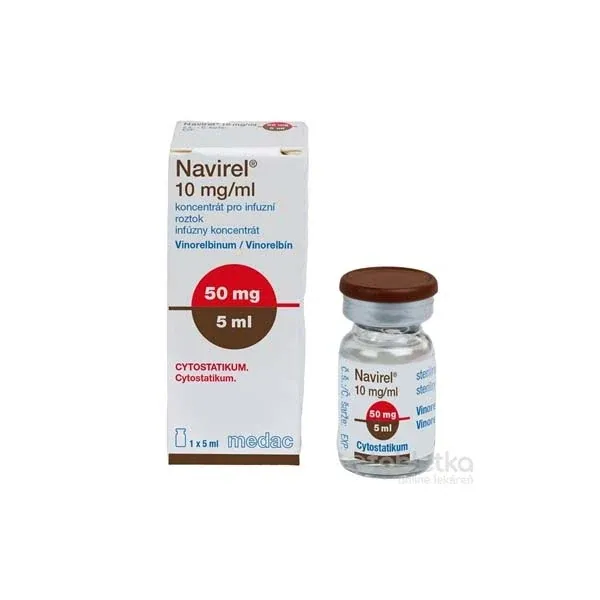
Table of Contents
- Patient Information Leaflet
- 1. What Navirel is and what it is used for
- 2. Important information before receiving Navirel
- 3. How to use Navirel
- 4. Possible adverse reactions
- 5. How to store Navirel
- 6. Contents of the pack and other information
- Information intended exclusively for medical professionals:
Patient Information Leaflet
Navirel, 10 mg/ml, concentrate for solution for infusion
vinorelbine
Please read all of this leaflet carefully before receiving this medicine because it contains
important information for you.
- Keep this leaflet, as you may need to read it again.
- If you have any further questions, please ask your doctor, pharmacist or nurse.
- If you experience any side effects, including any not listed in this leaflet, please inform your doctor, pharmacist or nurse. See section 4.
Leaflet Contents
- What Navirel is and what it is used for
- Important information before receiving Navirel
- How to use Navirel
- Possible side effects
- How to store Navirel
- Contents of the pack and other information
1. What Navirel is and what it is used for
Navirel is a concentrate for solution for infusion. The active substance, vinorelbine, belongs to a group of medicines used in the treatment of cancer. These medicines are known as cytostatic agents because they slow down or prevent the growth of cancer cells. Navirel is used in the treatment of certain types of lung cancer (so-called non-small cell lung cancer) and breast cancer.
2. Important information before receiving Navirel
When not to use Navirel
- if the patient is allergic to vinorelbine, any other similar medicine used in the treatment of malignant tumours belonging to the group of so-called vinca alkaloids, or any of the other ingredients of this medicine (listed in section 6);
- if the patient has a low number of white blood cells of a specific subtype or has an active infection or has had a severe infection within the last 2 weeks;
- if the patient has a low number of platelets;
- if the patient has severe liver disease unrelated to the malignant tumour being treated with vinorelbine;
- if the patient is receiving or has recently received the yellow fever vaccine;
- if the patient is pregnant;
- if the patient is breastfeeding.
Warnings and precautions
Before starting treatment with Navirel, discuss with the doctor, pharmacist, or nurse if the patient:
- has previously undergone radiotherapy in which the irradiated field included the liver;
- has impaired liver function;
- is receiving or has recently received certain types of vaccines containing live viruses (called live attenuated vaccines);
- is currently taking the antiepileptic medicine phenytoin or the antifungal medicine itraconazole;
- has ever had a heart attack or has complained of chest pain;
- has symptoms of infection (e.g. fever, chills); in such case, inform the doctor immediately so that necessary diagnostic tests can be performed;
- is Japanese, as such patients are at increased risk of developing lung connective tissue disorders.
Contact of the medicine with the eyes must be strictly avoided. There is a risk of severe irritation or even ulceration of the eyes (corneal ulceration). If contact with the eyes occurs, they should be immediately rinsed with a large amount of sodium chloride solution.
Inform the doctor immediately if the patient experiences burning pain and redness at the infusion site during or after infusion. This may be a sign of incorrect administration, and in such a case, the infusion must be stopped immediately.
Children and adolescents
This medicine is not recommended for use in children, as there is insufficient data on efficacy and safety in this population.
Navirel and other medicines
Inform the doctor, pharmacist, or nurse about all medicines the patient is currently taking, has recently taken, or plans to take.
Special attention should be paid by the doctor if the patient is taking any of the following medicines:
- medicines that reduce blood clotting (anticoagulants);
- antiepileptic medicines such as phenytoin, phenobarbital, and carbamazepine;
- antibacterial medicines such as rifampicin, clarithromycin, and erythromycin;
- antiviral medicines such as ritonavir;
- antifungal medicines such as itraconazole and ketoconazole;
- an anticancer medicine called mitomycin C;
- medicines that suppress the immune system, such as cyclosporine and tacrolimus;
- heart disease medicines such as verapamil and quinidine;
- herbal medicines containing St. John's wort (Hypericum perforatum).
During treatment with Navirel, live attenuated vaccines (vaccines containing live viruses, e.g. measles, mumps, rubella vaccines) should not be administered, as they may increase the risk of life-threatening post-vaccination reactions. The yellow fever vaccine must not be given during treatment with Navirel, as it also contains live viruses.
Pregnancy, breastfeeding, and effects on fertility
Navirel must not be given to pregnant women unless clearly indicated by the doctor.
If the patient is pregnant or breastfeeding, suspects she may be pregnant, or is planning to have a child, she should consult a doctor or pharmacist before receiving this medicine.
Navirel must not be given to breastfeeding women. If treatment with this medicine is necessary, the patient must discontinue breastfeeding.
During treatment and for at least 7 months after treatment ends, the patient must avoid becoming pregnant due to the potential risk of harm to the unborn child by using an effective method of contraception.
Men undergoing treatment with this medicinal product must not father a child during treatment and for at least 4 months after treatment ends by using an effective method of contraception.
Advice should be sought regarding sperm cryopreservation before treatment due to the risk of irreversible infertility caused by vinorelbine therapy.
Driving and using machines
After receiving vinorelbine, the patient may experience adverse effects that could impair the ability to drive or operate machinery. If the patient feels unwell, he or she should not perform tasks requiring concentration, such as driving or operating machinery.
3. How to use Navirel
Navirel must be prepared and administered only by appropriately trained medical personnel specializing in cancer treatment. Navirel is intended for single-dose use only.
Before each administration, a blood sample will be taken for analysis to check whether the patient has an adequate blood cell count to receive Navirel. If blood test results are unsatisfactory, administration of the medicine may be postponed, and the patient may undergo further evaluations until the results normalize.
Navirel is usually administered once a week. The recommended dose in adults is 25–30 mg/m².
Always follow the instructions provided by your doctor.
Dose modifications
- If significant hepatic impairment is present, the doctor may adjust the dose of the medicine. Follow the instructions given by your doctor.
- In patients with renal impairment, no dose adjustment is required. Follow the instructions given by your doctor.
Navirel must always be administered as an intravenous infusion.
Navirel will be given as an infusion into a peripheral vein over 6 to 10 minutes.
After completion of the infusion, a solution of sodium chloride will be injected through the same vein to ensure proper distribution of the medicine throughout the patient's body.
Administration of a higher dose than described in the package leaflet
The doctor will ensure that the patient receives a dose appropriate for their condition. However, if the patient has any doubts or experiences symptoms suggestive of overdose, such as fever, signs of infection, or constipation, they should contact their doctor, emergency medical services, or pharmacist.
If you have any further questions about the use of this medicine, consult your doctor, pharmacist, or nurse.
4. Possible adverse reactions
Like all medicines, this medicine can cause adverse reactions, although not everyone will experience them.
You should immediately inform the doctor if the patient experiences any of the following symptoms,
as they may indicate a serious adverse reaction:
Uncommon adverse reactions (may occur in up to 1 in 100 people)
- Cough, fever, and chills, which may be signs of a severe infection that could lead to organ failure and blood infection.
- Breathing difficulties (dyspnoea) or breathing problems caused by narrowing of the airways (bronchospasm).
Rare adverse reactions (may occur in up to 1 in 1,000 people)
- Severe chest pain, which may spread to the neck and arms. It may be caused by reduced blood flow to the heart (angina pectoris or heart attack).
- Signs of very low blood pressure, such as severe dizziness and lightheadedness upon standing.
- Severe constipation with abdominal pain when unable to defecate for several days (paralytic ileus).
Unknown frequency (cannot be estimated from available data)
- Signs of a severe allergic reaction, including wheezing, swelling of the lips, tongue, or throat, difficulty swallowing, rash, lightheadedness, and fainting (anaphylactic reaction or anaphylactic shock, anaphylactoid reaction).
- Chest pain, shortness of breath, and fainting, which may be symptoms of a blood clot in the lung vessels (pulmonary embolism).
- Headaches, altered mental status, which may lead to confusion and coma, seizures, blurred vision, and high blood pressure, which may indicate a neurological disorder such as posterior reversible encephalopathy syndrome.
- Breathing difficulties, which may be symptoms of a condition called acute respiratory distress syndrome and may be severe and life-threatening.
Other adverse reactions that may occur in patients:
Very common adverse reactions (may occur in more than 1 in 10 people)
- Suppression of bone marrow function leading to reduced numbers of red blood cells, which may manifest as pale skin and cause weakness or shortness of breath, and reduced numbers of a specific subtype of white blood cells (neutrophils), which usually recovers within 5 to 7 days.
- Constipation, vomiting, inflammation of the mucous membrane of the mouth, oesophagitis.
- After prolonged chemotherapy, cases of loss of certain specific reflex responses (so-called deep tendon reflexes) and reduced muscle strength in the legs have been reported.
- Transient, asymptomatic increases in certain blood test parameters used to assess liver function.
- Hair loss, which is usually mild.
- Adverse reactions at the injection site, such as skin redness, burning pain, discoloration of the vein, and local phlebitis.
- Weakness, fatigue, fever, pain in various locations, including chest pain and pain at the tumour site.
Common adverse reactions (may occur in up to 1 in 10 people)
- Decreased number of platelets (blood cells that help stop bleeding); this symptom is rarely severe.
- Bacterial, viral, or fungal infections in various parts of the body, such as the respiratory, urinary, or gastrointestinal systems, ranging from mild to moderate severity, which usually resolve with appropriate treatment.
- Dyspnoea or skin reactions due to hypersensitivity to vinorelbine.
- Diarrhoea, usually mild or moderate.
- Muscle pain, joint pain, jaw pain.
- Increased blood creatinine levels, a substance reflecting kidney function.
Uncommon adverse reactions (may occur in up to 1 in 100 people)
- Peripheral nerve disorders manifesting as tingling or prickling sensations and increased or decreased muscle tone (paresthesia).
- Low blood pressure.
- High blood pressure.
- Hot flushes associated with sudden redness of the face and neck.
- Cold hands and feet.
- Breathing difficulties or wheezing (dyspnoea and bronchospasm).
Rare adverse reactions (may occur in up to 1 in 1,000 people)
- Marked decrease in blood sodium levels, which may cause fatigue, disorientation, fine muscle tremors, seizures, or coma.
- Inflammation of the pancreas (an organ responsible for regulating blood glucose levels), manifesting as severe abdominal pain radiating to the back.
- Transient changes in ECG readings, including changes in heart rhythm.
- Breathing difficulties caused by connective tissue disease of the lungs (interstitial lung disease).
- Fainting.
- Generalised skin reactions.
- Severe skin disorders at the injection site, such as tissue necrosis (necrosis at injection site).
Very rare adverse reactions (may occur in up to 1 in 10,000 people)
- Blood infection with complications and sepsis leading to death.
- Heart rhythm disorders, such as rapid heartbeat (tachycardia), palpitations, and irregular heartbeat (arrhythmia).
- Impaired respiratory function (respiratory failure).
- Guillain-Barré syndrome (symptoms include weakness or paralysis of legs and arms, breathing problems, and blood pressure disturbances).
Unknown frequency (cannot be estimated from available data)
- Generalised infection with fever and markedly reduced numbers of certain specific white blood cells, potentially leading to death (neutropenic sepsis).
- Reduction in a specific subtype of white blood cells accompanied by fever (febrile neutropenia).
- Marked reduction in all blood cells, which may manifest as fatigue, increased tendency to bruise, and increased risk of infections.
- Syndrome of inappropriate antidiuretic hormone secretion (SIADH), symptoms of which include weight gain, nausea, muscle cramps.
- Loss of/lack of appetite.
- Loss of control over muscles [may be associated with abnormal gait, speech changes, and eye movement disorders (ataxia)].
- Headache.
- Dizziness.
- Heart failure, which may cause shortness of breath and ankle swelling.
- Cough.
- Abdominal pain.
- Gastrointestinal bleeding.
- Severe diarrhoea.
- Hand-foot syndrome (symptoms include numbness, tingling, burning, or itching, skin redness [sunburn-like], swelling, discomfort, pain, rash, affecting palms and/or soles of feet).
- Chills with fever.
- Darker skin colour spreading along veins.
- Weight loss.
A burning pain and redness may occur at the infusion site during or after infusion.
This may be a sign of incorrect administration of the injection, and in such a case, the doctor or nurse should be informed immediately, and the infusion should be stopped immediately.
Reporting of adverse reactions
If any adverse reactions occur, including any adverse reactions not listed in this leaflet, inform your doctor, pharmacist, or nurse. Adverse reactions can be reported directly to the Department of Monitoring Adverse Drug Reactions of the Office for Registration of Medicinal Products, Medical Devices and Biocidal Products:
Al. Jerozolimskie 181C, PL-02-222 Warsaw, tel.: +48 22 49-21-301, fax: +48 22 49-21-309,
website: https://smz.ezdrowie.gov.pl
Adverse reactions can also be reported to the marketing authorisation holder.
Reporting adverse reactions helps provide more information on the safety of the medicine.
5. How to store Navirel
Keep this medicine out of the sight and reach of children.
Do not use this medicine after the expiry date stated on the carton and label following:
Expiry date (EXP). The expiry date refers to the last day of the stated month.
Store in a refrigerator (2-8 ºC). Do not freeze.
Keep in the original packaging to protect from light.
6. Contents of the pack and other information
What Navirel contains
The active substance is vinorelbine (as tartrate), at a concentration of 10 mg/ml.
Each 1 ml vial contains a total of 10 mg vinorelbine (as tartrate).
Each 5 ml vial contains a total of 50 mg vinorelbine (as tartrate).
The other ingredient is water for injections.
What Navirel looks like and contents of the pack
Navirel is a clear, colourless to pale yellow concentrate for solution for infusion (sterile concentrate) contained in a glass vial.
Pack sizes: 1 ml or 5 ml concentrate in packs of 1 vial or 10 vials.
Also available in multipacks containing 10 single packs, each containing 1 vial.
Not all pack sizes may be marketed.
Marketing Authorisation Holder and Manufacturer
medac
Gesellschaft für klinische
Spezialpräparate mbH
Theaterstr. 6
22880 Wedel
Germany
Tel.: +48 22 43000-30
Fax: +48 22 43000-31
e-mail: [email protected]
This medicinal product is authorised for marketing in the European Economic Area under the following names:
Cyprus Navirel 10 mg/ml πυκνό διάλυμα για παρασκευή διαλύματος προς έγχυση
Czech Republic Navirel
Denmark Navirel
Netherlands Navirel 10 mg/ml concentraat voor oplossing voor infusie
Iceland Navirel 10 mg/ml innrennslisþykkni, lausn
Germany Navirel 10 mg/ml Konzentrat zur Herstellung einer Infusionslösung
Norway Navirel 10 mg/ml konsentrat til infusjonsvæske
Poland Navirel
Portugal Vinorelbina Navirel 10 mg/ml concentrado para solução para perfusão
Slovakia Navirel 10 mg/ml koncentrát na infúzny roztok
Sweden Navirel 10 mg/ml koncentrat till infusionsvätska, lösning
Information intended exclusively for medical professionals:
How to use Navirel
Vinorelbine must be prepared and administered only by appropriately trained personnel. Protective goggles, disposable gloves, face mask, and disposable gown must be used. In case of spillage or leakage of the product, it should be wiped up immediately. Contact of the product with the eyes must be strictly avoided. If the solution comes into contact with the eyes, they should be immediately rinsed with a large amount of sodium chloride solution 9 mg/ml (0.9%).
After preparation, all surfaces that have come into contact with the product should be thoroughly cleaned, and hands and face should be washed.
No incompatibilities have been observed between the contents of Navirel 10 mg/ml, concentrate for solution for infusion, and neutral glass bottles, polyvinyl chloride (PVC) bags, polyvinyl chloride (PVC) infusion bags, or infusion sets comprising polyvinyl chloride (PVC) lines.
Vinorelbine should be administered as a slow intravenous bolus infusion (lasting 6–10 minutes) after dilution in 20–50 ml of sodium chloride solution 9 mg/ml (0.9%) for injection or 5% (w/v) glucose solution for injection.
The intravenous infusion time via peripheral vein should be strictly maintained between 6 and 10 minutes, as prolonged exposure to infusion via peripheral vein increases the risk of venous irritation.
After completion of administration, the vein must be thoroughly flushed with at least 250 ml of sodium chloride solution 9 mg/ml (0.9%).
How to store Navirel
After opening and dilution:
The medicinal product should be used immediately after opening and dilution. Intended for single-dose administration only.
Reconstituted solution: 24 hours if stored at 25 °C or in a refrigerator (at 2–8 °C).
From a microbiological standpoint, the product should be used immediately. If the product is not used immediately after opening, the user is responsible for ensuring appropriate storage conditions and duration prior to administration, not exceeding 24 hours at a storage temperature of 2–8 °C, unless the opening and dilution were performed under controlled and validated aseptic conditions.
Do not use if the concentrate is not a clear, colorless to pale yellow solution free from visible particles to the naked eye.