Nasen odt
Poland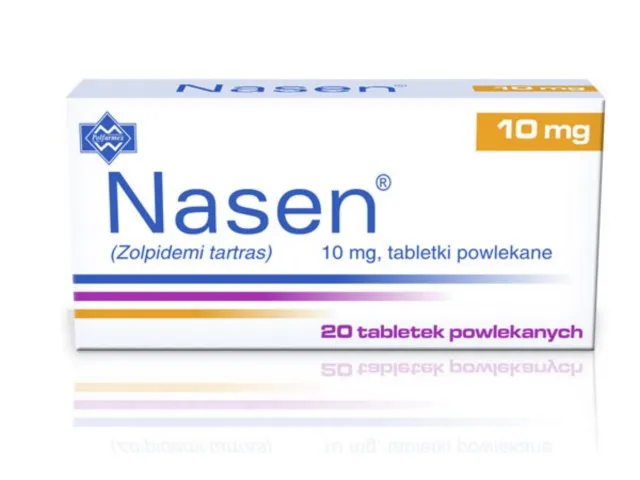
Table of Contents
Patient Information Leaflet: Instructions for the User
NASEN ODT, 5 mg, orodispersible tablets
Zolpidem tartrate
Please read this leaflet carefully before taking this medicine, as it contains
important information for the patient.
- Keep this leaflet for future reference.
- If you have any questions, consult your doctor or pharmacist.
- This medicine has been prescribed for a specific individual. Do not pass it on to others. It may harm someone else, even if their symptoms are the same.
- If you experience any adverse reactions, including any not listed in this leaflet, inform your doctor or pharmacist. See section 4.
Table of Contents
- What NASEN ODT is and what it is used for
- Important information before taking NASEN ODT
- How to take NASEN ODT
- Possible side effects
- How to store NASEN ODT
- Contents of the pack and other information
1. What NASEN ODT is and what it is used for
NASEN ODT is available as orodispersible tablets and contains the active substance zolpidem.
Zolpidem belongs to a group of medicines known as hypnotics and sedatives.
NASEN ODT is indicated for the short-term treatment of insomnia in adults when insomnia causes the patient significant distress or impairment in daily functioning.
The medicine facilitates falling asleep, reduces the number of nocturnal awakenings, prolongs sleep duration, and improves sleep quality.
Before starting treatment with NASEN ODT, discuss it with your doctor.
Whenever possible, the underlying causes of insomnia should be identified and, if feasible, eliminated before a hypnotic medicine is prescribed.
Persistence of insomnia after 7–14 days of treatment may indicate the presence of underlying psychiatric or physical disorders requiring diagnosis and medical evaluation at regular intervals.
Do not use for prolonged periods. Treatment should be as short as possible, since the risk of dependence increases with the duration of treatment.
2. Important information before taking Nasen ODT
Do not take Nasen ODT if:
- you are allergic to zolpidem or any of the other ingredients of this medicine (listed in section 6). Symptoms of an allergic reaction include: rash, difficulty swallowing or breathing, swelling of the lips, face, throat or tongue.
- you have sleep apnoea syndrome,
- you have myasthenia gravis (a disease characterised by muscle weakness),
- you have acute and/or severe respiratory insufficiency,
- you have severe hepatic insufficiency,
- you have a mental illness (psychosis),
- you are under 18 years of age.
Do not take this medicine if any of the above apply to you. If in doubt, speak to your doctor or pharmacist before taking zolpidem.
Warnings and precautions
Before taking Nasen ODT, talk to your doctor or pharmacist if:
- you have previously abused alcohol or psychoactive substances,
- you have breathing problems,
- you have liver problems,
- you have depression or have previously suffered from another mental illness,
- you have recently taken zolpidem or other similar medicines for longer than 4 weeks.
Dependence
Taking Nasen ODT may lead to drug abuse and/or development of psychological or physical dependence.
The risk of dependence is higher when Nasen ODT is taken for longer than 4 weeks and in patients with mental disorders and/or a history of alcohol, illicit drug or medication abuse.
Suicidal thoughts, suicide attempts, suicide and depression
Some studies have shown an increased risk of suicidal thoughts, suicide attempts and suicide in patients taking certain sedative and hypnotic medicines, including this one. However, it has not been established whether this is caused by the medicine or whether other factors are involved.
If you have suicidal thoughts, contact your doctor as soon as possible to obtain medical advice.
Serious injuries
The medicine may cause drowsiness and impaired consciousness, which may lead to falls and consequently to serious injuries.
Next-day psychomotor impairment (see also Driving and using machines)
Nasen ODT has a central nervous system depressant effect. The risk of impaired psychomotor performance, including impaired ability to drive, may be increased if:
- you take the medicine less than 8 hours before activities requiring full mental alertness;
- you take a dose higher than the recommended dose;
- you take zolpidem during treatment with other medicines that depress the central nervous system or other medicines that increase zolpidem blood levels, while consuming alcohol or while using illicit substances.
A single dose of Nasen ODT should be taken immediately before going to bed.
Do not take another dose during the same night.
Memory loss
Sedative and hypnotic medicines may cause anterograde amnesia. This most commonly occurs several hours after taking the medicine. To reduce the risk, ensure you have the opportunity to have uninterrupted sleep lasting 8 hours.
Other psychiatric reactions and "paradoxical" reactions
The use of sedative and hypnotic medicines such as zolpidem may be associated with other psychiatric and paradoxical reactions such as: anxiety, worsened insomnia, agitation, irritability, aggression, hallucinations, anger outbursts, nightmares, delusions, inappropriate behaviour and other behavioural disturbances.
In such cases, treatment should be discontinued. The occurrence of such reactions is more likely in elderly patients.
Sleepwalking and similar behaviours
Nasen ODT may cause sleepwalking or other unusual behaviours during sleep (such as driving, eating, making phone calls or engaging in sexual activity), while the patient is not fully awake. The patient may not remember these activities the following morning. If any of these behaviours occur, treatment with Nasen ODT should be stopped immediately and you should contact your doctor, as such sleep-related behaviours may pose a serious risk of injury to the patient or others.
Consuming alcohol or taking other medicines that cause drowsiness together with Nasen ODT may increase the risk of such sleep-related behaviours, as may using zolpidem at doses exceeding the maximum recommended dose.
Rebound insomnia (rebound insomnia)
After stopping hypnotic treatment, a transient syndrome may occur in which the symptoms that led to the initiation of sedative and hypnotic treatment return in an intensified form. These symptoms may be accompanied by other reactions such as mood changes, anxiety and restlessness.
You should be informed about the possibility of rebound insomnia and the need to take appropriate measures to minimise the risk of anxiety and other symptoms if they occur during withdrawal.
In the case of short-acting sedative and hypnotic medicines, withdrawal symptoms may occur between doses.
Nasen ODT with other medicines
Tell your doctor or pharmacist if you are taking, have recently taken or might take any other medicines, including those obtained without a prescription, such as herbal medicines. This is important because zolpidem may affect the action of certain other medicines and certain medicines may affect the action of zolpidem.
Medicines with central nervous system depressant effects:
When zolpidem is taken with certain medicines, drowsiness and next-day psychomotor impairment, including impaired driving ability, may be intensified. These include:
- Medicines used to treat certain mental health disorders (antipsychotics).
- Medicines used to treat depression, such as sertraline.
- Medicines used to treat moderate to severe pain (opioid analgesics).
- Medicines used to treat epilepsy.
- Medicines used in anaesthesia.
- Sedatives, anti-anxiety medicines or medicines used to treat sleep problems (hypnotics).
- Medicines used to treat hay fever, rashes or other allergies, which may cause drowsiness (sedating antihistamines), such as chlorpheniramine or promethazine.
When taking zolpidem with antidepressants such as bupropion, desipramine, fluoxetine, sertraline and venlafaxine, you may see things that are not real (visual hallucinations).
Concomitant use of zolpidem with fluvoxamine, ciprofloxacin or St John's wort (a herbal medicine) used to treat mood disorders and depression is not recommended.
Concomitant use with opioids
Concomitant use of Nasen ODT and opioids (strong painkillers, medicines used in substitution therapy and some cough medicines) increases the risk of drowsiness, breathing difficulties (respiratory depression), coma and may be fatal. Therefore, concomitant use of these medicines should only be considered if other treatment options are not possible.
However, if your doctor prescribes Nasen ODT together with opioids, the dose and duration of concomitant use should be limited by your doctor.
Inform your doctor about all opioid medicines you are taking and strictly follow dosing instructions. It may be helpful to inform your friends and family so they are aware of the above signs and symptoms. If these symptoms occur, contact your doctor.
The following medicines may increase the risk of adverse effects when used with zolpidem. To reduce this risk, your doctor may decide to reduce the dose of zolpidem:
- Certain antifungal medicines, such as ketoconazole.
The following medicines may reduce the effect of zolpidem:
- Rifampicin (an antibiotic) – for infections.
Nasen ODT and alcohol
Concomitant use of alcohol with zolpidem is not recommended.
The sedative effect of zolpidem may be intensified, resulting in very deep sleep, which may impair normal breathing or make waking up difficult.
Nasen ODT with food and drink
Take the medicine immediately before going to bed or after going to bed.
Pregnancy and breastfeeding
If you are pregnant, think you may be pregnant or are planning to become pregnant, you should consult your doctor before taking this medicine.
Pregnancy
Nasen ODT is not recommended during pregnancy.
A large amount of data has not shown evidence of developmental abnormalities with benzodiazepines. However, the medicine taken during pregnancy may affect the baby, as some studies have shown an increased risk of cleft lip and cleft palate in newborns compared to the general population.
Cleft lip and cleft palate (sometimes called "hare lip") is a congenital malformation caused by incomplete fusion of the palate and upper lip.
Reduced fetal movement and variable fetal heart rate may occur if the mother takes Nasen ODT during the second and/or third trimester of pregnancy.
If you take Nasen ODT late in pregnancy or during delivery, your baby may show muscle weakness, low body temperature, feeding difficulties and breathing problems (respiratory depression).
If you regularly take Nasen ODT late in pregnancy, your baby may develop physical dependence and withdrawal symptoms such as agitation or seizures. In such cases, the newborn should be closely monitored after birth.
Breastfeeding
Do not take Nasen ODT during breastfeeding, as a small amount of the medicine passes into breast milk.
If you are pregnant or breastfeeding, you should consult your doctor or pharmacist before taking this medicine.
Driving and using machines
Do not drive, operate machinery or tools after taking Nasen ODT if you feel drowsy, dizzy or disoriented. Nasen ODT has a major influence on the ability to drive and use machines and may cause events such as "falling asleep at the wheel". After waking up following administration of Nasen ODT (as with other hypnotic medicines), it may happen that:
- you feel drowsy, sleepy, dizzy or disoriented;
- you need more time to make quick decisions (impaired reflexes);
- you may have blurred or double vision;
- you may be less alert.
To minimise the risk of such events, it is recommended to allow at least 8 hours between taking zolpidem and driving, operating machinery or working at heights.
Do not consume alcohol or psychoactive substances while taking Nasen ODT, as this may intensify the effects mentioned above.
Nasen ODT contains excipients – lactose monohydrate, aspartame and sodium.
Nasen ODT contains lactose. If you have been previously diagnosed with intolerance to certain sugars, you should consult your doctor before taking this medicine.
The medicine contains 2.5 mg of aspartame in each 5 mg tablet. Aspartame is a source of phenylalanine. It may be harmful to patients with phenylketonuria. This is a rare genetic disorder in which phenylalanine accumulates in the body due to improper excretion.
The medicine contains less than 1 mmol (23 mg) of sodium per tablet, meaning the medicine is considered "sodium-free".
Nasen ODT contains sulphites
The medicine may rarely cause severe hypersensitivity reactions and bronchospasm.
3. How to use Nasen ODT
This medicine should be taken as directed by your doctor. If you have any doubts, consult your
doctor or pharmacist.
This medicine should be taken orally.
The recommended dose of Nasen ODT is 10 mg (2 tablets) once daily (every 24 hours).
Your doctor may prescribe a lower dose for some patients. Nasen ODT should be taken:
- as a single dose,
- immediately before bedtime.
The patient must ensure a period of at least 8 hours between taking the medicine and performing
activities requiring increased concentration.
Do not exceed the dose of 10 mg within 24 hours.
As with all sleep medicines, long-term use of Nasen ODT is not recommended. The recommended
duration of treatment with this medicine should not exceed 4 weeks.
Adults:
The recommended dose of Nasen ODT is 10 mg (2 tablets) once daily, immediately before bedtime.
Your doctor may prescribe a lower dose for some patients.
Elderly patients:
For elderly patients, the recommended initial dose is 5 mg of Nasen ODT (1 tablet), immediately
before bedtime. If necessary, your doctor may increase the dose to 2 tablets of 5 mg Nasen ODT (or
1 tablet of 10 mg Nasen ODT).
Children and adolescents:
Nasen ODT must not be used in children and adolescents under 18 years of age.
Patients with impaired liver function:
For patients with impaired liver function, the recommended initial dose is 5 mg of Nasen ODT (1
tablet), taken immediately before bedtime.
Zolpidem must not be used in patients with severe liver impairment.
Blood tests:
- Zolpidem may affect liver enzyme activity during blood testing.
- Inform your doctor that you are taking zolpidem before undergoing blood tests.
Taking more Nasen ODT than recommended
If you take more than the recommended dose, contact your doctor immediately or go to a hospital
emergency department.
Taking an overdose of zolpidem may be very dangerous. The following side effects may occur:
- Drowsiness, disorientation, deep sleep, up to possible coma.
Missing a dose of Nasen ODT
Nasen ODT should be taken immediately before bedtime.
Take the missed dose the next day at the usual time.
Do not take two doses at the same time to make up for a missed dose.
Stopping Nasen ODT
Continue taking Nasen ODT until your doctor advises you to stop treatment.
Do not stop taking Nasen ODT suddenly. However, if this happens, inform your doctor. Your doctor
will advise you on how to discontinue treatment gradually by reducing the dose step by step.
If Nasen ODT is stopped abruptly, sleep problems may return and a "withdrawal effect" may occur.
If this happens, some of the following symptoms may occur.
Contact your doctor immediately if you experience any of the following:
- Feelings of anxiety, tremors, irritability, restlessness, or disorientation;
- Headache;
- Muscle weakness or floppiness;
- Disturbances in consciousness, difficulty concentrating or focusing;
- Nightmares, hallucinations;
- Increased sensitivity to light, noise, and touch;
- Impaired contact with reality;
- Numbness, tingling in hands and feet;
- Muscle pain;
- Changes in behavior;
- Seizures.
If you have any further questions about the use of this medicine, consult your doctor or pharmacist.
4. Possible adverse reactions
Like all medicines, this medicine can cause adverse reactions, although not everyone will experience them.
You should stop taking zolpidem and contact your doctor immediately or go to
hospital if:
- The patient has an allergic reaction. Symptoms may include itchy, lumpy rash or hives, swelling of the hands, feet, ankles, face, lips or throat, which may cause difficulty in swallowing or breathing.
- The patient has liver damage due to the toxic effect of the medicine, which may manifest as discolouration of the skin or eyes, abdominal (stomach) pain or feeling of bloating, severe itching, pale or bloody stools, extreme weakness, nausea or loss of appetite.
You should inform your doctor as soon as possible if the patient experiences any of the following
adverse reactions:
Common (may occur in less than 1 in 10 people):
- Cognitive disturbances, such as anterograde amnesia (memory loss may be associated with unusual behaviour). This is more likely to occur within a few hours after taking this medicine. If the patient sleeps for 7–8 hours after taking zolpidem, the risk of problems occurring will be lower;
Sleep-driving and other sleep-related behaviours
In patients taking zolpidem, the following complex sleep behaviours may occur: sleep-driving, sleepwalking, preparing and eating food, and engaging in sexual activity during sleep, with no memory of these actions.
Alcohol and certain medicines used to treat depression or anxiety may increase the risk of this serious adverse reaction.
- Worsening of sleep problems after taking this medicine;
- Seeing or hearing things that are not real (hallucinations).
Uncommon (may occur in less than 1 in 100 people):
- Blurred vision or double vision.
Rare (may occur in less than 1 in 1,000 people):
- Disorders of consciousness;
- Gait disturbances, falls (particularly in elderly people);
- Visual disturbances.
Tell your doctor or pharmacist if any of the following adverse reactions
worsen or persist for longer than a few days:
Common (may occur in up to 1 in 10 people):
- Diarrhoea;
- Nausea, vomiting;
- Abdominal pain;
- Infections of upper and lower respiratory tract;
- Headache;
- Feeling of fatigue or overstimulation;
- Nightmares;
- Depression;
- Dizziness;
- Drowsiness;
- Back pain.
Uncommon (may occur in up to 1 in 100 people):
- Rash, itching;
- Excessive sweating;
- Feeling of anxiety, aggression, confusion or irritability;
- Feeling of excessive happiness/self-confidence, euphoria;
- Paraesthesia (numbness, tingling, pricking, burning sensation of the skin);
- Tremor;
- Sleepwalking or other unusual behaviours during sleep, somnambulism (see section: Sleep-driving and other sleep-related behaviours);
- Attention disorders (concentration);
- Speech disorders;
- Changes in liver enzyme activity – visible in blood test results;
- Appetite disturbances;
- Muscle pain, muscle cramps, muscle weakness.
Rare (may occur in up to 1 in 1,000 people):
- Itchy, lumpy rash (urticaria);
- Disorders of libido (sexual drive);
- Cholestasis (a condition involving blockage of bile removal from the liver), which manifests as jaundice, rash, fever and excretion of darker urine.
Very rare (may occur in up to 1 in 10,000 people):
- Delusions;
- Breathing difficulties (respiratory depression);
- Zolpidem dependence.
Frequency not known (frequency cannot be estimated from available data):
- Anger or behavioural disturbances; Most psychiatric adverse reactions are associated with paradoxical reactions.
- Drug tolerance (need to take a higher dose to fall asleep).
Reporting of adverse reactions
If any adverse symptoms occur, including any adverse symptoms
not listed in this leaflet, tell your doctor, pharmacist or nurse.
Adverse reactions can be reported directly to the Department of Monitoring of Adverse Drug Reactions of the Office for Registration of Medicinal Products, Medical Devices and Biocidal Products,
Al. Jerozolimskie 181C
02-222 Warsaw
Tel.: + 48 22 49 21 301
Fax: + 48 22 49 21 309
Website: https://smz.ezdrowie.gov.pl
Adverse reactions can also be reported to the responsible entity.
Reporting adverse reactions helps to provide more information on the safety of the medicine.
5. How to store medicine N
Keep the medicine out of sight and reach of children.
There are no special storage temperature requirements for this medicine.
Store in the original packaging to protect from light and moisture.
Do not use this medicine after the expiry date stated on the blister and carton after "EXP". The expiry date refers to the last day of the stated month.
Medicines must not be disposed of via wastewater or household waste. Ask your pharmacist how to dispose of medicines no longer in use. This will help protect the environment.
6. Contents of the pack and other information
What the medicine contains
- The active substance is zolpidem tartrate. Each tablet contains 5 mg of zolpidem tartrate.
- The other ingredients are: potassium polyacrylate, mannitol (E 421), lactose monohydrate, microcrystalline cellulose, colloidal anhydrous silica, aspartame (E 951), blackcurrant flavour (containing, among others, natural flavouring substances, maltodextrins, glyceryl triacetate (E 1518), triethyl citrate (E 1505), ammonium sulfite caramel (E 150d)), magnesium stearate.
What the medicine looks like and contents of the pack
The medicine is in the form of white to off-white orodispersible tablets, round, flat with bevelled edges, embossed with the number "5" on one side and smooth on the other, with a blackcurrant odour.
The pack contains 30 orodispersible tablets, packed in aluminium/aluminium blisters, placed in a cardboard carton.
Marketing Authorisation Holder and Importer
Polfarmex S.A.
ul. Józefów 9
99-300 Kutno
Poland
Tel.: + 48 24 357 44 44
Fax: + 48 24 357 45 45
e-mail: [email protected]
Importer
Inpharmasci
Zone Industrielle N 2, 1 Rue Nungesser,
Prouvy, 59121, France