Naproxen polfarmex
Poland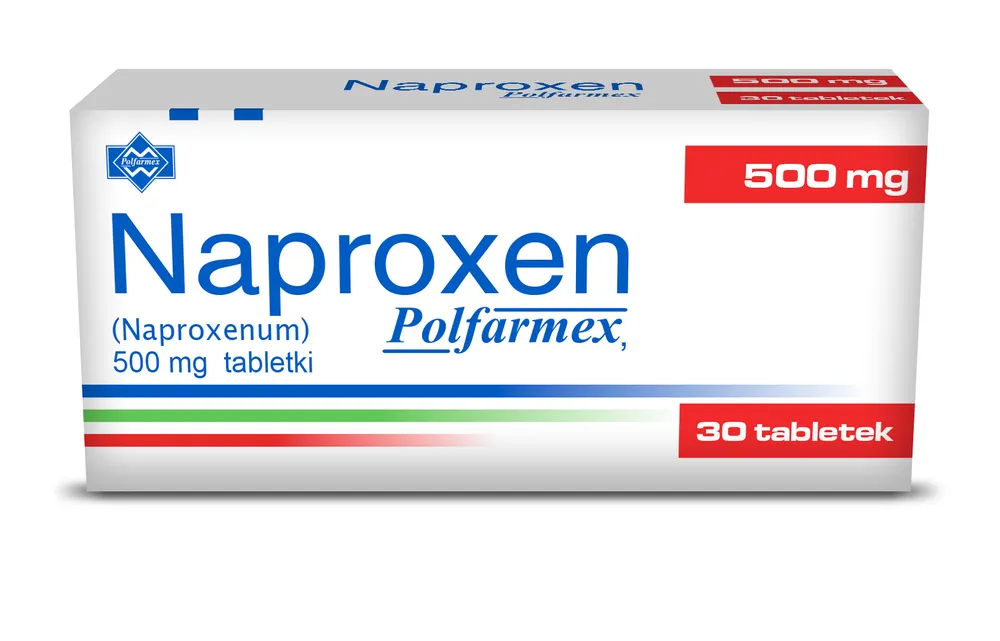
Table of Contents
Patient Information Leaflet
NAPROXEN POLFARMEX, 500 mg, tablets
Naproxenum
Please read this leaflet carefully before taking the medicine, as it contains important information for the patient.
- Keep this leaflet, as you may need to read it again.
- If you have any questions, please consult your doctor or pharmacist.
- This medicine has been prescribed for a specific individual. Do not share it with others. This medicine may harm other people, even if their symptoms are the same.
- If you experience any adverse reactions, including any not listed in this leaflet, inform your doctor or pharmacist. See section 4.
Table of Contents
- What is Naproxen Polfarmex and what is it used for
- Important information before taking Naproxen Polfarmex
- How to take Naproxen Polfarmex
- Possible side effects
- How to store Naproxen Polfarmex
- Contents of the pack and other information
1. What is Naproxen Polfarmex and what is it used for
Naproxen Polfarmex belongs to the group of non-steroidal anti-inflammatory drugs (NSAIDs) which have analgesic and antipyretic properties.
Naproxen Polfarmex is indicated for use in:
- rheumatoid arthritis;
- juvenile rheumatoid arthritis;
- ankylosing spondylitis;
- acute musculoskeletal pain;
- acute attacks of gouty arthritis;
- relief of moderate pain (e.g. soft tissue injuries) and painful menstruation.
2. Information before using Naproxen Polfarmex
When not to use Naproxen Polfarmex:
- if the patient is allergic to naproxen or any of the other ingredients of this medicine (listed in section 6);
- if the use of acetylsalicylic acid or other non-steroidal anti-inflammatory drugs has previously caused allergic reactions such as asthma attack, rhinitis, or urticaria;
- if the patient has or has had peptic ulceration or (and) duodenal ulcer, perforation, or gastrointestinal bleeding;
- if the patient has a bleeding disorder;
- if the patient has severe heart, liver, or kidney failure;
- if the patient is in the third trimester of pregnancy.
Warnings and precautions
Before starting treatment with Naproxen Polfarmex, consult your doctor or pharmacist.
Naproxen should be administered cautiously and at the lowest effective dose in patients with cardiac insufficiency (due to the potential risk of increased peripheral edema).
To detect possible adverse effects, patients on long-term treatment with non-steroidal anti-inflammatory drugs should undergo regular medical check-ups.
Naproxen should be used with particular caution in patients with risk factors for cardiovascular complications—such as hypertension, hyperlipidemia, impaired peripheral circulation, diabetes, or in smokers.
The use of naproxen carries a risk of gastrointestinal ulceration, perforation, or bleeding. These adverse effects may be fatal and may occur without warning symptoms. Treatment with naproxen should be discontinued if gastrointestinal bleeding or ulceration occurs. Patients with a history of gastrointestinal disorders, especially elderly patients, should be informed of the need to report any unusual gastrointestinal symptoms to their doctor, particularly bleeding. This is especially important during the initial period of treatment. In such patients, the use of the lowest effective dose is recommended.
Concomitant use of naproxen and other non-steroidal anti-inflammatory drugs (including selective COX-2 inhibitors) increases the risk of serious adverse effects associated with this class of drugs.
Concomitant use of naproxen with heparin or warfarin should be under medical supervision.
Naproxen inhibits platelet aggregation and prolongs bleeding time. The risk of bleeding is increased in patients taking anticoagulants (e.g., dicoumarol) or in those with pre-existing coagulation disorders.
Naproxen should be administered cautiously and at the lowest effective dose in patients with hepatic impairment. In patients with cirrhosis of the liver (alcoholic or otherwise), plasma naproxen concentrations are reduced, while the amount of unbound (free) naproxen increases.
In patients with bronchial asthma or other allergic conditions, naproxen increases the risk of bronchospasm.
Naproxen should be administered cautiously in patients with impaired renal function. Renal function tests—such as serum creatinine concentration and (or) creatinine clearance—should be performed periodically in these patients. Naproxen is contraindicated in patients with creatinine clearance below 20 mL/min.
Due to its anti-inflammatory and antipyretic effects, naproxen may mask symptoms of other diseases and complicate diagnosis.
Due to the increased risk of adverse effects, long-term treatment with NSAIDs is not recommended in elderly patients. They should receive naproxen at the lowest effective dose. Elderly patients on long-term NSAID therapy should be regularly monitored.
The use of non-steroidal anti-inflammatory drugs carries a risk of serious gastrointestinal adverse effects. This risk is independent of the duration of NSAID use. Most adverse events occur in elderly and debilitated patients who tolerate gastric and intestinal ulcers and bleeding poorly. Clinical studies have not identified any patient group at lower risk of developing gastrointestinal ulcers or bleeding.
Serious skin reactions, including Stevens-Johnson syndrome, toxic epidermal necrolysis, and drug reaction with eosinophilia and systemic symptoms (DRESS syndrome), have been reported with the use of Naproxen Polfarmex. Treatment with Naproxen Polfarmex should be discontinued immediately and medical advice sought if any of the symptoms associated with these serious skin reactions (described in section 4) occur. The highest risk of these reactions occurs at the beginning of naproxen treatment, most commonly within the first month of therapy. Treatment should be discontinued at the first sign of rash, oral mucosal lesions, or other signs of hypersensitivity.
Hypersensitivity reactions may occur in patients with known hypersensitivity to acetylsalicylic acid or other non-steroidal anti-inflammatory drugs, as well as in patients without such history, particularly in those with angioedema, bronchial asthma, nasal mucosal inflammation, or nasal polyps. Hypersensitivity reactions may be fatal.
Rarely, the use of non-steroidal anti-inflammatory drugs may lead to ocular disorders such as optic neuritis or papilledema. The causal relationship is not fully understood. Ophthalmological evaluation is recommended if ocular symptoms occur.
When discontinuing corticosteroids or reducing their dose during naproxen therapy, this should be done gradually. Due to the risk of adverse effects such as adrenal insufficiency or worsening of joint inflammation, the patient should remain under medical supervision.
The use of medicines such as Naproxen Polfarmex may be associated with a small increase in the risk of heart attack (myocardial infarction) or stroke. This risk increases with prolonged use of high doses. Doses higher than recommended or longer treatment duration should not be used.
If the patient has heart problems, a history of stroke, or risk factors for these conditions (e.g., high blood pressure, diabetes, high cholesterol, smoking), treatment should be discussed with a doctor or pharmacist.
Naproxen Polfarmex and other medicines
Inform your doctor or pharmacist about all medicines currently or recently taken, as well as any medicines planned for future use.
Concomitant use of naproxen with agents that neutralize gastric acid or with cholestyramine may delay its absorption. Food intake does not significantly affect the extent of naproxen absorption.
Naproxen may reduce the diuretic effect of furosemide and decrease renal excretion of lithium (reduced renal clearance of lithium ions), leading to increased serum lithium concentration.
Naproxen may enhance the anticoagulant effect of drugs such as warfarin.
Probenecid increases serum naproxen concentration and prolongs its half-life.
Concomitant use of naproxen with cardiac glycosides may inhibit renal excretion of glycosides, resulting in increased serum concentrations.
Naproxen reduces tubular excretion of methotrexate, which may increase its toxicity.
It reduces the antihypertensive effect of propranolol and other β-adrenergic receptor blockers.
Naproxen increases the risk of renal dysfunction associated with the use of ACE inhibitors.
Acetylsalicylic acid may increase the renal clearance of naproxen and reduce its serum concentration.
Concomitant use of naproxen with cyclosporine may increase cyclosporine serum concentration, potentially leading to neurotoxic effects.
Naproxen enhances the effects of hydantoins, sulfonamides, and oral anticoagulants by displacing them from plasma protein binding sites.
Concomitant use of naproxen with corticosteroids increases the risk of gastrointestinal disorders, including gastrointestinal bleeding.
Naproxen, like other NSAIDs, reduces the efficacy of mifepristone. Naproxen treatment should not be initiated until 8 to 12 days after the last dose of mifepristone.
Concomitant use of naproxen with fluoroquinolones increases the risk of seizures.
Taking naproxen within 48 hours before adrenal function testing may interfere with the measurement of urinary 17-ketosteroids and 5-hydroxyindoleacetic acid.
Concomitant use of naproxen with antiplatelet agents and non-selective serotonin reuptake inhibitors may increase the risk of gastrointestinal bleeding.
Pregnancy, breastfeeding, and fertility
If the patient is pregnant or breastfeeding, suspects she may be pregnant, or is planning to have a child, she should consult her doctor or pharmacist before using this medicine.
This medicine may be used during pregnancy only if clearly necessary during the first and second trimesters.
The use of naproxen is contraindicated during the third trimester of pregnancy.
Naproxen passes into breast milk; therefore, it should not be used in nursing mothers.
Naproxen Polfarmex may impair fertility. Women planning to conceive or experiencing difficulty conceiving should inform their doctor.
Driving and operating machinery
Caution should be exercised while taking Naproxen Polfarmex. In some patients, side effects such as drowsiness, dizziness, insomnia, or depression may occur.
Naproxen Polfarmex contains Quinoline Yellow (E 104)
This medicine contains Quinoline Yellow, which may cause allergic reactions.
3. How to use Naproxen Polfarmex
This medicine should always be taken according to the instructions given by your doctor or pharmacist. If in doubt,
consult your doctor or pharmacist.
The dose of the medicine must be adjusted according to the patient's clinical response.
Adults:
Rheumatoid arthritis, ankylosing spondylitis
Recommended initial dose is usually 750 mg to 1000 mg once daily (loading dose), followed by 250 mg to 500 mg every 12 hours. In acute conditions, the dose may be increased (short-term, under strict medical supervision) to 750–1000 mg daily, given in divided doses.
Acute gout attack
Initially 750 mg, then 250 mg every 8 hours until pain subsides.
Dysmenorrhoea, soft tissue injuries
Initial dose of 500 mg, then, if necessary, 250 mg every 6 to 8 hours.
Maximum daily dose – 1250 mg.
Children:
Juvenile rheumatoid arthritis (children over 5 years of age and weighing more than 20 kg)
Recommended daily dose is 10 mg/kg body weight, given in two divided doses in the morning and evening.
The use of naproxen is not recommended in children under 16 years of age for indications other than juvenile arthritis.
The medicine should be taken during a meal or with milk.
Treatment should be initiated with the lowest effective dose for the shortest duration necessary to relieve symptoms, in order to minimize the risk of adverse effects.
Use of a higher than recommended dose of Naproxen Polfarmex
Symptoms of overdose: drowsiness, vomiting, heartburn, nausea, epigastric pain, renal function disturbances. If any of the above symptoms occur, contact your doctor immediately.
In case of naproxen overdose, emptying of the stomach should be performed, followed by appropriate supportive treatment. Prompt administration of an adequate amount of activated charcoal reduces the amount of absorbed drug.
In cases of renal failure, hemodialysis may be necessary.
Missed dose of Naproxen Polfarmex
Do not take a double dose to make up for a missed dose.
4. Possible adverse effects
Like all medicines, this medicine can cause adverse effects, although not everyone will experience them.
Adverse effects that occur frequently (in 1 to 10 people out of 100):
- dizziness, headache, feeling of emptiness in the head;
- indigestion, nausea, heartburn, abdominal pain.
Adverse effects that occur less frequently (in 1 to 10 people out of 1,000):
- drowsiness, insomnia, somnolence;
- constipation, diarrhoea, vomiting;
- dizziness;
- rash, itching, urticaria.
Adverse effects that occur rarely (in 1 to 10 people out of 10,000):
- oesophagitis, ulceration of the oral mucosa, gastrointestinal mucosal ulcers complicated or uncomplicated by bleeding or perforation, gastrointestinal bleeding, haematemesis, melaena, acute pancreatitis;
- angioedema;
- hepatitis (including fatal cases), jaundice;
- thrombocytopenia, granulocytopenia with agranulocytosis, leukopenia, eosinophilia, aplastic and haemolytic anaemia;
- vasculitis;
- renal function disorders;
- peripheral oedema, particularly in patients with hypertension or renal insufficiency, fever (including chills and febrile illnesses).
Adverse effects that occur very rarely (in less than 1 person out of 10,000):
- aseptic meningitis, cognitive disorders, convulsions;
- pancreatitis, colitis, aphthae, oral mucositis, intestinal ulcers;
- hearing impairment, tinnitus, hearing disturbances;
- alopecia (usually reversible), photosensitivity, porphyria, erythema multiforme exudativum, bullous reactions including Stevens-Johnson syndrome and toxic epidermal necrolysis, erythema nodosum, persistent erythema, lichen planus, pustular reactions, skin rashes, systemic lupus erythematosus, photosensitivity reactions including late cutaneous porphyria (pseudoporphyria) or bullous epidermal detachment, petechiae, purpura, excessive sweating, exfoliative dermatitis;
- interstitial nephritis, renal papillary necrosis, nephrotic syndrome, renal failure, glomerular haematuria, proteinuria;
- anaphylaxis/anaphylactoid reactions, including fatal shock;
- psychiatric disorders, depression, sleep disturbances, difficulty concentrating;
- oedema, increased thirst, malaise;
- visual disturbances, corneal opacity, intraocular optic neuritis, retrobulbar optic neuritis, optic disc oedema;
- congestive heart failure, hypertension, pulmonary oedema, palpitations;
- dyspnoea, bronchial asthma, eosinophilic pneumonia;
- induction of labour;
- closure of the ductus arteriosus;
- in women - fertility disorders;
- increased creatinine concentration, abnormal liver function tests, hyperkalaemia.
If any of the following adverse effects occur, treatment with
Naproxen Polfarmex should be discontinued and medical advice should be sought immediately:
Frequency unknown: frequency cannot be estimated from the available data
- extensive rash, high body temperature, elevated liver enzyme activity, blood disorders (eosinophilia), lymphadenopathy and involvement of other organs (drug reaction with eosinophilia and systemic symptoms, also known as DRESS syndrome). See also section 2;
- characteristic allergic skin reaction called fixed drug eruption, which usually recurs in the same location(s) upon re-exposure to the drug and may present as round or oval red patches and swelling of the skin, blisters (urticaria), itching.
Seizures, concentration disturbances and meningitis have been reported during treatment with NSAIDs.
The following adverse effects may also occur: glomerulonephritis,
hyperkalaemia, increased serum creatinine concentration.
Mild peripheral oedema, fever, muscle pain, muscle weakness and malaise may occur during treatment with naproxen.
Oedema and dyspnoea have been reported during treatment with NSAIDs.
Use of medicines such as Naproxen Polfarmex may be associated with a small increased risk of myocardial infarction (heart attack) or stroke.
The following adverse effects may also occur during naproxen treatment: asthma,
eosinophilic pneumonia, pulmonary oedema.
Reporting of adverse effects
If any adverse effects occur, including any not listed in this leaflet, inform your doctor or pharmacist. Adverse effects can be reported directly to the Department of Monitoring Adverse Drug Reactions of the Office for Registration of Medicinal Products, Medical Devices and Biocidal Products:
Al. Jerozolimskie 181C
02-222 Warsaw
Tel.: + 48 22 49 21 301
Fax: + 48 22 49 21 309
Website: https://smz.ezdrowie.gov.pl
Adverse effects can also be reported to the marketing authorisation holder.
Reporting adverse effects helps provide more information on the safety of the medicine.
5. How to store Naproxen Polfarmex
Keep this medicine out of sight and reach of children.
Do not use this medicine after the expiry date stated on the carton, blister, or container after the "EXP" label. The expiry date refers to the last day of the specified month.
Store below 25°C.
Keep in the original packaging to protect from light.
Medicines must not be disposed of via wastewater or household waste. Ask your pharmacist how to dispose of medicines no longer required. This will help protect the environment.
6. Contents of the pack and other information
What Naproxen Polfarmex contains
- The active substance is naproxen. Each tablet contains 500 mg of naproxen.
- Other ingredients: maize starch, povidone, magnesium stearate, quinoline yellow (E 104).
What Naproxen Polfarmex looks like and contents of the pack
Naproxen Polfarmex, 500 mg – packs contain 20 or 30 tablets.
Marketing Authorisation Holder and Manufacturer
Polfarmex S.A.
ul. Józefów 9
99-300 Kutno
Poland
Tel.: +48 24 357 44 44
Fax: +48 24 357 45 45
e-mail: [email protected]