Naproxen aflofarm
Poland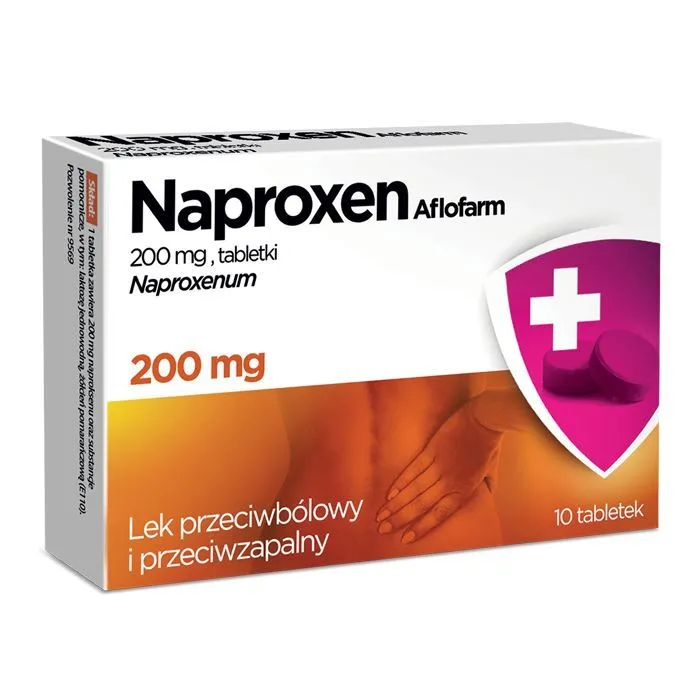
Table of Contents
Patient Information Leaflet
Naproxen Aflofarm, 200 mg, tablets
Naproxenum
Please read this leaflet carefully before taking the medicine, as it contains
important information for the patient.
This medicine should always be taken exactly as described in this patient leaflet or as directed by
a doctor or pharmacist.
- Keep this leaflet, so that you can read it again if necessary.
- If you need advice or further information, please consult your pharmacist.
- If you experience any adverse reactions, including any not listed in this leaflet, inform your doctor or pharmacist. See section 4.
- If there is no improvement after 10 days, or if you feel worse, you should contact your doctor.
Table of Contents
- What Naproxen Aflofarm is and what it is used for
- Important information before taking Naproxen Aflofarm
- How to take Naproxen Aflofarm
- Possible side effects
- How to store Naproxen Aflofarm
- Contents of the pack and other information
1. What Naproxen Aflofarm is and what it is used for
Naproxen Aflofarm is a medicine with analgesic and antipyretic properties. It belongs to a group
of medicines called non-steroidal anti-inflammatory drugs (NSAIDs). The medicine contains the active
substance naproxen, a derivative of propionic acid.
Therapeutic indications
Treatment of mild to moderate pain, such as:
- pain associated with musculoskeletal disorders, including mild strains, post-exercise injuries, low back pain;
- painful menstruation.
2. Important information before taking Naproxen Aflofarm
When not to take Naproxen Aflofarm
- if the patient is allergic to naproxen or any of the other ingredients of this medicine (listed in section 6);
- if the patient has experienced shortness of breath, asthma, rhinitis, or urticaria after taking acetylsalicylic acid or other nonsteroidal anti-inflammatory drugs (NSAIDs), because Naproxen Aflofarm may cause similar adverse reactions in these patients;
- if the patient has ever had or currently has gastrointestinal bleeding;
- if the patient has ever experienced or currently has perforation (a hole) in the wall of the stomach or intestine, associated with the use of nonsteroidal anti-inflammatory drugs (NSAIDs);
- if the patient currently has or has ever had peptic ulcer disease of the stomach and/or duodenum or ulcer bleeding;
- if the patient has a bleeding tendency (coagulation disorders);
- if the patient has severe heart failure;
- if the patient has severe renal or hepatic insufficiency;
- if the patient is in the last three months of pregnancy.
Warnings and precautions
Before starting to take Naproxen Aflofarm, discuss this with your doctor or
pharmacist:
- if the patient has gastrointestinal diseases (e.g. inflammatory bowel disease, duodenal ulcer, Crohn's disease manifesting e.g. with chronic diarrhoea), or diseases of the anus and rectum, as this increases the risk of gastrointestinal bleeding;
- if the patient has certain skin diseases (systemic lupus erythematosus (SLE) or mixed connective tissue disease). In patients with systemic lupus erythematosus or mixed connective tissue disease, the risk of aseptic meningitis may increase;
- if the patient has hypertension and/or heart disorders due to fluid retention;
- if the patient has impaired kidney or liver function;
- if the patient has blood clotting disorders (naproxen may prolong bleeding time);
- if the patient has heart disorders;
- if the patient uses an intrauterine device;
- if the patient has bronchial asthma, chronic rhinitis, sinusitis, nasal polyps, or allergies (current or past), as bronchospasm may occur after taking the medicine;
- if the patient has heart, kidney, or liver failure, is taking diuretics, or has lost a large amount of fluid (e.g. due to major surgery) – such patients should have regular kidney function monitoring ordered by the doctor;
- if the patient is 65 years of age or older, as the risk of adverse effects of the medicine increases, especially gastrointestinal bleeding and perforation of the stomach or duodenal wall, which may be fatal. The patient should inform the doctor about any unusual gastrointestinal symptoms (especially bleeding, pain), particularly at the beginning of treatment;
- if visual disturbances occur, the patient should contact an ophthalmologist;
- the medicine may mask (hide) symptoms of existing infection;
- the medicine may adversely affect fertility in women (see section: Pregnancy, breastfeeding and fertility).
Taking the medicine at the lowest effective dose for the shortest duration necessary to relieve symptoms reduces the risk of adverse effects.
Taking medicines such as naproxen may be associated with a small increased risk of heart attack or stroke. This risk increases with long-term use of high doses of the medicine.
Do not use higher doses or longer treatment duration than recommended.
If the patient has heart problems, has had a stroke, or there is suspicion of risk for these conditions (e.g. high blood pressure, diabetes, elevated cholesterol, smoking), treatment should be discussed with a doctor or pharmacist.
Do not use Naproxen Aflofarm if taking other medicines from the NSAID group (including COX-2 inhibitors such as celecoxib or etoricoxib) or glucocorticosteroids (see section: Naproxen Aflofarm and other medicines).
Pain symptoms related to the gastrointestinal tract are not an indication for using naproxen.
Effect on laboratory test results
Before undergoing laboratory tests, the patient should inform the doctor that they are taking Naproxen Aflofarm, as it may interfere with the results of certain tests (e.g. measurement of 17-ketogenic steroids in urine and 5-hydroxyindoleacetic acid (5-HIAA)).
Serious skin reactions, including Stevens-Johnson syndrome, toxic epidermal necrolysis, and drug reaction with eosinophilia and systemic symptoms (DRESS syndrome), have been reported with the use of Naproxen Aflofarm. The use of Naproxen Aflofarm should be discontinued and medical advice sought immediately if any of the symptoms associated with these serious skin reactions, described in section 4, occur.
Children and adolescents
Safety of use in children has not been established. Do not use in children under 16 years of age.
Naproxen Aflofarm and other medicines
Inform your doctor or pharmacist about all medicines currently or recently taken, as well as any medicines planned for use.
Do not take the following medicines concomitantly with Naproxen Aflofarm. Naproxen Aflofarm may affect the action of other medicines and vice versa. The patient should inform the doctor if taking any of the medicines listed below.
Medicines that may increase gastrointestinal bleeding:
- acetylsalicylic acid (used for pain relief and fever reduction, as well as for prevention of blood clots);
- other nonsteroidal anti-inflammatory drugs (NSAIDs);
- glucocorticosteroids (steroid medicines used, among others, for treatment of bronchial asthma);
- antiplatelet drugs (medicines reducing the risk of blood clot formation);
- selective serotonin reuptake inhibitors (medicines used to treat depression).
Medicines that may cause kidney damage:
- tacrolimus (a medicine used, among others, for treatment of atopic dermatitis);
- cyclosporine (a medicine used in organ transplant patients).
Naproxen Aflofarm may enhance the effect of:
- anticoagulants (medicines preventing blood clotting, e.g. acenocoumarol);
- lithium (a medicine used to treat depression);
- methotrexate (a medicine used to treat certain cancers and rheumatoid arthritis);
- phenytoin, hydantoins (medicines used to treat epilepsy);
- sulfonamides (used to treat bacterial infections);
- antidiabetic medicines (sulfonylurea derivatives);
- baclofen (a medicine reducing skeletal muscle tone).
Naproxen Aflofarm may reduce the effectiveness of:
- antihypertensive medicines (e.g. propranolol);
- diuretics (medicines increasing urine production, e.g. furosemide), because there is an increased risk of kidney function disorders, such as elevated blood potassium levels (hyperkalemia). If such a disorder occurs, the patient should drink large amounts of fluids.
Do not take Naproxen Aflofarm concomitantly with:
- zidovudine (a medicine used to treat HIV infection), as it may prolong bleeding time;
- cardiac glycosides (used to treat heart failure and cardiac arrhythmias), because naproxen may exacerbate symptoms of heart failure and increase blood levels of cardiac glycosides;
- quinolone antibiotics, as this increases the risk of seizures;
- ranitidine, sucralfate, magnesium oxide, magnesium hydroxide, aluminium hydroxide, and cholestyramine (medicines used to treat stomach disorders), as these medicines reduce the absorption of Naproxen Aflofarm;
- probenecid (used to treat gout), as it enhances the effect of Naproxen Aflofarm.
Do not take Naproxen Aflofarm for 8 to 12 days after stopping treatment with mifepristone (used in medical abortion – abortifacient).
Naproxen Aflofarm and food
Food may slightly delay the absorption of the medicine.
Pregnancy, breastfeeding and fertility
If the patient is pregnant or breastfeeding, suspects she may be pregnant, or plans to have a child, she should consult a doctor or pharmacist before using this medicine.
Pregnancy
Do not take Naproxen Aflofarm if the patient is in the last three months of pregnancy, as it may harm the unborn child or cause complications during delivery. It may cause kidney and heart problems in the unborn child. It may also affect bleeding tendency in the patient and her child and may cause delayed or prolonged labour. Naproxen Aflofarm should not be used during the first 6 months of pregnancy unless the doctor considers its use absolutely necessary. If treatment is required during this period or when trying to conceive, the lowest possible dose should be used for the shortest possible duration. Naproxen Aflofarm taken for longer than a few days after the 20th week of pregnancy may cause kidney function disorders in the unborn child, which may lead to low levels of amniotic fluid surrounding the baby (oligohydramnios) or narrowing of a blood vessel (ductus arteriosus) in the baby's heart. If treatment for longer than a few days is necessary, the doctor may recommend additional monitoring.
Breastfeeding
Do not use this medicine during breastfeeding, as naproxen passes into breast milk.
Fertility
The medicine may adversely affect fertility in women. If the patient is planning pregnancy or has difficulty conceiving, the medicine should be discontinued.
Driving and using machines
The medicine may affect the ability to drive and operate machinery. If drowsiness, dizziness, insomnia, or depressive states occur, the patient should not drive or operate machinery.
Naproxen Aflofarm contains monohydrate lactose, orange yellow and sodium
Monohydrate lactose
The medicine contains 38.9 mg of monohydrate lactose per tablet.
If the patient has previously been diagnosed with intolerance to certain sugars, the patient should consult a doctor before taking the medicine.
Orange yellow
The medicine may cause allergic reactions.
Sodium
The medicine contains 0.026 mg of sodium per tablet.
The medicine contains less than 1 mmol (23 mg) of sodium per tablet, meaning the medicine is considered "sodium-free".
3. How to take Naproxen Aflofarm
Always take this medicine exactly as described in this patient leaflet or as directed by your doctor or pharmacist. If in doubt, consult your doctor or pharmacist.
This medicine is taken orally.
Adults
For immediate relief of pain: 2 tablets (400 mg) as a single dose, then if necessary 1 tablet every 6 to 8 hours. The daily dose must not exceed 600 mg.
Do not use this medicine for pain for longer than 10 days without clear instructions from a doctor.
Adverse effects can be minimized by using the lowest effective dose for the shortest duration necessary for symptom relief.
Use in elderly patients (over 65 years of age)
A doctor will decide whether this medicine should be used in these patients and will determine the appropriate dose. Since elderly patients have a higher risk of adverse effects, consideration should be given to using lower doses.
Use in children
The safety of this medicine in children has not been established. Do not use in children under 16 years of age.
Dosing in patients with impaired kidney, liver or heart function
Dose reduction may be necessary in patients with impaired kidney, liver or heart function.
Taking more than the recommended dose of Naproxen Aflofarm
If you take more than the recommended dose, seek immediate advice from your doctor or pharmacist.
Symptoms of overdose may include: drowsiness, nausea, vomiting, dizziness, dyspnoea, heartburn, agitation, convulsions.
Missed dose of Naproxen Aflofarm
Do not take a double dose to make up for a missed dose.
If you have any further questions about the use of this medicine, consult your doctor or pharmacist.
4. Possible adverse reactions
Like all medicines, this medicine can cause adverse reactions, although not everyone will experience them.
You should contact your doctor immediately if you experience:
- rash, severe swelling of the face, lips or throat making it difficult to breathe, speak or swallow, decreased blood pressure, slow or rapid heartbeat, pallor, restlessness, sweating, dizziness, loss of consciousness, respiratory arrest or cardiac arrest (these are symptoms of a severe allergic reaction);
- vomiting blood or coffee-ground-like material, black stools or blood in the stool (these are symptoms of gastrointestinal bleeding).
The following adverse reactions may occur
Common (occur in 1 to 10 people out of 100):
- dizziness, headache;
- sensation of emptiness in the head;
- indigestion, nausea, heartburn, abdominal pain.
Uncommon (occur in 1 to 10 people out of 1,000):
- somnolence;
- insomnia;
- drowsiness;
- diarrhoea, constipation, vomiting;
- rash (itchy red bumps on the skin);
- itching;
- urticaria (pale red, itchy wheals on the skin).
Rare (occur in 1 to 10 people out of 10,000):
- gastrointestinal ulceration with bleeding or perforation;
- gastrointestinal bleeding;
- angioedema (sudden swelling of the face, limbs or joints without itching or pain);
- renal function disorders;
- peripheral oedema (including around the ankles), particularly in patients with hypertension or renal insufficiency;
- fever (including chills and febrile illnesses).
Very rare (occur in less than 1 person out of 10,000):
-
severe allergic reaction (anaphylaxis), anaphylactoid reactions (symptoms similar to allergic reactions), including shock (a life-threatening condition caused by hypoxia of vital organs) resulting in death;
-
marked reduction in the number of all white and red blood cells (thrombocytopenia, leukopenia, agranulocytosis, aplastic anaemia, haemolytic anaemia). Initial symptoms include: fever, sore throat, superficial ulceration of the oral mucosa, influenza-like symptoms, profound exhaustion, nosebleeds or subcutaneous haemorrhages;
-
excessive number of white blood cells (eosinophilia);
-
psychiatric disorders;
-
depression;
-
sleep disturbances, inability to concentrate;
-
aseptic meningitis (neck stiffness, headache, nausea, vomiting, fever, disorientation);
-
cognitive dysfunction, seizures;
-
visual disturbances, corneal opacity, intraocular optic neuritis, extraocular optic neuritis, optic disc oedema;
-
tinnitus, hearing disturbances;
-
congestive heart failure, hypertension, pulmonary oedema, palpitations, vasculitis;
-
dyspnoea, bronchial asthma, eosinophilic pneumonia (presence of eosinophilia in the respiratory tract);
-
pancreatitis, colitis;
-
aphthae (oral mucosal ulceration presenting as white patches), stomatitis, oesophagitis, intestinal ulcers;
-
hepatitis (including fatal cases), jaundice (yellowing of the skin and whites of the eyes);
-
alopecia (usually reversible);
-
photosensitivity;
-
porphyria (a disorder characterized by abnormal haem production, a component of haemoglobin);
-
erythema multiforme exudativum (red-blue skin and (or) mucosal lesions, sometimes with blisters, fever and joint pain);
-
bullous reactions, including Stevens-Johnson syndrome (blisters on the skin and (or) mucous membranes which rupture and turn into painful erosions; fever, muscle and joint pain often accompany these); and toxic epidermal necrolysis (detachment and necrosis of large areas of the epidermis);
-
erythema nodosum (red, painful nodules on the lower legs), persistent erythema, lichen planus, acneiform eruptions, skin rashes, systemic lupus erythematosus (a chronic autoimmune disease affecting multiple organs), hypersensitivity reactions to light, including cutaneous porphyria (pseudoporphyria) or bullous separation of the epidermis, petechiae (small red or purple spots on the skin), purpura (skin discoloration and pigmentation changes);
-
excessive sweating;
-
renal function disorders (interstitial nephritis, renal papillary necrosis, nephrotic syndrome, renal failure);
-
renal haematuria (presence of red blood cells in urine);
-
proteinuria (presence of protein in urine);
-
induction of labour;
-
closure of the ductus arteriosus;
-
oedema;
-
increased thirst, malaise;
-
increased creatinine levels, abnormal liver function tests (detected in blood tests);
-
hyperkalemia (increased potassium levels in blood).
Frequency unknown (frequency cannot be estimated from available data):
- widespread rash, high body temperature, elevated liver enzyme activity, blood disorders (eosinophilia), enlarged lymph nodes and involvement of other organs (drug reaction with eosinophilia and systemic symptoms, also known as DRESS syndrome). See also section 2;
- a characteristic allergic skin reaction called fixed drug eruption, which typically recurs in the same location(s) upon re-exposure to the drug and may present as round or oval red patches, skin swelling, blisters (urticaria), or itching.
Taking medicines such as Naproxen Aflofarm may be associated with a small increased risk of heart attack (myocardial infarction) or stroke.
If any of the above symptoms occur, the medicine should be discontinued and medical advice sought.
Reporting of adverse reactions
If any adverse reactions occur, including any not listed in this leaflet, please consult your doctor or pharmacist.
Adverse reactions can be reported directly to the Department of Monitoring Adverse Reactions of Medicinal Products, Office for Registration of Medicinal Products, Medical Devices and Biocidal Products
Al. Jerozolimskie 181C
02-222 Warsaw
Tel.: +48 22 49-21-301, Fax: +48 22 49-21-309
Website: https://smz.ezdrowie.gov.pl
Adverse reactions can also be reported to the marketing authorization holder.
Reporting adverse reactions helps to provide more information on the safety of the medicine.
5. How to store Naproxen Aflofarm
Keep this medicine out of sight and reach of children.
Store below 25°C.
Do not use this medicine after the expiry date stated on the blister and carton after EXP.
The expiry date refers to the last day of the stated month.
Lot – batch number.
Medicines must not be disposed of via the sewage system or in household waste. Ask your pharmacist how to dispose of medicines no longer required. This will help protect the environment.
6. Contents of the pack and other information
What Naproxen Aflofarm contains
- The active substance is naproxen. One tablet contains 200 mg of naproxen.
- The other ingredients are: monohydrate lactose, maize starch, magnesium stearate, povidone 30, colloidal anhydrous silica, sodium lauryl sulfate, sunset yellow (E110).
What Naproxen Aflofarm looks like and contents of the pack
Naproxen Aflofarm is in the form of tablets. Round, flat, uncoated tablets, light orange-pink in colour. The tablets are smooth, with a uniform surface, free from spots and damage.
The medicine is available in aluminium/PVC blisters. The pack contains 10 tablets in a cardboard box.
Marketing Authorisation Holder
Aflofarm Farmacja Polska Sp. z o.o.
ul. Partyzancka 133/151
95-200 Pabianice
Tel. + 48 42 22-53-100
Manufacturer
Aflofarm Farmacja Polska Sp. z o.o.
ul. Szkolna 31
95-054 Ksawerów