Nalpain 10 mg/ml
Poland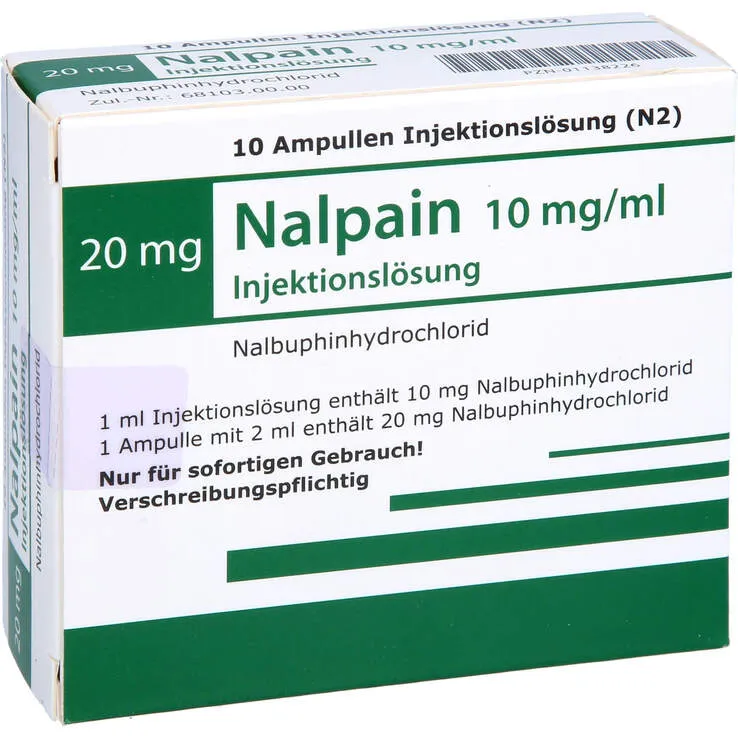
Table of Contents
Package leaflet: Information for the user
NALPAIN, 10 mg/ml, solution for injection
nalbuphine hydrochloride
Please read all of this leaflet carefully before using this medicine, because it contains
important information for the patient.
- Keep this leaflet, as you may need to read it again.
- If you have any questions, ask your doctor or pharmacist.
- This medicine has been prescribed for a specific individual. Do not pass it on to others. It may harm other people, even if their symptoms are the same.
- If the patient experiences any adverse reactions, including any not listed in this leaflet, inform a doctor or pharmacist. See section 4.
Contents of the leaflet:
- What NALPAIN is and what it is used for
- Important information before using NALPAIN
- How to use NALPAIN
- Possible side effects
- How to store NALPAIN
- Contents of the pack and other information
1. What NALPAIN is and what it is used for
NALPAIN is a medicinal product belonging to the group of analgesic (anaesthetic) drugs with opioid properties.
It is used for the short-term treatment of moderate to severe pain. It may also be used before and after surgery.
2. Important information before using NALPAIN
When not to use NALPAIN
- if the patient is allergic to nalbuphine or any of the other ingredients of this medicine (listed in section 6)
- if the patient has severe kidney function impairment
- if the patient has liver function disorders
- if the patient is taking other opioids
Warnings and precautions
When to exercise special caution when using NALPAIN
- If the patient has head trauma, intracranial injury, or increased intracranial pressure, NALPAIN may worsen these symptoms. It is also possible that the use of NALPAIN in patients with head injury may mask their symptoms. If the patient has kidney function disorders, the dose of NALPAIN must be reduced.
- If NALPAIN is administered to the mother during childbirth, newborns should be monitored for respiratory depression and cardiac rhythm disturbances. If the patient has difficulty breathing or develops breathing problems during treatment with NALPAIN, careful medical monitoring may be required.
- If the patient has been diagnosed with heart failure, intestinal paralysis, gallbladder pain, epilepsy, or thyroid dysfunction.
- Misuse of NALPAIN may lead to psychological and physical dependence or addiction.
- If the patient is addicted to heroin, methadone, or other opioid substances, NALPAIN must not be used as a substitute. In such cases, withdrawal symptoms may significantly worsen.
Ask your doctor whether any of the above warnings apply to the patient or have applied in the past.
NALPAIN and other medicines
Other medicines may affect the action of NALPAIN.
Tell your doctor or pharmacist about all medicines the patient is currently taking or has recently taken, as well as any medicines the patient plans to take, including those available without a prescription, herbal medicines, or natural supplements.
- Concomitant use of NALPAIN with specific narcotics (opioids) is not recommended. The analgesic effect may thereby be reduced.
- Alcohol and medicinal products containing alcohol should be avoided.
- Concomitant use of NALPAIN with other anxiolytic and calming agents (anxiolytics), or simultaneous use of NALPAIN with opioid analgesics (painkillers), phenothiazines (medicines used in schizophrenia), or other central nervous system depressants, sedatives, hypnotics, or similar agents may increase the risk of adverse effects. The doctor must adjust the dose of NALPAIN 10 mg/ml solution for injection or of the other medicinal product.
- Concomitant use of NALPAIN with sedatives such as benzodiazepines or related drugs may increase the risk of drowsiness, breathing difficulties (respiratory depression), coma, and may be life-threatening. Therefore, concomitant use should only be considered when no other treatment options are possible. If your doctor has prescribed NALPAIN together with sedatives, the dose and duration of such combined treatment should be limited by the doctor. Inform your doctor about all sedative medicines the patient is taking and strictly follow the doctor's dosing instructions. It may be helpful to inform friends or relatives about the possibility of the above-mentioned symptoms occurring. If such symptoms occur, contact your doctor immediately.
Pregnancy and breastfeeding
If the patient is pregnant or breastfeeding, suspects she may be pregnant, or is planning to become pregnant, she should consult her doctor before using this medicine.
There is insufficient information available on the potential harmful effects of NALPAIN during pregnancy in humans.
If NALPAIN is administered to the mother during childbirth, newborns should be monitored for respiratory depression and cardiac rhythm disturbances (see section 4, Possible side effects).
NALPAIN passes into human milk. Breastfeeding should be discontinued for 24 hours during treatment with NALPAIN.
Consult your doctor or nurse before taking any medicine.
Driving and operating machinery
NALPAIN reduces reaction speed. Therefore, driving and operating machinery should be avoided during treatment with NALPAIN. Other possible adverse effects are listed in section 4.
NALPAIN contains sodium
This medicine contains less than 1 mmol (23 mg) of sodium per dose, i.e. it is considered "sodium-free".
3. How to use NALPAIN
Nalbuphine will always be administered to the patient by qualified medical personnel. The dose received by the patient depends on the patient's body weight.
Dosage
Adults
The recommended dose for adult patients weighing 70 kg is 10–20 mg of nalbupine hydrochloride, corresponding to 0.1–0.3 mg/kg body weight. The maximum single dose must not exceed 20 mg.
The dose may be repeated if necessary after 3 to 6 hours, with a maximum total daily dose of 160 mg.
Dosage should be adjusted according to the intensity of pain and the patient's physical condition.
Children and adolescents
The recommended dose for children is 0.1–0.2 mg/kg body weight. The maximum single dose is 0.2 mg of nalbupine hydrochloride per kilogram of body weight.
The dose may be repeated if necessary after 3 to 6 hours, with a maximum total daily dose of 1.6 mg/kg body weight.
Duration of treatment
The duration of treatment will be determined by the physician.
If the patient notices that the effect of NALPAIN is too strong or too weak, they should consult their doctor or nurse for advice.
Use of a higher than recommended dose of NALPAIN
Using a higher than recommended dose of NALPAIN may cause symptoms of respiratory depression, drowsiness, or loss of consciousness.
However, since this medicine will be administered during a hospital stay, it is unlikely that an excessive dose will be given.
If there are any further doubts regarding the use of this medicine, consult a doctor or nurse.
4. Possible adverse reactions
Like any medicine, this medicine can cause adverse reactions, although not everyone experiences them.
The following adverse reactions may occur:
Very common (in more than 1 out of 10 people): sedation
Common (in more than 1 out of 100 people and in less than 1 out of 10 people): sweating, somnolence, dizziness,
dryness of the oral mucosa, headache, vomiting, nausea, reduced sense of well-being
Rare (in more than 1 out of 10,000 people and in less than 1 out of 1,000 people): feeling of slight numbness
in the head area, nervousness, tremor, withdrawal symptoms, skin sensory disturbances,
breathing difficulties
Very rare (in less than 1 out of 10,000 people): hallucinations, disorientation, personality disorders,
slowing of heart rate, acceleration of heart rate, pulmonary fluid retention, increased sense of well-being,
low blood pressure, high blood pressure, lacrimation, blurred vision, allergic reactions, pain at the site of administration,
skin redness, urticaria, respiratory depression in newborns, delayed circulatory system development in newborns
If any of these adverse reactions worsen, or if the patient notices other adverse effects not listed in this leaflet,
they should inform their doctor or pharmacist.
Reporting of adverse reactions
If any adverse symptoms occur, including any adverse symptoms not listed in this leaflet, the patient should inform their doctor or pharmacist. Adverse reactions can be reported directly to the Department of Monitoring of Adverse Drug Reactions of the Office for Registration of Medicinal Products, Medical Devices and Biocidal Products, Al. Jerozolimskie 181C, PL-02 222 Warsaw, Tel.: + 48 22 49 21 301, Fax: + 48 22 49 21 309, website: https://smz.ezdrowie.gov.pl
Adverse reactions can also be reported to the responsible entity.
Reporting adverse reactions helps to gather more information on the safety of using the medicine.
5. How to store NALPAIN
Keep this medicine out of the sight and reach of children.
Do not use this medicine after the expiry date stated on the ampoule and outer packaging after
"EXP". The expiry date refers to the last day of the stated month. The abbreviation "Lot" indicates the batch number.
Do not store above 25°C.
Store ampoules in the outer packaging to protect from light.
The product should be used immediately after opening.
This medicinal product is for single use only. Any unused portion of the solution must be discarded.
Do not use NALPAIN 10 mg/ml if discoloration, cloudiness, or particulate matter is observed in the solution.
Medicines should not be disposed of via wastewater or household waste. Ask your pharmacist how to dispose of medicines no longer required. This will help protect the environment.
6. Package contents and other information
What NALPAIN contains
- The active substance is nalbupine hydrochloride. 1 ml of solution contains 10 mg of nalbupine hydrochloride. One 2 ml ampoule contains 20 mg of nalbupine hydrochloride.
- The other ingredients are:
anhydrous citric acid
sodium citrate
sodium chloride
hydrochloric acid (for pH adjustment)
water for injections
What NALPAIN looks like and contents of the pack
One ampoule contains 2 ml of a clear, colourless solution for injection.
NALPAIN is available in packs of 10 ampoules.
Marketing Authorisation Holder and Manufacturer
Marketing Authorisation Holder
Orpha-Devel Handels und Vertriebs GmbH
Wintergasse 85/1B
3002 Purkersdorf
Austria
Manufacturer
AOP Orphan Pharmaceuticals GmbH
1190 Vienna, Austria
This medicinal product is authorised in the European Economic Area countries under the following names:
Czech Republic: Nalbuphin OrPha 10 mg/ml injekční roztok
Greece: NALPAIN 10 mg/ml ενέσιμο διάλυμα
Netherlands: Nalbufine HCl OrPha 10 mg/ml oplossing voor injectie
Germany: NALPAIN 10 mg/ml Injektionslösung
Poland: NALPAIN 10 mg/ml roztwór do wstrzykiwań
Hungary: NALPAIN 10 mg/ml oldatos injekció