Naloxone hydrochloride wzf
Poland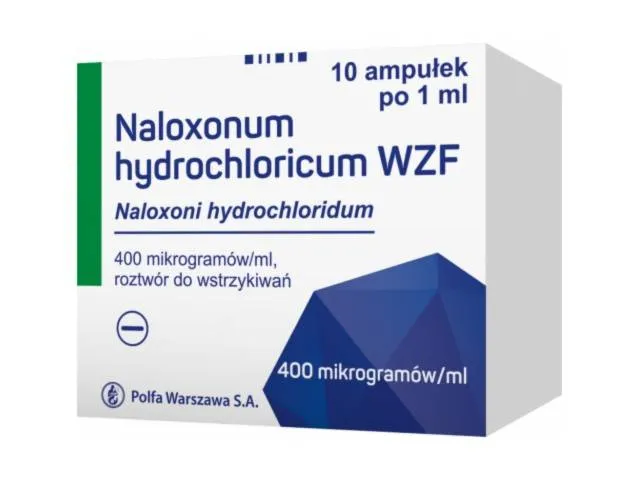
Table of Contents
- Package leaflet: Information for the patient
- 1. What Naloxonum hydrochloricum WZF is and what it is used for
- 2. Important information before using Naloxonum hydrochloricum WZF
- 3. How to use Naloxonum hydrochloricum WZF
- 4. Possible adverse effects
- 5. How to store the medicine Naloxonum hydrochloricum WZF
- 6. Contents of the pack and other information
- Information intended exclusively for healthcare professionals
Package leaflet: Information for the patient
Warning! Keep the leaflet. Information on the immediate packaging in a foreign language.
NALOXONUM HYDROCHLORICUM WZF
400 micrograms/ml, solution for injection
Naloxoni hydrochloridum
Please read the entire leaflet carefully before using the medicine, as it contains
important information for the patient.
- Keep this leaflet, so that you can read it again if necessary.
- If you have any doubts, consult your doctor, pharmacist, or nurse.
- This medicine has been prescribed for a specific person. Do not pass it on to others. The medicine may harm another person, even if their symptoms are the same.
- If you experience any adverse reactions, including any not listed in this leaflet, inform your doctor, pharmacist, or nurse. See section 4.
Leaflet contents
- What Naloxonum hydrochloricum WZF is and what it is used for
- What you need to know before using Naloxonum hydrochloricum WZF
- How to use Naloxonum hydrochloricum WZF
- Possible side effects
- How to store Naloxonum hydrochloricum WZF
- Contents of the pack and other information
1. What Naloxonum hydrochloricum WZF is and what it is used for
Naloxonum hydrochloricum WZF contains the active substance naloxone and belongs to a group of medicines called opioid antagonists.
Naloxonum hydrochloricum WZF reverses (blocks) the unwanted effects of strong painkillers – opioids (e.g. morphine), such as breathing difficulties and drowsiness.
Naloxonum hydrochloricum WZF is used:
- in cases of overdose of strong painkillers (opioids) leading to severe breathing difficulties;
- to reverse the effects of opioids administered during surgery;
- to treat breathing difficulties in newborns whose mothers received opioids during childbirth;
- to determine whether opioids are the cause of poisoning.
Naloxonum hydrochloricum WZF is always administered by medical personnel.
2. Important information before using Naloxonum hydrochloricum WZF
When not to use Naloxonum hydrochloricum WZF:
- if the patient is allergic to naloxone or any of the other ingredients of this medicine (listed in section 6.).
Warnings and precautions
Before starting treatment with Naloxonum hydrochloricum WZF, discuss this with your doctor or pharmacist.
The doctor will exercise particular caution when using Naloxonum hydrochloricum WZF and take appropriate measures:
- if the patient has taken an excessive dose of opioids or is opioid-dependent, acute withdrawal symptoms may develop, such as high blood pressure, rapid heartbeat, severe breathing problems, or cardiac arrest, which may sometimes lead to death;
- if withdrawal symptoms occur, such as nausea, vomiting, diarrhoea, weakness, rapid heartbeat, elevated blood pressure, fever, runny nose, sneezing, piloerection (goosebumps), sweating, yawning, nervousness, restlessness, irritability, tremors, cramping abdominal pain, or body aches; in newborns, seizures, excessive crying, and increased reflexes may occur;
- if Naloxonum hydrochloricum WZF is to be administered to a newborn whose mother used opioids before delivery or is opioid-dependent, as severe withdrawal symptoms may occur in the newborn;
- if the patient has heart disease or circulatory system disorders, or is taking cardiac medications or drugs with adverse effects on the cardiovascular system, as these patients have an increased risk of adverse effects such as irregular heartbeat, hypertension or hypotension, or breathing difficulties;
- if the patient has used a strong painkiller—buprenorphine or pentazocine—because the effectiveness of Naloxonum hydrochloricum WZF in such cases is limited;
- if breathing difficulties occur after administration of Naloxonum hydrochloricum WZF, as this may be due to the shorter duration of action of naloxone compared to opioids;
- if Naloxonum hydrochloricum WZF is administered after surgery involving the use of opioids, as symptoms such as nausea, vomiting, shivering, hypertension, and rapid heartbeat may occur (see section 4);
- if the patient has liver or kidney disease.
Naloxonum hydrochloricum WZF and other medicines
Inform your doctor about all medicines currently used or recently taken, as well as any medicines the patient plans to use.
Inform your doctor if the patient has used or is using:
- potent painkillers (e.g. morphine, codeine, buprenorphine, pentazocine);
- sleeping or (and) sedative medicines;
- medicines that may affect the heart or circulatory system (e.g. antihypertensives, tricyclic antidepressants, calcium antagonists, beta-blockers, digoxin, clonidine, cocaine, methamphetamine). Severe hypertension has been reported during administration of hydrochloride naloxone in cases of clonidine overdose-induced coma.
Pregnancy and breastfeeding
If the patient is pregnant or breastfeeding, suspects she may be pregnant, or is planning to conceive, she should consult her doctor before using this medicine.
Inform your doctor if the patient:
- is pregnant;
- suspects she may be pregnant;
- is planning pregnancy;
- is breastfeeding. The decision to use Naloxonum hydrochloricum WZF during pregnancy or breastfeeding is made by the doctor.
Naloxonum hydrochloricum WZF may cause withdrawal symptoms in newborns (see information above).
Naloxone may be used in pregnant women only if, in the doctor's opinion, its use is absolutely necessary. Breastfeeding should be avoided for 24 hours after administration of the medicine.
Driving and operating machinery
Do not drive or operate machinery for at least 24 hours after administration of the medicine.
Naloxonum hydrochloricum WZF contains sodium
The medicine contains 3.36 mg of sodium (main component of table salt) in each ml of solution. This corresponds to 0.17% of the maximum recommended daily sodium intake in the adult diet.
The medicine contains 84 mg of sodium (main component of table salt) in the maximum daily dose of 10 mg naloxone (25 ml of solution). This corresponds to 4.2% of the maximum recommended daily sodium intake in the adult diet.
The medicine may be diluted—see below "Information intended exclusively for healthcare professionals". When calculating the total sodium content in the prepared, diluted solution, the sodium content originating from the diluent must be taken into account. For accurate information on the sodium content of the diluent, refer to the product characteristics of the medicinal product used as the diluent.
3. How to use Naloxonum hydrochloricum WZF
Naloxonum hydrochloricum WZF is always administered by medical personnel.
The medicine may be given:
- intravenously – injected directly into a vein or administered as an infusion;
- intramuscularly;
- subcutaneously.
The dose of the medicine is determined by the doctor. The dose used depends on body weight, the patient's condition, and the type and amount of opioid used.
Use of a higher than recommended dose of Naloxonum hydrochloricum WZF
- After administration of higher naloxone doses, recurrence of pain and return of muscle rigidity may occur.
- The medicine is administered by medical personnel, therefore it is unlikely that a patient would receive more medicine than intended.
4. Possible adverse effects
Like all medicines, this medicine can cause adverse effects, although they do not occur in everyone.
All medicines can cause allergic reactions, but severe allergic reactions after using this medicine are very rare.
If you experience wheezing, difficulty breathing, swelling of the eyelids, face or lips, rash or itching (especially affecting the whole body), seek immediate medical advice.
The following adverse effects have been reported:
Very common (occurring in more than 1 out of 10 patients):
- nausea.
Common (occurring in less than 1 out of 10 patients):
- dizziness;
- headache;
- rapid heartbeat;
- hypotension or hypertension;
- vomiting;
- postoperative pain.
Uncommon (occurring in less than 1 out of 100 patients):
- tremor, sweating;
- heart rhythm disorders, slow heartbeat;
- diarrhoea;
- dry mouth;
- irritation of blood vessel walls after intravenous administration;
- local irritation, burning sensation and redness at the site of intramuscular injection;
- abnormally fast and deep breathing.
Rare (occurring in less than 1 out of 1,000 patients):
- seizures;
- muscle tension.
Very rare (occurring in less than 1 out of 10,000 patients):
- severe heart disorders (ventricular fibrillation, cardiac arrest);
- pulmonary oedema (symptoms include fluid in the lungs, difficulty breathing, apnoea);
- erythema multiforme (symptoms usually include widespread blistering rash, skin discoloration, and damage to mucous membranes and skin);
- allergic reactions (symptoms usually include urticaria, rhinitis, dyspnoea, facial swelling), anaphylactic shock (severe allergic reaction).
Reporting of adverse effects
If any adverse effects occur, including any not listed in this leaflet, inform your doctor, pharmacist or nurse. Adverse effects can be reported directly to the Department of Monitoring Adverse Drug Reactions, Office for Registration of Medicinal Products, Medical Devices and Biocidal Products
Al. Jerozolimskie 181C
02-222 Warsaw
Tel.: +48 22 49 21 301
Fax: +48 22 49 21 309
Website: https://smz.ezdrowie.gov.pl
Reporting adverse effects helps to provide more information on the safety of the medicine.
5. How to store the medicine Naloxonum hydrochloricum WZF
Keep this medicine out of sight and reach of children.
Store below 25°C. Keep in the original packaging to protect from light.
Do not use this medicine after the expiry date stated on the container. The expiry date refers to the last day of the stated month.
Medicines must not be disposed of via wastewater or household waste. Ask your pharmacist how to dispose of medicines no longer required. This will help protect the environment.
6. Contents of the pack and other information
What Naloxonum hydrochloricum WZF contains
- The active substance is naloxone hydrochloride. Each ml of solution contains 400 micrograms of naloxone hydrochloride (as naloxone hydrochloride dihydrate).
- The other ingredients are: sodium chloride, hydrochloric acid diluted (for pH adjustment), water for injections.
What Naloxonum hydrochloricum WZF looks like and contents of the pack
Naloxonum hydrochloricum WZF solution for injection is a colourless,
clear liquid.
Colourless glass ampoules containing 1 ml of solution are packed in a cardboard box.
The cardboard box contains 10 ampoules.
For more detailed information, please contact the marketing authorisation holder or the parallel importer.
Marketing authorisation holder in Bulgaria, country of export:
Warsaw Pharmaceutical Works Polfa S.A.
Karolkowa 22/24, 01-207 Warsaw
Poland
Manufacturer:
Warsaw Pharmaceutical Works Polfa S.A.
Karolkowa 22/24, 01-207 Warsaw
Poland
Parallel importer:
Delfarma Sp. z o.o.
Św. Teresy od Dzieciątka Jezus 111
91-222 Łódź
Repackaged in:
Delfarma Sp. z o.o.
Św. Teresy od Dzieciątka Jezus 111
91-222 Łódź
Marketing authorisation number in Bulgaria, country of export: 20030166
Parallel import authorisation number: 39/22
Information intended exclusively for healthcare professionals
NALOXONUM HYDROCHLORICUM WZF
400 micrograms/ml, solution for injection
Naloxoni hydrochloridum
Administration route of Naloxonum hydrochloricum WZF
The medicinal product is administered intravenously, intramuscularly, or subcutaneously, or as an intravenous infusion after prior dilution.
In the case of intravenous infusion, the solution should be diluted with 0.9% sodium chloride solution or 5% glucose solution as follows: 2000 micrograms (5 ml of solution containing 400 micrograms/ml naloxone) in 500 ml of diluent. The resulting diluted solution contains 4 micrograms of naloxone per 1 ml. The solution should be prepared immediately before administration.
Note: Naloxonum hydrochloricum WZF should not be administered in the same intravenous infusion with other medicinal products.
During administration of the medicinal product, oxygen therapy and resuscitation treatment must be available, along with equipment enabling cardiopulmonary resuscitation.
Instructions for opening the ampoule
Before opening the ampoule, ensure that all the solution is in the lower part of the ampoule. Gently shake the ampoule or tap it with a finger to facilitate the solution flowing downward.
Each ampoule has a white dot (see Figure 1) indicating the location of the score line beneath it.
- To open the ampoule, hold it vertically in both hands with the white dot facing toward you – see Figure 2. The upper part of the ampoule should be held so that the thumb is positioned above the white dot.
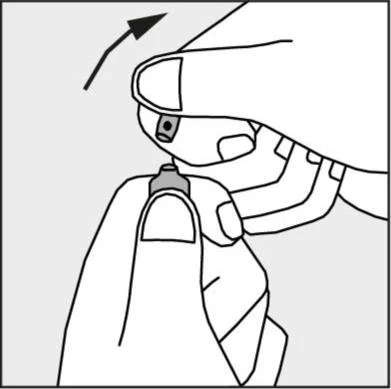
- Press in the direction of the arrow shown in Figure 3. Ampoules are intended for single use only and should be opened immediately before use. Any unused medicinal product remaining after opening must be discarded in accordance with applicable regulations.
Figure 1.
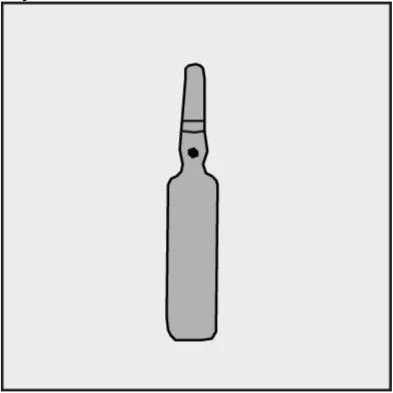
Figure 2.
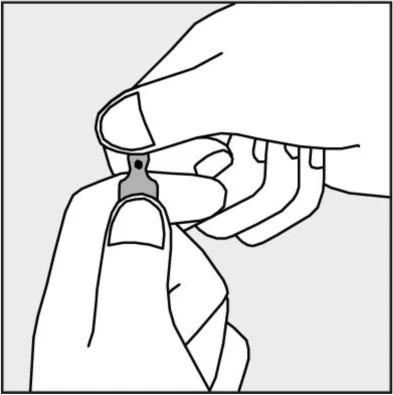
Figure 3.
Dosage of Naloxonum hydrochloricum WZF
The naloxone dose and route of administration depend on the patient's condition, the type and amount of opioid administered.
Opioid poisoning
Adults
Typically, an initial intravenous dose of 400 to 2000 micrograms is administered.
If necessary, the intravenous dose may be repeated every 2–3 minutes until consciousness returns and respiration becomes regular and adequate.
If no improvement in respiratory function or return of consciousness occurs after administration of 10 mg, the cause of these symptoms is likely not opioid overdose.
The medicinal product may also be administered intramuscularly or subcutaneously. In life-threatening situations, the medicinal product should be administered intravenously.
Children
The usual initial intravenous dose is typically 10 micrograms per kg body weight. If necessary, an additional dose of 100 micrograms per kg body weight may be administered.
If naloxone cannot be administered intravenously, the medicinal product should be given intramuscularly or subcutaneously in divided doses.
Reversal of opioid-induced anesthesia
Adults
Typically, 100 to 200 micrograms intravenously, i.e., 1.5–3 micrograms per kg body weight.
In some cases, especially when a long-acting opioid has been used, additional intramuscular doses of naloxone may be required within 1–2 hours. The medicinal product may also be administered via intravenous infusion.
Children
Intravenous dose of 10 micrograms per kg body weight. If necessary, an additional dose of 100 micrograms per kg body weight may be administered.
If naloxone cannot be administered intravenously, the medicinal product should be given intramuscularly or subcutaneously in divided doses. The medicinal product may also be administered via intravenous infusion.
Reversal of respiratory depression in newborns caused by maternal administration of opioid analgesics during labor
Newborns
In the case of apnea, ensure airway patency before administering the medicinal product.
Administer 10 micrograms per kg body weight intravenously, intramuscularly, or subcutaneously. The dose may be repeated after 2–3 minutes if necessary.
Alternatively, a single intramuscular dose of naloxone 200 micrograms (approximately 60 micrograms per kg body weight) may be administered.
Differential diagnosis of opioid poisoning
Intravenous administration of a dose of 0.5 micrograms per kg body weight of naloxone can help determine whether respiratory depression or urinary retention is caused by opioids. The naloxone dose may then be gradually increased, avoiding excessively high doses. High doses eliminate all opioid effects, including analgesia, and may also cause sympathetic and cardiovascular system stimulation.