Naklofen
Poland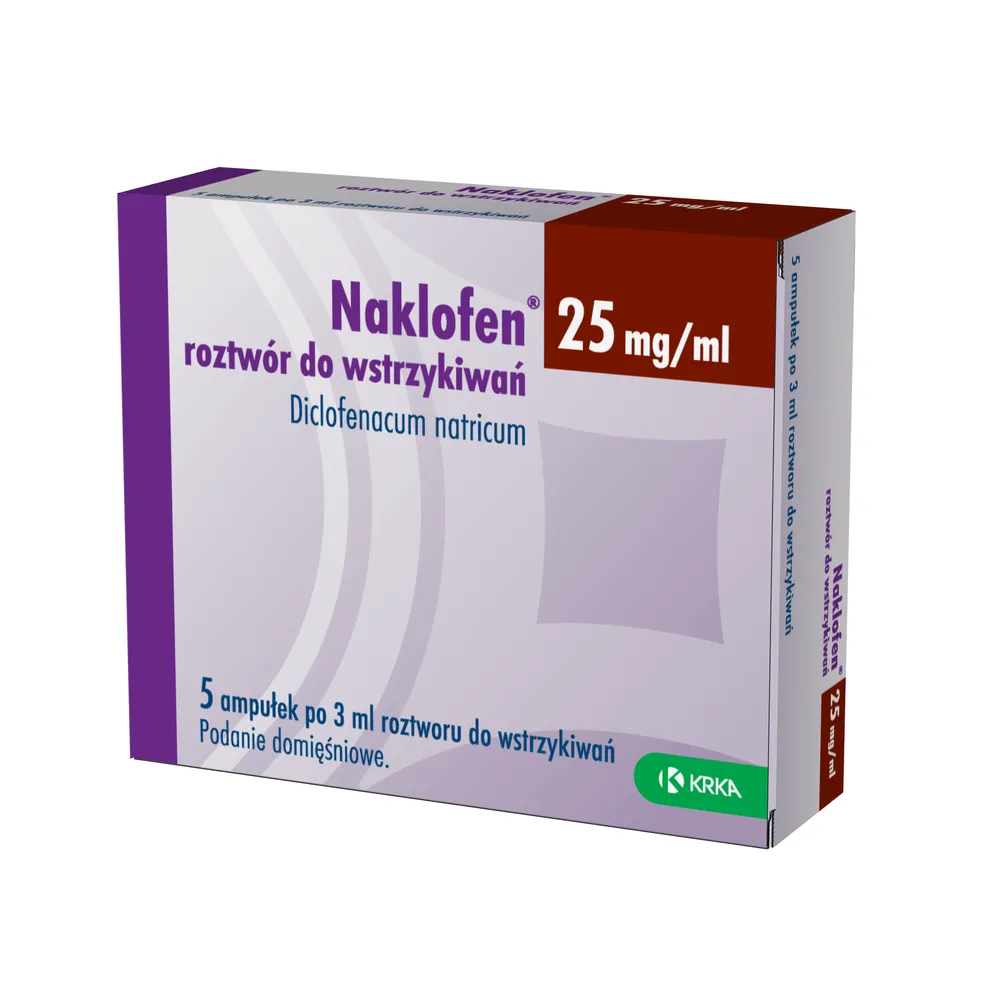
Table of Contents
- Patient Information Leaflet
- 1. What Naklofen is and what it is used for
- 2. Important information before using Naklofen
- 3. How to use Naklofen
- 4. Possible adverse effects
- 5. How to store Naklofen
- 6. Contents of the pack and other information
- Information intended exclusively for medical professionals:
Patient Information Leaflet
Naklofen, 25 mg/ml, solution for injection
Diclofenacum natricum
Please read all of this leaflet carefully before using this medicine, because it contains
important information for you.
- Keep this leaflet, as you may need to read it again.
- If you have any further questions, please ask your doctor, pharmacist, or nurse.
- This medicine has been prescribed for a specific individual. Do not pass it on to others. It may harm them, even if their symptoms are the same.
- If you experience any adverse reactions, including any not listed in this leaflet, inform your doctor, pharmacist, or nurse. See section 4.
Table of contents
- What Naklofen is and what it is used for
- What you need to know before using Naklofen
- How to use Naklofen
- Possible side effects
- How to store Naklofen
- Contents of the pack and other information
1. What Naklofen is and what it is used for
Naklofen is a non-steroidal anti-inflammatory drug (NSAID) with anti-inflammatory,
analgesic, and antipyretic properties. The main mechanism of action is inhibition of
prostaglandin synthesis.
Naklofen is used in the treatment of inflammatory or degenerative rheumatic diseases:
- rheumatoid arthritis, ankylosing spondylitis,
- osteoarthritis,
- extra-articular rheumatism.
2. Important information before using Naklofen
When not to use Naklofen:
- if the patient is allergic to sodium diclofenac, acetylsalicylic acid, ibuprofen, or any other medicine in the NSAID group, or to any of the other ingredients of this medicine (listed in section 6). Symptoms of hypersensitivity include facial and lip swelling (angioedema), breathing difficulties, chest pain, nasal discharge, rash, or any other allergic-type reactions.
- if the patient has active or a history of peptic ulcer disease of the stomach and (or) duodenum, gastrointestinal bleeding or perforation,
- if the patient has gastrointestinal bleeding or perforation related to previous use of non-steroidal anti-inflammatory drugs,
- if the patient is in the third trimester of pregnancy,
- if the patient has severe liver or kidney failure,
- if the patient has heart disease and (or) cerebrovascular disease, e.g. following myocardial infarction, stroke, transient ischaemic attack (mini-stroke), or arterial embolism in the heart or brain, or following a procedure to unblock or bypass blocked blood vessels,
- if the patient has current or previous circulatory disorders (peripheral vascular disease).
Warnings and precautions
Before starting treatment with Naklofen, discuss this with your doctor.
Use of diclofenac may cause gastrointestinal bleeding, ulceration, or perforation (which may be fatal). This effect may be particularly dangerous when high doses of diclofenac are used, or in patients with a history of gastrointestinal ulceration or in elderly patients. If any unusual abdominal symptoms occur during treatment with Naklofen (especially gastrointestinal bleeding), treatment should be stopped immediately and medical advice sought.
In patients with ulcerative colitis or Crohn’s disease, diclofenac may worsen the course of the disease.
Diclofenac may, very rarely (especially at the beginning of treatment), cause life-threatening skin reactions such as exfoliative dermatitis, Stevens-Johnson syndrome with widespread rash, high fever and joint pain, or toxic epidermal necrolysis with skin and mucous membrane lesions, high fever and severe general condition. If early signs of rash, mucosal changes or other symptoms of allergic reaction occur, the medicine should be discontinued and medical advice sought.
The medicine may mask symptoms of infection (e.g. headache, increased body temperature) and may complicate correct diagnosis. Inform your doctor about using this medicine during medical examinations.
Patients with asthma, allergic rhinitis, nasal mucosal swelling (e.g. due to nasal polyps), chronic obstructive pulmonary disease or chronic respiratory infections are more susceptible to allergic reactions to diclofenac (worsening of asthma symptoms, Quincke’s oedema or urticaria). This warning also applies to patients allergic to other substances (e.g. those experiencing skin reactions, itching or urticaria). In such patients, the medicine should be administered with particular caution.
In patients with impaired liver function, diclofenac may worsen the course of the disease. Strict adherence to the doctor’s recommendations regarding regular liver function tests is essential.
Particular caution is required when using Naklofen:
- in patients with hepatic porphyria, as diclofenac may trigger an attack of porphyria.
- if the patient smokes.
- if the patient has diabetes.
- if the patient has angina pectoris, thrombosis, hypertension, elevated cholesterol or elevated triglyceride levels.
Talk to your doctor before starting treatment with Naklofen if the patient has ever experienced severe skin rash, skin peeling, blistering or (and) oral ulcers after taking Naklofen or other painkillers.
Before using Naklofen, inform your doctor if the patient has recently undergone or is scheduled for stomach or gastrointestinal surgery, as Naklofen may sometimes impair intestinal wound healing after surgery.
The risk of adverse effects can be reduced by using the lowest effective dose for the shortest duration necessary.
Do not use Naklofen simultaneously with other systemic non-steroidal anti-inflammatory drugs, including selective cyclooxygenase-2 inhibitors.
Inform your doctor about any of the above-mentioned conditions before using the medicine.
Taking medicines such as Naklofen may be associated with a small increased risk of heart attack (myocardial infarction) or stroke. This risk increases with long-term use of high doses. Do not use higher doses or longer treatment duration than recommended.
If at any time during treatment with Naklofen any signs or symptoms of heart or blood vessel disease occur, such as chest pain, shortness of breath, weakness or speech disturbances, seek immediate medical advice.
The medicine may transiently inhibit platelet aggregation.
Children and adolescents
Naklofen in the form of injection solution is not suitable for use in children and adolescents.
Naklofen and other medicines
Tell your doctor or pharmacist about all medicines the patient is currently taking or has recently taken, as well as any medicines the patient plans to take, including those available without prescription.
Inform your doctor about all chronic diseases and metabolic disorders.
Due to interactions with certain other medicines, the effect of Naklofen or those medicines may be increased or decreased.
Inform your doctor especially if taking the following medicines:
- lithium or medicines belonging to the group of antidepressants (selective serotonin reuptake inhibitors),
- digoxin (a medicine used in the treatment of heart disease),
- angiotensin-converting enzyme inhibitors, β-adrenergic blocking agents (a group of medicines used in the treatment of hypertension and heart failure),
- diuretics (medicines that increase urine output),
- non-steroidal anti-inflammatory drugs (e.g. acetylsalicylic acid or ibuprofen) and corticosteroids,
- trimethoprim (a medicine used to prevent or treat urinary tract infections),
- anticoagulants and platelet inhibitors,
- antidiabetic medicines except insulin,
- methotrexate (a medicine used in the treatment of certain cancers or arthritis),
- cyclosporine and tacrolimus (medicines used in organ transplant recipients),
- antibacterial quinolones and certain medicines used to treat infections,
- phenytoin (a medicine used in the treatment of epileptic seizures),
- colestipol and cholestyramine (medicines that lower blood cholesterol levels),
- sulfinpyrazone, probenecid (medicines used in the treatment of gout),
- voriconazole (a medicine used in the treatment of fungal infections).
Pregnancy, breastfeeding and fertility
If the patient is pregnant or breastfeeding, suspects she may be pregnant, or is planning to have a child, she should consult a doctor or pharmacist before using this medicine.
Do not take Naklofen if the patient is in the last three months of pregnancy, as it may harm the unborn child or cause complications during delivery. Naklofen may cause kidney and heart function disorders in the unborn child. It may increase the tendency to bleeding in both mother and child and may delay or prolong labour. During the first 6 months of pregnancy, Naklofen should not be used unless the doctor considers its use absolutely necessary. If treatment is required during this period or when trying to conceive, the lowest possible dose should be used for the shortest possible time. From week 20 of pregnancy, Naklofen may cause kidney function disorders in the unborn child if taken for longer than a few days. This may lead to low levels of amniotic fluid surrounding the baby (oligohydramnios) or narrowing of the blood vessel (ductus arteriosus) in the baby’s heart. If treatment is required for longer than a few days, the doctor may recommend additional monitoring.
Do not use Naklofen during breastfeeding.
The medicine may make it more difficult to become pregnant. If the patient is planning pregnancy or has difficulty becoming pregnant, she should inform her doctor.
Driving and operating machinery
Naklofen has a mild or moderate effect on the ability to drive and operate machinery. If dizziness or (and) other central nervous system disorders occur, do not drive or operate machinery.
Naklofen contains benzyl alcohol, sodium metabisulphite (E 223), propylene glycol, sodium
This medicine contains 120 mg of benzyl alcohol in each ampoule. Benzyl alcohol may cause allergic reactions. Pregnant or breastfeeding women and patients with liver or kidney disease should consult a doctor before using this medicine, as large amounts of benzyl alcohol may accumulate in their bodies and cause adverse effects (so-called metabolic acidosis).
Sodium metabisulphite may rarely cause severe hypersensitivity reactions and bronchospasm.
This medicine contains 630 mg of propylene glycol in each ampoule.
The medicine contains less than 1 mmol (23 mg) of sodium per dose, meaning it is considered "sodium-free".
3. How to use Naklofen
This medicine should always be used as directed by the physician. If in doubt, consult your
doctor or pharmacist.
Dosage and method of administration
Injections should be administered deep intramuscularly.
The injectable solution is used in the treatment of acute conditions. Injections should be replaced as soon as possible by tablets or suppositories. This medicine should not be administered for longer than 2 days. The usual dose is 75 mg – one ampoule per day – administered by deep intramuscular injection into the upper outer quadrant of the buttock. A dose greater than 150 mg per day should not be used.
Exceptionally, in severe cases, the daily dose may be increased to two injections of 75 mg each, given several hours apart (one injection into each buttock).
If the effect of the medicine appears too strong or too weak, consult your doctor or pharmacist.
Children and adolescents
The use of Naklofen injectable solution is not recommended in children and adolescents due to the dose volume.
Use of a higher than recommended dose of Naklofen
Overdose does not produce characteristic symptoms, but the following may occur: vomiting, gastrointestinal bleeding, diarrhoea, dizziness, tinnitus or convulsions.
In cases of significant poisoning, acute renal failure and liver damage may occur.
If you accidentally take more medicine than recommended, contact your doctor, pharmacist or go immediately to the nearest hospital emergency department.
Missed dose of Naklofen
Your doctor determines the frequency of injections. If a scheduled dose is missed, inform your doctor as soon as possible.
Do not take a double dose to make up for a missed dose.
Stopping Naklofen treatment
Discontinuing treatment without consulting your doctor may be dangerous. If diclofenac is used for a short period to relieve pain, it may be safely discontinued. However, if the medicine has been used long-term, consult your doctor before stopping treatment.
If you have any further questions about the use of this medicine, consult your doctor or pharmacist.
4. Possible adverse effects
Like all medicines, this medicine can cause adverse effects, although not everyone will experience them.
You should stop taking Naklofen and immediately inform your doctor if any of the following symptoms occur:
- Chest pain, which may be a sign of a potentially serious allergic reaction called Kounis syndrome.
- Injection site reactions, including pain, redness, swelling, hard lump, ulceration, and bruising at the injection site. This may lead to blackening and necrosis (death) of the skin and surrounding tissues at the injection site, healing with scarring, a condition also known as Nicolau syndrome.
- Severe allergic skin reaction, which may present as widespread red and/or dark patches, skin swelling, blisters, and itching (generalized bullous fixed drug eruption).
Adverse effects are listed below by frequency of occurrence using the following categories:
- Very common: may affect more than 1 in 10 people
- Common: may affect up to 1 in 10 people
- Uncommon: may affect up to 1 in 100 people
- Rare: may affect up to 1 in 1,000 people
- Very rare: may affect up to 1 in 10,000 people
- Frequency not known: frequency cannot be estimated from available data.
Common: nausea, vomiting, abdominal pain, indigestion, bloating with gas release, loss of appetite; headache, dizziness; increased liver enzyme activity; rash; irritation at the site of administration, pain at the site of administration, hardening at the site of administration.
Rare: gastric mucositis, gastrointestinal bleeding, vomiting blood, tarry stools, bloody diarrhoea, peptic ulcer of the stomach and/or duodenum (with or without bleeding or perforation); jaundice, liver function disorders (asymptomatic hepatitis, acute hepatitis, chronic active hepatitis), cholestasis; somnolence, fatigue; urticaria; hypersensitivity reactions (including bronchospasm, angioedema, hypotension, anaphylactic shock), fluid retention (oedema), breathing difficulties (asthma, dyspnoea); swelling, tissue atrophy at the site of administration.
Very rare: changes in blood cell counts (anaemia, thrombocytopenia, leukopenia, agranulocytosis); facial swelling (angioedema); disorientation, depression, insomnia, fatigue, nightmares, irritability, psychotic disorders; paraesthesia (sensation of pricking and tingling), memory disturbances, convulsions, restlessness, tremor, aseptic meningitis, taste disturbances, ischaemic stroke; visual disturbances, blurred vision, double vision; tinnitus, hearing disturbances; cardiac rhythm disorders (palpitations), chest pain, heart failure, myocardial infarction; hypertension, vasculitis; pneumonia; colitis (including haemorrhagic colitis and exacerbation of ulcerative colitis or Crohn's disease), constipation, oral mucositis (including ulcerative inflammation of the oral mucosa), glossitis, oesophageal disorders, formation of diaphragm-like strictures in the intestines, pancreatitis; liver function disorders (fulminant hepatitis, hepatic necrosis, liver failure); renal failure, haematuria, proteinuria, nephrotic syndrome, interstitial nephritis, renal papillary necrosis; bullous rash, exanthema, erythema, erythema multiforme, Stevens-Johnson syndrome (severe blistering rash affecting the skin, oral mucosa, eyes, and genitals), toxic epidermal necrolysis (severe, widespread blistering rash of the skin with redness and peeling of the skin), exfoliative dermatitis, hair loss, photosensitivity, red or purple spots on the skin (purpura), itching, abscess at the injection site.
Frequency not known: confusion, hallucinations, malaise, tissue damage at the injection site; allergic skin reaction which may present as round or oval redness and swelling of the skin, blisters and itching (fixed erythema). In affected areas, the skin may also appear darker, which may persist after the lesions have healed. Upon re-administration of the medicine, fixed erythema usually reappears in the same locations.
If any of the following adverse effects occur, stop taking Naklofen immediately and inform your doctor:
- stomach discomfort, heartburn or upper abdominal pain,
- vomiting blood, blood in stool, blood in urine,
- skin reactions such as rash or itching,
- wheezing or shortness of breath,
- yellowing of the skin or whites of the eyes,
- persistent sore throat or high fever,
- swelling of the face, feet or legs,
- severe migraine,
- chest pain associated with cough.
Taking medicines such as Naklofen may be associated with a small increased risk of heart attack (myocardial infarction) or stroke.
Reporting of adverse effects
If any adverse effects occur, including any not listed in this leaflet, inform your doctor or pharmacist. Adverse effects can be reported directly to the Department of Monitoring Adverse Drug Reactions, Office for Registration of Medicinal Products, Medical Devices and Biocidal Products, Al. Jerozolimskie 181C, 02-222 Warsaw,
Tel: +48 22 49 21 301,
Fax: +48 22 49 21 309
Website: https://smz.ezdrowie.gov.pl
Adverse effects can also be reported to the marketing authorization holder.
Reporting adverse effects helps provide more information on the safety of the medicine.
5. How to store Naklofen
Keep the medicine out of sight and reach of children.
Store below 25°C.
Keep in the original packaging to protect from light.
Do not use this medicine after the expiry date stated on the box after: EXP. The expiry date refers to the last day of the stated month.
Medicines should not be disposed of via wastewater or household waste. Ask your pharmacist how to dispose of medicines no longer in use. This will help protect the environment.
6. Contents of the pack and other information
What Naklofen contains
- The active substance is sodium diclofenac. 1 ml of injection solution contains 25 mg of sodium diclofenac. 3 ml of injection solution (1 ampoule) contains 75 mg of sodium diclofenac.
- Other ingredients: benzyl alcohol, propylene glycol, sodium metabisulfite (E 223), sodium hydroxide, water for injections. See section 2 “Naklofen contains benzyl alcohol, sodium metabisulfite (E 223), propylene glycol, sodium”.
What Naklofen looks like and contents of the pack
The injection solution is clear, colourless to slightly yellow.
Packaging: 5 ampoules containing 3 ml of injection solution, in a cardboard box.
Marketing Authorisation Holder and Manufacturer
KRKA, d.d., Novo mesto, Šmarješka cesta 6, 8501 Novo mesto, Slovenia
For further information about this medicine, contact the representative of the Marketing Authorisation Holder:
KRKA-POLSKA Sp. z o.o.
ul. Równoległa 5
02-235 Warsaw, Poland
tel. 22 57 37 500
Information intended exclusively for medical professionals:
Pharmaceutical incompatibilities
Mixing the medicinal product with other medicinal products in the same syringe is not recommended.