Mucosolvan for inhalations
Poland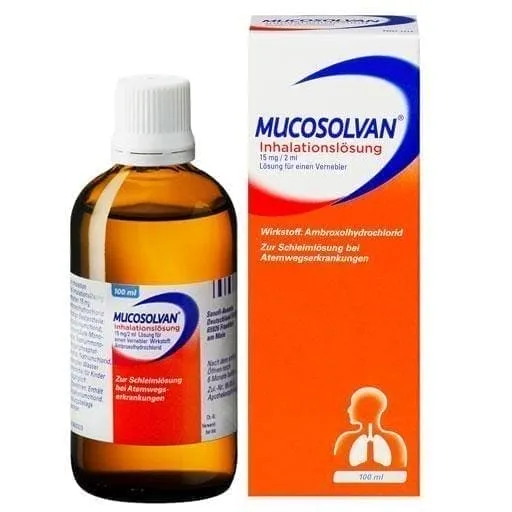
Instructions for Use
Patient Information Leaflet
Mucosolvan inhalacje, 15 mg/2 ml, solution for nebulisation
Ambroxoli hydrochloridum
(responsible entity logo)
Please read the entire leaflet carefully before using this medicine, as it contains
important information for the patient.
- Keep this leaflet for future reference.
- If you have any questions, please consult your doctor, pharmacist, or nurse.
- This medicine has been prescribed for a specific individual. Do not share it with others. This medicine may harm someone else, even if their symptoms are the same.
- If you experience any adverse reactions, including those not listed in this leaflet, inform your doctor, pharmacist, or nurse. See section 4.
Table of contents:
- What Mucosolvan inhalacje is and what it is used for
- Important information before using Mucosolvan inhalacje
- How to use Mucosolvan inhalacje
- Possible side effects
- How to store Mucosolvan inhalacje
- Contents of the pack and other information
1. What Mucosolvan inhalacje is and what it is used for
Ambroxol hydrochloride, the active substance in Mucosolvan inhalacje, increases mucus secretion
in the respiratory tract, facilitating expectoration and relieving cough.
Indications
Acute and chronic diseases of the lungs and bronchi associated with impaired mucus secretion
and impaired mucus transport.
2. Important information before using Mucosolvan inhalations
When not to use Mucosolvan inhalations
- If the patient is allergic to ambroxol hydrochloride or any of the other ingredients of this medicine (listed in section 6).
Warnings and precautions
- If the patient has renal impairment or severe hepatic insufficiency, Mucosolvan inhalations should only be used after consultation with a physician. As with other drugs metabolized in the liver and subsequently excreted by the kidneys, accumulation of ambroxol metabolites in the body may be expected in cases of severe renal impairment.
- Severe skin reactions associated with ambroxol hydrochloride have been reported. If a rash occurs (including lesions of mucous membranes, e.g. in the mouth, throat, nose, eyes, genital organs), treatment with Mucosolvan inhalations must be discontinued and the patient should contact a doctor immediately.
Mucosolvan inhalations and other medicines
Inform the doctor about all medicines currently used or recently used, as well as any medicines the patient plans to take.
No clinically significant adverse interactions with other medicines have been observed.
Ambroxol increases the concentration of antibiotics (amoxicillin, cefuroxime, erythromycin) in bronchopulmonary secretions and sputum.
Mucosolvan inhalations should not be administered simultaneously with antitussive medicines (e.g. codeine), as this may lead to dangerous accumulation of bronchial secretions due to suppressed cough reflex. Antitussive medicines impair the expectoration of liquefied mucus by suppressing the cough reflex.
Pregnancy, breastfeeding and fertility
If the patient is pregnant or breastfeeding, suspects she may be pregnant, or is planning to have a child, she should consult a doctor or pharmacist before using this medicine.
The use of Mucosolvan inhalations during pregnancy, especially during the first trimester, is not recommended.
The use of Mucosolvan inhalations in breastfeeding women is not recommended, as ambroxol hydrochloride passes into breast milk.
Non-clinical studies have not shown a direct or indirect harmful effect on fertility. There are no clinical studies regarding the effect on fertility.
Driving and operating machinery
There is no evidence of an effect of the medicine on the ability to drive or operate machinery.
Studies on the influence of the medicine on the ability to drive and operate machinery have not been conducted.
Mucosolvan inhalations contains a preservative: benzalkonium chloride
The medicine contains 0.45 mg of benzalkonium chloride in 2 ml of solution.
Benzalkonium chloride may cause wheezing (whistling breath) or respiratory disturbances (bronchospasm), especially in patients with asthma.
Mucosolvan inhalations contains sodium chloride and sodium dihydrogen phosphate
The medicine contains less than 1 mmol (23 mg) of sodium per 3 ml of solution, meaning the medicine is considered "sodium-free".
3. How to use Mucosolvan inhalations
This medicine should always be used as directed by the physician. In case of doubts, consult a doctor or pharmacist.
Recommended dosage:
Adults, children aged 6 years and above:
1 to 2 inhalations of 2 to 3 ml of solution per day.
Children under 6 years of age:
1 to 2 inhalations of 2 ml of solution per day.
It is recommended to warm the nebulization solution to body temperature before starting inhalation.
Patients with bronchial asthma may take the inhalation solution after using their usual bronchodilator medications.
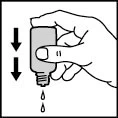
To ensure proper functioning of the dropper, turn the vial upside down and tap it gently.
Mucosolvan inhalations can be administered using any modern inhaler (except steam inhalers). The nebulization solution may be mixed with physiological saline (0.9% sodium chloride solution) in a 1:1 ratio to optimally humidify the air, especially when using a respirator.
Mucosolvan inhalations must not be mixed with sodium cromoglicate. The medicine should also not be mixed with other solutions resulting in a mixture with a pH higher than 6.3, e.g. alkaline saline inhalation solution (Ems salt). Due to increased pH, precipitation of free base of ambroxol hydrochloride or clouding of the solution may occur.
The patient should breathe normally during inhalation, as inhalation of the liquid itself may provoke a cough reflex.
Do not use the medicine before sleep.
Use of a higher than recommended dose of Mucosolvan inhalations
If a higher than recommended dose of Mucosolvan inhalations has been used, consult a doctor or pharmacist.
Specific symptoms of overdose have not been observed in humans so far. Based on cases of accidental overdose and (or) reports of improper use, symptoms corresponded to known adverse effects of the medicine when used at recommended doses. Symptomatic treatment may be necessary.
Missed dose of Mucosolvan inhalations
If a dose has been missed, take it as soon as possible.
Do not use a double dose to make up for the missed dose. Take the next dose at the usual time.
Stopping treatment with Mucosolvan inhalations
Mucosolvan inhalations should be used only when necessary and treatment should be discontinued once symptoms have resolved.
If you have any further questions regarding the use of this medicine, consult your doctor or pharmacist.
4. Possible adverse reactions
Like all medicines, this medicine can cause adverse reactions, although not everyone will experience them.
If any of the following adverse reactions occur, stop using the medicine
Mucosolvan inhalacje and seek immediate medical advice:
- allergic reaction with angioedema (rapidly progressing swelling of the skin, subcutaneous tissue, mucous membrane or submucosal tissue). This may cause a sensation of tightness in the throat, difficulty swallowing and breathing, and sudden-onset systemic allergic reactions (anaphylactic reactions, including anaphylactic shock). The frequency of these adverse reactions is unknown.
The following adverse reactions have been reported with this medicine:
Common (may occur in less than 1 in 10 people):
- taste disturbances (e.g. altered taste),
- sensation of numbness in the oral cavity and throat,
- nausea.
Uncommon (may occur in less than 1 in 100 people):
- diarrhoea,
- vomiting,
- dyspepsia,
- dryness of the oral mucosa,
- abdominal pain.
Rare (may occur in less than 1 in 1,000 people):
- hypersensitivity reactions,
- rash,
- urticaria.
Frequency not known (frequency cannot be estimated from available data):
- anaphylactic reactions, including anaphylactic shock, angioedema (rapidly progressing swelling of the skin, subcutaneous tissue, mucous membrane or submucosal tissue) and pruritus,
- severe skin reactions (including erythema multiforme, Stevens-Johnson syndrome, toxic epidermal necrolysis and acute generalised exanthematous pustulosis),
- dry throat.
Reporting of adverse reactions
If any adverse reactions occur, including any adverse reactions not listed
in this leaflet, inform a doctor, pharmacist or nurse. Adverse reactions
can be reported directly to the Department of Monitoring Adverse Drug Reactions of the Office for Registration of Medicinal Products, Medical Devices and Biocidal Products: Al. Jerozolimskie 181C, 02-222 Warsaw; tel: +48 22 492 13 01;
fax: +48 22 492 13 09; website https://smz.ezdrowie.gov.pl
Adverse reactions can also be reported to the marketing authorisation holder. By reporting adverse reactions, additional information on the safety of the medicine can be collected.
5. How to store Mucosolvan inhalacje
No special precautions for storage are required.
Keep the medicine out of the sight and reach of children.
Do not use this medicine after the expiry date stated on the bottle and carton. The expiry date refers to the last day of the stated month.
The shelf life after first opening the bottle is 12 months.
Medicines must not be disposed of via wastewater or household waste. Ask your pharmacist how to dispose of medicines no longer required. This will help protect the environment.
6. Contents of the pack and other information
What Mucosolvan inhalacje contains
- The active substance is ambroxol hydrochloride. 2 ml of nebuliser solution contain 15 mg of ambroxol hydrochloride.
- Other ingredients are: citric acid monohydrate, sodium hydrogen phosphate, sodium chloride, benzalkonium chloride, purified water.
What Mucosolvan inhalacje looks like and contents of the pack
The pack consists of 1 bottle containing 100 ml of nebuliser solution.
Marketing Authorisation Holder and Manufacturer
Marketing Authorisation Holder:
Opella Healthcare Poland Sp. z o.o.
ul. Marcina Kasprzaka 6
01-211 Warsaw
Manufacturer:
Istituto de Angeli S.r.l.
Loc. Prulli, 103/C
50066 Reggello (FI)
Italy
For further information about this medicinal product, please contact:
Opella Healthcare Poland Sp. z o.o.
ul. Marcina Kasprzaka 6
01-211 Warsaw
Tel.: +48 22 280 00 00
This page has been machine-translated and may contain inaccuracies. The original data is available in the manufacturing country's language.
Last data check: June 04, 2026 · Data source: Rejestr Produktów Leczniczych (URPL)