Morphini sulfas wzf 0.1% spinal
Poland
Table of Contents
- Package leaflet: Information for the patient
- 1. What Morphini sulfas WZF 0,1% Spinal is and what it is used for
- 2. Important information before using Morphini sulfas WZF 0.1% Spinal
- 3. How to use Morphini sulfas WZF 0.1% Spinal
- 4. Possible adverse reactions
- 5. How to store the medicinal product Morphini sulfas WZF 0.1% Spinal
- 6. Contents of the package and other information
- INFORMATION INTENDED EXCLUSIVELY FOR PROFESSIONAL MEDICAL PERSONNEL
Package leaflet: Information for the patient
MORPHINI SULFAS WZF 0,1% SPINAL 1 mg/ml, solution for injection
Morphini hemisulfas 2,5-hydricus
Please read all of this leaflet carefully before the medicine is administered, because it contains
important information for the patient.
- Keep this leaflet so that you can read it again if necessary.
- If you have any doubts, please consult your doctor, pharmacist, or nurse.
- This medicine has been prescribed for a specific individual. Do not pass it on to others. The medicine may harm another person, even if their symptoms are the same.
- If you experience any adverse reactions, including any not listed in this leaflet, inform your doctor, pharmacist, or nurse. See section 4.
Contents of the leaflet
- What Morphini sulfas WZF 0,1% Spinal is and what it is used for
- Important information before administration of Morphini sulfas WZF 0,1% Spinal
- How to use Morphini sulfas WZF 0,1% Spinal
- Possible side effects
- How to store Morphini sulfas WZF 0,1% Spinal
- Contents of the package and other information
1. What Morphini sulfas WZF 0,1% Spinal is and what it is used for
Morphini sulfas WZF 0,1% Spinal contains morphine, a very potent analgesic. Morphine belongs to a group of medicines called opioid analgesics.
Morphini sulfas WZF 0,1% Spinal is intended for intravenous, epidural, and intrathecal administration (administration into the so-called epidural space or into the spinal canal at an appropriate spinal level).
Morphini sulfas WZF 0,1% Spinal is used in acute and chronic pain of varying intensity, from moderate to severe. Morphine is used in postoperative and chronic pain, most commonly of neoplastic origin. Epidural or intrathecal administration of the medicine provides prolonged analgesic effect.
Morphini sulfas WZF 0,1% Spinal does not contain preservatives.
Morphini sulfas WZF 0,1% Spinal is always administered by medical personnel.
2. Important information before using Morphini sulfas WZF 0.1% Spinal
When not to use Morphini sulfas WZF 0.1% Spinal:
- if the patient is allergic to the active substance, other opioid painkillers, or any of the other ingredients of this medicine (listed in section 6);
- if the patient has difficulty breathing or a disease causing breathing difficulties or shortness of breath (known as obstructive upper airway disease);
- if the patient has general contraindications for intrathecal or epidural administration, e.g. inflammation at the injection site, use of anticoagulant drugs by the patient, or bleeding tendency.
Tolerance, dependence and abuse
This medicine contains morphine, which is an opioid. Repeated use of opioids may
lead to reduced effectiveness of the medicine (the patient becomes accustomed to it, known as
drug tolerance). Repeated use of Morphini sulfas WZF 0.1% Spinal may also lead to dependence,
abuse and addictive use, which may result in life-threatening overdose. The risk of these adverse
effects may increase with increasing dose and prolonged duration of use.
Dependence or addictive use may cause the patient to lose control over how much medicine to take or how often to take it.
The risk of dependence or addictive use varies between individuals. The risk of dependence on or addictive use of Morphini sulfas WZF 0.1% Spinal may be higher if:
- the patient or any of their relatives has ever abused or been dependent on alcohol, prescription medicines or drugs ("addiction");
- the patient smokes cigarettes;
- the patient has ever had mood disorders (depression, anxiety disorders or personality disorders) or has been treated by a psychiatrist for other mental illnesses.
If any of the following symptoms occur during treatment with Morphini sulfas WZF 0.1% Spinal,
this may indicate dependence or addictive use:
- the patient needs to take this medicine for longer than recommended by the doctor;
- the patient needs to take a higher dose than recommended;
- the patient uses this medicine for reasons other than those for which the doctor prescribed it, e.g. "to calm down" or "to help sleep";
- the patient has made repeated unsuccessful attempts to stop or control use of this medicine;
- after stopping the medicine, the patient feels unwell and feels better when taking the medicine again ("withdrawal effect"). If any of these symptoms are observed, the best treatment strategy for the patient should be discussed with the doctor, including when it is appropriate to discontinue treatment and how it can be safely stopped (see section 3 "Discontinuation of Morphini sulfas WZF 0.1% Spinal").
Warnings and precautions
Before starting treatment with Morphini sulfas WZF 0.1% Spinal, consult a doctor, pharmacist or nurse.
Acute generalized exanthematous pustulosis (AGEP) has been reported during treatment with Morphini sulfas WZF 0.1% Spinal. Symptoms usually occur within the first 10 days of treatment. Inform the doctor if, after taking Morphini sulfas WZF 0.1% Spinal or other opioids, the patient has ever experienced severe skin rash, skin peeling, blisters and/or mouth ulcers. Discontinue use of Morphini sulfas WZF 0.1% Spinal and seek immediate medical advice if the patient notices any of the following symptoms: appearance of blisters, extensive skin peeling or pustular rash accompanied by fever.
Sleep-related breathing disorders
Morphini sulfas WZF 0.1% Spinal may cause sleep-related breathing disorders such as sleep apnoea (pauses in breathing during sleep) and hypoxemia (low blood oxygen levels). Symptoms may include breathing pauses during sleep, nocturnal awakenings due to shortness of breath, difficulty maintaining sleep or excessive daytime sleepiness. If the patient or another person notices these symptoms, contact the doctor. The doctor may consider reducing the dose.
Consult the doctor if the patient experiences severe upper abdominal pain radiating to the back, nausea, vomiting or fever, as these may be symptoms of pancreatitis or biliary tract disorders.
If any of the following symptoms occur during treatment with Morphini sulfas WZF 0.1% Spinal, consult the doctor:
- Increased sensitivity to pain despite increasing the dose of the medicine (hyperalgesia). The doctor will decide whether dosage adjustment or use of a stronger analgesic is necessary (see section 2).
- Weakness, fatigue, loss of appetite, nausea, vomiting or low blood pressure. These may be symptoms of adrenal insufficiency (insufficient cortisol production), which may require hormone supplementation.
- Loss of libido, impotence, amenorrhea. This may be caused by reduced secretion of sex hormones.
- If the patient has previously been dependent on drugs or alcohol. Also inform the doctor if the patient notices signs of dependence on Morphini sulfas WZF 0.1% Spinal during treatment, e.g. frequently thinking about taking another dose even when not needed for pain relief.
- Symptoms of withdrawal or dependence. The most common withdrawal symptoms are listed in section 3. In such cases, the doctor may change the medicine or adjust the interval between doses.
The doctor will exercise particular caution and take appropriate measures when administering morphine to patients:
- with reduced thyroid function (hypothyroidism);
- with asthma or other breathing problems, e.g. emphysema;
- with benign prostatic hyperplasia or difficulty urinating;
- with low blood pressure or heart function disorders;
- with reduced blood flow to body tissues;
- elderly, debilitated or chronically ill patients;
- with biliary tract disorders (morphine may worsen pain);
- with liver function disorders;
- with kidney function disorders;
- after head injury, in cases of increased intracranial or intraocular pressure;
- with thoracic spinal deformity (kyphoscoliosis);
- with significant obesity;
- with epilepsy or a history of seizures;
- with metabolic disorders.
Children and adolescents
There are no data on the use of this medicine in patients under 18 years of age.
The safety of epidural and intrathecal administration of morphine in children has not been established.
In case of any doubts, consult the doctor.
Morphini sulfas WZF 0.1% Spinal and other medicines
Inform the doctor or pharmacist about all medicines currently used, recently used, or planned for use, if possible and the patient's condition allows.
This is particularly important when using the following medicines:
- Rifampicin, used in the treatment of, for example, tuberculosis.
- Concomitant use of Morphini sulfas WZF 0.1% Spinal and sedative medicines, e.g. benzodiazepines or related drugs, increases the risk of drowsiness, breathing difficulties (respiratory depression) or coma, which may be life-threatening. Therefore, combination therapy should only be considered when no other treatment options are available. If Morphini sulfas WZF 0.1% Spinal is used together with sedatives, the doctor should limit the dose and duration of concomitant use. The patient should inform the doctor about all sedative medicines being taken and strictly follow the prescribed dose. It may be helpful to inform
a relative or close friend of the patient about the possibility of the above-mentioned
symptoms occurring. If the described symptoms occur, consult the doctor.
- Some medicines used to treat blood clots (e.g. clopidogrel, prasugrel, ticagrelor) may have delayed and reduced effects when taken with morphine.
- Gabapentin or pregabalin, used in the treatment of epilepsy and nerve-related pain (neuropathic pain), may interact with morphine sulfate injection, which may significantly alter their effects.
The following may affect the action of morphine:
- monoamine oxidase inhibitors (antidepressants), e.g. moclobemide, especially if the patient has taken these medicines within the last 2 weeks;
- tricyclic antidepressants, e.g. amitriptyline;
- sleeping medicines, e.g. phenobarbital;
- sedatives, anxiolytics, e.g. diazepam;
- phenothiazine derivatives, e.g. promazine, chlorpromazine;
- butyrophenone derivatives, e.g. haloperidol, droperidol;
- medicines known as neuroleptics used to sedate the patient before surgery (so-called premedication) and administered during surgery, which may worsen breathing difficulties.
Morphini sulfas WZF 0.1% Spinal and alcohol
Alcohol should be avoided during treatment with morphine.
Pregnancy and breastfeeding
If the patient is pregnant or breastfeeding, suspects she may be pregnant, or plans to have a child, she should consult a doctor or pharmacist before using this medicine.
- The decision on using morphine during pregnancy or breastfeeding will be made by the doctor.
- If Morphini sulfas WZF 0.1% Spinal has been used for a prolonged period during pregnancy, there is a risk that the newborn may develop withdrawal symptoms (abstinence syndrome), which should be treated by a doctor.
- Intravenous administration of Morphini sulfas WZF 0.1% Spinal during childbirth is not recommended. Newborns of mothers who have taken morphine long-term may experience withdrawal symptoms - see section 3, subsection: "Discontinuation of Morphini sulfas WZF 0.1% Spinal".
Driving and operating machinery
Morphine may cause drowsiness and impair psychomotor performance. Patients should not drive or operate machinery while taking this medicine.
Morphini sulfas WZF 0.1% Spinal contains sodium
This medicine contains 7.08 mg of sodium (main component of table salt) per ampoule (2 ml). This corresponds to 0.354% of the maximum recommended daily sodium intake in the adult diet.
3. How to use Morphini sulfas WZF 0.1% Spinal
Morphini sulfas WZF 0.1% Spinal is administered by medical personnel.
Before starting treatment and regularly during therapy, the doctor will discuss with the patient what effects to expect from using Morphini sulfas WZF 0.1% Spinal, when and for how long the medicine should be used, when to contact the doctor, and when to discontinue the medicine (see also "Discontinuation of Morphini sulfas WZF 0.1% Spinal" in this section).
- Morphine dosage is individually determined by the doctor for each patient.
- Morphini sulfas WZF 0.1% Spinal is administered intravenously, epidurally, or intrathecally to adult patients.
- Morphini sulfas WZF 0.1% Spinal should not be administered to children and adolescents (see the section "Children and adolescents" above).
Administration of a higher than recommended dose of Morphini sulfas WZF 0.1% Spinal
Morphine is administered by medical personnel, so it is unlikely that a patient will receive more medicine than intended.
If a higher than recommended dose of Morphini sulfas WZF 0.1% Spinal is administered, aspiration pneumonia caused by vomiting or foreign bodies may occur. Symptoms may include shortness of breath, cough, and fever.
Following an overdose, the following may occur: extreme pupil constriction ("pinpoint pupils"), coma, shallow breathing, cyanosis, cold skin, and muscle flaccidity. Respiratory difficulties may develop (these may occur up to 24 hours after intrathecal administration), significant drop in blood pressure with cardiac insufficiency, lowered body temperature, seizures, and severe muscle pain.
Additionally, overdose symptoms may include breathing difficulties leading to loss of consciousness, and even death.
If such symptoms occur, medical personnel must be informed immediately. They will initiate appropriate management.
Missed dose of Morphini sulfas WZF 0.1% Spinal
Do not administer a double dose to make up for a missed dose.
Discontinuation of Morphini sulfas WZF 0.1% Spinal
If morphine is abruptly discontinued, especially in dependent individuals, withdrawal symptoms may occur.
Do not stop using Morphini sulfas WZF 0.1% Spinal unless otherwise instructed by a doctor. To discontinue treatment with Morphini sulfas WZF 0.1% Spinal, consult your doctor, who will decide how to gradually reduce the dose to avoid withdrawal symptoms. Withdrawal symptoms may include body aches, seizures, diarrhea, stomach pain, nausea, flu-like symptoms, rapid heartbeat, and dilated pupils. Psychological symptoms include intense feelings of unease, anxiety, and irritability.
Dependence is rare in patients receiving morphine for medical reasons.
If you have any further questions about the use of this medicine, consult your doctor, pharmacist, or nurse.
4. Possible adverse reactions
Like all medicines, this medicine can cause adverse reactions, although not everyone experiences them.
Stop using the medicine and contact a doctor immediately if the patient experiences:
- severe allergic reactions causing difficulty in breathing or dizziness;
- signs of hypersensitivity such as urticaria, skin itching or skin irritation – such symptoms occur frequently (less than 1 in 10 people) after epidural or intrathecal administration of morphine;
- severe skin reaction with blistering, widespread skin peeling, pustular eruptions accompanied by fever. This may be a condition called acute generalized exanthematous pustulosis (AGEP);
- breathing difficulties leading to loss of consciousness, usually after administration of a higher than recommended dose of Morphini sulfas WZF 0.1% Spinal (see above section "Use of a higher than recommended dose of Morphini sulfas WZF 0.1% Spinal");
- withdrawal symptoms or dependence (symptoms are described in section 3, subsection: "Discontinuation of Morphini sulfas WZF 0.1% Spinal").
Consult a doctor in case of frequently occurring adverse reactions
(less than 1 in 10 people):
- itching – occurs after epidural or intrathecal administration of a single dose of morphine, not only at the injection site;
- urinary retention – may last from 10 to 20 hours after a single epidural or intrathecal dose of the medicine and is an adverse reaction particularly expected in men (occurs less frequently in women).
Consult a doctor in case of adverse reactions occurring with unknown frequency
(frequency cannot be estimated from available data):
- increased sensitivity to pain;
- sweating;
- dry mouth;
- nausea, vomiting;
- constipation;
- development of tolerance to the medicine (characterized by progressively reduced effect of the medicine with prolonged use, necessitating dose escalation);
- difficulty in urination, reduced urine volume;
- dizziness;
- increased or decreased heart rate, palpitations, elevated blood pressure, or sudden drops in blood pressure upon changing position from lying to standing;
- decreased or increased body temperature;
- restlessness, anxiety, mood disturbances, euphoria, psychosis;
- pinpoint pupils (miosis);
- headache;
- urticaria;
- bullous eruption and/or local tissue irritation (type of hypersensitivity);
- suppression of cough reflex, breathing difficulties up to respiratory arrest;
- sleep apnea (episodes of breathing cessation during sleep);
- symptoms related to inflammation of the pancreas and biliary tract, e.g. severe epigastric pain radiating to the back, nausea, vomiting, or fever.
Reporting of adverse reactions
If any adverse reactions occur, including any not listed in this leaflet, inform your doctor, pharmacist, or nurse. Adverse reactions can be reported directly to the Department for Monitoring Adverse Drug Reactions of the Office for Registration of Medicinal Products, Medical Devices and Biocidal Products
Al. Jerozolimskie 181C
02-222 Warsaw
Phone: +48 22 49 21 301
Fax: +48 22 49 21 309
Website: https://smz.ezdrowie.gov.pl
Adverse reactions may also be reported to the marketing authorization holder.
Reporting adverse reactions helps to provide more information on the safety of the medicine.
5. How to store the medicinal product Morphini sulfas WZF 0.1% Spinal
Keep the ampoules in the original packaging to protect from light. Do not freeze.
Keep the medicinal product out of the sight and reach of children.
Do not use this medicinal product after the expiry date stated on the carton and on the ampoule. The expiry date refers to the last day of the stated month.
The labelling on the packaging: EXP indicates the expiry date, and Lot indicates the batch number.
Medicinal products should not be disposed of via wastewater or household waste. Ask your pharmacist how to dispose of medicinal products no longer required. Such measures will help protect the environment.
6. Contents of the package and other information
What Morphini sulfas WZF 0,1% Spinal contains
- The active substance is morphine sulfate 2.5-hydrate. Each ml of solution contains 1 mg of morphine sulfate 2.5-hydrate.
- Other ingredients: sodium chloride, water for injections.
What Morphini sulfas WZF 0,1% Spinal looks like and contents of the pack
Morphini sulfas WZF 0,1% Spinal is a colourless or almost colourless, clear liquid.
Packaging: cardboard boxes containing 10 ampoules of 2 ml.
Marketing Authorisation Holder and Manufacturer
Zakłady Farmaceutyczne POLPHARMA S.A.
ul. Pelplińska 19, 83-200 Starogard Gdański
tel. +48 22 364 61 01
INFORMATION INTENDED EXCLUSIVELY FOR PROFESSIONAL MEDICAL PERSONNEL
MORPHINI SULFAS WZF 0.1% SPINAL 1 mg/ml, solution for injection
Morphini hemisulfas 2.5-hydricus
Please refer to the current Summary of Product Characteristics
Morphini sulfas WZF 0.1% Spinal
Administration instructions for Morphini sulfas WZF 0.1% Spinal
- Dosage must be individually determined by a physician for each patient. The drug is administered intrathecally, epidurally, or intravenously (see section: "Dosage").
- The medicinal product is intended for adult patients.
- Morphine forms insoluble complexes with heparin. Solutions of morphine and heparin must not be mixed in the same syringe.
- Physical-chemical incompatibility (precipitate formation) has been demonstrated between morphine sulfate solutions and 5-fluorouracil.
- The Morphini sulfas WZF 0.1% Spinal preparation must not be sterilized by thermal methods.
- The product does not contain preservatives.
- Do not use if a change in color is visible.
Instructions for opening the ampoule
Before opening the ampoule, ensure that all the solution is located in the lower part of the ampoule.
Gently shake the ampoule or tap it with a finger to facilitate the flow of the solution downward.
Each ampoule has a colored dot (see Figure 1) indicating the scoring point located beneath it.
- To open the ampoule, hold it vertically in both hands, with the colored dot facing toward you – see Figure 2. The upper part of the ampoule should be gripped so that the thumb is positioned above the colored dot.
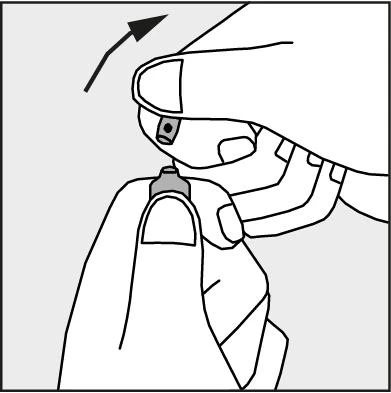
- Apply pressure in the direction of the arrow shown in Figure 3. Ampoules are for single use only and should be opened immediately before use. Any unused portion of the product must be destroyed in accordance with applicable regulations.
Figure 1.
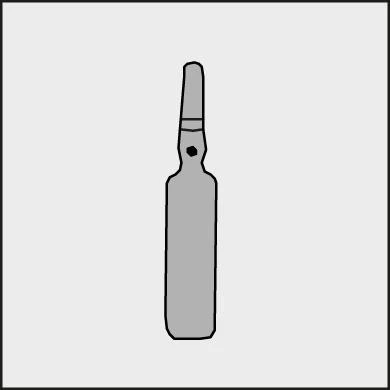
Figure 2.
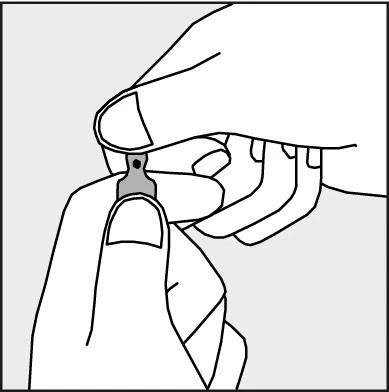
Figure 3.
Precautions for the use of Morphini sulfas WZF 0.1% Spinal
- Due to the higher risk of early and late adverse effects following intrathecal administration of morphine, epidural administration is recommended whenever possible. Epidural and intrathecal injections should be performed in the lumbar region of the spine.
- The drug may be administered epidurally or intrathecally only by an experienced physician familiar with the technique and potential adverse effects associated with these routes of administration. After epidural or intrathecal administration, the patient must be observed for 24 hours following the last dose due to the risk of respiratory center depression (both early and delayed).
- Opioids may cause sleep-related breathing disorders, including central sleep apnoea (CSA) and hypoxemia. Opioid use increases the risk of CSA in a dose-dependent manner. In patients who develop CSA, consideration should be given to reducing the total opioid dose.
- Resuscitation equipment, oxygen, and the specific antidote – naloxone hydrochloride – must be readily available. Respiratory center depression or other adverse reactions may also occur following accidental intrathecal or intravenous administration of an excessive dose (intrathecal doses are 1/10 of epidural doses).
- Prior to epidural administration of morphine, correct needle or catheter placement must be confirmed. Aspiration should be performed to exclude intravascular or intrathecal placement; blood or cerebrospinal fluid in the syringe would indicate improper positioning.
- In patients with chronic pain treated with morphine administered epidurally or intrathecally, after initiation of therapy under hospital conditions, treatment may be continued on an outpatient basis or at home. Supervision of morphine administration may be conducted by a physician or nurse. In patients treated in palliative-hospice care centers or at home, documentation should be maintained, including monitoring for adverse effects and actions taken in their event.
- Morphine may cause liver function disturbances and spasm of the sphincter of Oddi, leading to increased pressure in the biliary ducts.
- Repeated administration of Morphini sulfas WZF 0.1% Spinal may lead to opioid use disorder (OUD). Higher doses and longer duration of opioid therapy may increase the risk of OUD. Misuse or intentional inappropriate use of Morphini sulfas WZF 0.1% Spinal may result in overdose and/or death. The risk of OUD is increased in patients with a personal or family history (parents or siblings) of substance use disorders (including alcohol), current tobacco users, or patients with other psychiatric disorders (e.g., severe depression, anxiety disorders, or personality disorders).
- Acute generalized exanthematous pustulosis (AGEP), which may be life-threatening or fatal, has been reported in association with morphine therapy. Most of these reactions occurred within the first 10 days of treatment.
Dosage
Adults
Dosage must be individually adjusted, taking into account clinical indications, type of pain (acute or chronic), previously used analgesics, and the patient's condition.
Intravenous administration – initial dose in adults: 2 mg to 10 mg per 70 kg body weight.
Epidural administration – initial dose in adults: 5 mg administered by lumbar injection may provide analgesia for up to 24 hours. If analgesia is not achieved within 1 hour, a supplemental dose of 1 mg to 2 mg may be cautiously administered. Doses exceeding 10 mg per day must not be used.
For continuous infusion, the initial dose is 2 mg to 4 mg per day. If the initial dose is insufficient, a supplemental dose of 1 mg to 2 mg may be administered.
Intrathecal administration – single dose in adults: 0.2 mg to 1 mg administered by injection may provide analgesia for up to 24 hours. No more than 1 ml of solution should be administered intrathecally. Repeated intrathecal injections are not recommended.
Continuous intravenous infusion of naloxone hydrochloride at a dose of 0.6 mg/h for 24 hours following intrathecal administration reduces the likelihood of adverse effects.
Elderly patients
In elderly and debilitated patients, the drug should be used with particular caution. A reduced dose is usually sufficient.
Children and adolescents
There are no data on the use of this medicinal product in patients under 18 years of age.
The safety of epidural and intrathecal administration of morphine in children has not been established.