Monobenzone vis
Poland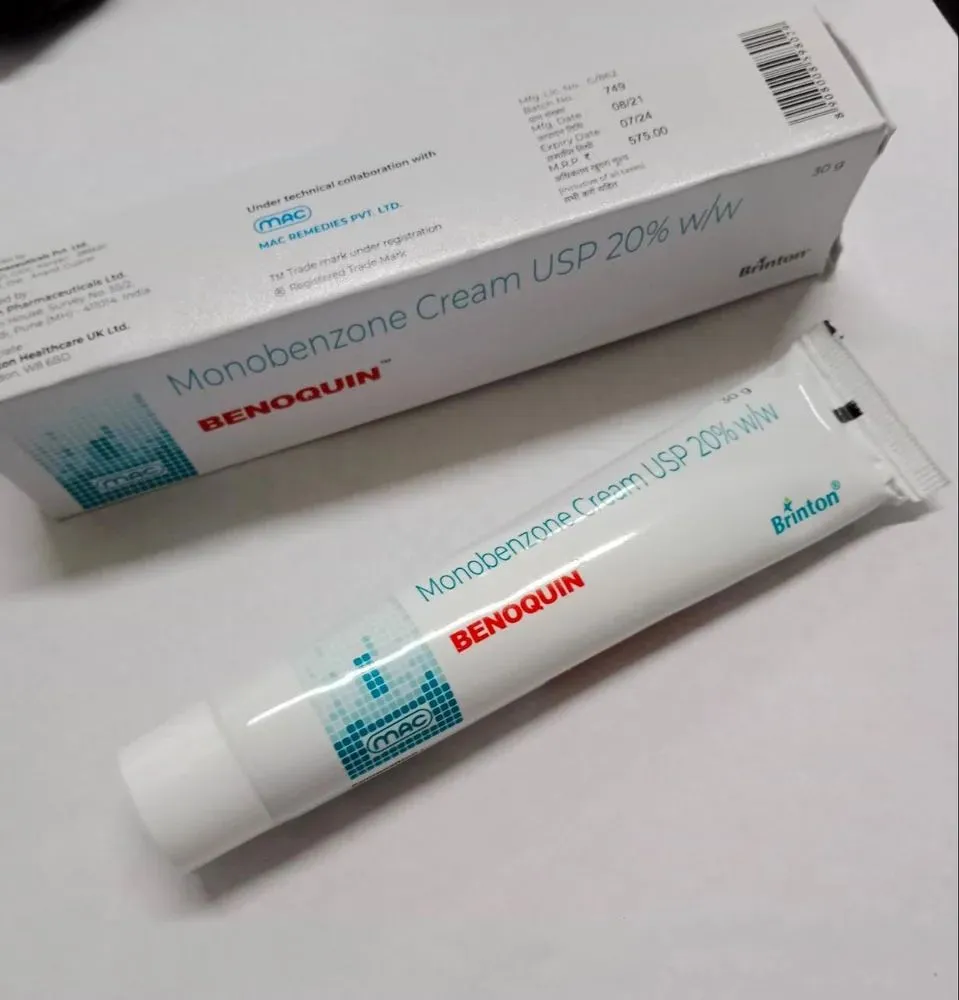
Table of Contents
Package leaflet: Information for the patient
MONOBENZONE VIS
200 mg/g ointment
Monobenzonum
Please read the entire leaflet carefully before using the medicine, as it contains
important information for the patient
- Keep this leaflet for future reference.
- If you have any questions, please consult your doctor, pharmacist, or nurse.
- This medicine has been prescribed for a specific individual. Do not pass it on to others. The medicine may harm someone else, even if their symptoms are similar.
- If you experience any adverse reactions, including any not listed in this leaflet, inform your doctor, pharmacist, or nurse. See section 4.
Table of contents of the leaflet:
-
What Monobenzone VIS is and what it is used for
-
Important information before using Monobenzone VIS
-
How to use Monobenzone VIS
-
Possible side effects
-
How to store Monobenzone VIS
-
Contents of the packaging and other information
1. What Monobenzone VIS is and what it is used for
Monobenzone VIS is an ointment containing the active substance monobenzyl ether of hydroquinone. When applied to the skin, the medicine reduces skin pigmentation.
Indications
The medicine is indicated for the treatment of hyperpigmentation (skin disorders with discoloration) caused by excess melanin pigment, and for depigmentation of normally pigmented skin areas in patients with vitiligo.
2. Important information before using Monobenzone VIS
When not to use Monobenzone VIS
- if the patient is allergic to the active substance or to any of the other ingredients of this medicine (listed in section 6),
- for pigmentary spots such as hyperpigmentation caused by photosensitivity reactions after using certain perfumes, melasma (chloasma) of pregnancy, hyperpigmentation caused by inflammatory skin conditions,
- café-au-lait spots, pigmented nevi, melanomas, and pigmentary changes caused by pigments other than melanin.
Warnings and precautions
Before starting treatment with Monobenzone VIS, discuss it with your doctor.
During treatment, avoid excessive sun exposure.
Throughout life after using this medicine, sunscreen products with UV filters should be used during exposure to sunlight.
The use of this medicine is not recommended in individuals with excessively dry skin or a tendency to develop allergic reactions.
Children and adolescents
There is no data available on use in children and adolescents.
Interaction of Monobenzone VIS with other medicines
No data available.
Inform your doctor about all medicines you are currently taking or have recently taken, as well as any medicines you plan to use.
Pregnancy, breastfeeding, and fertility:
If you are pregnant or breastfeeding, think you may be pregnant, or are planning to have a child, consult your doctor before using this medicine.
This medicine should be used during pregnancy or breastfeeding only if decided by the doctor.
Due to the presence of a hydroquinone derivative, use during pregnancy is not recommended.
Caution should be exercised when using this medicine during breastfeeding, as it is unknown whether the active substance passes into breast milk.
Driving and operating machinery:
The effect of the medicine on the ability to drive and operate machinery is unknown.
3. How to use Monobenzone VIS
This medicine should always be used exactly as recommended by the doctor.
In case of doubt, consult the doctor.
The medicine is intended for topical application to the skin.
Usually, the discoloured areas of skin are treated with Monobenzone 2 to 3 times daily, for no longer than 3 months.
If satisfactory treatment results are not achieved after this period, the use of the medicine should be discontinued.
Once a satisfactory degree of skin depigmentation has been achieved, the medicine should be used for maintenance treatment – usually 2 times per week.
If you feel that the effect of the medicine is too strong or too weak, consult your doctor.
Using more than the recommended dose of Monobenzone VIS
If more than the recommended dose of Monobenzone VIS has been used, contact your doctor.
Missing a dose of Monobenzone VIS
Do not apply a double dose to make up for a missed dose.
Stopping Monobenzone VIS
If you have any further doubts about the use of this medicine, consult your doctor.
4. Possible adverse effects
Like all medicines, this medicine can cause adverse effects, although not everyone will experience them.
The adverse effects listed below are classified according to the MedDRA system organ classes and frequency of occurrence:
Very common (≥ 1/10)
Common (≥ 1/100 to <1/10)
Uncommon (≥ 1/1,000 to <1/100)
Rare (≥ 1/10,000 to <1/1,000)
Very rare (<1/10,000)
Not known (frequency cannot be estimated from available data)
Skin and subcutaneous tissue disorders (frequency not known)
Transient sensation of itching or burning, which usually resolves within a few days.
Burning, skin redness, irritation, oozing lesions, permanent damage to melanocytes (pigment-producing skin cells).
If persistent burning, skin redness, irritation or oozing lesions occur, consult a physician, as these are indications for discontinuation of treatment.
Reporting suspected adverse effects
If any adverse effects occur, including any not listed in this leaflet, inform your doctor, pharmacist, or nurse. Adverse effects can be reported directly to the Department of Monitoring Adverse Drug Reactions of the Office for Registration of Medicinal Products, Medical Devices and Biocidal Products
Al. Jerozolimskie 181C,
02-222 Warsaw,
Phone: +48 22 49-21-301
Fax: +48 22 49-21-309
Website: https://smz.ezdrowie.gov.pl
Adverse effects can also be reported to the marketing authorization holder.
Reporting adverse effects helps to provide more information on the safety of this medicine.
5. How to store Monobenzone VIS
Keep Monobenzone VIS out of the reach and sight of children.
Store below 25°C in a dry place.
Do not use this medicine after the expiry date stated on the packaging (tube and box) after "expiry date". The expiry date refers to the last day of the stated month.
6. Contents of the packaging and other information
What Monobenzone VIS contains
The active substance in Monobenzone VIS is monobenzyl ether of hydroquinone.
1 g of cream contains 200 mg of monobenzyl ether of hydroquinone.
The excipients are: glycerol 86%, anhydrous eucerin, white vaseline, purified water.
What Monobenzone VIS looks like and contents of the pack
Monobenzone VIS is a cream.
The medicine is packed in an aluminium tube containing 30 g of cream, placed in a cardboard box.
Marketing Authorisation Holder and Manufacturer
Zakłady Chemiczno-Farmaceutyczne „VIS” Sp. z o.o.
ul. Św. Elżbiety 6a
41-905 Bytom
tel. (32) 2589555