Mitoxantrone sandoz
Poland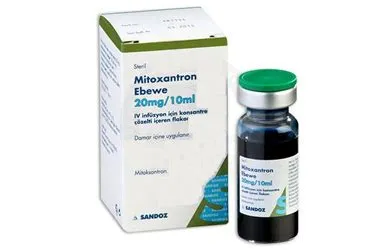
Table of Contents
Package leaflet: Information for the patient
Mitoxantron Sandoz, 2 mg/ml, concentrate for solution for infusion
Mitoxantronum
Please read all of this leaflet carefully before using this medicine, because it contains
important information for you.
- Keep this leaflet. You may need to read it again.
- If you have any further questions, ask your doctor, pharmacist, or nurse.
- If you experience any side effects, including any not listed in this leaflet, tell your doctor, pharmacist, or nurse. See section 4.
Contents of the leaflet
- What Mitoxantron Sandoz is and what it is used for
- What you need to know before using Mitoxantron Sandoz
- How to use Mitoxantron Sandoz
- Possible side effects
- How to store Mitoxantron Sandoz
- Contents of the pack and other information
1. What Mitoxantron Sandoz is and what it is used for
Mitoxantron Sandoz contains the active substance called mitoxantrone. Mitoxantron Sandoz
belongs to a group of medicines known as antineoplastic agents. It also belongs to a class of
antineoplastic drugs called anthracyclines. Mitoxantron Sandoz prevents the growth of cancer
cells, leading to their eventual death. This medicine also suppresses the activity of the immune
system and is therefore used in the treatment of a certain form of multiple sclerosis when no
other treatment options are available.
Mitoxantron Sandoz is used to treat:
- advanced (metastatic) breast cancer;
- a certain type of lymph node cancer (non-Hodgkin's lymphoma);
- a blood cancer in which the bone marrow (the spongy tissue inside large bones) produces too many white blood cells (acute myeloid leukaemia);
- a white blood cell cancer (chronic myeloid leukaemia) in the phase where white blood cell count is difficult to control (blast crisis); in this indication, Mitoxantron Sandoz is used in combination with other medicines;
- pain caused by advanced prostate cancer (in combination with corticosteroids);
- highly active relapsing-remitting multiple sclerosis and rapidly progressing disability when no other treatment options are available (see sections 2 and 3).
2. Important information before using Mitoxantron Sandoz
When not to use Mitoxantron Sandoz
- if the patient is allergic to mitoxantrone or to any of the other ingredients of this medicine (listed in section 6);
- if the patient is allergic to sulfites;
- if the patient has a certain form of asthma (bronchial asthma) with allergy to sulfites;
- if the patient is breastfeeding (see section "Pregnancy, breastfeeding and fertility").
When used for the treatment of multiple sclerosis:
- if the patient is pregnant.
Warnings and precautions
Mitoxantron Sandoz should be administered under the supervision of a physician experienced in the use of cytotoxic anticancer drugs (cytotoxic chemotherapy).
Mitoxantron Sandoz should be given by slow, freely flowing intravenous infusion.
Mitoxantron Sandoz must not be administered subcutaneously, intramuscularly, or intra-arterially. If Mitoxantron Sandoz leaks out of the vein during administration, severe local tissue damage may occur.
Mitoxantron Sandoz must also not be injected into the space around the brain or spinal cord (intrathecal injection), as this may cause severe damage resulting in permanent disability.
Before starting treatment with Mitoxantron Sandoz, discuss the following with your doctor,
pharmacist, or nurse:
- if the patient has liver problems;
- if the patient has kidney problems;
- if the patient has previously received Mitoxantron Sandoz;
- if the patient has heart function disorders;
- if the patient has previously undergone radiotherapy to the chest;
- if the patient is currently taking medicines affecting heart function;
- if the patient has previously been treated with anthracyclines or anthraquinones, such as daunorubicin or doxorubicin;
- if the patient's bone marrow is not functioning properly (suppressed) or if the patient is in poor general health;
- if the patient has an infection; such infections should be treated before starting therapy with Mitoxantron Sandoz;
- if the patient plans vaccination or immunization during treatment. Vaccination or immunization may not be effective if administered during treatment with Mitoxantron Sandoz and for 3 months after treatment ends;
- if the patient is pregnant, suspects she may be pregnant, or plans to have a child;
- if the patient is breastfeeding. Breastfeeding should be discontinued before starting treatment with Mitoxantron Sandoz.
If any of the following symptoms occur during treatment with Mitoxantron Sandoz, the patient should immediately inform the doctor, pharmacist, or nurse:
- fever, infection, unexplained bleeding or bruising, weakness, and easy fatigue;
- shortness of breath (including at night), cough, fluid retention (swelling of ankles or legs), palpitations (irregular heartbeat). These symptoms may occur during treatment or months, even years, after completion of treatment with Mitoxantron Sandoz.
The physician may need to adjust the dose or temporarily or permanently discontinue treatment with Mitoxantron Sandoz.
Blood tests before and during treatment with Mitoxantron Sandoz
Mitoxantron Sandoz may alter blood count results. Before starting treatment and during therapy with Mitoxantron Sandoz, the physician will perform blood tests to monitor blood counts. Blood tests will be performed more frequently, with special attention to the number of white blood cells (neutrophils) in the blood:
- if the patient has a low count of a certain type of white blood cells (neutrophils) (less than 1500 cells/mm³);
- if the patient is receiving Mitoxantron Sandoz at high doses [>14 mg/m² body surface area (BSA) for 3 days].
Heart function tests before and during treatment with Mitoxantron Sandoz
Mitoxantron Sandoz may damage the heart and cause heart function disorders or, in more severe cases, heart failure. The risk of such adverse effects is higher if the patient receives higher doses of Mitoxantron Sandoz or:
- has pre-existing heart function disorders;
- has previously undergone radiotherapy to the chest;
- is currently taking medications affecting heart function;
- has previously been treated with anthracyclines or anthraquinones, such as daunorubicin or doxorubicin.
The physician will perform heart function tests before starting Mitoxantron Sandoz and will repeat them regularly during treatment. When Mitoxantron Sandoz is used for the treatment of multiple sclerosis, the physician will assess heart function before starting treatment, before each subsequent dose, and once a year for 5 years after treatment ends.
Acute Myeloid Leukemia (AML) and Myelodysplastic Syndrome
A class of anticancer drugs (topoisomerase II inhibitors), including Mitoxantron Sandoz, may cause the following conditions, particularly when used in combination with chemotherapy and/or radiotherapy:
- a cancer of white blood cells (acute myeloid leukemia);
- a bone marrow disorder leading to the production of abnormal blood cells and potentially progressing to leukemia (myelodysplastic syndrome).
Discoloration of urine and tissues
Mitoxantrone may cause a blue-green discoloration of the urine lasting up to 24 hours after administration. Bluish discoloration of the whites of the eyes, skin, and nails may also occur.
Contraception in men and women
Men must not father a child and must use effective contraception during treatment and for 5 months after treatment ends. Women of childbearing potential must have a negative pregnancy test before each dose and must use effective contraception during treatment and for 8 months after treatment ends. If pregnancy occurs during treatment with this medicine, the physician must be informed immediately, regardless of whether the medicine is taken by the man or the woman.
Fertility
This medicine is associated with a risk of temporary or permanent cessation of menstrual bleeding in women of childbearing potential.
Children and adolescents
Experience with use in children and adolescents is very limited. This medicine must not be used in children and adolescents from birth up to 18 years of age, as safety and efficacy have not been established in this population.
Mitoxantron Sandoz and other medicines
Tell your doctor or pharmacist about all medicines the patient is currently taking, has recently taken, or plans to take. This is particularly important for any of the following medicines.
Medicines that increase the risk of adverse effects of Mitoxantron Sandoz:
- medicines that may cause heart damage (e.g., anthracyclines);
- medicines that suppress bone marrow production of blood cells (including platelets) (myelosuppressive agents);
- medicines that suppress the immune system (immunosuppressants);
- vitamin K antagonists, especially if the patient is receiving Mitoxantron Sandoz for cancer treatment;
- topoisomerase II inhibitors (a group of anticancer drugs including mitoxantrone) used concomitantly with other chemotherapy agents and/or radiotherapy. These may cause:
o cancer of white blood cells (acute myeloid leukemia);
o bone marrow disorder leading to production of abnormal blood cells and potentially progressing to leukemia (myelodysplastic syndrome).
If the patient is unsure whether they are taking any of the above medicines, consult the doctor or pharmacist.
Such medicines should be used with caution or discontinued during treatment with Mitoxantron Sandoz. If the patient is taking any of these medicines, the doctor may prescribe an alternative.
Also inform the doctor if the patient is already receiving Mitoxantron Sandoz and the doctor prescribes a new medicine the patient has not previously taken concurrently with Mitoxantron Sandoz.
Vaccination and immunization (vaccines) may not be effective during treatment with Mitoxantron Sandoz and for three months after treatment ends.
Pregnancy, breastfeeding and effects on fertility
If the patient is pregnant or breastfeeding, suspects she may be pregnant, or plans to have a child, she should consult her doctor or pharmacist before using this medicine.
Pregnancy
Mitoxantron Sandoz may harm the unborn child.
Therefore, pregnancy must be avoided. Mitoxantron Sandoz must not be used in the treatment of multiple sclerosis if the patient is pregnant (especially during the first three months of pregnancy).
If the patient becomes pregnant while taking Mitoxantron Sandoz, she must inform her doctor immediately and discontinue treatment with Mitoxantron Sandoz.
The patient must avoid becoming pregnant. Men must use effective contraception during treatment and for 5 months after treatment ends. Women of childbearing potential must have a negative pregnancy test before each dose and must use effective contraception during treatment and for 8 months after treatment with Mitoxantron Sandoz ends.
Breastfeeding
Mitoxantron Sandoz passes into breast milk and may cause serious adverse effects in the breastfed infant. Breastfeeding must not be used during treatment with mitoxantrone and for one month after treatment ends.
Fertility
Mitoxantron Sandoz is associated with a risk of temporary or permanent cessation of menstrual bleeding in women of childbearing potential. Therefore, the patient should discuss with her doctor plans for future pregnancy; egg cell cryopreservation may be considered. Data in men are not available. However, in animal studies, testicular damage and reduced sperm count in semen have been observed in males.
Driving and using machines
Mitoxantron Sandoz has minor influence on the ability to drive and use machines due to possible adverse effects such as confusion and fatigue (see section 4).
If the patient experiences such adverse effects, driving vehicles or operating machinery should be avoided.
Mitoxantron Sandoz contains sodium
Vial 10 mg/5 ml:
This medicine contains less than 1 mmol (23 mg) of sodium per vial, meaning the medicine is considered "sodium-free".
Vial 20 mg/10 ml:
This medicine contains 34.14 mg of sodium (a main component of table salt) in each vial. This corresponds to 1.7% of the maximum recommended daily dietary sodium intake for adults.
3. How to use Mitoxantron Sandoz
Mitoxantron Sandoz will be administered to the patient under the supervision of a physician experienced in the use of cytotoxic chemotherapy. This medicinal product must always be given as an intravenous infusion and must always be diluted prior to administration. The infused fluid may leak out of the vein into the surrounding tissues (extravasation). In such a case, the infusion must be stopped and restarted in another vein. Contact of Mitoxantron Sandoz with the body, especially with the skin, mucous membranes (moist linings of body cavities, e.g. oral cavity), and eyes, should be avoided.
The dose of Mitoxantron Sandoz will be calculated individually for each patient by the physician. The recommended dose is based on body surface area, expressed in square meters (m²), and determined according to height and body weight. Blood tests will be performed regularly during treatment. The dose of the medicinal product will be adjusted according to the results of these tests.
The usual recommended doses are as follows:
Metastatic breast cancer, non-Hodgkin's lymphoma
When Mitoxantron Sandoz is used alone:
The recommended initial dose of Mitoxantron Sandoz is 14 mg/m² body surface area (BSA) as a single intravenous dose; this dose may be repeated every 21 days if blood count parameters return to acceptable values.
A lower initial dose (12 mg/m² BSA or less) is recommended for patients with limited bone marrow reserve, for example due to prior chemotherapy, or for patients in poor general condition. Subsequent doses will be determined precisely by the physician.
In subsequent treatment cycles, the previous dose may usually be repeated if white blood cell and platelet counts return to normal values within 21 days.
Combination therapy (when the medicinal product is used in combination with another agent):
Mitoxantron Sandoz may be administered as part of combination therapy. Efficacy has been demonstrated when Mitoxantron Sandoz is combined with other cytotoxic medicinal products, including cyclophosphamide and 5-fluorouracil, or methotrexate and mitomycin C, in the treatment of metastatic breast cancer.
Mitoxantron Sandoz is also used in various combinations in the treatment of non-Hodgkin's lymphoma; however, currently available data are limited and no specific treatment regimen can be recommended.
Generally, when Mitoxantron Sandoz is used in combination chemotherapy, the initial dose should be reduced by 2–4 mg/m² BSA compared to the dose recommended when administered alone.
Acute myeloid leukaemia
When the medicinal product is used alone for the treatment of relapse (recurrence of cancer):
The recommended dose for induction of remission is 12 mg/m² BSA administered intravenously once daily for five consecutive days (total cumulative dose of 60 mg/m² BSA over 5 days).
In combination with other medicinal products for the treatment of malignancies:
The required dose will be determined precisely by the physician. Dose modification may be necessary if:
- the combination of medicinal products causes greater suppression of white and red blood cell and platelet production by the bone marrow than Mitoxantron Sandoz alone;
- the patient has severe kidney or liver problems.
Treatment of blast phase of chronic myeloid leukaemia
The medicinal product is used in combination therapy in case of relapse:
The recommended dose in combination therapy in case of relapse is 5 to 12 mg/m² BSA administered intravenously once daily for 2 to 4 consecutive days (maximum cumulative dose of 48 mg/m² BSA).
Advanced hormone-refractory prostate cancer
The recommended dosage of Mitoxantron Sandoz is 12 to 14 mg/m² BSA administered as a short intravenous infusion every 21 days in combination with low oral doses of corticosteroids (hormonal medicinal products that suppress the immune system).
Multiple sclerosis
Mitoxantron Sandoz will be administered under the supervision of a physician experienced in the use of chemotherapy for the treatment of multiple sclerosis.
The recommended dosage of mitoxantrone is 12 mg/m² BSA administered as a short intravenous infusion (approximately 5 to 15 minutes); such infusions may be repeated every 1 to 3 months. The maximum lifetime cumulative dose should not exceed 72 mg/m² BSA.
When mitoxantrone is administered repeatedly, doses should be adjusted based on the extent and duration of reduced white and red blood cell and platelet counts.
Elderly patients
Elderly patients should receive doses at the lower end of the recommended dosage range due to possible impairment of liver, kidney, or heart function, as well as possible concomitant diseases and medications.
If you have any further questions about the use of this medicinal product, please consult your doctor, pharmacist, or nurse.
4. Possible side effects
Like all medicines, this medicine can cause side effects, although not everybody will experience them.
The most serious side effects are heart damage (toxic effects on the heart muscle) and myelosuppression (suppression of bone marrow activity).
Some side effects may be severe.
If any of the following symptoms occur in a patient, a doctor should be contacted immediately:
- The skin becomes pale and the patient feels weak or experiences sudden shortness of breath (these may be symptoms of reduced red blood cell count);
- Unusual tendency to bruise or bleed, such as coughing up blood, presence of blood in vomit or urine, or black stools (possible symptoms of reduced platelet count);
- Occurrence or worsening of breathing difficulties;
- Chest pain, shortness of breath, changes in heart rhythm (acceleration or slowing), or fluid retention manifesting as swelling of the ankles or legs (possible symptoms of heart disease);
- Severe itchy rash (urticaria), swelling of hands, feet, ankles, face, lips, mouth or throat (which may cause difficulty in breathing or swallowing), or a feeling of impending fainting (these may be symptoms of a severe allergic reaction);
- Fever or infections.
In patients treated for cancer:
Very common (may occur in more than 1 in 10 patients)
- Infections
- Low number of red blood cells, which may cause fatigue and shortness of breath (anaemia). Blood transfusion may be necessary.
- Low number of certain types of white blood cells (neutrophils).
- Nausea
- Vomiting
- Hair loss
Common (may occur in up to 1 in 10 patients)
- Low platelet count – which may cause bruising or bleeding.
- Low number of a type of white blood cells (granulocytes)
- Fatigue, weakness and lack of energy
- Loss of appetite
- Heart attack
- Shortness of breath
- Constipation
- Diarrhoea
- Inflammation of the mouth and lips
- Fever
- Congestive heart failure (a serious condition in which the heart cannot pump sufficient blood)
Uncommon (may occur in up to 1 in 100 patients)
- Suppression of bone marrow activity – may be greater or last longer if the patient has previously been treated with chemotherapy or radiotherapy
- Inadequate blood cell production by the bone marrow (bone marrow failure)
- Abnormal white blood cell count
- Severe allergic reactions (anaphylactic reaction, including anaphylactic shock) – sudden itchy rash (urticaria), swelling of hands, feet, ankles, face, lips, mouth or throat (which may cause difficulty in breathing or swallowing), or a feeling of impending fainting
- Upper respiratory tract infections
- Urinary tract infections
- Blood poisoning (sepsis)
- Infections caused by microorganisms that normally do not cause disease in people with healthy immune systems (opportunistic infections)
- White blood cell cancer (acute myeloid leukaemia, AML)
- Bone marrow disorder causing production of abnormal blood cells, leading to leukaemia (myelodysplastic syndrome, MDS)
- Changes in body weight
- Metabolic disturbances (tumour lysis syndrome)
- Anxiety
- Confusion
- Headache
- Tingling sensation
- Irregular or slow heart rate
- Abnormal ECG (electrocardiogram) findings
- Reduced volume of blood pumped by the left ventricle of the heart, without symptoms
- Bruising
- Profuse bleeding
- Low blood pressure
- Abdominal pain
- Bleeding in the stomach or intestines, which may cause blood in vomit, bleeding during bowel movements, or black tarry stools
- Mucosal inflammation
- Pancreatitis
- Liver function disorders
- Skin inflammation (erythema)
- Nail disorders (e.g. nail separation from the nail bed, changes in nail appearance and structure)
- Rash
- Change in the colour of the whites of the eyes
- Skin discolouration
- Leakage of the drug solution into surrounding tissues (extravasation):
- Redness (erythema)
- Swelling
- Pain
- Burning sensation and/or skin discolouration
- Tissue necrosis, requiring surgical removal and skin grafting
- Abnormal blood test results assessing liver and kidney function (increased aspartate aminotransferase activity, increased blood creatinine and blood urea nitrogen levels)
- Kidney damage, causing oedema and weakness (nephropathy)
- Change in urine colour
- Swelling (oedema)
- Taste disturbances
- Pathological absence of menstrual bleeding
Rare (may occur in up to 1 in 1000 patients)
- Heart muscle damage impairing its ability to pump blood effectively (cardiomyopathy)
- Lung inflammation
In patients treated for multiple sclerosis:
Very common (may occur in more than 1 in 10 patients)
- Infections, including upper respiratory tract and urinary tract infections
- Nausea
- Hair loss
- Pathological absence of menstrual bleeding
Common (may occur in up to 1 in 10 patients)
- Low number of red blood cells, which may cause fatigue and shortness of breath (anaemia). Blood transfusion may be required.
- Low number of certain types of white blood cells (granulocytes)
- Constipation
- Vomiting
- Diarrhoea
- Inflammation of the mouth and lips
- Abnormal white blood cell count
- Headache
- Irregular heart rate
- Abnormal ECG (electrocardiogram) findings
- Reduced volume of blood pumped by the left ventricle of the heart, without symptoms
- Abnormal blood test results assessing liver function (increased aspartate aminotransferase activity)
Uncommon (may occur in up to 1 in 100 patients)
- Lung inflammation
- Blood poisoning (sepsis)
- Infections caused by microorganisms that normally do not cause disease in people with healthy immune systems (opportunistic infections)
- White blood cell cancer (acute myeloid leukaemia, AML)
- Bone marrow disorder causing production of abnormal blood cells, leading to leukaemia (myelodysplastic syndrome, MDS)
- Inadequate blood cell production by the bone marrow (bone marrow failure)
- Suppression of bone marrow activity – may be greater or last longer if the patient has previously been treated with chemotherapy or radiotherapy
- Low platelet count, which may cause bruising or bleeding
- Low number of a type of white blood cells (neutrophils)
- Severe allergic reaction (anaphylactic reaction, including anaphylactic shock) – sudden itchy rash (urticaria), swelling of hands, feet, ankles, face, lips, mouth or throat (which may cause difficulty in breathing or swallowing), or a feeling of impending fainting
- Loss of appetite
- Changes in body weight
- Anxiety
- Confusion
- Tingling sensation
- Fatigue, weakness and lack of energy
- Serious condition in which the heart cannot pump sufficient blood (congestive heart failure)
- Heart muscle damage impairing its ability to pump blood effectively (cardiomyopathy)
- Slow heart rate
- Heart attack
- Unusual tendency to bruise
- Profuse bleeding
- Low blood pressure
- Shortness of breath
- Abdominal pain
- Bleeding in the stomach or intestines, which may cause blood in vomit, bleeding during bowel movements, or black tarry stools
- Mucosal inflammation
- Pancreatitis
- Liver function disorders
- Nail disorders (e.g. nail separation from the nail bed, changes in nail appearance and structure)
- Rash
- Change in the colour of the whites of the eyes
- Skin discolouration
- Leakage of the drug solution into surrounding tissues (extravasation):
- Redness (erythema)
- Swelling
- Pain
- Burning sensation and/or skin discolouration
- Tissue necrosis, requiring surgical removal and skin grafting
- Abnormal blood test results assessing kidney function (increased blood creatinine and blood urea nitrogen levels)
- Kidney damage, causing oedema and weakness (nephropathy)
- Change in urine colour
- Swelling (oedema)
- Fever
- Sudden death
Rare (may occur in up to 1 in 1000 patients)
No data available
Reporting of side effects
If any side effects occur, including any not listed in this leaflet, inform your doctor, pharmacist or nurse. Side effects can be reported directly to the Department of Monitoring Adverse Drug Reactions of the Office for Registration of Medicinal Products, Medical Devices and Biocidal Products: Al. Jerozolimskie 181C, 02-222 Warsaw
Tel.: +48 22 49 21 301, Fax: +48 22 49 21 309, Website: https://smz.ezdrowie.gov.pl
Side effects can also be reported to the marketing authorisation holder.
Reporting side effects helps provide more information on the safety of the medicine.
5. How to store Mitoxantron Sandoz
Keep this medicine out of sight and reach of children.
Do not use this medicine after the expiry date stated on the carton and label after EXP.
The expiry date refers to the last day of the stated month.
There are no special requirements for storage conditions of this medicine.
After first opening the vial, the concentrate must be diluted immediately.
The resulting diluted solution remains stable for 24 hours at room temperature and for up to 3 days at 2°C–8°C.
Due to microbiological concerns, the diluted medicine should be used immediately.
Otherwise, the user is responsible for the storage conditions and duration of the solution prior to administration.
The solution should not be stored for longer than 24 hours at 2°C–8°C, unless dilution was carried out under controlled and validated aseptic conditions.
Medicines should not be disposed of via wastewater or household waste. Ask your pharmacist how to dispose of medicines no longer required. Such measures help protect the environment.
6. Contents of the packaging and other information
What Mitoxantron Sandoz contains
- The active substance is mitoxantrone (as mitoxantrone hydrochloride). Each ml of concentrate contains 2 mg of mitoxantrone (as mitoxantrone hydrochloride).
- The other components are: sodium chloride, sodium acetate, glacial acetic acid, anhydrous sodium sulfate, diluted hydrochloric acid (for pH adjustment), water for injections.
What Mitoxantron Sandoz looks like and contents of the pack
Mitoxantron Sandoz is a clear, blue solution free from visible particles.
The medicine is available in vials made of colourless glass. Cartons contain 1 vial containing
10 mg mitoxantrone in 5 ml or 20 mg mitoxantrone in 10 ml.
Pack sizes: 1 x 5 ml and 1 x 10 ml.
Not all pack sizes may be marketed.
Marketing Authorisation Holder
Sandoz GmbH
Biochemiestrasse 10
6250 Kundl, Austria
Manufacturer
EBEWE Pharma Ges.m.b.H. Nfg.KG
Mondseestrasse 11
4866 Unterach, Austria
Fareva Unterach GmbH
Mondseestraße 11
4866 Unterach, Austria
For further information about this medicine, please contact:
Sandoz GmbH
ul. Domaniewska 50 C
02-672 Warszawa
tel. 48 22 209 70 00
This medicine is authorised for marketing in the European Economic Area countries under the following names:
Austria Mitoxantron „Ebewe“ 2 mg/ml - Konzentrat zur Herstellung einer Infusionslösung
Belgium Mitoxantrone Sandoz 2 mg/ml concentraat voor oplossing voor infusie
Denmark Mitoxantron "Ebewe"
Finland Mitoxantron Ebewe 2 mg/ml infuusiokonsentraatti, liuosta varten
Greece MITOXANTRON/EBEWE
Spain Mitoxantrona Sandoz 2 mg/ml concentrado para solución para perfusión
Netherlands Mitoxantron Sandoz 2 mg/ml, concentraat voor oplossing voor infusie
Luxembourg Mitoxantrone Sandoz 2 mg/ml solution à diluer pour perfusion
Germany Mitoxantron NC 2mg/ml Konzentrat zur Herstellung einer Infusionslösung
Norway Mitoxantron Ebewe 2 mg/ml konsentrat til infusjonsvæske
Poland Mitoxantron Sandoz
Portugal Mitoxantrona Sandoz
Sweden Mitoxantron Ebewe 2 mg/ml koncentrat till infusionsvätska, lösning
Italy Mitoxantrone Sandoz
{logo of the marketing authorisation holder}