Milurit
Poland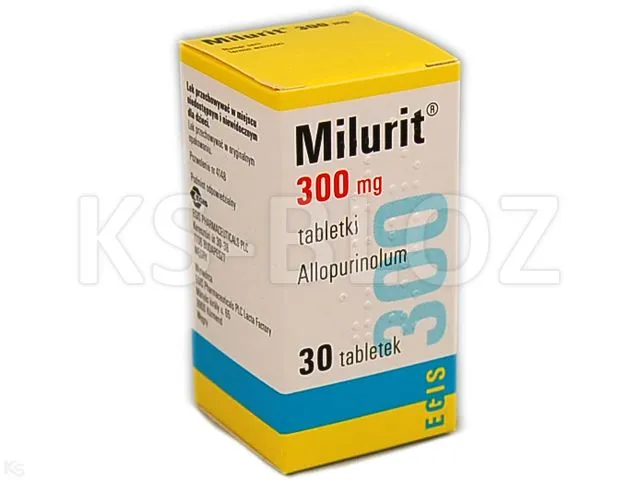
Table of Contents
Package leaflet: Information for the user
Warning! Keep this leaflet! Information on the immediate packaging in a foreign language.
Milurit
200 mg, tablets
Allopurinolum
Please read this leaflet carefully before taking this medicine, because it contains
important information for the patient.
- Keep this leaflet so that you can read it again if necessary.
- If you have any questions, please consult your doctor or pharmacist.
- This medicine has been prescribed for a specific individual. Do not pass it on to others. This medicine may harm other people, even if their symptoms are the same.
- If the patient experiences any adverse reactions, including any not listed in this leaflet, inform the doctor or pharmacist. See section 4.
Table of contents of the leaflet
- What Milurit is and what it is used for
- Important information before taking Milurit
- How to take Milurit
- Possible side effects
- How to store Milurit
- Contents of the pack and other information
1. What Milurit is and what it is used for
The active substance in Milurit is allopurinol. Allopurinol belongs to a group of medicines called enzyme inhibitors. These substances are effective in controlling the rate of certain processes occurring in the body.
Milurit is used long-term to prevent gout and may also be used in other conditions associated with excess uric acid in the body, such as kidney stones and other kidney diseases, as well as in patients receiving treatment for cancer or who have disorders in the function of certain enzymes.
2. Important information before using Milurit
When not to use Milurit
- If the patient is allergic to allopurinol or any of the other ingredients of this medicine (listed in section 6).
Warnings and precautions
Before starting treatment with Milurit, discuss this with your doctor.
Special caution and close medical monitoring may be necessary:
- If the patient belongs to the Han Chinese ethnic group or is of Thai or Korean descent.
- If the patient has liver or kidney disease. The doctor may recommend a lower dose or less frequent administration than daily. Closer monitoring will also be required.
- If the patient has heart disease or high blood pressure and is taking diuretics and/or blood pressure-lowering medicines called ACE inhibitors.
- If an acute gout attack is currently occurring.
- If the patient or a close relative has haemochromatosis (a rare condition characterized by abnormally increased iron absorption from the gastrointestinal tract, leading to excessive iron storage, particularly in the liver).
- If the patient has thyroid disease.
- If the patient is being treated with azathioprine (an immunosuppressive medicine used to suppress the immune response) or mercaptopurine (a medicine used in leukaemias).
If you are unsure whether any of the above situations apply, consult your doctor or pharmacist.
Severe skin rashes (hypersensitivity syndrome, Stevens-Johnson syndrome, toxic epidermal necrolysis) have been reported during treatment with allopurinol. The rash often involves ulceration of the mouth, throat, nose, genital organs, and conjunctiva (redness and swelling of the eyes). These potentially life-threatening severe skin reactions are often preceded by flu-like symptoms such as fever, headache, and generalised body aches. The rash may progress to widespread blistering and skin peeling.
These severe skin reactions may occur more frequently in patients of Chinese, Thai, or Korean descent. Chronic kidney disease may further increase the risk in these patients.
If a rash or any skin reaction occurs, stop taking Milurit immediately,
seek urgent medical advice, and inform the doctor that this medicine is being taken. If severe skin reactions such as Stevens-Johnson syndrome, hypersensitivity syndrome, or toxic epidermal necrolysis occur during treatment with Milurit, re-treatment with Milurit must not be initiated.
An acute gout attack may be expected in the early phase of treatment with Milurit. Therefore, the doctor may prescribe prophylactic treatment with an appropriate anti-inflammatory medicine or colchicine for at least one month.
To monitor the safety and effectiveness of treatment with Milurit, the doctor may order one or more laboratory tests. These tests should be performed and the results shown to the doctor.
If the patient has been diagnosed with a malignant disease or Lesch-Nyhan syndrome, the amount of uric acid in the urine may increase. To prevent this, it is important to drink sufficient fluids to adequately dilute the urine.
If the patient has urinary stones, kidney stones may shrink during treatment and may move into the urinary tract.
Children and adolescents
Children and adolescents under 15 years of age should not take Milurit, except in cases of certain cancers (particularly leukaemias) or in the treatment of certain enzymatic disorders such as Lesch-Nyhan syndrome.
Milurit with other medicines
Tell your doctor if you are currently taking, have recently taken, or plan to take any of the following medicines:
- Salicylates (used to relieve pain, fever, or inflammation, e.g. acetylsalicylic acid)
- Theophylline, a medicine used for breathing problems. The doctor may recommend monitoring blood levels of theophylline, especially at the beginning of treatment with Milurit, or may adjust its dose.
- Medicines used to treat epilepsy (seizures) (phenytoin)
- Ampicillin or amoxicillin (used for bacterial infections). Allergic reactions may occur more frequently; if possible, alternative antibiotics should be used.
- Didanosine, used in the treatment of HIV infection
- Vidarabine, used to treat viral infections. Caution: adverse effects of vidarabine may occur more frequently. Special precautions should be taken if such effects occur.
- Blood count abnormalities occur more frequently when allopurinol is taken together with cytostatic agents (e.g. cyclophosphamide, doxorubicin, bleomycin, procarbazine, alkylating halides) than when these active substances are taken separately. Therefore, regular blood count monitoring is necessary.
- If aluminium hydroxide is taken at the same time, allopurinol may be less effective. An interval of at least 3 hours should be maintained between taking the two medicines.
- Medicines used to suppress the immune response (immunosuppressants), such as cyclosporine (adverse effects of cyclosporine may occur more frequently),
- Azathioprine (used to suppress immune system function) and 6-mercaptopurine (used in the treatment of blood cancer). Concomitant administration of 6-mercaptopurine or azathioprine with allopurinol should be avoided. If 6-mercaptopurine or azathioprine is taken together with Milurit, the dose of 6-mercaptopurine or azathioprine should be reduced, as their effects may be prolonged. This may increase the risk of serious blood disorders. In such cases, the doctor will closely monitor the patient's blood cell counts during treatment. Seek immediate medical help if the patient notices any unexplained bruising, bleeding, fever, or sore throat.
- Medicines used to treat diabetes (chlorpropamide). A reduction in chlorpropamide dose may be necessary, especially in patients with impaired kidney function.
- Medicines used to treat heart disease or high blood pressure, such as ACE inhibitors (e.g. captopril, ramipril) or diuretics (particularly thiazide diuretics or furosemide)
- Medicines used to thin the blood (anticoagulants), such as warfarin, phenprocoumon, and acenocoumarol. The doctor will monitor blood clotting parameters more frequently and may reduce the dose of these medicines if necessary.
- Other medicines used to treat gout (probenecid).
Tell your doctor or pharmacist about all medicines the patient is currently taking or has recently taken, as well as any medicines the patient plans to take. This includes medicines available without a prescription, including herbal medicines. This is necessary because Milurit may affect the action of other medicines, and other medicines may affect the action of Milurit.
Pregnancy and breastfeeding
If the patient is pregnant or breastfeeding, suspects she may be pregnant, or is planning to have a baby, she should consult her doctor or pharmacist before using this medicine.
Pregnancy
The safety of using Milurit during pregnancy is not sufficiently documented. Milurit may be used during pregnancy only if no safer alternative is available and the disease itself poses a risk to the mother or unborn child.
Breastfeeding
Allopurinol is excreted in the milk of breastfeeding women. Allopurinol is not recommended during breastfeeding.
Driving and operating machinery
Drowsiness, dizziness, or coordination disturbances may occur. If such symptoms occur, the patient should not drive or operate machinery.
Milurit contains sodium
This medicine contains less than 1 mmol of sodium (23 mg) per tablet, i.e. essentially "sodium-free".
3. How to use Milurit
This medicine should always be used exactly as directed by your doctor. If in doubt, consult your doctor or pharmacist.
Milurit should be taken once daily after a meal. While taking this medicine, the patient should drink plenty of fluids (2–3 litres per day). If the daily dose exceeds 300 mg and the patient experiences gastrointestinal side effects such as nausea and vomiting (see section 4), to reduce these effects, the doctor may prescribe allopurinol in divided doses.
Dosage should always be individually determined by the doctor.
Recommended doses
Adults
The doctor usually starts treatment with a low dose of allopurinol (e.g. 100 mg/day) to reduce the risk of adverse effects. If necessary, the dose may be increased.
Recommended maintenance doses are:
100 to 200 mg daily for mild conditions, 300 to 600 mg daily for moderate conditions, and 700 to 900 mg daily for severe conditions.
If a dose in mg/kg body weight is required, a dose of 2 to 10 mg/kg body weight/day should be used.
During the early phase of treatment, the doctor may prescribe an anti-inflammatory medicine or colchicine to be taken for at least one month to prevent attacks of gouty arthritis.
Use in children and adolescents (below 15 years of age)
In children under 15 years of age, Milurit is administered at a dose of 10 to 20 mg/kg body weight per day, up to a maximum dose of 400 mg per day in three divided doses. Use in children is rarely indicated, except in neoplastic diseases (especially leukaemia) and certain enzymatic disorders such as Lesch-Nyhan syndrome.
Elderly patients (over 65 years of age)
The doctor will recommend the lowest dose of Milurit that effectively controls symptoms.
If the patient has severe kidney disease
- The patient may be advised to take a dose lower than 100 mg daily
- or to take a 100 mg dose at intervals longer than once daily.
If the patient is dialysed two or three times a week, the doctor may recommend a dose of 300 or 400 mg to be taken immediately after dialysis.
In case of kidney disease, the doctor may monitor kidney function, especially if the patient is also taking diuretics (water tablets, particularly thiazide diuretics).
If the patient has liver disease
The doctor may recommend lower doses. Periodic liver function tests may be necessary, especially at the beginning of treatment.
Treatment of conditions associated with increased uric acid turnover (e.g. neoplastic diseases, disorders of certain enzyme functions)
It is recommended to normalize elevated uric acid levels before starting cytotoxic therapy. Adequate fluid intake is important.
Skin reactions
If skin reactions occur, allopurinol should be discontinued immediately. After mild skin reactions have subsided, treatment may be resumed cautiously with a low dose (e.g. 50 mg/day), carefully weighing the potential risks. The dose may then be gradually increased, monitoring for skin reactions and other possible adverse effects. If the rash recurs, the medicine should be discontinued permanently, considering the possibility of severe skin reactions (see section 4 Possible side effects).
Taking more Milurit than recommended
If you take more Milurit than recommended, or if you suspect a child has swallowed tablets, contact your doctor or go immediately to the nearest emergency department. Bring this leaflet, any remaining tablets, and the packaging with you so the doctor knows which tablets have been taken.
The most common symptoms of overdose include nausea, vomiting, diarrhoea, or dizziness. Until medical help is available, ensure adequate fluid intake.
If you forget to take Milurit
If you miss a dose, take it as soon as you remember. However, if it is almost time for the next dose, skip the missed dose. Do not take a double dose to make up for a missed dose. Continue treatment as directed by your doctor.
Stopping Milurit
The duration of treatment is determined by the doctor.
Do not stop taking Milurit without first consulting your doctor, unless you experience allergic reactions or other serious adverse effects (see section 4).
If you have any further doubts about the use of this medicine, consult your doctor or pharmacist.
4. Possible adverse reactions
Like all medicines, this medicine can cause adverse reactions, although not everyone will experience them.
Adverse reactions associated with the use of Milurit occur rarely in the treated patient population and in most cases are mild in severity. The frequency of adverse reactions increases in cases of concomitant kidney and/or liver disease.
Cases of potentially life-threatening skin rash (Stevens-Johnson syndrome, toxic epidermal necrolysis) have been reported (see section 2).
If any of the following adverse reactions occur in a patient while taking Milurit, treatment must be discontinued immediately and the patient should contact a doctor without delay.
Not very common (may occur in up to 1 in 100 people)
Allergic reactions
Symptoms may include:
- skin rash, skin peeling, ulceration of lips and oral mucosa
- swelling of the face, hands, lips, tongue or throat
- difficulty swallowing or breathing
- very rarely: sudden wheezing, palpitations, chest tightness or collapse. Do not take any more tablets unless the doctor has instructed the patient to do so.
Rare (may occur in up to 1 in 1,000 people)
- fever and chills, headache, muscle pain (flu-like symptoms), and general malaise
- skin changes, such as ulceration of the mouth, throat, nose, or genital organs, and conjunctivitis (red, swollen eyes), widespread blisters or skin peeling
- severe hypersensitivity reactions with fever, skin rash, joint pain, and abnormal blood test results and liver function tests (these may be symptoms of multi-organ hypersensitivity)
Very rare (may occur in up to 1 in 10,000 people)
- severe allergic reaction causing swelling of the face or throat
- potentially life-threatening allergic reaction
Frequency unknown (cannot be estimated from available data)
- aseptic meningitis (inflammation of the membranes surrounding the brain and spinal cord): symptoms include neck stiffness, headache, nausea, fever, or altered consciousness. If such symptoms occur, seek immediate medical attention.
Other possible adverse reactions
Common (may occur in up to 1 in 10 people):
- rash
- increased blood levels of TSH (thyroid-stimulating hormone)
Not very common (may occur in up to 1 in 100 people):
- nausea, vomiting, and diarrhoea
- abnormal liver function test results
Rare (may occur in up to 1 in 1,000 people):
- joint pain or painful swelling in the groin, armpits, or neck
- jaundice (yellowing of the skin and whites of the eyes)
- liver disorders, such as hepatitis
- kidney disorders
- formation of kidney stones; symptoms may include blood in the urine and abdominal, flank, or groin pain
Very rare (may occur in up to 1 in 10,000 people):
- allopurinol tablets may sometimes affect the blood, which may present as bruising more easily than usual, or sore throat or other signs of infection. These symptoms usually occur in patients who have liver or kidney problems. Inform the doctor as soon as possible. Milurit may affect the lymph nodes.
- high temperature
- blood in the urine, kidney failure
- vomiting blood
- high levels of fats in the blood
- general malaise
- weakness, numbness of hands or feet, loss of balance, tingling, inability to move muscles (paralysis), or loss of consciousness
- headache, dizziness, drowsiness, or visual disturbances
- chest pain, high blood pressure, or slow heart rate
- infertility in men or inability to achieve or maintain an erection
- breast enlargement in men and women
- changes in bowel habits, presence of fat in the stool
- taste disturbances
- cataract (clouding of the eye lens), macular disease of the eye
- hair loss or change in hair colour
- seizures
- depression
- fluid retention leading to oedema, particularly around the ankles
- excessive thirst, fatigue, weight loss (these may be symptoms of diabetes). The doctor may recommend a blood glucose test to determine if this is the cause.
- acne (acneiform eruptions, small tender red skin nodules)
- muscle pain
Frequency unknown (cannot be estimated from available data):
- abdominal pain
- lichenoid skin eruption (itchy reddish-purple skin rash and/or white lace-like lines on mucous membranes)
Reporting of adverse reactions
If any adverse reactions occur, including any not listed in this leaflet, inform a doctor or pharmacist. Adverse reactions can be reported directly to the Department for Monitoring Adverse Drug Reactions of the Office for Registration of Medicinal Products, Medical Devices and Biocidal Products, Al. Jerozolimskie 181C, 02-222 Warsaw, tel.: +48 22 49 21 301, fax: +48 22 49 21 309, website: https://smz.ezdrowie.gov.pl.
Reporting adverse reactions helps to provide more information on the safety of the medicine.
5. How to store Milurit
Keep this medicine out of sight and reach of children.
No special storage instructions apply.
Do not use this medicine after the expiry date stated on the packaging. The expiry date refers to the last day of the stated month.
Medicines must not be disposed of via wastewater or household waste. Ask your pharmacist how to dispose of medicines no longer required. Such measures will help protect the environment.
6. Contents of the package and other information
What Milurit contains
The active substance is allopurinol. Each tablet contains 200 mg of allopurinol.
The other ingredients are: microcrystalline cellulose, sodium carboxymethyl starch (type A), gelatin,
colloidal anhydrous silica, magnesium stearate.
What Milurit looks like and contents of the pack
White or greyish, oval tablets, engraved with the code "E354" on one side and a division line marked SNAP on the other side. The tablet can be divided into equal doses.
Pack:
30 tablets in a brown glass bottle, type III, with a child-resistant cap and a tamper-evident ring, packed in a cardboard box.
For more detailed information, please contact the Marketing Authorisation Holder or the Parallel Importer.
Marketing Authorisation Holder in Romania, country of export:
Egis Pharmaceuticals PLC
Keresztúri út 30 – 38
1106 Budapest
Hungary
Manufacturer:
Egis Pharmaceuticals PLC
Mátyás király út 65
9900 Körmend
Hungary
Parallel Importer:
InPharm Sp. z o.o.
ul. Strumykowa 28/11
03-138 Warsaw
Poland
Repackaged by:
InPharm Sp. z o.o. Services sp. k.
ul. Chełmżyńska 249
04-458 Warsaw
Poland
Marketing Authorisation Number in Romania, country of export: 15062/2023/01
Parallel Import Licence Number: 120/23