Migea
Poland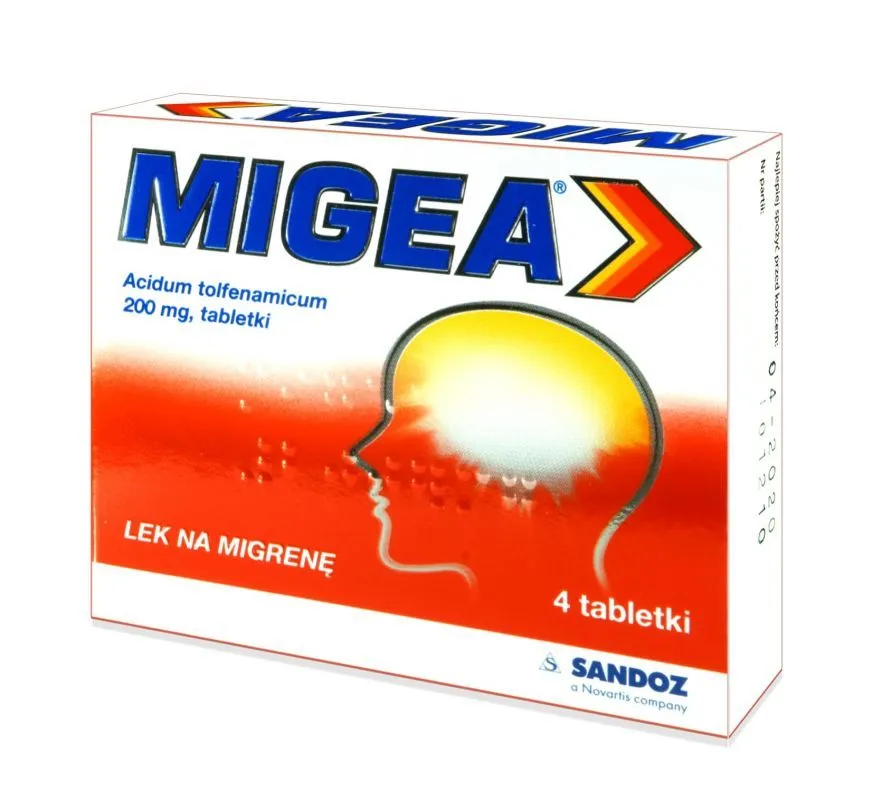
Table of Contents
Package leaflet: Information for the patient
Migea, 200 mg, tablets
Acidum tolfenamicum
Please read all of this leaflet carefully before taking this medicine because it contains
important information for you.
This medicine should always be taken exactly as described in this patient leaflet or as directed by
your doctor or pharmacist.
Keep this leaflet so that you can read it again if necessary.
If you need advice or further information, please consult your pharmacist.
If you experience any adverse reactions, including any possible adverse reactions not listed in this
leaflet, tell your doctor or pharmacist.
See section 4.
If there is no improvement after 3-4 days, or if you feel worse, you should contact your doctor.
Table of contents
- What Migea is and what it is used for
- What you should know before taking Migea
- How to take Migea
- Possible side effects
- How to store Migea
- Contents of the pack and other information
1. What Migea is and what it is used for
Migea contains the active substance tolfenamic acid – a non-steroidal medicine with analgesic,
anti-inflammatory and antipyretic properties.
Migea is indicated for the treatment of acute migraine attacks.
Migraine is defined as a pulsating, one-sided, moderate to severe headache, which may worsen
during physical exertion. It may sometimes be accompanied by nausea, vomiting, and sensitivity to
light, sound and smell.
Headache may occasionally be preceded by certain symptoms, such as short-term mood changes,
irritability, restlessness or loss of appetite. In some individuals (10-20%), a so-called aura may occur
shortly before the onset of headache (transient visual disturbances such as flashes of light,
flickering spots or light lines).
2. Important information before using Migea
When not to use Migea
if the patient is allergic to tolfenamic acid or any of the other ingredients of this
medicine (listed in section 6);
if the patient has asthma or if taking Migea or similar-acting medicines, such as
other non-steroidal anti-inflammatory drugs (NSAIDs, e.g. ibuprofen) or salicylates (e.g. acetylsalicylic
acid) previously caused asthma attacks, urticaria, angioedema or acute inflammation of the nasal mucosa;
if the patient has severe heart failure;
if the patient has severe renal insufficiency;
if the patient has severe hepatic insufficiency;
if the patient has gastrointestinal bleeding, cerebral vessel bleeding or any other active
bleeding;
if the patient has currently or previously been diagnosed with peptic ulcer disease of the stomach and (or)
duodenum, or has had gastrointestinal bleeding, ulceration or perforation in the past,
including cases caused by the use of non-steroidal anti-inflammatory drugs;
if the woman is in the third trimester of pregnancy.
This medicine must not be used in children and adolescents under 18 years of age.
Warnings and precautions
Before using Migea, discuss this with your doctor or pharmacist.
Inform about all current or previous health conditions, especially the following:
- liver or kidney function disorders;
- chronic diseases such as systemic lupus erythematosus or mixed connective tissue disease;
- hypertension and (or) heart function disorders and edema;
- gastrointestinal diseases such as ulcerative colitis, Crohn's disease;
- blood clotting disorders or other blood diseases;
- vascular diseases (peripheral or cerebral).
Non-steroidal anti-inflammatory drugs (NSAIDs) may cause interstitial nephritis,
glomerulonephritis, renal papillary necrosis or nephrotic syndrome.
Smoking, alcohol abuse and generally poor health increase the risk of adverse effects
on the gastrointestinal tract.
Avoid concomitant use of this medicine with other non-steroidal anti-inflammatory
drugs, including selective COX-2 inhibitors (e.g. meloxicam, nimesulide,
nabumetone).
Consult your doctor or pharmacist if the patient is taking or has taken
medicines that reduce blood clotting (anticoagulants), diuretics or medicines that may
increase the risk of gastrointestinal ulceration or bleeding (see below "Migea
and other medicines").
During treatment with Migea, the patient's skin may become more sensitive to harmful effects of
sunlight. Avoid exposure to sunlight and UV radiation (e.g. in solariums) and use appropriate skin protection.
Migea has analgesic, anti-inflammatory and antipyretic effects, therefore it may mask
symptoms of developing infection (such as headache, fever). During a visit to the doctor,
inform about the use of this medicine.
If disturbances in urination occur during treatment, increase fluid intake.
Patients diagnosed with hypertension and (or) heart failure, fluid retention and edema
should consult a doctor or pharmacist before using Migea,
because non-steroidal anti-inflammatory drugs have caused fluid retention,
hypertension and edema in some patients.
Taking medicines such as Migea may be associated with a small increased risk
of arterial thrombotic events (e.g. heart attack (myocardial infarction) or stroke). This risk increases with
long-term use of high doses. Do not use higher doses or longer treatment duration than recommended.
Long-term use of analgesics may lead to worsening of headache. In such a case,
seek medical advice. If the patient frequently or daily experiences headaches
despite (or because of) regular use of pain-relieving medicines, they should consult a
doctor.
Use Migea with caution in patients with bronchial asthma, as
bronchospasm has been reported after administration of non-steroidal anti-inflammatory drugs. Bronchospasm may be life-threatening.
If during treatment with Migea the following occur:
gastrointestinal bleeding,
rash and (or) mucosal changes,
other allergic symptoms,
discontinue use of the medicine and contact a doctor immediately.
Use of Migea in elderly patients
Elderly patients may be more sensitive to the effects of the medicine, and adverse effects
caused by non-steroidal anti-inflammatory drugs (especially gastrointestinal bleeding and perforation, which may be fatal) occur more frequently, as well as worsening of kidney, liver or heart function. Follow the instructions in the leaflet, use the lowest effective dose and report all adverse effects occurring during treatment to your doctor.
Migea and other medicines
Inform your doctor or pharmacist about all medicines currently or recently taken, as well as any medicines the patient plans to use.
Migea and certain concomitantly used medicines may interact and affect each other's action and occurrence of adverse effects. This especially applies to the following medicines:
methotrexate (a medicine used in the treatment of certain cancers or arthritis);
cyclosporine (an immunosuppressive medicine);
tacrolimus (an anti-inflammatory medicine);
lithium (a medicine used in the treatment of depression);
corticosteroids (anti-inflammatory medicines);
other analgesics;
other non-steroidal anti-inflammatory drugs (e.g. ibuprofen) or salicylates (e.g. acetylsalicylic
acid);
diuretics;
medicines used to treat high blood pressure (antihypertensives);
quinolone antibiotics;
anticoagulants (such as warfarin, acenocoumarol);
medicines inhibiting platelet function (antiplatelet agents);
antidepressants (from the group of selective serotonin reuptake inhibitors);
cardiac glycosides, e.g. digoxin (medicines used in heart diseases);
antiepileptic medicines (e.g. phenytoin);
oral antidiabetic medicines;
antacids containing aluminium hydroxide;
mifepristone (a medicine used, among others, in the treatment of uterine fibroids);
zidovudine (a medicine used in the treatment of HIV infection).
If in doubt whether the patient is taking any of the listed medicines, consult a
doctor or pharmacist.
Migea with food, drink and alcohol
Migea tablets may be taken independently of meals.
Do not drink alcohol during treatment with this medicine.
Pregnancy, breastfeeding and fertility
If the patient is pregnant or breastfeeding, suspects she may be pregnant or is planning to have a
child, she should consult a doctor or pharmacist before using this medicine.
Pregnancy
Do not take Migea if the patient is in the last three months of pregnancy, as it may
harm the unborn child or cause complications during delivery. Migea may
cause kidney and heart function disorders in the unborn child. It may increase
the tendency to bleeding in both the mother and the child and may delay or prolong
labor. Do not use Migea during the first six months of pregnancy unless the doctor considers
its use absolutely necessary. If treatment is necessary during this period or when trying to conceive,
use the lowest possible dose for the shortest possible time. From week 20 of pregnancy,
Migea may cause kidney function disorders in the unborn child if used for longer than a few days. This may lead to low levels of amniotic fluid surrounding the child (oligohydramnios) or narrowing of the fetal blood vessel (ductus arteriosus) in the child's heart. If treatment longer than a few days is required, the doctor may recommend additional monitoring.
Breastfeeding
A negligible amount of tolfenamic acid passes into breast milk. If use of the medicine during
breastfeeding is necessary, consult a doctor.
Fertility
Tolfenamic acid may impair fertility. If the patient plans pregnancy or has difficulties
conceiving, she should consult her doctor.
Driving and operating machinery
No effects of Migea on the ability to drive or operate machinery have been observed.
However, if the patient experiences dizziness, drowsiness, fatigue or visual disturbances,
he or she should not drive or operate machinery.
Migea contains sodium
This medicine contains less than 1 mmol (23 mg) of sodium per tablet, meaning the medicine is considered "sodium-free".
3. How to use Migea
This medicine should always be taken exactly as described in this patient information leaflet or as directed by a doctor or pharmacist. If in doubt, consult a doctor or pharmacist.
This medicine is for oral use.
Taking the medicine at the lowest effective dose for the shortest duration necessary to relieve symptoms reduces the risk of adverse effects.
Adults and elderly patients
1 tablet (200 mg of tolfenamic acid) at the onset of the first symptoms of an acute migraine attack.
If no improvement occurs, this dose may be repeated after 1 to 2 hours.
Do not take more than 2 Migea tablets (400 mg of tolfenamic acid) per day.
The tablet should be swallowed whole with water.
Children and adolescents
Migea should not be used in children and adolescents under 18 years of age.
Accidental overdose of Migea
If more Migea has been taken than recommended, seek immediate advice from a doctor or pharmacist.
Symptoms of overdose may include: headache, nausea, vomiting, abdominal pain, gastrointestinal bleeding, rarely diarrhea, disorientation, restlessness, coma, drowsiness, dizziness, tinnitus, fainting, and very rarely seizures. Severe poisoning may lead to kidney failure and liver damage.
If you have any further doubts about using this medicine, consult your doctor or pharmacist.
4. Possible adverse reactions
Like all medicines, this medicine can cause adverse reactions, although not everyone experiences them.
The medicine is generally well tolerated when used at the recommended doses.
Taking medicines such as Migea may be associated with a small increased risk of heart attack (myocardial infarction) or stroke. This risk increases with long-term use of high doses of the medicine.
Do not use higher doses or longer treatment duration than recommended.
The following adverse reactions may occur during treatment with this medicine:
Very common adverse reactions (may affect more than 1 in 10 people):
diarrhea, nausea.
Common adverse reactions (may affect less than 1 in 10 people):
dyspepsia, vomiting, abdominal pain, urticaria, rash, burning sensation during urination, lemon-colored urine, headache, dizziness, feeling of fatigue, liver function disorders.
Uncommon adverse reactions (may affect less than 1 in 100 people):
flatulence, feeling of fullness, loss of appetite, constipation, increased serum creatinine concentration, increased blood urea nitrogen concentration, excessive sweating, tingling, disorientation, facial flushing, decreased platelet count (thrombocytopenia), decreased number of a certain type of white blood cells – granulocytes (granulocytopenia), decreased white blood cell count (leukopenia), increased number of eosinophils (eosinophilia), anemia.
Rare adverse reactions (may affect less than 1 in 1,000 people):
insomnia, anxiety, tremor, tinnitus, bronchospasm, asthma attacks, dyspnea.
Very rare adverse reactions (may affect less than 1 in 10,000 people):
edema, heart failure, gastric and/or duodenal ulcer, perforation or gastrointestinal bleeding (sometimes fatal, especially in elderly patients), exacerbation of inflammatory bowel disease and Crohn's disease, tarry stools and bloody vomiting, gastritis, vesicular skin changes (including Stevens-Johnson syndrome, toxic epidermal necrolysis), photosensitivity, urinary retention (anuria), presence of blood in urine (hematuria), kidney pain, very frequent urination (pollakiuria), euphoria, hypersensitivity, hypoaesthesia, depression, arterial hypertension or hypotension, allergic interstitial pneumonia, pulmonary infiltrates with eosinophilia, pulmonary fibrosis, hemoptysis, toxic hepatitis, hemolytic anemia (anemia due to destruction of red blood cells), agranulocytosis (complete or almost complete absence of granulocytes), pancreatitis, stomatitis.
Frequency not known (frequency cannot be estimated from the available data):
visual disturbances, optic neuritis, aseptic meningitis (especially in patients with autoimmune diseases, i.e. systemic lupus erythematosus, mixed connective tissue disease) with symptoms such as neck stiffness, headache, nausea, vomiting, fever or disorientation, hallucinations, malaise and drowsiness, jaundice, deficiency of a certain type of white blood cells (neutrophils – neutropenia), nonspecific allergic reactions and anaphylaxis, pruritus, purpura, angioedema, erythema multiforme, interstitial nephritis, uremic syndrome and renal failure.
The risk of adverse reactions is higher in elderly patients. This risk is further increased in patients with renal, hepatic or cardiac impairment.
Reporting of adverse reactions
If any adverse reactions occur, including any adverse reactions not listed in this leaflet, inform your doctor, pharmacist or nurse. Adverse reactions can be reported directly to the Department of Monitoring of Adverse Drug Reactions of the Office for Registration of Medicinal Products, Medical Devices and Biocidal Products: Al. Jerozolimskie 181C, 02-222 Warsaw
tel.: + 48 22 49 21 301, fax: + 48 22 49 21 309, website: https://smz.ezdrowie.gov.pl
Adverse reactions can also be reported to the marketing authorization holder.
Reporting adverse reactions helps to provide more information on the safety of the medicine.
5. How to store Migea
Keep this medicine out of sight and reach of children.
Do not use this medicine after the expiry date stated on the packaging following: EXP.
The expiry date refers to the last day of the stated month.
Store below 25°C.
Medicines must not be disposed of via wastewater or household waste. Ask your pharmacist how to dispose of medicines you no longer use. This will help protect the environment.
6. Contents of the pack and other information
What Migea contains
The active substance is tolfenamic acid. One tablet contains 200 mg of tolfenamic acid.
Other ingredients are: maize starch, sodium carboxymethyl starch (type A), polyethylene glycol 6000,
alginic acid, microcrystalline cellulose, sodium croscarmellose, colloidal anhydrous silica,
sodium stearyl fumarate.
What Migea looks like and contents of the pack
Migea tablets are white, oval, biconvex, with a central break line on one side and marked
"FM7" on one side of the break line and "GEA" on the other side. The medicine is packed in
blister packs and cardboard boxes.
The pack contains 4 tablets.
Marketing Authorisation Holder
Sandoz GmbH
Biochemiestrasse 10
6250 Kundl, Austria
Manufacturer:
FAMAR S.A.
7 Anthoussas Av.
153 44 Anthoussa Attiki, Greece
Sandoz A/S
Edvard Thomsens Vej 14
2300 Copenhagen S, Denmark
Sandoz GmbH
Biochemiestrasse 10
6250 Kundl, Austria
For further information, please contact:
Sandoz Polska Sp. z o.o.
ul. Domaniewska 50 C
02-672 Warsaw
tel. 22 209 70 00