Mig for children
PolandTable of Contents
Package leaflet: Information for the user
MIG dla dzieci
20 mg/ml, oral suspension
For children weighing from 5 kg (from 6 months) to 29 kg (up to 9 years)
Ibuprofen
Please read all of this leaflet carefully before taking this medicine, because it
contains important information for you.
This medicine should always be used exactly as described in this patient leaflet or
as advised by your doctor or pharmacist.
- Keep this leaflet, so that you can read it again if necessary.
- If you need advice or further information, please consult your pharmacist.
- If you experience any side effects, including any not listed in this leaflet, tell your doctor or pharmacist. See section 4.
- If there is no improvement or if you feel worse after 3 days, you should consult your doctor.
Contents of the leaflet
- What MIG dla dzieci is and what it is used for
- Important information before taking MIG dla dzieci
- How to take MIG dla dzieci
- Possible side effects
- How to store MIG dla dzieci
- Contents of the pack and other information
1. What MIG dla dzieci is and what it is used for
MIG dla dzieci is a non-steroidal anti-inflammatory and analgesic medicine (NSAID)
with antipyretic (fever-reducing) properties.
MIG dla dzieci is used for short-term symptomatic treatment of:
- Mild to moderate pain
- Fever
MIG dla dzieci is intended for use in children weighing from 5 kg (from 6 months) to 29 kg (up to 9 years).
2. Important Information Before Using MIG for Children
When Not to Use MIG for Children
- If the child is allergic to ibuprofen or any of the other ingredients of this medicine (listed in section 6)
- If the patient has previously experienced bronchospasm, asthma attacks, nasal mucosal swelling (rhinitis), angioedema, or skin reactions (urticaria) after taking acetylsalicylic acid or other non-steroidal anti-inflammatory drugs (NSAIDs)
- In blood clotting disorders of unknown origin
- In active or recurrent history of gastric or duodenal ulcer (peptic ulcers) or gastrointestinal bleeding (two or more separate episodes of confirmed ulceration or bleeding)
- In cases of gastrointestinal bleeding or perforation in the patient's history related to previous NSAID treatment
- If the patient is experiencing cerebral hemorrhage (cerebrovascular bleeding) or other active bleeding
- In severe hepatic or renal insufficiency
- In severe heart failure
- In severe dehydration (significant loss of body fluids caused, for example, by vomiting, diarrhea, or inadequate fluid intake)
- During the last three months of pregnancy.
Warnings and Precautions
Before starting treatment with MIG for Children, discuss it with a doctor or pharmacist.
If the patient has an infection – see below, section titled “Infections”.
Adverse effects can be minimized by using the lowest effective dose for the shortest duration needed to control symptoms.
Gastrointestinal Safety
Avoid concomitant use of MIG for Children with other NSAIDs, including so-called COX-2 inhibitors (selective cyclooxygenase-2 inhibitors).
Elderly patients
The frequency of adverse effects during NSAID treatment, especially gastrointestinal bleeding and perforation, which may be fatal, is higher in elderly patients. Therefore, particularly careful medical monitoring is recommended in elderly patients.
Gastrointestinal bleeding, peptic ulcer disease, and perforation
Gastrointestinal bleeding, gastric and/or duodenal ulceration, and perforation, which may be fatal, have been reported with all NSAIDs, occurring at various times during treatment, with or without warning symptoms, and with or without previous serious gastrointestinal adverse events.
The risk of gastrointestinal bleeding, gastric and/or duodenal ulceration, and perforation increases with higher NSAID doses, in patients with a history of peptic ulcer disease, particularly if complicated by bleeding or perforation (see section 2. "When Not to Use MIG for Children"), and in elderly patients. In such patients, treatment should be initiated with the lowest available dose.
In such patients and in patients requiring additional low-dose acetylsalicylic acid or other drugs that may increase the risk of gastrointestinal adverse effects, consider concomitant administration of gastroprotective agents (e.g., misoprostol or proton pump inhibitors).
If the child has a history of gastrointestinal adverse effects, report any unusual abdominal symptoms (especially gastrointestinal bleeding), particularly at the beginning of treatment.
Exercise caution in children receiving concomitant medications that may increase the risk of gastric and/or duodenal ulceration or bleeding, such as oral corticosteroids, anticoagulants like warfarin, selective serotonin reuptake inhibitors used, among others, in depression treatment, or antiplatelet agents such as acetylsalicylic acid (see section 2. "MIG for Children and Other Medicines").
If gastrointestinal bleeding or gastric and/or duodenal ulceration occurs in the child, discontinue MIG for Children immediately. Seek medical advice promptly if the child experiences unusual abdominal symptoms.
NSAIDs should be used cautiously in patients with a history of gastrointestinal disorders (ulcerative colitis, Crohn's disease), as these conditions may worsen (see section 4. "Possible Side Effects").
Cardiovascular Effects
Taking anti-inflammatory/pain-relieving medicines such as ibuprofen may be associated with a small increased risk of myocardial infarction or stroke, especially when used in high doses. Do not exceed the recommended dose or duration of treatment.
Before using MIG for Children, the patient should discuss treatment with a doctor or pharmacist if:
- The patient has heart conditions such as heart failure, angina (chest pain), history of myocardial infarction, bypass surgery, peripheral arterial disease (poor circulation in legs or feet due to narrowed or blocked arteries), or has had any stroke (including "mini-stroke" or transient ischemic attack - TIA)
- The patient has hypertension, diabetes, elevated cholesterol levels, a family history of heart disease or stroke, or if the patient smokes
Symptoms of allergic reactions to ibuprofen, including difficulty breathing, facial and neck swelling (angioedema), or chest pain, have occurred. If any of these symptoms occur, discontinue MIG for Children immediately and contact a doctor or emergency medical services without delay.
Skin Reactions
Severe skin reactions have been reported with ibuprofen use, including exfoliative dermatitis, erythema multiforme, Stevens-Johnson syndrome, toxic epidermal necrolysis, drug reaction with eosinophilia and systemic symptoms (DRESS), and acute generalized exanthematous pustulosis (AGEP). If the patient develops any symptoms related to these severe skin reactions described in section 4, discontinue MIG for Children immediately and seek medical help.
During chickenpox (varicella), avoid using MIG for Children.
Infections
MIG for Children may mask symptoms of infection such as fever and pain. Therefore, MIG for Children may delay appropriate treatment and consequently increase the risk of complications. This has been observed in bacterial pneumonia and bacterial skin infections associated with chickenpox. If the patient takes this medicine during an existing infection and symptoms persist or worsen, seek medical advice immediately.
Respiratory Disorders
Exercise caution when administering MIG for Children to patients with bronchial asthma or a history of bronchial asthma, as NSAIDs have been reported to cause bronchospasm in these patients.
Other Considerations
MIG for Children should be used in children only after careful consideration of benefit-risk ratio:
- In certain inherited blood disorders (e.g., acute intermittent porphyria)
- In certain autoimmune disorders (systemic lupus erythematosus and mixed connective tissue disease). An increased risk of aseptic meningitis has been observed (see section 4. "Possible Side Effects").
MIG for Children may be used only under strict medical supervision in the following cases:
- If the patient has gastrointestinal disorders or a history of chronic inflammatory bowel disease (ulcerative colitis, Crohn's disease)
- In cases of high blood pressure or heart failure
- In cases of impaired kidney or liver function
- In cases of dehydration
- Immediately after major surgical procedures
- In cases of allergies (e.g., skin reactions to other medicines, asthma, hay fever), mild nasal mucosal hypertrophy (nasal polyps), chronic nasal mucosal edema, or chronic respiratory diseases with airway narrowing
Severe, acute hypersensitivity reactions (e.g., anaphylactic shock) have been very rarely observed.
If the first symptoms of severe hypersensitivity occur after taking MIG for Children, discontinue treatment immediately and notify a doctor.
Ibuprofen, the active substance in MIG for Children, may temporarily inhibit platelet function (platelet aggregation). Therefore, patients with coagulation disorders should be carefully monitored during treatment.
During prolonged use of MIG for Children, regular monitoring of liver enzymes, kidney function, and blood counts is required.
Before surgical procedures, inform the doctor or dentist about taking MIG for Children.
Prolonged use of painkillers for headache treatment may worsen the headache. If such a situation is observed or suspected, consult a doctor and discontinue treatment. Consider the possibility of medication-overuse headache in patients suffering from frequent or daily headaches despite regular use (or due to use) of painkillers.
Generally, habitual use of painkillers, especially combinations of multiple pain-relieving substances, may lead to permanent kidney damage and is associated with the risk of kidney failure (analgesic nephropathy).
Children and Adolescents
There is a risk of kidney function impairment in dehydrated children and adolescents.
MIG for Children and Other Medicines
Inform the doctor or pharmacist about all medicines currently or recently taken, as well as any medicines the patient plans to take.
MIG for Children may affect the action of other medicines or other medicines may affect the action of MIG for Children. For example:
- Anticoagulant medicines (i.e., blood thinners/preventing clot formation), such as acetylsalicylic acid, warfarin, ticlopidine
- Medicines lowering blood pressure (ACE inhibitors such as captopril, beta-blockers such as those containing atenolol, angiotensin II receptor antagonists such as losartan)
Also, some other medicines may be affected by or affect treatment with MIG for Children.
Therefore, always consult a doctor or pharmacist before using MIG for Children with other medicines.
In particular, inform the doctor or pharmacist if the patient is taking:
-
Digoxin (used to strengthen the heart), phenytoin (used to treat epileptic seizures), or lithium (used to treat certain psychiatric disorders), as blood levels of these medicines may increase. Monitoring serum levels of lithium, digoxin, and phenytoin is generally not required if ibuprofen is used according to recommendations (not longer than 3 days);
-
Diuretics (medicines increasing fluid excretion) and antihypertensive medicines (medicines used for high blood pressure);
-
Angiotensin-converting enzyme (ACE) inhibitors (medicines used to treat heart failure and hypertension): increased risk of kidney function disorders;
-
Potassium-sparing diuretics (some diuretics): concurrent use may lead to increased potassium levels;
-
Acetylsalicylic acid and other anti-inflammatory painkillers, including COX-2 inhibitors (non-steroidal anti-inflammatory drugs), selective serotonin reuptake inhibitors (medicines used to treat depression), and corticosteroids (medicines containing cortisone): increased risk of gastrointestinal ulceration and bleeding;
-
Low-dose acetylsalicylic acid: antiplatelet effect may be reduced (see section 2. "Warnings and Precautions");
-
Anticoagulants such as warfarin;
-
Sulfonylurea derivatives (used to lower blood glucose levels): clinical studies have shown interactions between NSAIDs and sulfonylurea derivatives. Blood glucose monitoring is recommended as a precaution during concomitant use;
-
Probenecid or sulfinpyrazone (medicines used to treat gout): may delay ibuprofen elimination from the body. This may lead to ibuprofen accumulation and increased adverse effects;
-
Zidovudine (a medicine used to treat AIDS): increased risk of hematomas and bruising in HIV-infected individuals with hemophilia;
-
Methotrexate (a medicine used to treat cancer and certain rheumatic diseases): do not use MIG for Children within 24 hours before and after methotrexate administration. This may increase methotrexate serum levels and intensify its adverse effects;
-
Pemetrexed (a medicine used to treat cancer): using pemetrexed together with NSAIDs may intensify pemetrexed's effects; therefore, caution is advised when administering higher NSAID doses;
-
Cyclosporine (an immunosuppressive medicine used, for example, after transplants and in rheumatism treatment): risk of kidney damage;
-
Tacrolimus (a medicine used to prevent transplant rejection): risk of kidney damage;
-
Quinolone antibiotics, such as ciprofloxacin: when these medicines are used concurrently, the risk of seizures may increase;
-
CYP2C9 inhibitors such as voriconazole and fluconazole (medicines used for fungal infections): concomitant use of ibuprofen and CYP2C9 inhibitors may increase the body's exposure time to ibuprofen (a CYP2C9 substrate). In a study using voriconazole and fluconazole (CYP2C9 inhibitors), exposure time to S(+)-ibuprofen increased by approximately 80-100%. When co-administering strong CYP2C9 inhibitors, consider reducing the ibuprofen dose, especially if high ibuprofen doses are administered together with voriconazole or fluconazole.
-
Deferasirox (a medicine given to patients receiving long-term blood transfusions in certain types of anemia): using deferasirox concurrently with NSAIDs (e.g., ibuprofen) may increase the risk of gastrointestinal adverse effects. Therefore, medical supervision is necessary during combined use of deferasirox with NSAIDs;
-
Mifepristone (used to terminate pregnancy): if NSAIDs are used 8-12 days after mifepristone administration, they may reduce mifepristone's effectiveness;
-
Ginkgo biloba (herbal medicine) in combination with NSAIDs: may increase bleeding risk.
MIG for Children and Alcohol
Avoid alcohol consumption during treatment with MIG for Children. Some adverse effects, especially gastrointestinal or central nervous system effects, are more likely when alcohol is consumed concurrently with MIG for Children.
Pregnancy, Breastfeeding, and Fertility
If the patient is pregnant or breastfeeding, suspects she may be pregnant, or plans to become pregnant, she should consult a doctor or pharmacist before using this medicine.
Pregnancy
Do not take MIG for Children if the patient is in the last three months of pregnancy, as it may harm the unborn child or cause delivery complications. It may cause kidney and heart problems in the unborn child. It may increase the tendency to bleeding in both the mother and child and may delay or prolong labor. Do not use MIG for Children during the first six months of pregnancy unless the doctor considers its use absolutely necessary. If treatment is necessary during this period or when trying to conceive, use the lowest possible dose for the shortest possible time. From week 20 of pregnancy, MIG for Children may cause narrowing of the blood vessel (ductus arteriosus) in the child's heart or kidney function disorders in the unborn child, which may lead to reduced amniotic fluid volume (oligohydramnios) if taken for longer than a few days. If treatment is required for longer than a few days, the doctor may recommend additional monitoring.
Breastfeeding
Only small amounts of ibuprofen and its metabolites pass into breast milk. Since no harmful effects have been observed in infants to date, discontinuation of breastfeeding is usually not necessary during short-term use. However, during prolonged use or when using high doses, discontinuation of breastfeeding should be considered.
Fertility
This medicine belongs to a group of medicines that may reduce fertility in women (NSAIDs). This effect is reversible and resolves after stopping treatment.
Driving and Operating Machinery
Since adverse effects on the central nervous system, such as fatigue and dizziness, may occur during use of high doses of MIG for Children, reaction time may be altered in individual cases, and the ability to actively participate in road traffic and operate machinery may be limited. This is particularly true with alcohol interaction. The patient may then lose the ability to react quickly and appropriately to unexpected or sudden situations. In such cases, do not drive a car or other vehicles! Do not operate machinery! Do not work without secure foot support!
MIG for Children contains liquid maltitol (E 965)
If the child has previously been diagnosed with intolerance to certain sugars, consult a doctor before taking this medicine.
MIG for Children contains sodium
The medicine contains 3.8 mg of sodium (main component of table salt) in each 1 ml. This corresponds to 0.2% of the maximum recommended daily sodium intake in the diet for adults.
MIG for Children contains sodium benzoate (E 211)
The medicine contains 1 mg of sodium benzoate in 1 ml.
MIG for Children contains benzyl alcohol
The medicine contains 0.0002 mg of benzyl alcohol in 1 ml.
Benzyl alcohol may cause allergic reactions.
Do not administer to young children (under 3 years of age) for longer than one week without a doctor's or pharmacist's recommendation.
Pregnant or breastfeeding women and patients with impaired kidney or liver function should consult a doctor before using the medicine, as large amounts of benzyl alcohol may accumulate in their bodies and cause adverse effects (so-called "metabolic acidosis").
3. How to use MIG for children
This medicine should always be used exactly as described in this patient information leaflet or as directed by your doctor or pharmacist. If in doubt, consult your doctor or pharmacist.
Use the lowest effective dose for the shortest duration necessary to control symptoms. If symptoms of infection (such as fever and pain) persist or worsen, immediately consult a doctor (see section 2).
Dosage
The recommended dose is:
| Body weight | Single dose | Maximum daily dose (24 hours) |
|------------------|------------------|-------------------------------------|
| (Age) | (Oral suspension) | (Oral suspension) |
| 5 kg - 6 kg | 2.5 ml oral suspension | 7.5 ml oral suspension |
| (Infants aged 6 - 8 months) | (corresponds to 50 mg ibuprofen) | (corresponds to 150 mg ibuprofen) |
| 7 kg - 9 kg | 2.5 ml oral suspension | 10 ml oral suspension |
| (Infants aged 9 - 11 months) | (corresponds to 50 mg ibuprofen) | (corresponds to 200 mg ibuprofen) |
| 10 kg - 15 kg | 5 ml oral suspension | 15 ml oral suspension |
| (Children aged 1 - 3 years) | (corresponds to 100 mg ibuprofen) | (corresponds to 300 mg ibuprofen) |
| 16 kg - 19 kg | 7.5 ml oral suspension | 22.5 ml oral suspension |
| (Children aged 4 - 5 years) | (corresponds to 150 mg ibuprofen) | (corresponds to 450 mg ibuprofen) |
| 20 kg - 29 kg | 10 ml oral suspension | 30 ml oral suspension |
| (Children aged 6 - 9 years) | (corresponds to 200 mg ibuprofen) | (corresponds to 600 mg ibuprofen) |
MIG for children is not recommended for use in children under 6 months of age or weighing less than 5 kg.
Intervals between doses should be at least 6 hours.
Do not exceed the recommended dose or duration of treatment (maximum 3 days).
Elderly patients
No special dose adjustment is required (see section 2: "Warnings and precautions").
Renal or hepatic impairment
In mild to moderate renal or hepatic impairment, dose reduction is not required.
Administration method
Oral administration in children.
For accurate dosing, an oral dosing syringe (graduated in half-millilitre increments up to 5 ml) is supplied with the package.
- Shake the bottle well before use.
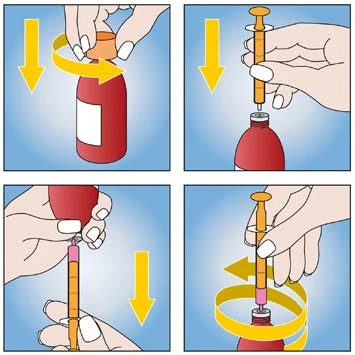
- To open the bottle, press down on the cap and turn it in the direction indicated by the arrows.
- Insert the oral dosing syringe into the neck of the bottle.
- Turn the bottle upside down, holding the oral dosing syringe securely, and pull the plunger until the required amount of medicine is drawn up.
- Turn the bottle back upright and gently remove the oral dosing syringe.
- To administer the suspension, place the tip of the syringe into the child's mouth and slowly push the plunger to empty the syringe. Adjust the speed of administration to match the child's swallowing rate.
After use, close the bottle with the cap. Then remove the plunger from the barrel of the oral dosing syringe, wash both parts with warm water, and allow them to dry. Store the oral dosing syringe out of sight and reach of children.
Some patients may experience mild digestive discomfort after taking MIG for children. If such symptoms occur, administer the medicine during meals.
If the patient feels that MIG for children is too strong or too weak, they should speak to their doctor.
Duration of treatment
This medicine is intended for short-term use only.
If it is necessary to use this medicine for longer than 3 days, or if symptoms worsen, consult a doctor.
Do not use MIG for children for longer than 3 days without consulting a doctor or dentist.
Overdose of MIG for children
MIG for children should be taken only as directed by a doctor or according to the dosing instructions in this leaflet. If pain relief appears insufficient, do not increase the dose without consulting a doctor.
If an overdose of MIG for children has been taken, or if a child accidentally ingests the medicine, always contact a doctor or go to the nearest hospital immediately for assessment of potential health risks and advice on appropriate actions.
Symptoms of overdose may include:
Symptoms of overdose may include nausea, stomach pain, vomiting (possibly with blood), headache, tinnitus, confusion, and nystagmus. Gastrointestinal bleeding may also occur. After ingestion of a large dose, drowsiness, feeling faint, chest pain, palpitations, loss of consciousness, seizures (especially in children), weakness, dizziness, blood in urine, low blood potassium levels, liver and kidney dysfunction, breathing difficulties (respiratory depression), low blood pressure, bluish-red discoloration of the skin and mucous membranes (cyanosis), cold sensation, and breathing problems may occur.
There is no specific antidote.
Missed dose of MIG for children
Do not take a double dose to make up for a missed dose.
If you have any further questions about the use of this medicine, consult your doctor or pharmacist.
4. Possible adverse effects
Like all medicines, this medicine can cause adverse effects, although not everyone will experience them.
Possible adverse effects
The adverse effects listed below include all adverse effects reported during the use of ibuprofen, including those reported during long-term treatment with high doses of ibuprofen in patients with rheumatic diseases. Adverse effects more frequent than very rare are those occurring during short-term use at daily doses not exceeding the maximum dose of 1200 mg ibuprofen for oral medicines and the maximum dose of 1800 mg ibuprofen for suppositories.
Regarding the adverse effects listed below, it should be noted that in most cases they are dose-dependent and show considerable individual variability.
The most commonly observed adverse effects are gastrointestinal disorders. Gastric and/or duodenal ulceration, perforation, or gastrointestinal bleeding may occur, sometimes leading to death, particularly in elderly patients (see section 2. "Warnings and precautions").
After administration of the medicine, nausea, vomiting, diarrhoea, flatulence, constipation, indigestion, abdominal pain, tarry stools, haematemesis (vomiting blood), inflammation of the oral mucosa with ulceration (ulcerative stomatitis), exacerbation of intestinal disorders, ulcerative colitis, and Crohn's disease have been reported (see section 2. "Warnings and precautions").
Gastritis (gastric mucosal inflammation) has been observed less frequently. The risk of gastrointestinal bleeding is particularly dependent on the dose used and the duration of treatment.
Treatment with NSAIDs has been associated with oedema, hypertension, and heart failure.
Use of medicines such as MIG dla dzieci may be associated with a small increased risk of myocardial infarction (heart attack) or stroke.
You should IMMEDIATELY STOP TAKING this medicine and seek medical help if the patient or child experiences any of the following adverse effects:
Not common: may affect up to 1 in 100 patients
- Symptoms of gastrointestinal bleeding such as severe upper abdominal pain, blood in stool and/or black tarry stools, vomiting blood or coffee-ground-like vomit.
Very rare: may affect up to 1 in 10,000 patients
- Symptoms of severe allergic reactions such as facial swelling, tongue swelling, laryngeal oedema with bronchospasm, dyspnoea (difficulty breathing), rapid heartbeat, sudden drop in blood pressure leading to life-threatening shock. These symptoms may occur even after a single dose of the medicine.
- Red, flat, non-elevated, target-like or circular skin lesions on the trunk, often with blisters in the centre, skin peeling, ulceration in the mouth, throat, nose, genital organs, and eyes. These severe skin reactions may be preceded by fever and influenza-like symptoms (exfoliative dermatitis, erythema multiforme, Stevens-Johnson syndrome, toxic epidermal necrolysis).
Frequency not known: frequency cannot be estimated from available data
- Widespread rash, high fever, swollen lymph nodes, and increased eosinophil count (a type of white blood cells) (DRESS syndrome).
- Red, scaly rash with subcutaneous nodules and blisters, mainly located in skin folds, trunk, and upper limbs, accompanied by fever. Symptoms usually appear at the beginning of treatment (acute generalised exanthematous pustulosis).
You should talk to your doctor and also read the instructions below if the patient or child experiences any of the following adverse effects:
Common: may affect up to 1 in 10 patients
- Gastrointestinal disturbances such as heartburn, abdominal pain, nausea, vomiting, flatulence, diarrhoea, constipation, and minor gastrointestinal blood loss, which in isolated cases may lead to anaemia.
Not common: may affect up to 1 in 100 patients - Hypersensitivity reactions with skin rash and itching, and asthma attacks (possibly accompanied by sudden drop in blood pressure): in such cases, you must immediately inform the doctor and discontinue MIG dla dzieci.
- Central nervous system disturbances such as headache, dizziness, insomnia, overstimulation, irritability, or fatigue.
- Visual disturbances: in such cases, treatment should be discontinued and the doctor informed.
- Gastric and/or duodenal ulcer disease, potentially with bleeding and perforation, inflammation of the oral mucosa with ulceration (ulcerative stomatitis), exacerbation of ulcerative colitis and Crohn's disease, gastritis (gastric mucosal inflammation).
- Various skin rashes.
Rare: may affect up to 1 in 1,000 patients
- Tinnitus, hearing loss.
Very rare: may affect up to 1 in 10,000 patients
-
Asthma, abnormal narrowing of the airway muscles causing breathing difficulties (bronchospasm), shortness of breath (dyspnoea).
-
Exacerbation of infection-related inflammation (e.g. necrotising fasciitis) has been reported during treatment with certain anti-inflammatory medicines (non-steroidal anti-inflammatory drugs, including MIG dla dzieci).
Aseptic meningitis (inflammation of the meninges not caused by infection) has been observed, with symptoms such as severe headache, nausea, vomiting, fever, neck stiffness, and altered consciousness. Patients with immunological disorders (systemic lupus erythematosus, mixed connective tissue disease) appear to be at higher risk.
If signs of infection (e.g. redness, swelling, excessive warmth, pain, fever) appear or worsen during treatment with MIG dla dzieci, you must immediately contact a doctor. -
Blood disorders (anaemia, leukopenia, thrombocytopenia, pancytopenia, agranulocytosis). Initial symptoms may include: fever, sore throat, oral mucosal ulceration, flu-like symptoms, profound fatigue, nosebleeds, and skin bleeding. In such cases, the medicine must be immediately discontinued and medical advice sought. Do not attempt self-treatment with analgesics or antipyretics.
-
Severe generalised hypersensitivity reactions.
-
Psychotic reactions, depression.
-
Palpitations, heart failure, myocardial infarction (heart attack).
-
High blood pressure (hypertension), vasculitis (inflammation of blood vessels).
-
Oesophagitis, pancreatitis, formation of fibrous strictures in the small and large intestine (intestinal fibrous strictures).
-
Liver function disorders, liver damage, especially during long-term treatment, liver failure, acute hepatitis. During prolonged treatment, liver function tests should be performed regularly.
-
Hair loss (alopecia).
-
Increased fluid retention (oedema), particularly in patients with hypertension or impaired kidney function, nephrotic syndrome (fluid retention [oedema] and proteinuria), inflammatory kidney disease (interstitial nephritis), which may be accompanied by acute renal failure. Kidney damage (papillary necrosis) and increased serum uric acid levels may also occur. Reduced urine output, fluid accumulation in tissues (oedema), and general malaise may indicate impaired kidney function or even renal failure. If any of the above symptoms occur or worsen, MIG dla dzieci should be discontinued and medical advice sought immediately.
Frequency not known: frequency cannot be estimated from available data
- Chest pain, which may be a symptom of a potentially serious allergic reaction called Kounis syndrome.
- Skin becomes sensitive to light.
In exceptional cases, during varicella (chickenpox) infection, severe skin infections and soft tissue complications may occur (see also "very rare" regarding "exacerbation of infection-related inflammation").
Reporting of adverse effects
If any adverse effects occur, including any not listed in this leaflet, inform your doctor, pharmacist, or nurse. Adverse effects can be reported directly to the Department of Monitoring Adverse Drug Reactions of the Office for Registration of Medicinal Products, Medical Devices and Biocidal Products
Al. Jerozolimskie 181C
02-222 Warsaw
Tel.: +48 22 49 21 301
Fax: +48 22 49 21 309
Website: https://smz.ezdrowie.gov.pl
Adverse effects can also be reported to the marketing authorisation holder.
Reporting adverse effects helps provide more information on the safety of the medicine.
5. How to store MIG dla dzieci
Keep this medicine out of sight and reach of children.
Do not use this medicine after the expiry date stated on the bottle and the cardboard
package following the abbreviation EXP. The expiry date refers to the last day of the stated month.
This medicine does not require any special storage conditions.
Shelf life after first opening the bottle: 6 months; do not store at temperatures above 25°C.
Medicines must not be disposed of via wastewater or household waste. Ask your pharmacist how to dispose of medicines no longer required. Such measures help protect the environment.
6. Package Contents and Other Information
What MIG for Children Contains
The active substance is ibuprofen.
Each 1 ml of oral suspension contains 20 mg of ibuprofen.
Other ingredients are:
Sodium benzoate (E 211); anhydrous citric acid; sodium citrate; sodium saccharin; sodium chloride; hypromellose 15 cP; xanthan gum; liquid maltitol (E 965); glycerol (E 422); strawberry flavour (containing substances identical to natural flavours, natural flavours, corn maltodextrin, triethyl citrate [E 1505], propylene glycol and benzyl alcohol); purified water.
What MIG for Children Looks Like and Contents of the Pack
MIG for Children is a white or almost white, viscous oral suspension.
MIG for Children is available in 100 ml or 200 ml bottles of oral suspension.
An oral syringe (with 0.5 ml graduations up to 5 ml) is included with the package.
Not all pack sizes may be marketed.
Marketing Authorisation Holder and Manufacturer
Marketing Authorisation Holder
Berlin-Chemie AG (Menarini Group)
Glienicker Weg 125
12489 Berlin
Germany
Manufacturers
Berlin-Chemie AG
Glienicker Weg 125
12489 Berlin
Germany
Laboratorios Alcalá Farma, S.L.
Avenida de Madrid, 82
28802 Alcalá de Henares - Madrid
Spain
For further information about this medicinal product, please contact the local representative of the Marketing Authorisation Holder:
Berlin-Chemie/Menarini Polska Sp. z o.o.
Tel.: +48 22 566 21 00
Fax: +48 22 566 21 01
This medicinal product is authorised in the Member States of the European Economic Area under the following names:
Bulgaria МИГ за деца
Estonia IBUSTAR
Germany Eudorlin Ibuprofen 20 mg/ml Suspension zum Einnehmen
Hungary Ibustar 20mg/ml belsőleges szuszpenzió gyermekek részére
Latvia Ibustar bērniem 100 mg/5 ml suspensija iekšķīgai lietošanai
Lithuania Ibustar 20mg / ml oral suspension, for children
Poland MIG dla dzieci
Romania MIG pediatric 20 mg/ml suspensie orală
Slovakia MIG Junior 2%