Midazolam kalceks
PolandTable of Contents
- Package leaflet: Information for the user
- 1. What Midazolam Kalceks is and what it is used for
- 2. Important information before receiving Midazolam Kalceks
- 4. Possible adverse reactions
- 5. How to store Midazolam Kalceks
- 6. Contents of the package and other information
- Information intended exclusively for medical professionals:
Package leaflet: Information for the user
Midazolam Kalceks, 1 mg/ml, solution for injection / for infusion
Midazolam Kalceks, 5 mg/ml, solution for injection / for infusion
Midazolamum
Please read carefully all the information in this leaflet before this medicine is administered, as it contains
important information for the patient.
- Keep this leaflet, as you may need to read it again.
- If you have any further questions, please consult your doctor or nurse.
- If you experience any adverse reactions, including any not listed in this leaflet, inform your doctor or nurse. See section 4.
Table of contents
- What Midazolam Kalceks is and what it is used for
- Important information before receiving Midazolam Kalceks
- How to use Midazolam Kalceks
- Possible side effects
- How to store Midazolam Kalceks
- Contents of the pack and other information
1. What Midazolam Kalceks is and what it is used for
Midazolam belongs to a group of medicines called benzodiazepines (sedatives). It is a short-acting medicine used to induce sedation (a state of calmness, drowsiness, or sleep) and to relieve anxiety symptoms and reduce muscle tension. This medicine is used for:
- Inducing mild sedation (a state of calmness or drowsiness while maintaining consciousness) in adults and children.
- Inducing sedation in adults and children in intensive care units.
- Anaesthesia in adults (used before and during induction of anaesthesia, either alone or in combination with other anaesthetic medicines).
- Use before induction of anaesthesia in children.
2. Important information before receiving Midazolam Kalceks
When not to use Midazolam Kalceks:
- if the patient is allergic to midazolam, other benzodiazepines, or any of the other ingredients of this medicine (listed in section 6),
- if the patient has severe respiratory disorders and is due to undergo light sedation.
Warnings and precautions
Before receiving Midazolam Kalceks, talk to your doctor or
nurse if:
- the patient is over 60 years old,
- the patient suffers from chronic or debilitating illness (e.g. chronic diseases of the respiratory, renal, hepatic or cardiac systems),
- the patient has muscle weakness (a neuromuscular disorder characterised by reduced muscle strength),
- the patient has previously abused alcohol or drugs,
- the patient is taking other medicines, including those not prescribed by the attending physician (see section “Midazolam Kalceks and other medicines”),
- if the patient has temporary breathing interruptions during sleep,
- the patient is pregnant or suspects she may be pregnant.
Midazolam Kalceks should be administered only in healthcare facilities equipped with resuscitation equipment appropriate for the patient's age and body weight. Administration of midazolam may reduce myocardial contractility (the heart muscle's ability to contract) and cause apnoea (interruptions in breathing). Serious adverse reactions affecting the cardiovascular and respiratory systems, such as respiratory depression (slowed or shallow breathing), apnoea, respiratory arrest and/or circulatory arrest, have been rarely observed. To avoid these events, the medicine should be administered slowly and at the lowest possible dose.
Particular caution should be exercised when administering midazolam to infants and children. Inform the doctor if the child has cardiovascular or respiratory disorders. The child will then be monitored and the dose adjusted accordingly.
Infants under 6 months of age undergoing sedation in intensive care units are more susceptible to respiratory disturbances; therefore, dosing will be increased very gradually, and respiratory rate and blood oxygen saturation will be closely monitored.
When midazolam is used for premedication (to induce relaxation, calmness and drowsiness before administration of an anaesthetic), the patient's response will be carefully assessed to ensure appropriate dosing, as sensitivity to the drug varies among individuals. The use of midazolam is not recommended in neonates and children under 6 months of age.
Paradoxical reactions and anterograde amnesia (loss of memory of recent events) have been reported following administration of midazolam (see section 4).
Long-term treatment
If midazolam is used for a prolonged period, the patient may develop tolerance (reduced effectiveness of midazolam) or drug dependence.
Following prolonged treatment (e.g. in intensive care units), withdrawal symptoms may occur, including headache, diarrhoea, muscle pain, anxiety, tension, psychomotor agitation, disorientation, irritability, sleep disturbances, mood changes, hallucinations and seizures. In severe cases, depersonalisation, numbness and tingling of limbs, hypersensitivity to light, noise and physical contact may occur. To prevent these adverse effects, the doctor will gradually reduce the dose of the medicine.
Midazolam Kalceks and other medicines
Inform your doctor or nurse about all medicines currently taken by the patient, those taken recently, and any medicines the patient plans to take.
This is very important because using more than one medicine at the same time may enhance or reduce the effects of the medicines taken.
In particular, inform your doctor or nurse if the patient is taking any of the following medicines:
- anxiolytics (used for anxiety or to help sleep),
- sedatives (inducing calmness or causing drowsiness),
- hypnotics (sleeping pills),
- antidepressants (medicines used to treat depression, e.g. nefazodone),
- opioid analgesics (very strong painkillers, e.g. fentanyl),
- anaesthetics (e.g. propofol),
- certain antihistamines (medicines used to treat allergies),
- antifungal medicines (ketoconazole, voriconazole, fluconazole, itraconazole, posaconazole),
- antibiotics (erythromycin, clarithromycin, telithromycin, roxithromycin),
- medicines affecting blood pressure, calcium channel blockers such as diltiazem, verapamil,
- medicines used to treat HIV infection (human immunodeficiency virus) (efavirenz or saquinavir, lopinavir and other protease inhibitors),
- medicines used to treat hepatitis C virus infection (simeprevir, boceprevir and telaprevir),
- antiepileptic medicines (carbamazepine, phenytoin or valproic acid),
- atorvastatin (used to treat high cholesterol levels),
- rifampicin (used to treat mycobacterial infections, e.g. tuberculosis),
- ticagrelor (used to prevent heart attack),
- aprepitant, netupitant, casopitant (used to prevent nausea and vomiting),
- certain anticancer medicines (e.g. imatinib, lapatinib, idelalisib, vemurafenib),
- everolimus, cyclosporine (used to prevent rejection of transplanted organs),
- propiverine (used for urinary incontinence),
- herbal medicines (e.g. St John’s wort, Ginkgo biloba or ginseng).
Concomitant use of midazolam and opioid medicines (strong painkillers, medicines used in substitution therapy and some cough medicines) increases the risk of drowsiness, breathing difficulties (respiratory depression), coma and potentially life-threatening effects. Therefore, concomitant use should only be considered when no other treatment options are available.
If your doctor prescribes midazolam together with opioid medicines, the doctor should limit the dose and duration of concomitant treatment.
Inform your doctor about all opioid medicines being taken and strictly follow the doctor’s dosing instructions. It may be helpful to inform friends or family members so they are aware of the symptoms listed above. If such symptoms occur, contact your doctor immediately.
Surgical procedures
If the patient is to receive an inhaled anaesthetic (one that is breathed in) during surgery or dental treatment, it is important to inform the doctor or dentist that the patient has received Midazolam Kalceks.
Midazolam Kalceks and alcohol
Alcohol may intensify the calming (sedative) effect of midazolam; therefore, the patient should avoid consuming alcohol.
Pregnancy and breastfeeding
If the patient is pregnant or breastfeeding, suspects she may be pregnant, or is planning to become pregnant, she should consult her doctor before taking this medicine. The doctor will decide whether the patient should receive the medicine.
If the patient has received Midazolam Kalceks, she should not breastfeed for the next 24 hours. This is because midazolam may pass into human milk.
Driving and operating machinery
Midazolam has a significant effect on the ability to drive and operate machinery.
This medicine may cause drowsiness, memory disturbances, and affect the patient’s concentration and coordination. This may in turn affect performance of tasks requiring precision, such as driving and operating machinery. After receiving midazolam, the patient should not drive or operate machinery until the effects of the medicine have completely worn off. The doctor will decide when the patient may resume these activities. After the procedure, the patient should return home accompanied by a responsible adult.
Inadequate sleep or consumption of alcohol increases the likelihood of impaired alertness and attention.
Midazolam Kalceks contains sodium
Midazolam Kalceks, 1 mg/ml
In a daily dose of up to 6.5 ml, this medicine contains less than 1 mmol (23 mg) of sodium, meaning the medicine is considered "sodium-free". If the administered daily dose is 6.6 ml or more (corresponding to more than 1 mmol of sodium), the following should be considered: The medicine contains 3.5 mg of sodium (main component of table salt) in each ml of solution. This corresponds to 0.18% of the maximum recommended daily sodium intake in the diet of adults.
Midazolam Kalceks, 5 mg/ml
In a daily dose of up to 7.3 ml, this medicine contains less than 1 mmol (23 mg of sodium), meaning the medicine is considered "sodium-free". If the administered daily dose is 7.4 ml or more (corresponding to more than 1 mmol of sodium), the following should be considered: The medicine contains 3.15 mg of sodium (main component of table salt) in each ml of solution. This corresponds to 0.16% of the maximum recommended daily sodium intake in the diet of adults.
3. How to use Midazolam Kalceks
This medicine should be administered only by experienced doctors in a facility equipped with equipment for monitoring and supporting the respiratory and circulatory systems, or by personnel trained in recognition and management of possible adverse events.
Dosage and route of administration
The appropriate dose for a given patient will be determined by the doctor. Doses vary and depend on the planned treatment and desired level of sedation. The dose depends on body weight, age, general health status of the patient, concomitant medications, response to the medicine, and whether the patient will require administration of other medicines simultaneously.
If the patient is to receive strong analgesics, they will be administered first, followed by Midazolam Kalceks at an appropriately adjusted dose.
This medicine may be injected directly into the patient's vein (intravenously), injected into muscle (intramuscularly), or administered rectally.
Children and infants
In infants and neonates under 6 months of age, midazolam is indicated only for sedation in intensive care units. The medicine should be administered gradually into a vein.
In children aged 12 years and younger, midazolam is usually administered intravenously. When used for premedication, it may be administered rectally (into the rectum).
Accidental overdose of Midazolam Kalceks
The medicine is administered by a doctor or nurse.
If the patient accidentally receives too much midazolam, this may lead to drowsiness, ataxia (impaired coordination of body movements), dysarthria (speech disturbances), nystagmus (involuntary eye movements), loss of reflexes, apnoea (cessation of breathing), hypotension (low blood pressure), respiratory-circulatory depression and coma. In case of overdose, careful monitoring of vital signs, symptomatic treatment of respiratory and circulatory disturbances, and administration of a benzodiazepine antagonist may be required.
Discontinuation of Midazolam Kalceks
Abrupt discontinuation of treatment may cause withdrawal symptoms such as headache, muscle pain, anxiety, tension, psychomotor agitation, disorientation, mood swings, hallucinations and seizures, rebound insomnia, irritability. The risk of withdrawal symptoms is higher with abrupt cessation of treatment; therefore, gradual dose reduction is recommended.
If you have any further doubts regarding the use of this medicine, consult your doctor, pharmacist or nurse.
4. Possible adverse reactions
Like any medicine, this medicine can cause adverse reactions, although not everyone will experience them.
If the patient experiences any of the listed adverse reactions, tell the doctor about it. These may be life-threatening reactions and may require urgent treatment:
- Anaphylactic shock (a life-threatening allergic reaction). Symptoms may include sudden rash, itching or hives (urticaria), swelling of the face, lips, tongue or other parts of the body. There may also be difficulty breathing, wheezing or trouble breathing, pale skin, weak and rapid pulse, or a feeling of fainting. Additionally, chest pain may occur, which could be a symptom of a serious allergic reaction called Kounis syndrome.
- Heart attack (cardiac arrest). Symptoms may include chest pain, which may radiate to the neck and arms and down to the left arm.
- Breathing difficulties or complications (sometimes leading to respiratory arrest).
- Choking and sudden airway obstruction (laryngospasm).
Life-threatening adverse reactions occur more frequently in adults over 60 years of age and
in individuals with breathing difficulties and heart disease, especially if the medicine is injected too quickly
or in too high a dose.
Other adverse reactions:
The following adverse reactions have been reported, but their frequency cannot be estimated from
available data:
Immune system disorders: generalized allergic reactions (skin reactions, cardiac and circulatory reactions, wheezing).
Mental disorders: confusion, disorientation, emotional and mood disturbances, changes in libido.
Paradoxical reactions such as motor restlessness, psychomotor agitation, irritability, nervousness, muscle spasms and tremors, hostility, hallucinations, anger, aggression, anxiety, nightmares, unusual dreams, illusions, psychoses, inappropriate behavior, and other adverse behavioral effects, episodic excitement and acts of violence have been observed. These reactions were mainly observed when the medicine was injected too quickly or in too high a dose. The risk of developing these symptoms is higher in children and elderly patients.
Dependence: midazolam may lead to physical dependence, even when used at therapeutic doses. To avoid withdrawal symptoms, including seizures, which may occur after prolonged use of midazolam, the dose should be gradually reduced (see section 2).
Nervous system disorders: drowsiness and prolonged sedation, reduced alertness, lethargy, headache, dizziness, impaired muscle coordination. Transient memory loss has also been reported. Its duration depends on the dose administered and may also occur after treatment has ended. In isolated cases, memory loss persisted for a prolonged period. Seizures have been observed in premature infants and newborns.
Cardiac disorders: severe adverse reactions such as low blood pressure, slowed heart rate, and vasodilation (e.g. flushing of the face and neck, fainting, and headache) have been observed.
Gastrointestinal disorders: nausea, vomiting, constipation, dry mouth.
Skin disorders: skin rash, allergic reaction, itching.
General disorders and administration site conditions: fatigue, erythema, skin swelling, blood clots in blood vessels, and pain at the injection site (erythema, thrombophlebitis, thrombosis).
An increased risk of falls and bone fractures has been observed in elderly patients taking benzodiazepines, particularly in elderly individuals who are also taking other sedative medicines (including alcoholic beverages).
There is a higher likelihood of adverse reactions occurring in patients with severe renal function impairment.
Reporting of adverse reactions
If any adverse reactions occur, including any not listed in this leaflet, inform the anaesthesiologist or another doctor. Adverse reactions can be reported directly to the Department of Monitoring Adverse Reactions of Medicinal Products at the Office for Registration of Medicinal Products, Medical Devices and Biocidal Products
Al. Jerozolimskie 181C
02-222 Warsaw
Tel.: + 48 22 49 21 301
Fax: + 48 22 49 21 309
Website: https://smz.ezdrowie.gov.pl
Adverse reactions can also be reported to the marketing authorization holder.
Reporting adverse reactions helps to provide more information on the safety of the medicine.
5. How to store Midazolam Kalceks
No special temperature storage requirements for the medicinal product.
Store ampoules in the outer packaging to protect from light.
Keep the medicine out of sight and reach of children.
After opening the ampoule, the medicinal product should be used immediately.
Chemical and physical stability of diluted solutions has been demonstrated for 24 hours
at 25 °C and for 3 days at 2 °C - 8 °C with the following infusion solutions: 0.9% sodium chloride, 5% and 10% glucose, Ringer's solution and Hartmann's solution.
From a microbiological point of view, the product should be used immediately after dilution. If not used immediately, the responsibility for the storage conditions and duration prior to use lies with the user, provided that the storage period does not exceed 24 hours at 2 °C to 8 °C, unless dilution has been carried out under controlled and validated aseptic conditions.
Do not use the medicinal product after the expiry date stated on the cardboard box after "Expiry date (EXP)" and on the ampoule after "EXP". The expiry date refers to the last day of the stated month.
Medicines must not be disposed of via wastewater or household waste. Ask your pharmacist how to dispose of medicines no longer required. These measures will help protect the environment.
6. Contents of the package and other information
What Midazolam Kalceks contains
- The active substance is midazolam.
Midazolam Kalceks, 1 mg/ml
1 ml of solution contains 1 mg of midazolam.
One 5 ml ampoule contains 5 mg of midazolam.
Midazolam Kalceks, 5 mg/ml
1 ml of solution contains 5 mg of midazolam.
One 1 ml ampoule contains 5 mg of midazolam.
One 3 ml ampoule contains 15 mg of midazolam.
One 10 ml ampoule contains 50 mg of midazolam.
- The excipients are: hydrochloric acid concentrated, sodium chloride, sodium hydroxide (for pH adjustment), water for injections.
What Midazolam Kalceks looks like and contents of the pack
A clear, colourless solution for injection/infusion in ampoules made of colourless glass type I,
with an OPC break ring, containing 1 ml, 3 ml or 10 ml of solution (for 5 mg/ml)
and 5 ml of solution (for 1 mg/ml).
Pack sizes: 5 or 10 ampoules.
Not all pack sizes may be marketed.
Marketing Authorisation Holder and Manufacturer/Importer
AS KALCEKS
Krustpils iela 71E
1057 Rīga
Latvia
Tel.: +371 67083320
E-mail: [email protected]
Information intended exclusively for medical professionals:
Instructions for use
Midazolam Kalceks is compatible with the following infusion solutions:
- 0.9% sodium chloride solution
- 5% glucose solution
- 10% glucose solution
- Ringer's solution
- Hartmann's solution
For intravenous infusion administration, the contents of Midazolam Kalceks ampoules should be diluted
with one of the solutions listed above at a ratio of 15 mg midazolam per 100 to 1,000 mL
of infusion solution.
Midazolam Kalceks solution for injection / for infusion must not be diluted in 6% Macrodex
in glucose solution.
Midazolam Kalceks solution for injection / for infusion must not be mixed with alkaline
injection solutions. Midazolam precipitates in solutions containing bicarbonates.
To avoid potential incompatibility, Midazolam Kalceks solution for injection / for infusion must not
be mixed with any other solutions except those listed above.
Midazolam Kalceks solution for injection / for infusion is intended for single use only.
Before administration, visually inspect the solution. Only use solutions that are clear and free of
visible particulate matter.
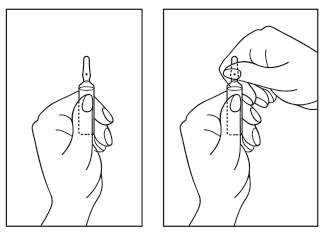
Instructions for opening the ampoule:
- Position the ampoule so that the coloured dot is at the top. If any solution is present in the upper part of the ampoule, gently tap with a finger to ensure all solution collects in the lower part of the ampoule.
- Use both hands to open; hold the lower part of the ampoule in one hand and snap off the top part with the other hand in the direction away from the coloured dot (see images below).