Midazolam accord
Poland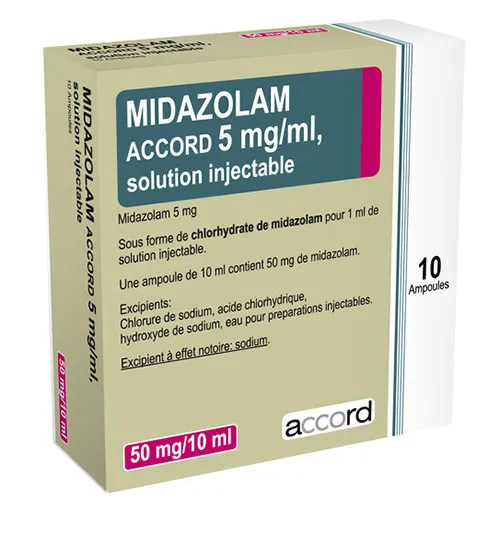
Table of Contents
Package leaflet: Information for the patient
Midazolam Accord, 1 mg/ml, solution for injection or infusion
Midazolam Accord, 5 mg/ml, solution for injection or infusion
Midazolamum
Please read all of this leaflet carefully before the medicine is administered, because it contains important information for the patient.
- Keep this leaflet, as you may need to read it again.
- If you have any further questions, please ask your doctor or nurse.
- This medicine has been prescribed for a specific individual. Do not pass it on to others. It may harm someone else, even if their symptoms are the same.
- If you experience any adverse effects, including any not listed in this leaflet, tell your doctor or nurse. See section 4.
Table of contents:
- What Midazolam Accord is and what it is used for
- Important information before receiving Midazolam Accord
- How Midazolam Accord will be given
- Possible side effects
- How to store Midazolam Accord
- Contents of the pack and other information
1. What Midazolam Accord is and what it is used for
Midazolam Accord, 1 mg/ml; 5 mg/ml, solution for injection or infusion contains midazolam, which belongs to a group of medicines called benzodiazepines.
It is a short-acting medicine used to induce sedation (a deep state of calmness, drowsiness, or sleep) and to relieve anxiety symptoms and reduce muscle tension.
This medicine is used for:
- inducing mild sedation (a state of deep calmness or drowsiness while maintaining consciousness during medical examinations and procedures) in adults and children,
- inducing sedation in adults and children in intensive care units,
- anaesthesia in adults, either alone or in combination with other anaesthetic agents,
- premedication to induce relaxation, calmness, and drowsiness before anaesthesia induction in adults and children.
2. Important information before receiving Midazolam Accord
When not to give Midazolam Accord to the patient
- if the patient is allergic (hypersensitive) to midazolam or to any of the other ingredients of this medicine listed in section 6,
- if the patient is allergic to other benzodiazepines such as diazepam or nitrazepam,
- if the patient has severe breathing problems and is to undergo mild sedation.
Do not administer midazolam if any of the above apply. If you are unsure, tell your doctor or nurse before the medicine is given.
Warnings and precautions
Adults
Before receiving this medicine, inform your doctor or nurse if:
- the patient is over 60 years of age,
- the patient has chronic illness (e.g. chronic respiratory, kidney, liver, or heart disease) or is debilitated (the patient has a condition causing them to be very weak, exhausted, and lacking energy),
- the patient has sleep apnoea syndrome (cessation of breathing during sleep); such patients will be closely monitored,
- the patient suffers from muscle weakness (a neuromuscular disorder characterised by reduced muscle strength),
- the patient currently misuses or has a history of alcohol misuse. Alcohol may significantly enhance the clinical effects of midazolam, including deep sedation, which may lead to coma or death,
- the patient regularly uses recreational drugs (medicines used for non-medical purposes) or has a history of drug misuse,
- the patient is pregnant or suspects she may be pregnant (see section "Pregnancy and breastfeeding").
Children and infants
If this medicine is to be given to a child:
- It is particularly important to inform the doctor or nurse if the child has cardiovascular diseases. The child will be closely monitored and the dose adjusted accordingly.
- Children should be closely monitored; in infants and children under 6 months of age, monitoring should include respiratory rate and haemoglobin oxygen saturation.
If any of the above situations apply to the child, inform the doctor or nurse.
Midazolam Accord and other medicines
Tell your doctor or nurse about all medicines the patient is currently taking or plans to take, including herbal medicines.
This is very important, as taking more than one medicine at the same time may increase or decrease the effects of the medicines.
In particular, inform your doctor or nurse if the patient is taking any of the following medicines:
- sedatives (used for anxiety and to aid sleep),
- sleeping pills,
- hypnotics (causing drowsiness and calmness),
- antidepressants or antipsychotics (used to treat depression or schizophrenia),
- opioid painkillers,
- cough medicines (such as those containing codeine),
- antihistamines (used to treat allergies),
- antifungal medicines (ketoconazole, voriconazole, fluconazole, itraconazole, posaconazole),
- macrolide antibiotics (such as erythromycin, clarithromycin, or roxithromycin),
- medicines used to treat high blood pressure and heart conditions (such as diltiazem, verapamil, and methyldopa),
- medicines used to treat HIV infection (efavirenz or protease inhibitors such as saquinavir),
- medicines used to treat hepatitis C virus infection (protease inhibitors such as boceprevir and telaprevir),
- a medicine used to treat high cholesterol levels (atorvastatin),
- a medicine used to treat mycobacterial infections, e.g. tuberculosis (rifampicin),
- a medicine used to prevent heart attack (ticagrelor),
- St John's wort (Hypericum perforatum),
- carbamazepine (used to treat epilepsy and bipolar disorder),
- phenytoin (used to treat epilepsy),
- aprepitant (used to prevent nausea or vomiting).
If any of the above apply to the patient or if the patient has any doubts, inform the doctor or pharmacist before receiving midazolam.
Surgical procedures
If the patient is to receive an anaesthetic before surgery or dental treatment (including inhaled anaesthetics), it is important to inform the doctor or dentist that the patient has received midazolam.
Midazolam Accord and alcohol
The patient must not drink alcohol while taking midazolam, as alcohol may greatly enhance the sedative effect of Midazolam Accord and cause breathing problems.
Pregnancy and breastfeeding
If the patient is pregnant, suspects she may be pregnant, or plans to become pregnant, she should consult her doctor before taking this medicine. The doctor will decide whether this medicine is suitable.
Midazolam used during early pregnancy may harm the unborn child. Administering high doses near the end of pregnancy, during labour or caesarean section, may cause the mother to be at risk of aspiration, and the newborn may experience cardiac arrhythmia, reduced muscle tone (hypotonia), feeding difficulties, low body temperature, and breathing difficulties (respiratory depression). With prolonged use near the end of pregnancy, the baby may develop physical dependence, and withdrawal symptoms may occur after birth.
Midazolam may pass into breast milk; therefore, women should not breastfeed for 24 hours after taking the medicine.
Driving and using machines
This medicine may cause drowsiness, dizziness, memory impairment, reduced concentration, and impaired coordination. These effects may affect performance of tasks requiring precision, such as driving and operating machinery. The patient should not drive or operate machinery until the effects of the medicine have completely worn off. Your doctor will advise when it is safe to resume these activities.
Do not drive until you know how this medicine affects you.
Talk to your doctor or pharmacist if you are unsure whether it is safe to drive while taking this medicine.
Inadequate sleep or alcohol consumption increases the likelihood of impaired alertness and attention.
After treatment, the patient should go home accompanied by a responsible adult.
Midazolam Accord contains sodium
This medicinal product contains less than 1 mmol of sodium (23 mg) per ampoule, i.e. the medicine is considered "sodium-free".
3. How the medicine Midazolam Accord will be administered
Midazolam should be administered only by experienced doctors or nurses. The medicine
should be given in a healthcare facility (hospital, clinic) equipped with equipment for
monitoring and supporting the respiratory and circulatory systems, and by personnel trained in
recognizing and managing possible adverse reactions.
What dose of midazolam will be given
The appropriate dose for each patient will be determined by the doctor. Doses vary significantly and depend on
the planned treatment and the desired level of sedation. The dose in a specific case depends
on the patient's body weight, age, general health status, concomitant medications, response to
midazolam, and whether additional medicines will be administered during midazolam administration.
If the patient is to receive strong painkillers, these will be given first, followed by midazolam at an appropriately adjusted dose.
Method of administration
Midazolam Accord can be administered in four different ways:
- by slow injection into a vein (intravenous injection),
- through a special tube inserted into a vein (intravenous infusion),
- by injection into muscle (intramuscular injection),
- rectally.
After completion of treatment, the patient should be accompanied home by a responsible
adult.
Children and infants
- In infants and children under 6 months of age, midazolam use is indicated only for sedation in an intensive care unit. The dose should be administered gradually by intravenous injection.
- In children aged 12 years and younger, the medicine is usually given intravenously. When used for premedication (to induce relaxation, calmness, or drowsiness before administration of an anaesthetic), the medicine may be given rectally.
Accidental overdose of Midazolam Accord
The medicine will be administered by a doctor or nurse.
If the patient accidentally receives an overdose, this may lead to:
- drowsiness,
- ataxia (lack of coordination) and loss of reflexes,
- dysarthria (speech disturbances),
- nystagmus (involuntary eye movements),
- low blood pressure (hypotension),
- apnoea and respiratory-circulatory depression (i.e. slowing or shallowing of breathing and reduced heart rate), and coma.
Discontinuation of Midazolam Accord treatment
With prolonged use of midazolam (over a long period), the patient may:
- develop tolerance to midazolam. The medicine becomes less effective and works less well.
- develop dependence and withdrawal symptoms (see below).
The doctor will gradually reduce the dose of the medicine to avoid these effects.
During midazolam administration, the following reactions have been observed, particularly in children and elderly patients: psychomotor agitation, excitement, irritability, involuntary movements, hyperactivity, nervousness, hostility, hallucinations, anger, aggression, anxiety, nightmares, illusions (seeing or hearing things that are not real), psychoses (loss of contact with reality), and inappropriate behaviour, episodes of excitement and acts of violence (these reactions are also known as paradoxical reactions and differ from the typically expected effects).
If such symptoms occur, the doctor may consider discontinuing midazolam treatment.
Withdrawal symptoms:
Benzodiazepines, such as Midazolam Accord, may cause dependence if used for a long time (e.g. in intensive care units). This means that if treatment with the medicine is stopped or the dose is reduced too quickly, withdrawal symptoms may occur, including:
- headaches
- diarrhoea
- muscle pain
- anxiety, tension, psychomotor agitation, disorientation, irritability
- inability to sleep (insomnia)
- mood changes
- hallucinations (seeing or hearing things that are not there)
- seizures.
In severe cases of withdrawal, the following may occur: feeling of detachment from reality,
numbness and tingling in the limbs (e.g. hands and feet), sensitivity to light, noise, and touch.
4. Possible adverse reactions
Like all medicines, this medicine can cause adverse reactions, although not everyone will experience them.
The adverse reactions listed below occurred at an unknown frequency.
If any of the adverse reactions listed below occur in the patient, MIDAZOLAM ACCORD TREATMENT MUST BE DISCONTINUED IMMEDIATELY and the doctor must be informed immediately. These may be life-threatening reactions requiring urgent treatment.
- Anaphylactic shock (a life-threatening allergic reaction). Symptoms include sudden rash, itching or hives; swelling of the face, lips, tongue or other parts of the body. There may also be shortness of breath, wheezing or difficulty breathing, or pale skin, weak and rapid pulse, or feeling faint. Additionally, chest pain may occur, which could be a symptom of a serious allergic reaction called Kounis syndrome.
- Heart attack (myocardial infarction). Symptoms include chest pain, which may radiate to the neck and arms, and then down the left arm.
- Breathing difficulties or complications (sometimes leading to respiratory arrest)
- Choking and sudden airway obstruction (laryngospasm)
Life-threatening incidents occur more frequently in adults over 60 years of age and in patients with respiratory insufficiency or impaired cardiac muscle function, especially if the medicine is injected too rapidly or if the dose administered is too high.
Other adverse reactions
Immune system disorders
- General allergic reactions (skin reactions, cardiac and cardiovascular system reactions, wheezing)
Effects on behaviour:
- Psychomotor agitation, restlessness, irritability, nervousness, anxiety
- Hostility, anger, aggression or acts of violence
- Excitation
- Hyperactivity, changes in libido
- Inappropriate behaviour
Psychiatric and nervous system disorders
- Confusion, disorientation
- Emotional and mood disturbances
- Involuntary movements
- Nightmares, unusual dreams
- Hallucinations (seeing or hearing things that do not exist)
- Psychoses (loss of contact with reality)
- Drowsiness and prolonged sedation
- Reduced alertness
- Dizziness
- Headache
- Difficulty coordinating muscle movements
- Seizures in preterm infants and newborns
- Temporary memory loss. The duration of memory loss depends on the length of treatment and the dose used. Amnesia may occur after discontinuation of treatment. In isolated cases, it may persist for a long time.
- Drug dependence, misuse
- Excitation, anxiety, anger or aggression. Uncontrolled muscle spasms or muscle tremors may also occur. These reactions may occur after administration of too high a dose of the medicine and (or) too rapid injection. The risk of developing these symptoms is higher in children and elderly patients.
Cardiovascular disorders
- Low blood pressure, which may cause dizziness or fainting
- Slowed heart rate
- Flushing of the face and neck
- Fainting
Respiratory disorders
- Shallow breathing
- Hiccups
Gastrointestinal disorders
- Nausea or vomiting
- Constipation
- Dry mouth
Skin and subcutaneous tissue disorders
- Skin redness (rash)
- Itchy skin lesions (urticaria)
- Itching of the skin
Muscle disorders
- Muscle spasms and tremors (which cannot be controlled)
Reactions at the injection site
- Redness
- Swelling of the skin
- Blood clots in blood vessels or pain at the injection site
Injuries
- In elderly patients taking benzodiazepines, an increased risk of falls and bone fractures has been observed. This risk is greater in elderly patients and in those taking other sedative medicines (including alcohol).
General disorders
- Fatigue
Elderly patients
The likelihood of life-threatening adverse reactions increases in patients over 60 years of age and in those with respiratory insufficiency or impaired cardiac muscle function, particularly if the medicine is administered too rapidly or in high doses.
Patients with severe kidney disease
In patients with severe kidney disease, there is an increased likelihood of adverse reactions occurring.
If any adverse reactions become severe, worsen, or if an adverse reaction not listed in this leaflet occurs, inform the doctor or nurse.
Reporting adverse reactions
If any adverse reactions occur, including any not listed in this leaflet, inform the doctor or nurse. Adverse reactions can be reported directly to the responsible entity or to the Department of Monitoring Adverse Drug Reactions of the Office for Registration of Medicinal Products, Medical Devices and Biocidal Products
Al. Jerozolimskie 181C
02-222 Warsaw
Tel: +48 22 49 21 301
Fax: +48 22 49 21 309
Website: https://smz.ezdrowie.gov.pl
Adverse reactions can also be reported to the responsible entity.
By reporting adverse reactions, additional information on the safety of the medicine can be collected.
5. How to store Midazolam Accord
Storage of the medicinal product is the responsibility of the doctor or pharmacist. The storage conditions for this medicinal product are as follows:
Keep out of the sight and reach of children.
Do not use Midazolam Accord after the expiry date stated on the carton and ampoule following the abbreviation EXP. The expiry date refers to the last day of the stated month.
Store ampoules in the original packaging to protect from light.
Medicines must not be disposed of via the sewage system or household waste. Ask your pharmacist how to dispose of medicines no longer required. This will help protect the environment.
6. Contents of the pack and other information
What Midazolam Accord contains
The active substance is midazolam (in the form of hydrochloride).
Strength 1 mg/ml
1 ml of injection solution contains 1 mg of midazolam (as hydrochloride)
5 ml solution
Amount of midazolam: 5 mg
Strength 5 mg/ml
1 ml of injection solution contains 5 mg of midazolam (as hydrochloride)
1 ml, 3 ml, 10 ml solutions
Amount of midazolam: 5 mg, 15 mg, 50 mg
Other ingredients are water for injections, sodium chloride, sodium hydroxide (for pH adjustment), and
concentrated hydrochloric acid (for pH adjustment).
What Midazolam Accord looks like and contents of the pack
Midazolam Accord, solution for injection or infusion, is a clear, colourless to pale yellow solution in ampoules made of colourless and transparent glass.
The 1 mg/ml strength is available in packs of 10 ampoules, each containing 5 ml.
The 5 mg/ml strength is available in packs of 10 ampoules, each containing 1 ml;
in packs of 10 ampoules, each containing 3 ml; in packs of 10 ampoules, each containing 10 ml;
and in packs containing a single 10 ml ampoule.
Ampoules are available in blisters/plastic trays.
Not all pack sizes may be marketed.
Marketing Authorisation Holder
Accord Healthcare Polska Sp. z o.o.
Taśmowa Street 7
02-677 Warsaw
Tel: +48 22 577 28 00
Manufacturer/Importer
Accord Healthcare Polska Sp. z o.o.
Lutomierska Street 50
95-200 Pabianice
Accord Healthcare single member S.A.
64th Km National Road Athens, Lamia
Schimatari, 32009
Greece
The following information is intended exclusively for medical personnel or healthcare professionals:
Preparation of infusion solution
Midazolam for injection may be diluted with 0.9% sodium chloride solution, glucose solution 50 mg/ml (5%) or 100 mg/ml (10%), Ringer's solution, or Hartmann's solution. For continuous intravenous infusion, midazolam solution may be diluted to concentrations between 0.015 and 0.15 mg per ml using one of the solutions listed above. These solutions remain stable for 24 hours at room temperature and for 3 days at 8°C. Midazolam for injection must not be mixed with any other solution than those listed above, and must especially not be dissolved in 6% dextran (with 0.9% sodium chloride solution), in glucose, or mixed with alkaline injection solutions. Midazolam precipitates in sodium bicarbonate solutions.
Before administration, inspect the solution visually. Only use solutions that are clear and free from visible solid particles.
Shelf life and storage
Midazolam ampoules are intended for single use only.
Ampoules before opening
Store in the original packaging and protect from light.
Diluted solutions
After dilution, the solution maintains its chemical and physical stability for 24 hours at room temperature (15–25°C) or for 3 days at 8°C.
From a microbiological standpoint, the diluted product should be used immediately. If this is not possible, the responsibility for storage conditions and duration prior to use lies with the user, provided that the storage time does not exceed 24 hours and the temperature is maintained between +2°C and +8°C, unless dilution was carried out under controlled and validated aseptic conditions.
For continuous intravenous infusion, midazolam injection solution may be diluted within the range of 0.015 to 0.15 mg/ml using one of the solutions listed above.
Disposal of unused product and waste
Any unused product or waste material should be disposed of in accordance with local regulations.