Midanium
Poland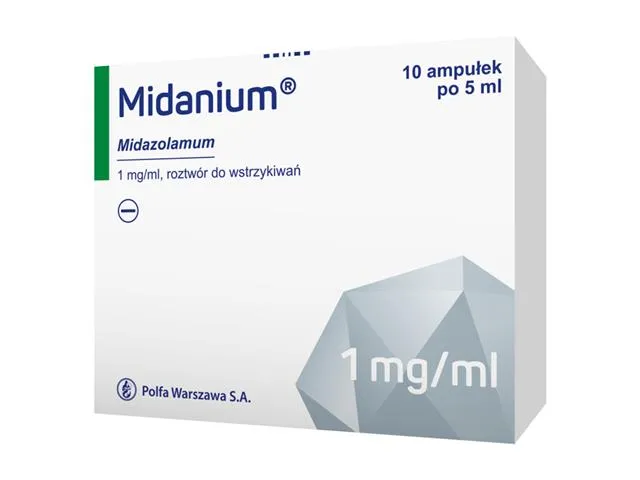
Table of Contents
- Package leaflet: Information for the patient
- 1. What Midanium is and what it is used for
- 2. Important information before using Midanium
- 3. How to use Midanium
- Detailed dosage information is provided in the section "Information intended
- 4. Possible side effects
- 5. How to store Midanium
- 6. Contents of the packaging and other information
- Information intended exclusively for medical professionals
Package leaflet: Information for the patient
MIDANIUM, 1 mg/ml, solution for injection
MIDANIUM, 5 mg/ml, solution for injection
Midazolam
Please read carefully all the information in this leaflet before using the medicine, as it contains
important information for the patient.
- Keep this leaflet, so that you can read it again if necessary.
- If you have any further questions, please consult your doctor, pharmacist, or nurse.
- This medicine has been prescribed for a specific person only. Do not pass it on to others. The medicine may harm another person, even if their symptoms are the same.
- If the patient experiences any adverse reactions, including any not listed in this leaflet, inform the doctor, pharmacist, or nurse. See section 4.
Table of contents of the leaflet
- What Midanium is and what it is used for
- Important information before using Midanium
- How to use Midanium
- Possible side effects
- How to store Midanium
- Contents of the pack and other information
1. What Midanium is and what it is used for
Midanium contains midazolam as the active substance. Midazolam belongs to a group of medicines called benzodiazepines. It has a short-acting, potent calming and sleep-inducing effect.
Midanium is used in adults:
- for sedation (calming, reducing anxiety and agitation) with preserved consciousness, before and during short diagnostic and therapeutic procedures;
- in patient preparation (premedication) before various procedures, e.g. surgery, endoscopy;
- as a sedative component prior to induction of general anaesthesia, before administration of another anaesthetic agent;
- for sedation in intensive care units.
Midanium is used in children:
- for sedation (calming, reducing anxiety and agitation) with preserved consciousness, before and during short diagnostic and therapeutic procedures;
- in patient preparation (premedication) before various procedures, e.g. surgery, endoscopy;
- for sedation in intensive care units.
2. Important information before using Midanium
When not to use Midanium:
- if the patient is allergic to midazolam (or other benzodiazepines) or any of the other ingredients of this medicine (listed in section 6);
- if the patient has severe respiratory insufficiency or acute respiratory depression (very serious breathing difficulties).
Warnings and precautions
Before starting treatment with Midanium, discuss this with your doctor or nurse.
Consult your doctor if the patient:
- is over 60 years of age or is frail;
- has impaired liver function, chronic liver or kidney failure;
- has chronic respiratory insufficiency;
- is in a serious condition, especially with heart disease and breathing difficulties;
- has myasthenia gravis (a chronic disease characterized by muscle weakness). Patients with any of the above conditions should inform their doctor.
After receiving Midanium, the patient should be discharged from hospital or a procedure room only with the doctor's approval. A caregiver should accompany the patient after discharge.
Do not use this medicine long-term, as it may increase the risk of dependence and development of tolerance to the drug. Tolerance means progressively reduced effectiveness of the drug with prolonged use, requiring higher doses to achieve the same effect.
Children
- Midanium should be used in infants under 6 months of age only in intensive care units.
- Paradoxical reactions may occur in children during treatment with Midanium (symptoms listed in section 4, "Possible side effects"). If such symptoms occur, discontinue the drug immediately.
- Extreme caution is required in children with heart disease (especially with unstable circulation).
Midanium and other medicines
Tell your doctor about all medicines the patient is currently taking or has recently taken, as well as any medicines the patient plans to take.
Midanium and other concomitant medicines may affect each other's actions. This is particularly true for the following medicines:
- antifungal agents (ketoconazole, voriconazole, fluconazole, itraconazole, posaconazole);
- macrolide antibiotics (erythromycin, clarithromycin);
- HIV protease inhibitors (medicines used in HIV infection – saquinavir);
- verapamil and diltiazem (calcium channel blockers, mainly used in cardiovascular diseases);
- atorvastatin (a medicine that lowers blood cholesterol);
- aprepitant (an antiemetic medicine);
- rifampicin (an antibiotic);
- phenytoin (an anticonvulsant medicine);
- efavirenz (a medicine used in HIV infection);
- strong painkillers (called opioid analgesics, e.g. morphine, buprenorphine);
- medicines used in psychiatric disorders (e.g. haloperidol, carbamazepine);
- sedatives, anxiolytics, and hypnotics;
- medicines used to treat depression (fluoxetine, fluvoxamine);
- medicines used to treat allergies (with sedative effects);
- hydralazine (a medicine for hypertension);
- inhaled anesthetics used for general anesthesia;
- herbal mixtures containing St. John's wort extract (Hypericum perforatum).
Concomitant use of Midanium and opioids (strong painkillers, substitution therapy drugs for addiction, and some cough medicines) increases the risk of drowsiness, breathing difficulties (respiratory depression), coma, and potentially life-threatening effects. Therefore, concomitant use of these medicines should only be considered if no other treatment options are available.
If your doctor has prescribed Midanium together with opioid medicines, the treating physician should reduce the dose and recommend the shortest possible treatment duration.
Inform your doctor about all opioid medicines you are taking and strictly follow the doctor's dosing instructions. It may be helpful to inform friends or family members about the risks so they are aware of the above symptoms. If such symptoms occur, contact your doctor immediately.
Midanium and alcohol
Alcohol (ethanol) significantly enhances the sedative effect of midazolam. Drinking alcohol during treatment with Midanium is contraindicated.
Pregnancy and breastfeeding
If the patient is pregnant or breastfeeding, suspects she may be pregnant, or is planning to have a child, she should consult her doctor before using this medicine.
Midazolam may be used during pregnancy only if absolutely necessary.
Midazolam is not recommended for use during caesarean section.
Midazolam passes into human milk in small amounts. If treatment is necessary, the patient should discontinue breastfeeding and resume 24 hours after administration of midazolam.
Driving and operating machinery
After administration of the medicine, the following may occur: sedation, memory impairment, concentration difficulties, and muscle weakness, which may negatively affect performance of tasks requiring high alertness.
Do not drive or operate machinery until full recovery of function.
Your doctor will decide when the patient may resume these activities.
Midanium contains sodium
The medicine contains 3.16 mg of sodium (the main component of table salt) per ml. This corresponds to 0.16% of the maximum recommended daily intake of sodium in the adult diet.
The medicine may be diluted – see section below "Instructions for preparation and administration of Midanium". When calculating the total sodium content in the prepared diluted solution, include the sodium originating from the diluent. For accurate information on sodium content in the solution used for dilution, refer to the patient leaflet of the diluent used.
3. How to use Midanium
This medicine should always be used according to the doctor's instructions. If in doubt, consult
your doctor.
- Midanium is administered by medical personnel.
- The medicine is given intramuscularly, intravenously, and rectally.
- The doctor will determine the dosage and duration of treatment individually for each patient.
Detailed dosage information is provided in the section "Information intended
exclusively for healthcare professionals.
Administration of a higher than recommended dose of Midanium
The medicine is administered by healthcare personnel, so it is unlikely that a patient would receive more than the recommended dose. After an overdose of midazolam, symptoms such as drowsiness, impaired motor coordination, speech disturbances or slurred speech, and nystagmus may occur. In more severe cases, loss of reflexes, respiratory arrest, hypotension, serious breathing difficulties, and in rare instances, coma, may occur.
If a patient suspects they have received a higher than recommended dose, medical advice should be sought immediately, and the doctor will initiate appropriate treatment.
If a dose of Midanium is missed
Do not administer a double dose to make up for a missed dose.
Discontinuation of Midanium treatment
Following prolonged use of midazolam in intensive care units, withdrawal symptoms (so-called withdrawal syndrome) may occur if the drug is abruptly discontinued. Symptoms of this syndrome may include: headache, muscle pain, anxiety, tension, restlessness, confusion, irritability, recurring insomnia, mood changes, hallucinations, and seizures.
The doctor will carefully adjust the dose and duration of treatment to minimize the risk of these symptoms.
If you have any further questions regarding the use of this medicine, consult your doctor, pharmacist, or nurse.
4. Possible side effects
Like all medicines, this medicine can cause side effects, although not everyone will experience them.
The following side effects may occur during treatment with this medicine. Their frequency is unknown and cannot be determined from the available data.
Treatment with Midanium should be discontinued and immediate medical attention sought if any of the following side effects occur, as they may be life-threatening and may require immediate treatment:
- Anaphylactic shock (a life-threatening allergic reaction). Symptoms may include sudden rash, itching, or hives (urticaria), and swelling of the face, lips, tongue, or other parts of the body. The patient may also experience shortness of breath, wheezing or difficulty breathing, or pale skin, weak and rapid pulse, or feeling faint. Additionally, chest pain may occur, which could be a symptom of a serious allergic reaction known as Kounis syndrome.
- Shortness of breath and breathing difficulties (sometimes leading to respiratory arrest), apnea;
- Laryngospasm causing choking;
- Cardiac disturbances such as slowed heart function (bradycardia), vasodilation, cardiac arrest.
Other side effects, frequency unknown (frequency cannot be determined from available data):
- Confusion, euphoria, hallucinations;
- Agitation, feelings of hostility and rage, aggression, episodes of excitement, involuntary movements (including clonic-tonic seizures and muscle tremors), excessive activity, acts of violence (so-called paradoxical reactions, particularly reported in children and elderly patients); physical dependence and withdrawal symptoms, drug abuse, seizures (in preterm and full-term neonates, also as withdrawal symptoms);
- Sedation (excessive calming) prolonged and postoperative, reduced level of consciousness, drowsiness, dizziness; impaired motor coordination (ataxia); anterograde amnesia (the patient does not remember events that occurred shortly after administration of the drug) – the duration of these side effects depends on the dose administered;
- Hiccups;
- Vasodilation;
- Hypotension;
- Dryness of oral mucosa, nausea, vomiting, constipation;
- Skin rash, urticaria, itching;
- Severe venous disorders (phlebitis and venous thrombosis);
- Pain and redness at the injection site;
- Fatigue;
- Increased risk of falls and fractures has been reported in elderly patients and in patients concurrently taking sedative medicines.
Prolonged intravenous administration of midazolam, even at therapeutic doses, may lead to physical dependence, and abrupt discontinuation of the drug may be accompanied by withdrawal symptoms, including seizures – see section "Discontinuation of Midanium treatment".
In elderly and debilitated patients, especially those with heart disease and breathing difficulties, more pronounced side effects may occur, particularly after too rapid injection or administration of high doses.
Reporting of side effects
If any side effects occur, including any not listed in this leaflet, inform your doctor, pharmacist, or nurse. Side effects can also be reported directly to the Department of Monitoring Adverse Drug Reactions, Office for Registration of Medicinal Products, Medical Devices and Biocidal Products
Al. Jerozolimskie 181 C
02-222 Warsaw
Phone: +48 22 49 21 301
Fax: +48 22 49 21 309
Website: https://smz.ezdrowie.gov.pl
Side effects can also be reported to the Marketing Authorization Holder.
Reporting side effects helps provide more information on the safety of this medicine.
5. How to store Midanium
Keep the medicine out of sight and reach of children.
Do not use this medicine after the expiry date stated on the carton and ampoule. The expiry date refers to the last day of the stated month.
The label on the packaging shows "EXP" followed by the expiry date and "Lot" followed by the batch number.
Store below 25°C. Do not freeze.
Medicines must not be disposed of via the sewage system or household waste. Ask your pharmacist how to dispose of medicines no longer required. This will help protect the environment.
6. Contents of the packaging and other information
What Midanium contains
- The active substance is midazolam. 1 ml of solution contains 1 mg or 5 mg of midazolam, respectively.
- Other ingredients: sodium chloride, disodium edetate, hydrochloric acid 10%, sodium hydroxide 10% or hydrochloric acid 10% (for pH adjustment), water for injections.
What Midanium looks like and contents of the pack
Midanium 1 mg/ml, solution for injection is a colorless, clear liquid.
The cardboard pack contains 10 ampoules of colorless glass, each containing 5 ml.
Midanium 5 mg/ml, solution for injection is a colorless or pale yellow, clear liquid.
The cardboard pack contains 10 ampoules of colorless glass, each containing 1 ml, or 5 ampoules of colorless glass, each containing 3 ml, or 5 ampoules of colorless glass, each containing 10 ml.
Marketing Authorization Holder and Manufacturer
Zakłady Farmaceutyczne POLPHARMA S.A.
ul. Pelplińska 19, 83-200 Starogard Gdański
tel. +48 22 364 61 01
Information intended exclusively for medical professionals
MIDANIUM, 1 mg/ml, solution for injection
MIDANIUM, 5 mg/ml, solution for injection
Midazolam
Preparation and administration instructions for Midanium
- Midanium is administered intramuscularly, intravenously, and rectally.
- Midazolam should be administered only by experienced physicians in a fully equipped facility with monitoring and life-support equipment for respiratory and cardiovascular systems, and by personnel adequately trained in recognizing and managing expected adverse reactions, including cardiopulmonary resuscitation.
- Midanium may be mixed with 500 ml of the following infusion solutions:
- 5% glucose solution;
- 0.9% NaCl solution;
- 4% glucose solution with 0.18% NaCl solution.
The prepared solution maintains physicochemical stability when stored at room temperature for 24 hours. From a microbiological standpoint, the solution should be used immediately after preparation. If not used immediately, the user is responsible for storage conditions and duration prior to use. Adsorption of midazolam onto plastic components of infusion devices or syringes has not been confirmed.
- Midanium 5 mg/ml may be mixed with morphine sulfate (Morphini sulfas WZF 20 mg/ml) (see also "Warnings and precautions" below) within the following active substance ratios: 10 mg morphine sulfate with midazolam in doses ranging from 1.66 mg to 10 mg.
To prepare a mixture of 10 mg morphine sulfate : 1.66 mg midazolam, mix 2.1 ml of Morphini sulfas WZF 20 mg/ml with 1.4 ml of Midanium 5 mg/ml.
To prepare a mixture of 10 mg morphine sulfate : 10 mg midazolam, mix 1.0 ml of Morphini sulfas WZF 20 mg/ml with 4.0 ml of Midanium 5 mg/ml.
The shelf life of the mixture of Morphini sulfas WZF 20 mg/ml with Midanium 5 mg/ml is 24 hours. Chemical and physical stability has been demonstrated for 24 hours at 25°C. The mixture should be prepared immediately before administration. From a microbiological standpoint, the prepared mixture should be used immediately. If not used immediately, the user is responsible for storage conditions and duration. If necessary, the prepared mixture may be stored for up to 24 hours at 25°C, provided it is prepared under controlled, validated aseptic conditions. Any unused mixture remaining after 24 hours must be discarded. The prepared mixture does not require protection from light.
Instructions for opening ampoules
Before opening the ampoule, ensure that all the solution is in the lower part of the ampoule.
Gently shake the ampoule or tap it with a finger to help the solution flow down.
Each ampoule has a colored dot (see Figure 1) indicating the designated break point.
- To open the ampoule, hold it vertically with both hands, with the colored dot facing toward you—see Figure 2. The upper part of the ampoule should be held so that the thumb is positioned above the colored dot.
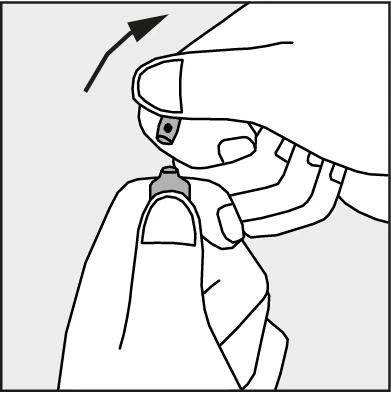
- Press in the direction of the arrow shown in Figure 3. Ampoules are for single use only and should be opened immediately before use. Any unused portion of the medicinal product must be discarded according to applicable regulations.
Figure 1.
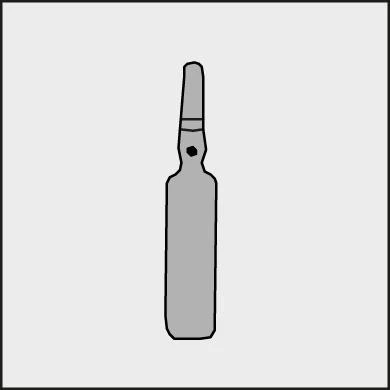
Figure 2.
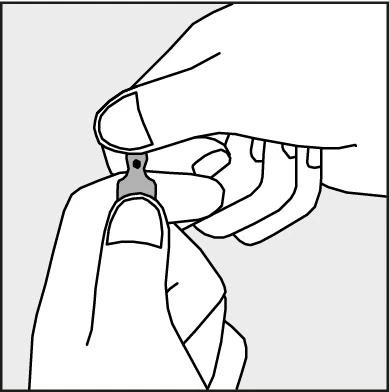
Figure 3.
Warnings and precautions
Exercise particular caution when administering the medicinal product to the following patients:
- with respiratory disorders;
- infants under 6 months of age and children with unstable cardiovascular systems;
- patients over 60 years of age;
- chronically ill or debilitated patients, e.g., those with chronic respiratory insufficiency, chronic renal insufficiency, hepatic dysfunction, or cardiac disorders;
- patients with renal dysfunction (creatinine clearance <10 ml/min). The pharmacokinetics of unbound midazolam after intravenous administration are similar to those observed in healthy volunteers. However, during prolonged infusion, the mean duration of sedative effect in patients with renal insufficiency was significantly longer, most likely due to accumulation of α-hydroxymidazolam glucuronide. There are no data available on patients with severe renal insufficiency (creatinine clearance below 30 ml/min) receiving midazolam for general anesthesia induction.
- patients with impaired hepatic function—midazolam clearance after intravenous administration is reduced, with a prolonged elimination half-life. Therefore, the clinical effect may be stronger and prolonged. In such cases, the midazolam dose should be reduced and the patient's condition closely monitored. Patients at high risk should receive lower doses and be observed for early signs of vital function changes.
Serious adverse reactions affecting the cardiovascular and respiratory systems have been reported: respiratory depression, apnea, respiratory arrest, and/or cardiac arrest. These events are more likely to occur following rapid injection or administration of a high dose of the medicinal product.
When midazolam is used for premedication, patients should be observed after administration, as overdosage symptoms may occur due to individual variability in sensitivity.
As with other centrally acting depressant agents and/or muscle relaxants, particular caution should be exercised in patients with myasthenia gravis.
When midazolam and opioids are used concomitantly, the risk of respiratory depression increases; therefore, such cases require close observation.
Dosage
Standard dosage
Midazolam is a potent sedative agent and should be administered slowly and incrementally.
Gradual administration of midazolam facilitates safe achievement of the desired level of sedation, depending on clinical requirements, the patient's health status and age, and concomitant medications. Dosing in patients aged 60 years and older, debilitated or chronically ill patients, and children should be carefully adjusted, taking into account individual patient risk factors. Standard dosage recommendations are provided in the table below. Additional information is given below the table.
| Indication | Adults under 60 years | Adults aged 60 years and older, debilitated or chronically ill | Children |
| Sedation with preserved consciousness | Intravenous: Initial dose: 2 – 2.5 mg Supplemental doses: 1 mg Total dose: 3.5 – 7.5 mg | Intravenous: Initial dose: 0.5 – 1 mg Supplemental doses: 0.5 – 1 mg Total dose: <3.5 mg | Intravenous, from 6 months to 5 years: Initial dose: 0.05 – 0.1 mg/kg body weight Total dose: <6 mg Intravenous, 6 to 12 years: Initial dose: 0.025 – 0.05 mg/kg body weight Total dose: <10 mg Rectal, over 6 months: 0.3 – 0.5 mg/kg body weight Intramuscular, 1 - 15 years: 0.05 – 0.15 mg/kg body weight |
| Premedication before induction of general anesthesia | Intramuscular: 0.07 – 0.1 mg/kg body weight Intravenous: 1–2 mg; dose may be repeated | Intramuscular: 0.025 – 0.05 mg/kg body weight Intravenous: Initial dose: 0.5 mg; if necessary, dose may be slowly increased | Rectal, over 6 months: 0.3 – 0.5 mg/kg body weight Intramuscular, 1 - 15 years: 0.08 – 0.2 mg/kg body weight |
| Induction of general anesthesia | Intravenous: 0.15 – 0.2 mg/kg body weight (0.3 – 0.35 without premedication) | Intravenous: 0.05 – 0.15 mg/kg body weight (0.15 – 0.3 without premedication) | |
| As a sedative component in balanced anesthesia | Intravenous: Repeated doses: 0.03 – 0.1 mg/kg body weight or continuous infusion 0.03 – 0.1 mg/kg body weight/h | Intravenous: Lower doses than recommended for adults under 60 years | |
| Sedation in intensive care units | Intravenous: Loading dose: 0.03 – 0.3 mg/kg body weight administered in increments of 1–2.5 mg Maintenance dose: 0.03 – 0.2 mg/kg body weight/h | Intravenous: Loading dose: 0.03 – 0.3 mg/kg body weight administered in increments of 1–2.5 mg Maintenance dose: 0.03 – 0.2 mg/kg body weight/h | Intravenous, neonates below 32 weeks gestational age: 0.03 mg/kg body weight/h Intravenous, neonates above 32 weeks gestational age and infants up to 6 months: |
| 0.06 mg/kg body weight/h Intravenous, over 6 months: Loading dose: 0.05 – 0.2 mg/kg body weight Maintenance dose: 0.06 – 0.12 mg/kg body weight/h |
- CONSCIOUS SEDATION
For diagnostic or therapeutic procedures, midazolam should be administered intravenously. The dose should be individually adjusted and administered gradually. It must not be injected rapidly or given as a single bolus injection. The onset of sedative effect may vary among individual patients depending on their clinical condition and the method of drug administration (e.g., rate of administration, dose size). If necessary and depending on the patient's condition, additional doses may be administered. The drug's effect begins approximately 2 minutes after administration, with peak effect observed within 5–10 minutes.
Adults: Midazolam should be administered intravenously slowly, at a rate of approximately 1 mg per 30 seconds. In patients under 60 years of age, the initial dose is 2 mg to 2.5 mg, administered 5 to 10 minutes before the procedure begins. If needed, additional 1 mg doses may be given. The average total dose ranges from 3.5 mg to 7.5 mg. Typically, a total dose exceeding 5 mg is not required. In patients over 60 years of age, debilitated or chronically ill patients, the initial dose administered 5 to 10 minutes before the procedure should be reduced to 0.5–1 mg. If necessary, additional doses of 0.5 mg to 1 mg may be given. In these patients, peak effect is achieved more slowly; additional doses of midazolam should be administered very slowly and with caution. Typically, a total dose exceeding 3.5 mg is not required.
Children: Intravenous administration: Midazolam doses should be gradually increased until the desired clinical effect is achieved. The initial dose should be administered over 2 to 3 minutes. After administration, wait 2 to 5 minutes before proceeding with the procedure or repeating the dose to assess sedative effect. If deeper sedation is required, continue administering small incremental doses until the appropriate level of sedation is achieved.
Infants and young children under 5 years of age may require significantly higher doses (in mg/kg body weight) than older children and adolescents.
Children under 6 months of age – are particularly susceptible to airway obstruction and hypoventilation. Therefore, midazolam administration for sedation is not recommended in children under 6 months of age.
Children aged 6 months to 5 years: initial dose 0.05 mg/kg to 0.1 mg/kg body weight. Up to 0.6 mg/kg body weight may be required to achieve the desired effect; however, the total dose should not exceed 6 mg. Higher midazolam doses increase the risk of hypoventilation and prolonged sedation.
Children aged 6 to 12 years: initial dose 0.025 mg/kg to 0.05 mg/kg body weight. A total dose of up to 0.4 mg/kg body weight may be required; maximum dose 10 mg. Higher midazolam doses increase the risk of hypoventilation and prolonged sedation.
Children aged 12 to 16 years: dosing as in adults.
Rectal administration: The total midazolam dose is usually 0.3 mg/kg to 0.5 mg/kg body weight, administered as a single dose. Rectal administration should be performed using a syringe fitted with a plastic applicator. If the volume of solution to be administered is too small, add water to a maximum volume of 10 ml. Repeat rectal dosing is not recommended. Midazolam administration by this route is not recommended in children under 6 months of age due to limited available data in this patient group.
Intramuscular administration: Doses range from 0.05 mg/kg to 0.15 mg/kg body weight. A total dose greater than 10 mg is usually not necessary. Intramuscular administration should be reserved for exceptional circumstances only, as it is painful. Rectal administration is preferred. For children weighing less than 15 kg, midazolam solution with a concentration higher than 1 mg/ml should not be used. Higher concentrations should be diluted to 1 mg/ml.
- ANESTHESIA
- Premedication prior to general anesthesia
Premedication with midazolam administered shortly before the procedure induces sedation (causing drowsiness or sleep and reducing anxiety) and anterograde amnesia during the preoperative period. Midazolam may also be administered with anticholinergic drugs. In such cases, midazolam should be given intravenously or deep intramuscularly into large muscle groups, 20 to 60 minutes before induction of anesthesia. In children, rectal administration is preferred (see below). Continuous and close monitoring of the patient is mandatory after drug administration, as individual sensitivity to the drug varies and symptoms of overdose may occur.
Adults: To achieve preoperative sedation and anterograde amnesia, in patients classified as ASA I and II and in patients under 60 years of age, an intravenous dose of 1–2 mg (repeatable as needed) or intramuscular dose of 0.07 mg/kg to 0.1 mg/kg midazolam is recommended. In patients over 60 years of age, debilitated or chronically ill patients, the dose should be reduced and individually adjusted according to the patient's condition.
- Intravenous injection: recommended initial dose 0.5 mg; if necessary, the dose may be slowly increased.
- Intramuscular injection: 0.025 mg/kg to 0.05 mg/kg body weight.
- When opioids are co-administered, the midazolam dose should be reduced. The usual dose is 2 to 3 mg.
Children
Newborns and children under 6 months of age
Use of the drug is not recommended in children under 6 months of age due to limited data on safety and efficacy.
Children over 6 months of age
Rectal administration: The total midazolam dose, usually ranging from 0.3 mg/kg to 0.5 mg/kg body weight, should be administered 15 to 30 minutes before induction of anesthesia. Rectal administration should be performed using a syringe with a plastic applicator. If the volume to be administered is small, water may be added to a total volume of 10 ml.
Intramuscular administration: Because this route is painful, it should be limited to exceptional circumstances only. Rectal administration is recommended. Effective and safe intramuscular doses range from 0.08 mg/kg to 0.2 mg/kg body weight.
Children aged 1–15 years require proportionally higher doses than adults when adjusted for body weight.
For children weighing less than 15 kg, midazolam solution with a concentration higher than 1 mg/ml should not be used. Higher concentrations should be diluted to 1 mg/ml.
- Induction of General Anesthesia
Adults: When midazolam is used for induction of anesthesia, individual patient responses may vary. The dose should be administered gradually until the desired effect is achieved, taking into account the patient's age and clinical condition. If midazolam is administered before or simultaneously with other intravenous anesthetics or inhalational agents used for induction, the usual initial dose of each agent should be significantly reduced, sometimes to as little as 25% of the standard initial dose. The desired anesthetic effect is achieved by gradual administration. The intravenous midazolam dose used for induction of general anesthesia should be injected slowly and fractionally. Each dose, not exceeding 5 mg, should be administered over 20–30 seconds, with a 2-minute interval between successive doses.
Patients under 60 years of age who have received premedication: usual intravenous dose is 0.15 mg/kg to 0.2 mg/kg body weight.
Unpremedicated patients under 60 years of age: a higher dose is required (intravenous 0.3 mg/kg to 0.35 mg/kg body weight). If necessary, additional injections of approximately 25% of the initial dose may be given to achieve full induction. Induction may also be completed using inhalational anesthetics. In resistant cases, up to 0.6 mg/kg body weight of midazolam may be administered to achieve induction; however, emergence may be prolonged after such high doses.
Premedicated patients over 60 years of age, debilitated or chronically ill patients: the dose should be significantly reduced, e.g., to 0.05–0.15 mg/kg body weight, administered intravenously over 20–30 seconds, with a 2-minute wait for effect.
Unpremedicated patients over 60 years of age: usually require a higher midazolam dose for induction—initial dose of 0.15 mg/kg to 0.3 mg/kg body weight is recommended. Severely ill or debilitated patients who have not received premedication usually require a lower midazolam dose—typically 0.15 mg/kg to 0.25 mg/kg body weight is sufficient.
- Balanced Anesthesia (Midazolam as a Sedative Component)
Adults: Midazolam may be used as a sedative component in balanced anesthesia, administered as repeated small intravenous doses (0.03 mg/kg to 0.1 mg/kg body weight) or by continuous intravenous infusion (0.03 mg/kg/h to 0.1 mg/kg/h), usually in combination with analgesic agents. Doses and intervals between doses depend on the individual patient's response. Lower maintenance doses should be used in patients over 60 years of age, debilitated or chronically ill patients.
- SEDATION IN INTENSIVE CARE UNITS
The desired level of sedation is achieved by gradually increasing the midazolam dose, followed by continuous intravenous infusion or repeated injections, depending on clinical needs, patient condition, age, and concomitant medications.
Adults: Intravenous loading dose: 0.03 mg/kg to 0.3 mg/kg midazolam administered slowly in successive injections. Each single injection of 1 mg to 2.5 mg should be given over 20 to 30 seconds, with a 2-minute interval between injections. In patients with hypovolemia, vasoconstriction, or hypothermia, the loading dose should be reduced or omitted.
If midazolam is administered with potent analgesic agents, these should be given first to safely adjust the sedative effect of midazolam according to the level of sedation caused by the analgesic.
Intravenous maintenance dose: 0.03 mg/kg/h to 0.2 mg/kg/h. In patients with hypovolemia, vasoconstriction, or hypothermia, the maintenance dose should be reduced. The level of sedation should be regularly assessed. With prolonged sedation, tolerance may develop—requiring an increase in dose.
Children
Newborns and infants up to 6 months of age
Midazolam should be administered as a continuous intravenous infusion, starting at 0.03 mg/kg/h (0.5 μg/kg/min) in newborns with a gestational age below 32 weeks or at 0.06 mg/kg/h (1 μg/kg/min) in newborns with a gestational age above 32 weeks and infants up to 6 months of age.
Loading doses are not recommended in preterm infants, newborns, and infants under 6 months of age. The drug should be administered by infusion, initially at a faster rate during the first few hours to achieve therapeutic plasma concentrations. Infusion rate should be carefully and frequently monitored, especially during the first 24 hours, to administer the lowest effective dose and prevent potential drug accumulation. Careful observation of respiratory function and monitoring of blood oxygen saturation are recommended.
Children over 6 months of age
In children over 6 months of age who are intubated and mechanically ventilated, the loading dose of 0.05 mg/kg to 0.2 mg/kg should be administered intravenously slowly over 2 to 3 minutes until the desired clinical effect is achieved.
Midazolam should not be administered as a rapid intravenous bolus. After the loading dose, a continuous intravenous infusion of 0.06 mg/kg/h to 0.12 mg/kg/h (1 to 2 μg/kg/min) should be initiated. The infusion rate may be increased or decreased as needed (typically by 25% of the initial or subsequent rate), or additional intravenous midazolam doses may be administered to increase or maintain the drug effect at the desired level.
When initiating midazolam administration in patients with impaired cardiovascular function, the drug should be administered in small incremental injections, with careful observation for signs of hemodynamic instability, such as arterial hypotension.
These patients are also susceptible to the respiratory depressant effects of midazolam and require particularly careful monitoring of respiratory function and blood oxygen saturation.
Midazolam solution with a concentration greater than 1 mg/ml should not be used in preterm infants, newborns, or children weighing less than 15 kg. Higher concentrations should be diluted to 1 mg/ml.