Mezavant
Poland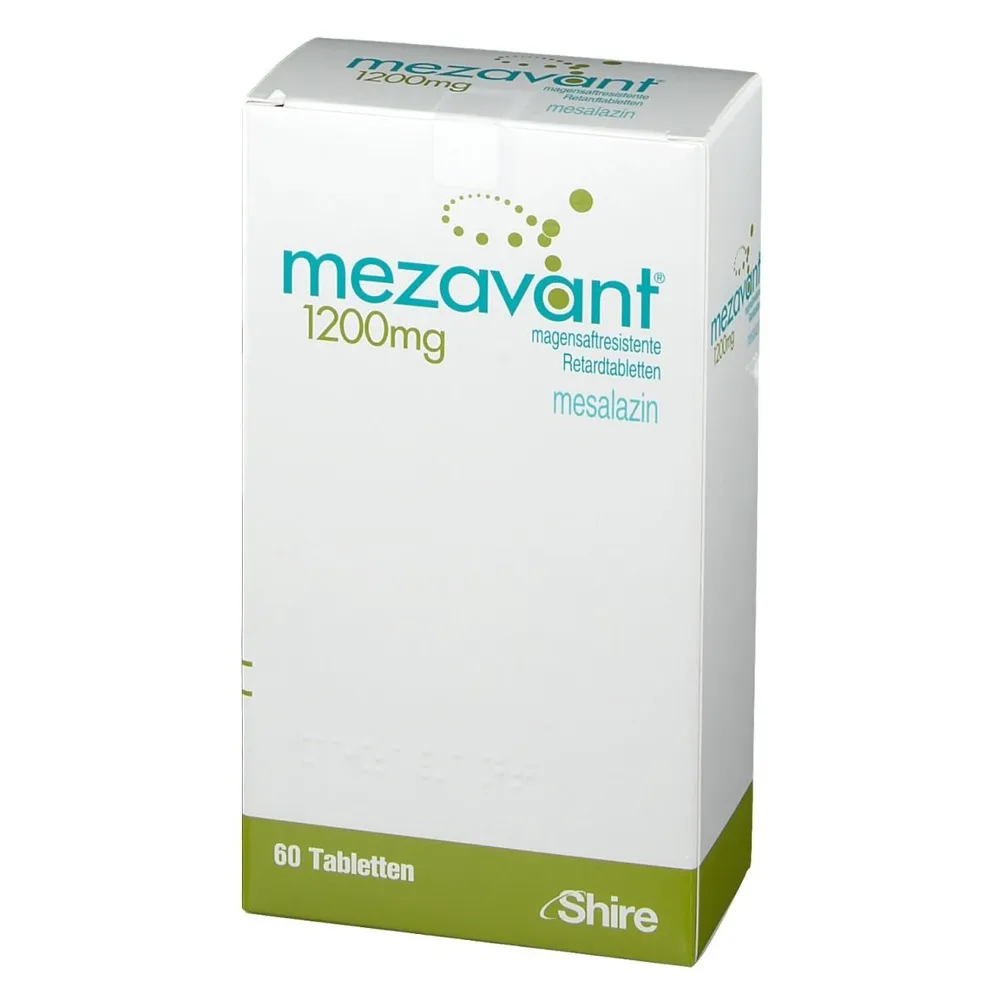
Table of Contents
Package leaflet: Information for the user
Mezavant, 1200 mg, prolonged-release enteric-coated tablets
( Mesalazinum )
Please read all of this leaflet carefully before taking this medicine because it contains
important information for you.
- Keep this leaflet. You may need to read it again.
- If you have any further questions, please ask your doctor or pharmacist.
- This medicine has been prescribed for a specific individual. Do not pass it on to others. It may harm someone else, even if their symptoms are the same.
- If you experience any side effects, including any not listed in this leaflet, tell your doctor or pharmacist. See section 4.
Contents of the leaflet
- What Mezavant is and what it is used for
- Important information before taking Mezavant
- How to take Mezavant
- Possible side effects
- How to store Mezavant
- Contents of the pack and other information
1. What Mezavant is and what it is used for
Pharmacotherapeutic group: Aminosalicylic acid and related substances.
Mezavant, prolonged-release enteric-coated tablets, contains the active substance mesalazine, an anti-inflammatory agent used in the treatment of ulcerative colitis.
Ulcerative colitis is a disease of the colon (large intestine) and rectum (back passage), in which the intestinal mucosa becomes red and swollen (inflamed), resulting in frequent passage of bloody stools, accompanied by stomach cramps.
When administered during flare-ups of ulcerative colitis, Mezavant acts throughout the colon and rectum, treating the inflammation and reducing symptoms. The tablets may also be taken to prevent recurrence of ulcerative colitis.
2. Important information before taking Mezavant
When not to take Mezavant:
- if the patient is allergic (hypersensitive) to the group of medicines called salicylates [which includes acetylsalicylic acid (Aspirin)];
- if the patient is allergic (hypersensitive) to mesalazine or to any of the other ingredients of this medicine (listed in section 6);
- if the patient has severe kidney or liver problems.
Warnings and precautions
Mesalazine may cause a reddish-brown discoloration of urine upon contact with sodium hypochlorite bleach present in toilet water. This is due to a chemical reaction between mesalazine and the bleach and is harmless.
Before starting treatment with Mezavant, discuss with your doctor:
- if the patient has any kidney or liver problems;
- if the patient has previously had myocarditis (inflammation of the heart muscle, which may be caused by an infection in the heart);
- if the patient has ever developed a severe skin rash, skin peeling, blisters, and/or mouth sores after taking Mezavant;
- if the patient has previously had an allergic reaction to sulfasalazine (another medicine used to treat ulcerative colitis);
- if the patient has a narrowing or blockage of the stomach or intestine;
- if the patient has lung problems.
Before starting treatment and periodically during treatment with Mezavant, the doctor may take urine and blood samples to monitor whether the patient's kidneys and liver are functioning properly and whether blood composition is normal.
Treatment with Mezavant may lead to the formation of kidney stones. Symptoms may include abdominal pain (on the side) and blood in the urine. During treatment with Mezavant, an adequate amount of fluids should be consumed.
Severe skin reactions, including drug reaction with eosinophilia and systemic symptoms (DRESS), Stevens-Johnson syndrome (SJS), and toxic epidermal necrolysis (TEN), have been reported with Mezavant treatment. If any of the symptoms associated with these severe skin reactions described in section 4 occur, treatment with Mezavant must be stopped immediately and the patient should contact a doctor without delay.
Children and adolescents
Mezavant is not recommended for use in children and adolescents weighing 50 kg or less, or in children under 10 years of age, due to lack of data on safety and efficacy (see section 3).
Mezavant with other medicines
Studies have shown that Mezavant does not affect the action of the following antibiotics used to treat infections: amoxicillin, metronidazole, and sulfamethoxazole.
However, Mezavant may interact with certain other medicines.
Tell your doctor or pharmacist about all medicines the patient is currently taking or has recently taken, as well as any medicines the patient plans to use.
- Mesalazine or sulfasalazine (used to treat ulcerative colitis);
- Non-steroidal anti-inflammatory drugs [for example, medicines containing acetylsalicylic acid (Aspirin), ibuprofen, or diclofenac];
- Azathioprine or 6-mercaptopurine, or other medicines known to affect bone marrow function (known as immunosuppressive medicines, which reduce the activity of the patient's immune system); bone marrow is the tissue inside bones that produces blood cells.
- Anticoagulant coumarin derivatives (medicines that prolong the patient's blood clotting time), e.g. warfarin.
Mezavant with food and drink
Mezavant should be taken with food, at the same time each day. Tablets should be swallowed whole. They must not be crushed or chewed.
Pregnancy and breastfeeding
Since mesalazine crosses the placenta during pregnancy and passes into human milk in small amounts, Mezavant should only be used during pregnancy or breastfeeding on the advice of a doctor. Cases of complications [including reduced blood cell counts (white blood cells, red blood cells, and platelets)] have been reported in infants whose mothers took Mezavant during pregnancy. Cases of diarrhoea have been reported in breastfed infants of mothers taking Mezavant.
If the patient is pregnant or breastfeeding, suspects she may be pregnant, or is planning to have a baby, she should consult her doctor before taking Mezavant.
Effect on laboratory test results
If the patient is due to have urine tests, it is important to inform the doctor or nurse that the patient is currently taking or has recently taken this medicine, as it may affect test results.
Driving and operating machinery
It is unlikely that Mezavant will have any effect on the ability to drive or operate machinery.
Mezavant contains sodium
This medicine contains less than 1 mmol (23 mg) of sodium per maximum recommended dose (4 tablets), meaning this medicine is considered "sodium-free".
3. How to take Mezavant
This medicine should always be taken exactly as prescribed by your doctor. If in doubt, consult
your doctor or pharmacist.
The recommended dose for adult patients is 2.4 g to 4.8 g (two to four tablets) taken once daily
for the treatment of acute episodes of ulcerative colitis. If the highest daily dose of 4.8 g is taken,
a follow-up check-up should be scheduled after 8 weeks of treatment. After symptoms have
resolved, your doctor may recommend continuing treatment with a maintenance dose of 2.4 g
(two tablets) once daily to prevent recurrence of further episodes.
For the treatment of acute episodes of ulcerative colitis (first 8 weeks of treatment) in children
and adolescents weighing more than 50 kg and aged 10 years or older, the recommended dose
is 2.4 g to 4.8 g (two to four tablets) taken once daily.
For the prevention of recurrent episodes of ulcerative colitis in children and adolescents weighing
more than 50 kg and aged 10 years or older, the recommended dose is 2.4 g (two tablets) taken
once daily.
The tablets should be taken with food, at the same time each day. Swallow the tablets whole.
Do not crush or chew them.
While taking this medicine, remember to drink plenty of fluids to maintain hydration, especially
after severe or prolonged episodes of vomiting and/or diarrhoea, high fever, or excessive sweating.
Mezavant is not recommended for use in children and adolescents weighing 50 kg or less, or
in children under 10 years of age, due to lack of data on safety and efficacy.
Taking more Mezavant than recommended
Taking too much Mezavant may cause one or more of the following symptoms: tinnitus (ringing
in the ears), dizziness, headache, disorientation, drowsiness, shortness of breath, excessive fluid
loss (due to sweating, diarrhoea, and vomiting), low blood sugar (which may cause dizziness),
rapid breathing, changes in blood composition, and elevated body temperature.
If an overdose is taken, contact your doctor, pharmacist, or hospital emergency department
immediately. Take the medicine packaging with you.
Missing a dose of Mezavant
It is important to take Mezavant tablets every day, even if symptoms of ulcerative colitis are not
present. Always complete the prescribed course of treatment.
If a dose is missed, take the next dose as usual the following day. Do not take a double dose to
make up for a missed tablet.
If you have any further questions about the use of this medicine, consult your doctor or pharmacist.
4. Possible adverse reactions
Tell your doctor immediately if:
- The patient experiences symptoms such as cramps, severe abdominal pain, bloody or excessively frequent stools (diarrhea), fever, headache, or rash. These symptoms may indicate an acute intolerance syndrome occurring during an acute episode of ulcerative colitis. This is a serious condition, although rare, and means that the medicine must be discontinued immediately.
- The patient develops unexplained bruising (without injury), rash, anemia (feeling of fatigue, weakness, and paleness, especially of lips, nails, and inner eyelids), fever (high temperature), sore throat, or unusual bleeding (e.g. nosebleeds).
- The patient develops red, flat, target-like rashes on the trunk or circular rashes often with blisters in the center, skin peeling, mouth, throat, nose, genital or eye ulcers, extensive rash, fever, and swollen lymph nodes. These serious skin reactions may be preceded by fever and flu-like symptoms.
- The patient develops swelling of the tongue, lips, or around the eyes due to an allergic reaction.
- The patient develops increased intracranial pressure causing headache, which may start as pain behind the eyes and worsen with eye movement, as well as blurred or dimmed vision, double vision, light flashes in the visual field, loss of peripheral vision, and temporary or permanent vision loss. These symptoms may be accompanied by dizziness, nausea, vomiting, and tinnitus.
Like all medicines, this medicine can cause adverse reactions, although not everybody will get them.
Common adverse reactions, occurring in less than 1 in 10 patients: headache, changes in blood pressure, flatulence (wind), nausea, bloated or painful stomach, inflammation causing abdominal pain or diarrhea, diarrhea, indigestion, vomiting, abnormal liver function test results, itching, rash, joint pain, back pain, weakness, fatigue (feeling of extreme tiredness), fever (high temperature).
Uncommon adverse reactions, occurring in less than 1 in 100 patients: decreased platelet count, increasing the risk of bleeding and bruising; dizziness; feeling of drowsiness or fatigue; tremor or shaking; ear pain; rapid heartbeat; sore throat; pancreatitis (associated with upper abdominal and back pain and nausea); rectal polyp (a non-cancerous overgrowth in the rectum causing symptoms such as constipation and bleeding); acne; hair loss; muscle pain; urticaria; facial swelling.
Rare adverse reactions, occurring in less than 1 in 1,000 patients: kidney failure, marked decrease in white blood cells predisposing to infections, increased sensitivity of the skin to sunlight and ultraviolet radiation (photosensitivity).
The following adverse reactions have been reported, but their frequency is unknown:
Marked decrease in blood cells, which may cause weakness or bruising, low number of blood cells; allergic reaction (hypersensitivity); severe allergic reaction causing difficulty in breathing or dizziness; severe illness with blistering of the skin (which may cause skin peeling and result in painful areas without epidermis), in the mouth, eyes, and genital organs; allergic reaction causing skin rash, fever, and internal organ inflammation; neuropathy (nerve disorder or damage causing tingling and numbness); inflammation of the heart and the membrane surrounding the heart; lung inflammation; difficulty in breathing or wheezing; gallstones; liver inflammation (associated with flu-like symptoms and jaundice); hepatotoxicity (liver damage, which may manifest as abnormal liver function tests); allergic swelling of the tongue, lips, and around the eyes; redness of the skin, skin rash, usually on the face, photosensitivity, joint pain, joint inflammation, fatigue, and general malaise; kidney problems (such as kidney inflammation and scarring); kidney stones and associated kidney pain (see also section 2); reversible reduction in sperm production.
Reporting of adverse reactions
If any adverse reactions occur, including any not listed in this leaflet, tell your doctor or pharmacist. Adverse reactions can be reported directly to the Department of Monitoring Adverse Drug Reactions of the Office for Registration of Medicinal Products, Medical Devices and Biocidal Products
Al. Jerozolimskie 181C
02-222 Warsaw
Phone: +48 22 49 21 301
Fax: +48 22 49 21 309
Website: https://smz.ezdrowie.gov.pl
Adverse reactions can also be reported to the marketing authorization holder.
Reporting adverse reactions helps to provide more information on the safety of the medicine.
5. How to store Mezavant
- Keep this medicine out of the sight and reach of children.
- Store below 25°C.
- Store in the original packaging to protect from moisture.
- Do not use this medicine after the expiry date stated on the carton after EXP. The expiry date refers to the last day of the stated month.
- Medicines should not be disposed of via wastewater or household waste. Ask your pharmacist how to dispose of medicines no longer required. These measures will help protect the environment.
6. Contents of the pack and other information
What Mezavant contains
The active substance is mesalazine 1200 mg.
The other ingredients are: sodium carmellose, carnauba wax, stearic acid, colloidal hydrated silica,
sodium carboxymethyl starch (Type A), talc, magnesium stearate, methacrylic acid and methyl methacrylate copolymer (1:1), methacrylic acid and methyl methacrylate copolymer (1:2), triethyl citrate, titanium dioxide (E171), iron oxide red (E172), Macrogol 6000.
What Mezavant looks like and contents of the pack
Mezavant is supplied in blisters made of Polyamide/Aluminium/PVC/Aluminium, contained in a cardboard carton. The pack contains 60 or 120 tablets. Not all pack sizes may be marketed.
The red-brown tablets are oval-shaped (dimensions 20.5 × 9.5 × 7.5 mm) and marked with S476.
Marketing Authorisation Holder and Manufacturer
Marketing Authorisation Holder Manufacturer
Takeda Pharmaceuticals International AG Cosmo SpA
Ireland Branch Via C. Colombo 1
Block 2 Miesian Plaza 20045 Lainate-Milan
50 – 58 Baggot Street Lower Italy
Dublin 2, D02 HW68
Ireland
Tel: +800 6683 8470
e-mail: [email protected]
This medicinal product is authorised in the European Economic Area member states under the following names:
| Austria, Belgium, Cyprus, Denmark, Greece, Spain, the Netherlands, Luxembourg, Germany, Norway, Poland, Portugal, Sweden, Hungary. | Mezavant |
| Ireland, Malta and the United Kingdom | Mezavant XL |