Metronidazole b. braun
Poland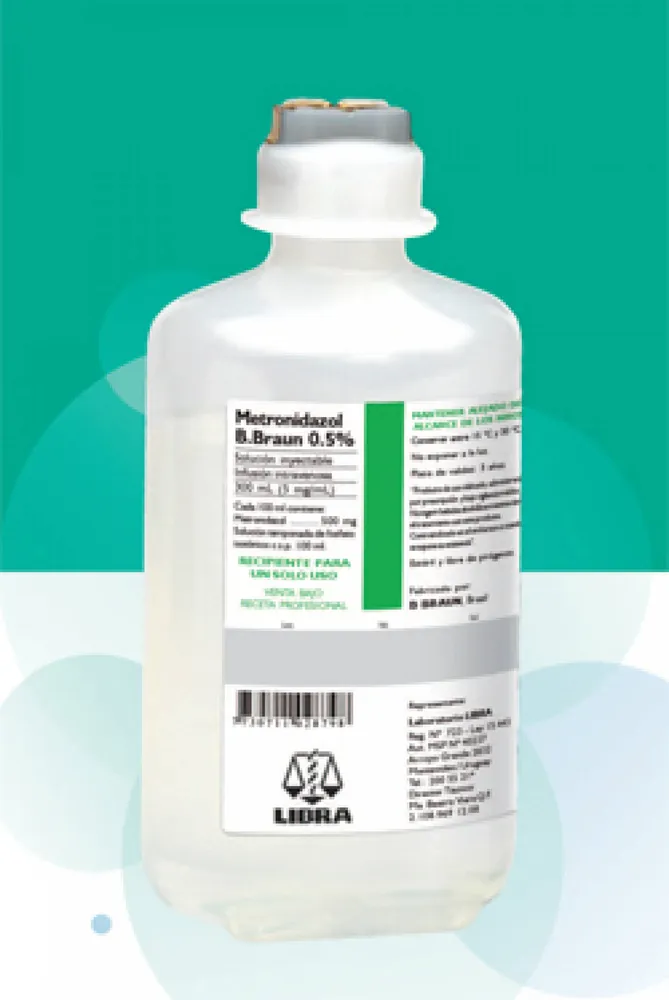
Table of Contents
- Package leaflet: Information for the user
- 1. What Metronidazole B. Braun is and what it is used for
- 2. Important information before using Metronidazole B. Braun
- 3. How to use Metronidazole B. Braun
- 4. Possible adverse effects
- 5. How to store Metronidazole B. Braun
- 6. Contents of the pack and other information
Package leaflet: Information for the user
Metronidazole B. Braun, 5 mg/ml, solution for infusion
Metronidazolum
Please read this leaflet carefully before using the medicine, as it contains
important information for the patient.
- Keep this leaflet, so that you can read it again if necessary.
- If you have any doubts, please consult your doctor.
- This medicine has been prescribed for a specific individual. Do not pass it on to others. The medicine may harm another person, even if their symptoms are the same.
- If any adverse reactions occur in the patient, including any adverse reactions not listed in this leaflet, inform your doctor. See section 4.
Contents of the leaflet
- What Metronidazole B. Braun is and what it is used for
- Important information before using Metronidazole B. Braun
- How to use Metronidazole B. Braun
- Possible side effects
- How to store Metronidazole B. Braun
- Contents of the package and other information
1. What Metronidazole B. Braun is and what it is used for
Metronidazole B. Braun is an antibiotic used to treat severe bacterial infections caused by bacteria sensitive to the active substance of the medicine – metronidazole.
Metronidazole B. Braun is used in the treatment of the following conditions:
- central nervous system infections, such as brain abscesses (localized infection with pus), meningitis (inflammation of the membranes covering the brain);
- lung and pleural infections, such as pneumonia with tissue damage, aspiration pneumonia following gastric content entering the lungs, lung abscesses;
- gastrointestinal tract infections, such as peritonitis, liver abscesses, postoperative infections of the colon or rectum, purulent infections within the abdominal and pelvic cavity;
- genital tract infections in women, such as endometritis, post-hysterectomy or post-caesarean states, septic abortion with blood infection (sepsis), puerperal fever;
- ear, nose, throat, dental, jaw, and oral cavity infections, e.g., necrotizing stomatitis;
- endocarditis;
- bone and joint infections, such as osteomyelitis;
- gas gangrene;
- sepsis with septic thrombophlebitis.
If necessary, other appropriate antibiotics may be used.
Metronidazole B. Braun may be used prophylactically before procedures with a high risk of anaerobic bacterial infection (mainly gynecological procedures, stomach and intestinal surgeries).
2. Important information before using Metronidazole B. Braun
When not to use Metronidazole B. Braun
- if the patient is allergic to metronidazole or other similar substances, or to any of the other ingredients of this medicine (listed in section 6).
Warnings and precautions
Before starting treatment with Metronidazole B. Braun, discuss this with your doctor.
Exercise special caution when using Metronidazole B. Braun if the patient has:
- severe liver damage;
- blood cell formation disorders;
- diseases of the brain, spinal cord, or nerves. In such cases, the treating physician will decide whether Metronidazole B. Braun should be used.
If seizures or other neurological reactions such as numbness of the limbs occur during treatment, the doctor will immediately adjust further treatment.
Metronidazole B. Braun should generally not be used for longer than 10 days. Treatment may be extended only in exceptional cases when absolutely necessary. Metronidazole treatment may be repeated only when absolutely necessary. In such cases, the doctor will recommend close monitoring of the patient's condition.
Particularly during prolonged metronidazole therapy or in patients with reduced immunity, an imbalance in intestinal flora may occur.
Therapy should be stopped or reassessed immediately if the patient develops severe diarrhoea, which may be due to a serious condition of the large intestine called pseudomembranous colitis (see also section 4).
Severe hepatotoxicity/acute liver failure, including fatal cases, have been reported in patients with Cockayne syndrome treated with metronidazole-containing medicines.
In patients with Cockayne syndrome, the doctor should monitor liver function during and after metronidazole treatment.
If any of the symptoms listed below occur, the patient should immediately inform the doctor and stop taking metronidazole:
- abdominal pain, loss of appetite, nausea, vomiting, fever, malaise, fatigue, jaundice, dark urine, sticky or loose stools, or skin itching;
- severe skin reactions, including Stevens-Johnson syndrome (SJS), toxic epidermal necrolysis (TEN), drug reaction with eosinophilia and systemic symptoms (DRESS), and acute generalized exanthematous pustulosis (AGEP), have been reported with the use of Metronidazole B. Braun 5 mg/ml. Treatment with Metronidazole B. Braun 5 mg/ml should be discontinued and immediate medical advice sought if any of the symptoms associated with these severe skin reactions described in section 4 occur.
Prolonged metronidazole treatment may interfere with blood cell formation (see section "Possible side effects"), therefore the doctor will recommend monitoring blood cell counts during treatment.
Metronidazole B. Braun and other medicines
Tell your doctor or pharmacist about all medicines the patient is currently taking or has recently taken, as well as any medicines the patient plans to take.
Medicines that may cause heart rhythm disturbances
Inform the doctor if the patient is taking medicines that may cause heart rhythm disturbances (so-called QT prolongation, visible on ECG), such as certain antiarrhythmics (medicines used to treat heart rhythm disorders, e.g. amiodarone), or certain antibiotics (e.g. ciprofloxacin).
Heart function should be monitored while taking these medicines. Contact the doctor immediately if any heart function disturbances, dizziness, or fainting occur.
Barbiturates (active ingredient in sleeping pills)
Phenobarbital reduces the duration of action of metronidazole; therefore, an increased dose of metronidazole may be necessary.
Busulfan
Metronidazole and busulfan should not be used simultaneously, as this may increase the risk of toxic effects.
Carbamazepine (medicine used to treat epilepsy)
Special caution is required when used concomitantly, as metronidazole may prolong the action of carbamazepine.
Cimetidine (medicine used to treat stomach disorders)
In isolated cases, cimetidine may reduce the elimination of metronidazole and lead to increased serum concentrations of metronidazole.
Coumarin derivatives (medicines that inhibit blood coagulation)
Metronidazole may enhance the anticoagulant effect of coumarin-type medicines. Therefore, if the patient is taking a blood-thinning medicine (e.g. warfarin), the doctor may recommend reducing the dose of that medicine during concomitant administration of metronidazole.
Cyclosporine (medicine used to suppress unwanted immune reactions)
Concurrent treatment with cyclosporine and metronidazole may increase cyclosporine blood levels; therefore, the doctor will adjust the cyclosporine dose accordingly.
Disulfiram (used in alcohol detoxification therapy)
Metronidazole should not be taken if the patient is receiving disulfiram, or disulfiram treatment should be discontinued. Concurrent use of these medicines may cause disorientation or severe psychiatric disturbances (psychosis).
Fluorouracil (anticancer medicine)
The daily dose of fluorouracil may need to be reduced when used concomitantly with metronidazole, as metronidazole may increase fluorouracil blood levels.
Lithium (used in the treatment of psychiatric disorders)
Particular care and close monitoring of the patient are required when metronidazole is used concomitantly with lithium salts, as lithium dosing may need to be readjusted.
Mycophenolate mofetil (used to prevent organ rejection after transplantation)
Metronidazole may reduce the effectiveness of this medicine; therefore, close monitoring of mycophenolate mofetil's effects is recommended.
Phenytoin (medicine used to treat epilepsy)
If the patient is taking phenytoin, the doctor will recommend cautious use of metronidazole. Metronidazole may prolong the action of phenytoin, while phenytoin may reduce the effectiveness of metronidazole.
Tacrolimus (used to suppress unwanted immune reactions)
Blood levels of tacrolimus and kidney function should be monitored when starting and stopping metronidazole treatment.
Metronidazole B. Braun and alcohol
Alcohol
Do not consume any alcoholic beverages during metronidazole treatment, as this may cause intolerance reactions such as vomiting or dizziness.
Pregnancy, breastfeeding, and fertility
If the patient is pregnant or breastfeeding, suspects she may be pregnant, or is planning to have a child, she should consult her doctor before using this medicine.
Pregnancy
If the patient is pregnant, the doctor will prescribe metronidazole only if absolutely necessary.
Breastfeeding
Breastfeeding should not be performed during metronidazole treatment. Breastfeeding should not be resumed until 2 to 3 days after completion of metronidazole treatment, as metronidazole passes into breast milk.
Fertility
Animal studies indicate only a potential negative effect of metronidazole on the male reproductive system when males are given doses significantly higher than the maximum doses for humans.
Driving and operating machinery
Do not drive or operate machinery during metronidazole treatment, as metronidazole may impair alertness. This is particularly important at the beginning of treatment or if the patient consumes alcohol.
Metronidazole B. Braun contains sodium
This medicine contains 322 mg of sodium (main component of table salt) per 100 ml. This corresponds to 16% of the maximum recommended daily dietary sodium intake for adults.
3. How to use Metronidazole B. Braun
Dosing
The dose is determined based on the type and severity of the disease, age, body weight, and the patient's response to treatment.
The usual recommended dosing is as follows:
Adults and adolescents
Treatment of infections:
On the first day of therapy, the patient usually receives 300 ml of the medicinal product (corresponding to 1500 mg of metronidazole).
From the second day of treatment, the patient receives 200 ml of the medicinal product daily (corresponding to 1000 mg of metronidazole).
Alternatively, the patient may receive 100 ml of the medicinal product (corresponding to 500 mg of metronidazole) every 8 hours.
At the beginning of therapy, the physician may prescribe a higher initial dose of metronidazole.
In most cases, treatment lasts 7 days. It may be extended only in exceptional cases.
Patients with kidney disease receive the same doses.
In patients with liver disease, dose reduction may be necessary.
If the patient is undergoing dialysis (artificial kidney), the physician will appropriately adjust the dose on the day of dialysis.
Prevention of infections that may occur after surgical procedures
When metronidazole is used to prevent infections in surgery, the patient may be given 500 mg of the medicinal product before surgery. This dose will be repeated 8 and 16 hours after surgery.
Use in children and adolescents
Dosing in children is based on body weight (b.w.)
Treatment of infections
| Age | Dosage |
| 8 weeks to 12 years | 20 – 30 mg of metronidazole per kg body weight per day as a single dose or divided doses of 7.5 mg per kg body weight every 8 hours. This daily dose may be increased to 40 mg of metronidazole per kg body weight if the infection is severe. |
| Below 8 weeks | 15 mg of metronidazole per kg body weight as a single daily dose or divided doses of 7.5 mg per kg body weight every 12 hours. |
| Children younger than 40 weeks of gestational age | Since metronidazole may accumulate in these patients during the early period of life, the plasma concentration of metronidazole should be monitored after several days of therapy. |
Treatment usually lasts 7 days.
Prevention of infections that may occur after surgical procedures:
| Age | Dose |
| Below 12 years | 20 – 30 mg of metronidazole per kg body weight as a single dose administered 1–2 hours before surgical procedure. |
| Neonates below 40 weeks of gestational age | 10 mg of metronidazole per kg body weight as a single dose before surgical procedure. |
Method and duration of administration
Metronidazole B. Braun is administered as an intravenous infusion directly into the vein.
The infusion from one bottle usually lasts 60 minutes and should not be shorter than 20 minutes.
Before infusion, the product may be diluted in an appropriate infusion solution.
Metronidazole treatment usually does not last longer than 7 days and must not exceed 10 days unless absolutely necessary (see section "Warnings and precautions").
If the patient is receiving other antibiotics simultaneously, the physician will administer these drugs separately.
Use of a higher than recommended dose of Metronidazole B. Braun
Symptoms following overdose may include adverse reactions, both subjective and objective, as described in the next section.
In case of significant metronidazole overdose, there is no specific antidote or treatment known; however, metronidazole can be effectively removed from the body during dialysis (i.e., using artificial kidney).
4. Possible adverse effects
Like all medicines, this medicine can cause adverse effects, although not everyone will experience them.
Adverse effects usually occur with high doses or prolonged use.
The following terms are used to describe the frequency of adverse effects:
very common: affects more than 1 in 10 patients
common: affects 1 to 10 in 100 patients
uncommon: affects 1 to 10 in 1,000 patients
rare: affects 1 to 10 in 10,000 patients
very rare: affects less than 1 in 10,000 patients
frequency not known: frequency cannot be determined from available data.
If any of the symptoms listed below occur, discontinue use of the medicine
Metronidazole B. Braun 5 mg/ml and contact your doctor immediately:
Rare:
- Severe, persistent diarrhoea (which may be a sign of a serious intestinal infection called pseudomembranous colitis).
- Severe, acute allergic reactions up to anaphylactic shock.
Very rare:
- During treatment, a decrease in white blood cells and platelets may occur (granulocytopenia, agranulocytosis, pancytopenia, thrombocytopenia). Regular blood count monitoring is necessary during prolonged treatment.
- Hepatitis, jaundice, pancreatitis (isolated cases).
- Brain function disorders, lack of coordination.
Frequency not known:
- Mild to moderate allergic reactions, including swelling of the face, lips, throat, and (or) tongue (angioedema).
- Forced gaze in one direction, damage or inflammation of the eye nerves.
- Decreased number of white blood cells (leukopenia), severe anaemia (aplastic anaemia).
- Seizures, nerve disorders such as numbness, pain, sensation of touching fur, or tingling in arms and legs.
- Non-bacterial brain inflammation (aseptic meningitis).
- Acute liver failure in patients with Cockayne syndrome (see section 2 "Warnings and precautions").
- Hearing disorders, hearing loss.
- Ringing in the ears (tinnitus).
- Skin rash, blisters, fever, or other symptoms of allergic reaction.
- Red, flat, localized or circular spots on the trunk, often with central blisters, skin peeling, and ulceration of the mouth, throat, nose, genital organs, and eyes. These severe skin rashes may be preceded by fever and flu-like symptoms (Stevens-Johnson syndrome, toxic epidermal necrolysis).
- Widespread rash, high body temperature, and enlarged lymph nodes (DRESS syndrome or drug hypersensitivity syndrome).
- Red, peeling, widespread rash with subcutaneous nodules and blisters, accompanied by fever. Symptoms usually appear after starting treatment (acute generalised exanthematous pustulosis).
Other adverse effects
Common:
Fungal and bacterial superinfections.
Uncommon:
- Dark urine colour (caused by a metronidazole metabolite).
Rare:
- Changes in ECG.
Very rare:
- Psychotic disorders, including confusion, hallucinations.
- Headache, dizziness, drowsiness, fever, visual and movement disturbances, speech disorders, convulsions.
- Visual disturbances, e.g. double vision, myopia.
- Liver function disorders (such as increased activity of certain enzymes and increased bilirubin levels).
- Allergic skin reactions, e.g. itching, urticaria.
- Muscle and joint pain.
Frequency not known:
- Vomiting, nausea, diarrhoea, inflammation of the tongue or oral cavity, belching, bitter taste in the mouth, metallic taste, epigastric pressure, coated tongue.
- Difficulty swallowing.
- Anorexia.
- Sad (depressive) mood.
- Drowsiness or insomnia, sudden muscle spasms.
- Skin redness and itching (erythema multiforme).
- Irritation of vein walls (up to phlebitis and thrombosis) following intravenous administration, weakness, fever.
Immediate management in case of pseudomembranous colitis
In case of persistent, severe diarrhoea, inform your doctor immediately, as it may be caused by pseudomembranous colitis, a serious condition requiring immediate treatment. The doctor will discontinue metronidazole treatment and provide appropriate therapy.
Reporting of adverse effects
If any adverse effects occur, including any not listed in this leaflet, inform your doctor or nurse. Adverse effects can be reported directly to the Department of Monitoring Adverse Drug Reactions, Office for Registration of Medicinal Products, Medical Devices and Biocidal Products,
Al. Jerozolimskie 181C
02-222 Warsaw
Tel: +48 22 49 21 301
Fax: +48 22 49 21 309
Website: https://smz.ezdrowie.gov.pl
Adverse effects can also be reported to the marketing authorisation holder.
Reporting adverse effects helps to provide more information on the safety of the medicine.
5. How to store Metronidazole B. Braun
Keep the medicine out of the sight and reach of children.
Do not use this medicine after the expiry date stated on the bottle and carton. The expiry date refers to the last day of the stated month.
Store the container in its outer packaging to protect it from light.
This medicine is for single use only. Any unused portion should be discarded.
From a microbiological standpoint, the diluted medicine should be used immediately. If not used immediately, the storage duration and conditions prior to use are the responsibility of the user and should not exceed 24 hours at a temperature of 2°C to 8°C, unless dilution has taken place under controlled, validated aseptic conditions.
Only use if the solution is clear and free from visible particles, and the bottle and closure are undamaged.
Medicines should not be disposed of via wastewater or household waste. Ask your pharmacist how to dispose of medicines no longer required. This will help protect the environment.
6. Contents of the pack and other information
What Metronidazole B. Braun contains
- The active substance is metronidazole. 1 ml of Metronidazole B. Braun infusion solution contains 5 mg of metronidazole. One polyethylene bottle with a volume of 100 ml contains 500 mg of metronidazole.
- The other ingredients are sodium chloride, disodium phosphate dodecahydrate, citric acid, water for injections.
What Metronidazole B. Braun looks like and contents of the pack
Metronidazole B. Braun is a clear, colourless or slightly yellowish solution.
Metronidazole B. Braun is available in polyethylene bottles with a volume of 100 ml.
The solution is available in packs of 10 or 20 bottles.
Marketing Authorisation Holder
B. Braun Melsungen AG
Carl-Braun-Straße 1
34212 Melsungen, Germany
Correspondence address:
34209 Melsungen, Germany
Tel. +49-5661-71-0
Fax +49-5661-71-4567
Manufacturer
B. Braun Medical, S.A.
Carretera de Terrassa 121
08191 Rubí, Barcelona, Spain
For further information, please contact the local representative of the Marketing Authorisation Holder:
Aesculap Chifa Sp. z o.o.
ul. Tysiąclecia 14
64-300 Nowy Tomyśl
tel. (061) 44 20 100
fax (061) 44 23 936
This medicinal product is authorised in the European Economic Area countries under the following names:
| Austria | Metronidazole B.Braun 5 mg/ml infusion solution |
| Belgium | Metronidazole B.Braun 5 mg/ml |
| Cyprus | Metronidazole B.Braun 5 mg/ml |
| Denmark | Metronidazol B.Braun 5 mg/ml |
| Estonia | Metronidazole B.Braun 5 mg/ml |
| Lithuania | Metronidazole B.Braun 5 mg/ml infusion solution |
| Latvia | Metronidazole B.Braun 5 mg/ml |
| Germany (Reference Member State) | Metronidazole B.Braun 5 mg/ml infusion solution |
| Poland | Metronidazole B. Braun |
| Slovakia | Metronidazol B.Braun 5 mg/ml |
| Italy | Metronidazolo B.Braun 5 mg/ml |