Metronidazole polpharma
Poland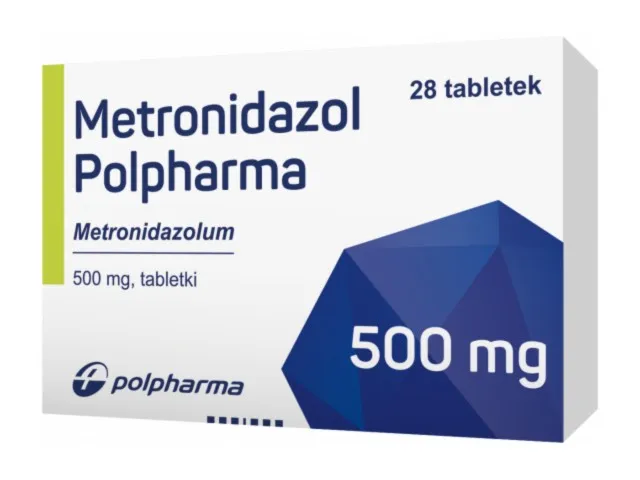
Table of Contents
- Package leaflet: Information for the user
- 1. What Metronidazol Polpharma is and what it is used for
- 2. Important information before using Metronidazol Polpharma
- 3. How to use Metronidazol Polpharma
- 4. Possible adverse reactions
- 5. How to store Metronidazol Polpharma
- 6. Contents of the pack and other information
Package leaflet: Information for the user
Metronidazol Polpharma, 500 mg, tablets
Metronidazolum
Read the entire leaflet carefully before using the medicine, as it contains important information for the patient.
- Keep this leaflet for future reference.
- If you have any questions, consult your doctor or pharmacist.
- This medicine has been prescribed for a specific individual. Do not pass it on to others. The medicine may harm other people, even if their symptoms are the same.
- If you experience any adverse reactions, including any not listed in this leaflet, inform your doctor or pharmacist. See section 4.
Table of contents
- What Metronidazol Polpharma is and what it is used for
- Important information before taking Metronidazol Polpharma
- How to take Metronidazol Polpharma
- Possible side effects
- How to store Metronidazol Polpharma
- Contents of the pack and other information
1. What Metronidazol Polpharma is and what it is used for
Metronidazol Polpharma is an antimicrobial and antiprotozoal agent.
The medicine is used in adults and children for:
- treating infections caused by anaerobic bacteria of the genera Bacteroides, Fusobacterium, Clostridium, Eubacterium, anaerobic cocci, and Gardnerella vaginalis, as well as protozoa such as Trichomonas, Entamoeba histolytica, Giardia lamblia, and Balantidium;
- prevention of postoperative infections caused by anaerobic bacteria, particularly species of Bacteroides and Streptococcus;
- treatment of infections caused by anaerobic bacteria (septicaemia, bloodstream infection known as bacteraemia, peritonitis, brain abscess, pneumonia, endocarditis, puerperal fever, pelvic abscess, salpingitis, post-surgical wound infections);
- urogenital trichomoniasis in both women and men;
- bacterial vaginosis;
- protozoal diseases – amoebiasis (amebiasis) and giardiasis (lambliasis);
- acute necrotizing ulcerative gingivitis; acute odontogenic infections;
- lower limb ulcers and pressure sores (anaerobic bacterial infections);
- in combination with other recommended medicines for the treatment of peptic ulcer associated with Helicobacter pylori infection.
2. Important information before using Metronidazol Polpharma
When not to use Metronidazol Polpharma:
- if the patient is allergic to metronidazole, other 5-nitroimidazole derivatives, or any of the other ingredients of this medicine (listed in section 6);
- during the first trimester of pregnancy.
Warnings and precautions
Before starting treatment with Metronidazol Polpharma, discuss this with your doctor or
pharmacist.
Exercise particular caution and inform your doctor when using Metronidazol
Polpharma if:
- the patient has active or chronic diseases of the central or peripheral nervous system (brain, spinal cord, or nerves);
- the patient has experienced neurological disorders during treatment (numbness, tingling in limbs, dizziness, lack of coordination, or seizures);
- the patient has severe impairment of liver or kidney function (see section 3);
- the patient is concurrently taking anti-inflammatory medicines called corticosteroids, or if the patient is prone to developing oedema;
- the patient previously or after metronidazole treatment showed significant abnormalities in blood tests and differential counts. In case of need for repeated metronidazole use, such a patient should remain under medical supervision. During treatment, the doctor will monitor blood parameters, particularly white blood cell count (leukocytes). If the drug is used for longer than 10 days, such monitoring is absolutely necessary.
During metronidazole treatment, vaginal, intestinal, or oral infections caused by yeast may occasionally occur. In such cases, consult a doctor who will prescribe appropriate antifungal treatment.
Metronidazole does not exhibit direct bactericidal activity against aerobic bacteria and facultative anaerobes.
Despite eliminating bacteria causing trichomoniasis, infection may persist.
During metronidazole treatment and for at least 48 hours after treatment ends, alcoholic beverages must not be consumed due to the risk of adverse reactions (see "Metronidazol Polpharma with food, drink and alcohol").
Metronidazole may interfere with the results of certain laboratory tests (aspartate aminotransferase (AspAT), alanine aminotransferase (AlAT), lactate dehydrogenase (LDH), serum triglyceride and blood glucose levels).
During metronidazole treatment, blistering skin reactions, sometimes fatal, such as Stevens-Johnson syndrome or toxic epidermal necrolysis, may occasionally occur (see section 4). If flu-like symptoms or progressive rash (often with blisters or mucosal lesions) develop, treatment must be discontinued immediately and medical advice sought.
The medicine may cause darkening of urine.
In patients with Cockayne syndrome, severe hepatotoxicity (acute liver failure), including fatal cases, has been reported during treatment with metronidazole-containing medicines.
In patients with Cockayne syndrome, liver function should be monitored by the physician during and after metronidazole treatment.
Immediately inform your doctor and discontinue Metronidazol Polpharma if the patient experiences any of the following symptoms:
- abdominal pain, loss of appetite, nausea, vomiting, fever, malaise, fatigue, jaundice, dark urine, pale or loose stools, or skin itching.
Metronidazol Polpharma with other medicines
Inform your doctor about all medicines currently used, recently taken, or planned for use.
In particular, inform your doctor if the patient is taking:
- oral anticoagulants (e.g. acenocoumarol, warfarin);
- lithium salts (medicines used in psychiatric disorders);
- terfenadine and astemizole (antihistamines);
- disulfiram (a medicine used in alcoholism treatment); metronidazole treatment may only be started at least 2 weeks after discontinuation of disulfiram therapy;
- medicines increasing liver enzyme activity (e.g. phenytoin, phenobarbital);
- medicines decreasing liver enzyme activity (e.g. cimetidine);
- 5-fluorouracil or busulfan (medicines used in cancer treatment);
- cyclosporine (a medicine used in transplant patients).
Metronidazol Polpharma with food, drink and alcohol
The medicine can be taken regardless of meals.
Metronidazole intensifies the toxic effects of alcohol. Consuming alcohol during treatment may cause adverse reactions such as flushing, sweating, headache, nausea, vomiting, epigastric pain, and tachycardia.
Pregnancy, breastfeeding and fertility
If the patient is pregnant, breastfeeding, suspects she may be pregnant, or plans to become pregnant, she should consult her doctor before using this medicine.
Pregnancy
This medicine is contraindicated during the first trimester of pregnancy. In the second and third trimesters of pregnancy, the medicine may be used only if, in the opinion of the physician, the expected benefit to the mother outweighs the potential risk to the fetus.
Breastfeeding
Metronidazole passes into human milk, reaching concentrations similar to those in plasma. The medicine should not be used during breastfeeding. However, if the doctor decides that treatment with this medicine is necessary, breastfeeding should be discontinued.
Effect on fertility
No data available.
Driving and operating machinery
Metronidazol Polpharma may cause drowsiness, dizziness, disorientation, hallucinations, seizures, or transient visual disturbances. It is recommended not to drive or operate machinery if such symptoms occur.
Metronidazol Polpharma contains glucose
If the patient has previously been diagnosed with intolerance to certain sugars, the patient should consult a doctor before taking this medicine.
3. How to use Metronidazol Polpharma
This medicine should always be used exactly as directed by the physician. In case of doubt, consult your
doctor.
Due to the risk of toxic effects (mutagenicity) in humans, the physician will carefully consider whether
prolonged use of metronidazole beyond the usually recommended duration is possible.
The usual recommended dosage is as follows:
Prevention of infections caused by anaerobic bacteria
Adults and children over 12 years of age: 1 g as a single dose, followed by 500 mg every 8 hours for
24 hours before the procedure; after the procedure, intravenous or rectal administration of metronidazole
should continue until the patient is able to take tablets orally.
Children under 12 years of age: 20–30 mg/kg body weight (bw) as a single dose given 1–2 hours before
the procedure.
Premature infants born before week 40 of pregnancy: 10 mg/kg bw as a single dose before surgery.
Infections caused by anaerobic bacteria
Metronidazole may be used therapeutically either as monotherapy or in combination with other
antibacterial agents. The average duration of treatment should not exceed 7 days.
Adults and children over 12 years of age: 250–500 mg three times daily.
Children over 8 weeks of age up to 12 years of age: the usual daily dose is 20–30 mg/kg bw as a single
dose or divided into doses of 7.5 mg/kg bw administered every 8 hours. The daily dose may be increased
up to 40 mg/kg bw depending on the severity of infection. The usual duration of treatment is 7 days.
Children under 8 weeks of age: 15 mg/kg bw per day as a single dose or divided into doses of 7.5 mg/kg
bw administered every 12 hours.
In premature infants born before week 40 of pregnancy, accumulation of metronidazole may occur
during the first week of life; therefore, the physician will monitor serum concentrations of metronidazole
after several days of treatment.
Trichomoniasis
Adults and children over 10 years of age: 2000 mg as a single dose or 250 mg three times daily for
7 days, or 500 mg twice daily for 5–7 days.
Note: treatment should be carried out simultaneously in both sexual partners.
Children under 10 years of age: 40 mg/kg bw orally as a single dose or 15–30 mg/kg bw per day divided
into 2–3 doses for 7 days. The single dose should not exceed 2000 mg.
Bacterial vaginosis
Adults and children over 10 years of age: 500 mg in the morning and evening for 7 days or 2000 mg as a
single dose.
Amebiasis (amoebic dysentery)
Adults and children over 10 years of age: 500 mg to 750 mg three times daily for 5–10 days.
Children aged 7 to 10 years: 200 mg to 400 mg three times daily for 5–10 days.
Children aged 3 to 7 years: 100 mg to 200 mg four times daily for 5–10 days.
Children aged 1 to 3 years: 100 mg to 200 mg three times daily for 5–10 days.
Alternative dosing regimen for this indication (dose expressed in mg per kg bw):
Children aged 1 to 10 years: 35–50 mg/kg bw per day in three divided doses for 5 to 10 days, not exceeding
2400 mg per day.
Giardiasis (lambliasis)
Adults and children over 10 years of age: 2000 mg once daily for 3 days or 500 mg twice daily for 7 to
10 days.
Children aged 7 to 10 years: 1000 mg once daily for 3 days.
Children aged 3 to 7 years: 600 mg to 800 mg once daily for 3 days.
Children aged 1 to 3 years: 500 mg once daily for 3 days.
Alternative dosing regimen for this indication (dose expressed in mg per kg bw):
15–40 mg/kg bw per day, divided into 2–3 doses.
Treatment of Helicobacter pylori infection (eradication therapy)
Metronidazole should be used for at least 7 days in combination with other agents recommended for
the treatment of Helicobacter pylori infections.
Adults: 500 mg 2–3 times daily for 7–14 days.
Children and adolescents: 20 mg/kg bw per day, not exceeding 500 mg twice daily for 7–14 days.
Acute necrotizing ulcerative gingivitis
Adults: 250 mg three times daily for 3 days.
Children: 35–50 mg/kg bw per day, divided into three doses, for 3 days.
Acute peridental infections
Adults and adolescents over 17 years of age: 250 mg three times daily for 3–7 days.
Children and adolescents aged 10 to 17 years: 200–250 mg three times daily for 3–7 days.
Children aged 7 to 9 years: 100 mg three times daily for 3–7 days.
Children aged 3 to 6 years: 100 mg twice daily for 3–7 days.
Children aged 1 to 2 years: 50 mg three times daily for 3–7 days.
Leg ulcers and pressure sores
Adults: 500 mg three times daily for 7 days.
Method of administration
Oral administration.
NOTE! Tablets may be crushed to facilitate administration to children.
The medicine is also available in the form of 250 mg tablets and as an injection/infusion solution.
Do not change the dosage of the medicine on your own.
Use in patients with hepatic impairment
In patients with severe hepatic dysfunction or hepatic encephalopathy, accumulation of the drug may
occur; therefore, the physician will recommend reducing the daily dose to one-third of the usual dose,
administered once daily.
Use in patients with renal impairment
Dose reduction in these patients is not necessary.
In patients undergoing hemodialysis, metronidazole and its metabolites are removed during the 8-hour
dialysis period; therefore, metronidazole should be re-administered immediately after dialysis.
In patients undergoing intermittent peritoneal dialysis or continuous ambulatory peritoneal dialysis
(CAPD), no dosage adjustment is required.
Use in elderly patients
This medicine should be used with caution in elderly patients, especially when high doses are administered.
Use of a higher than recommended dose of Metronidazol Polpharma
If a higher than recommended dose is used, consult a physician immediately.
Missed dose of Metronidazol Polpharma
If a dose is missed, take it as soon as possible. If it is almost time for the next dose, do not take the missed
dose. Do not take a double dose to make up for a missed dose.
If you have any further questions about the use of this medicine, consult your doctor or pharmacist.
4. Possible adverse reactions
Like all medicines, this medicine can cause adverse reactions, although not everyone will experience them.
The frequency, type, and severity of adverse reactions in children are the same as in adults.
If any of the following serious adverse reactions occur in a patient, stop taking Metronidazole Polpharma and contact a doctor immediately:
- Adverse reactions occurring rarely (occur in less than 1 in 1,000 people):
- anaphylaxis (severe allergic reaction; symptoms include, for example, itching, swelling, shortness of breath, disturbances in heart function, dizziness);
- Adverse reactions occurring very rarely (occur in less than 1 in 10,000 people):
- agranulocytosis (lack of white blood cells called granulocytes in the blood), neutropenia (deficiency of granulocytes), thrombocytopenia (reduced number of blood platelets), pancytopenia (deficiency of red and white blood cells and platelets). Symptoms of these blood disorders include, among others, fever, sore throat, superficial ulcers of the oral mucosa, flu-like symptoms, fatigue, bleeding (e.g. bruises, petechiae, purpura, nosebleeds);
- encephalopathy (brain disorders; symptoms include, for example, neck stiffness, disorientation, fever, headache, hallucinations, paralysis, light sensitivity, visual and movement disturbances);
- Adverse reactions occurring with unknown frequency (frequency cannot be determined from available data):
- angioedema (symptoms include, for example, swelling of the face, tongue, and trachea, leading to breathing difficulties);
- urticaria;
- fever;
- acute liver failure in patients with Cockayne syndrome (see section 2 "Warnings and precautions"). Other adverse reactions
Adverse reactions occurring very rarely (less than 1 in 10,000 people):
- psychotic disorders, including confusion and hallucinations;
- subacute cerebellar syndrome (symptoms include, for example, impaired motor coordination, speech impairment, gait disturbances, nystagmus, and tremor);
- somnolence, dizziness, convulsions, headaches;
- visual disturbances, such as double vision and myopia, mostly transient;
- increased activity of liver enzymes (AspAT, AlAT, alkaline phosphatase), hepatitis, liver cell damage, jaundice, and pancreatitis, which resolve after discontinuation of the drug;
- rash, acneiform eruptions, itching, redness;
- muscle pain, joint pain;
- darker urine discoloration due to the presence of the drug.
Adverse reactions occurring with unknown frequency (frequency cannot be determined from available data):
- leukopenia (reduced number of white blood cells);
- loss of appetite;
- depressed mood;
- peripheral sensory neuropathy (symptoms include numbness, tingling, abnormal sensations such as pricking, burning) or transient seizure-like episodes; in most cases, neuropathy resolved after discontinuation of the drug or dose reduction;
- aseptic meningitis;
- optic neuropathy/optic neuritis (symptoms include, for example, eye pain, visual disturbances);
- taste disturbances, oral mucosal inflammation, coated tongue, nausea, vomiting, gastrointestinal disturbances such as epigastric pain and diarrhea;
- erythema multiforme, Stevens-Johnson syndrome (symptoms include blisters progressing to erosions on the mucous membranes of the mouth, conjunctiva, and genital organs), toxic epidermal necrolysis (erythematous-bullous lesions of the skin and mucous membranes leading to sloughing of large areas of epidermis and exposure of large skin surfaces) – see section 2 "Warnings and precautions";
- vaginal pain and yeast infection.
Cases of liver failure requiring transplantation have been reported in patients treated with metronidazole in combination with other antibiotics.
Reporting of adverse reactions
If any adverse reactions occur, including any adverse reactions not listed in this leaflet, inform your doctor or pharmacist. Adverse reactions can be reported directly to the Department of Monitoring Adverse Drug Reactions, Office for Registration of Medicinal Products, Medical Devices and Biocidal Products
Al. Jerozolimskie 181C
02-222 Warsaw
Phone: +48 22 49 21 301
Fax: +48 22 49 21 309
Website: https://smz.ezdrowie.gov.pl
Adverse reactions can also be reported to the marketing authorization holder.
Reporting adverse reactions helps provide more information on the safety of the medicine.
5. How to store Metronidazol Polpharma
Keep the medicine out of the sight and reach of children.
Do not store above 25°C.
Store in the original packaging to protect from light.
Do not use this medicine after the expiry date stated on the packaging.
The expiry date refers to the last day of the stated month.
The marking on the packaging following the abbreviation EXP indicates the expiry date, and following the abbreviation Lot/LOT indicates the batch number.
Medicines must not be disposed of via wastewater or household waste. Ask your pharmacist how to dispose of medicines no longer in use. This will help protect the environment.
6. Contents of the pack and other information
What Metronidazol Polpharma contains
- The active substance is metronidazole. Each tablet contains 500 mg of metronidazole.
- The other ingredients are: potato starch, gelatin, liquid glucose, magnesium stearate.
What Metronidazol Polpharma looks like and contents of the pack
Tablets are white to yellowish, elongated, biconvex.
Pack:
The pack contains 14, 20 or 28 tablets in blisters made of Aluminium/PVC foil, placed in a cardboard box.
Not all pack sizes may be marketed.
Marketing Authorisation Holder and Manufacturer
Zakłady Farmaceutyczne POLPHARMA S.A.
ul. Pelplińska 19, 83-200 Starogard Gdański
tel. + 48 22 364 61 01