Metopirone
Poland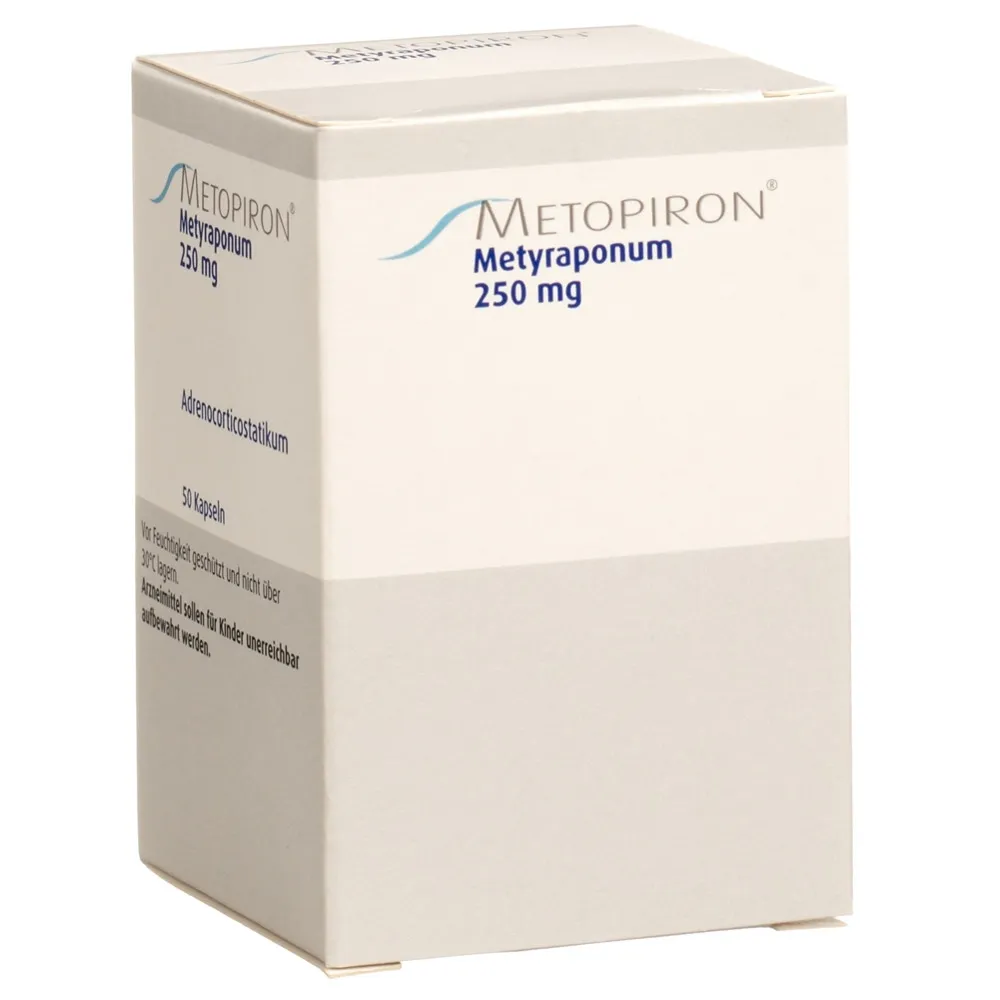
Table of Contents
Patient Information Leaflet
Metopirone, 250 mg, soft capsules
metyrapone
Please read all of this leaflet carefully before using this medicine, as it contains
important information for you.
- Keep this leaflet, as you may need to read it again.
- If you have any further questions, please ask your doctor or nurse.
- This medicine has been prescribed for a specific individual. Do not pass it on to others. It may harm other people, even if their symptoms are the same.
- If you experience any side effects, including any not listed in this leaflet, tell your doctor or nurse. See section 4.
Leaflet Contents
- What Metopirone is and what it is used for
- What you need to know before taking Metopirone
- How to take Metopirone
- Possible side effects
- How to store Metopirone
- Contents of the pack and other information
1. What Metopirone is and what it is used for
Metopirone contains 250 mg of metyrapone. Metyrapone belongs to a group of medicines used in tests assessing pituitary gland function. Metyrapone is used in a diagnostic test to determine whether the patient has insufficient levels of ACTH (a hormone secreted by the pituitary gland) that regulates cortisol secretion. Metyrapone may also be used in a diagnostic test helping to identify a specific type of Cushing's syndrome. Additionally, the medicine may be used to treat symptoms and signs of endogenous Cushing's syndrome by reducing elevated cortisol levels (a hormone produced by the adrenal glands). Cushing's syndrome is a collection of symptoms caused by high levels of cortisol produced by the body in the adrenal glands.
2. Important information before taking Metopirone
When not to take Metopirone during diagnostic testing for ACTH deficiency:
- if the patient has Addison's disease, in which the adrenal glands do not produce sufficient amounts of steroid hormones, cortisol or aldosterone.
When not to take Metopirone:
- if the patient is allergic to metyrapone or any of the other ingredients of this medicine (listed in section 6).
Warnings and precautions
Before starting Metopirone for diagnostic testing,
discuss with your doctor if:
- the patient has or may have a condition in which hormone levels in the body are low (e.g. reduced cortisol production by the adrenal glands or severe hypopituitarism). The doctor will perform tests to ensure that taking Metopirone is appropriate for the patient.
- the patient has liver disease or liver damage, as this may slow down the action of the medicine.
- the patient is taking medicines such as glucocorticosteroids, because the doctor may decide not to perform the Metopirone test until the patient has discontinued these medicines.
During treatment with Metopirone
Metopirone may transiently reduce the amount of hormones produced by the adrenal glands (cortisol).
However, the doctor will correct this by administering an appropriate hormonal medicine.
If the patient has Cushing's syndrome, the doctor may also prescribe a medicine to prevent
infections. However, if the patient develops shortness of breath and fever within a few hours or days,
medical advice should be sought immediately, as these symptoms may indicate a severe
lung infection.
Laboratory tests before and during Metopirone administration
Blood tests should be performed before starting treatment and regularly during treatment. This is
to detect any possible abnormalities in the patient's potassium and cortisol levels.
Depending on the results, the doctor may adjust the dosage and/or prescribe corrective treatment.
Depending on cardiovascular risk factors, an ECG should be considered before starting treatment
with Metopirone or during treatment.
Contact the doctor immediately if the patient experiences any of the following symptoms:
weakness, fatigue, dizziness, loss of appetite, nausea, vomiting, diarrhoea, abdominal pain.
These symptoms, together with low blood pressure, high potassium levels, low sodium levels, or low
blood glucose levels, may indicate hypocortisolism (insufficient cortisol levels in the blood).
Therefore, the doctor will monitor blood pressure and perform blood tests.
In case of confirmed hypocortisolism, the doctor may decide to initiate temporary replacement
steroid therapy (glucocorticosteroid) and/or reduce the dose or discontinue treatment with Metopirone.
If the patient takes Metopirone for a prolonged period
During treatment with this medicine, blood pressure may increase.
Metopirone and other medicines
Inform the doctor or pharmacist about all medicines currently taken or recently taken, as well as any
medicines the patient plans to take, because they may affect the results of the Metopirone test. The following medicines may affect the results of the Metopirone test:
- antiepileptic drugs used in the treatment of epilepsy (e.g. phenytoin, barbiturates);
- antidepressants and neuroleptics used in the treatment of anxiety, depression or psychiatric disorders (e.g. amitriptyline, chlorpromazine, alprazolam);
- hormones affecting the hypothalamic-pituitary axis, which regulate bodily processes such as stress, emotions, energy levels, digestion, and the immune system (e.g. cortisol, hydrocortisone, ACTH, tetracosactide);
- corticosteroids;
- antithyroid drugs used in the treatment of thyroid disorders (e.g. thyroxine, liothyronine, carbimazole);
- cyproheptadine used in the treatment of allergies (e.g. Periactin).
Metopirone must not be taken together with paracetamol without prior consultation with a doctor.
Pregnancy, breastfeeding and effects on fertility
Use during pregnancy
Metopirone is not recommended for use in women of childbearing age who are not using an effective
method of contraception.
If the patient is pregnant, suspects she may be pregnant, or is planning to become pregnant, she should
consult her doctor as soon as possible to determine whether treatment with Metopirone should be discontinued or continued.
If Metopirone must be taken during pregnancy, the doctor will need to monitor cortisol levels in the newborn for the first week of life.
Use during breastfeeding
Breastfeeding should be discontinued during treatment with Metopirone, as metyrapone may pass into human milk.
Driving and operating machinery
If dizziness or drowsiness occurs while taking this medicine, the patient should not drive a motor vehicle or operate machinery until these symptoms have resolved.
Metopirone contains sodium ethyl parahydroxybenzoate (E215) and sodium propyl parahydroxybenzoate (E217),
which may cause allergic reactions (may be delayed).
Metopirone contains sodium
The medicine contains less than 1 mmol of sodium (23 mg) per capsule, meaning the medicine is considered "sodium-free".
Monitoring and supervision
When used as part of a diagnostic test, the patient will receive the medicine only under the supervision of a doctor, as the doctor must monitor the body's response to the administered medicine.
3. How to take Metopirone
This medicine should always be taken exactly as directed by the doctor. If in doubt, consult the doctor or pharmacist. If Metopirone is being administered for the diagnosis of Cushing's syndrome, the patient must go to hospital for testing.
Use in adults
If a rapid single-dose test is being performed (to assess pituitary gland function):
Around midnight, the patient will be asked to swallow one or more capsules with yoghurt or milk. A blood sample will then be taken in the morning and tested by the doctor.
The recommended dose of the medicine is 30 mg/kg body weight. The same dose is used in children.
If a multiple-dose test is being performed (to assess pituitary gland function and assist in diagnosing a specific type of Cushing's syndrome):
The doctor will begin collecting the patient's urine samples over 24 hours before starting administration of this medicine. The patient will then receive 2–3 capsules (500–750 mg) every 4 hours for the next 24 hours. The capsules should be taken with milk or after a meal. Over the following 24 hours, the doctor will collect further urine samples.
If the patient is being treated due to symptoms and signs of endogenous Cushing's syndrome:
The dose given to the patient will be individually adjusted and may range from 1 capsule (250 mg) to 24 capsules (6 g) per day, divided into three or four doses. The dose of Metopirone may be periodically adjusted by the doctor to restore normal cortisol levels.
Always follow the doctor's instructions exactly and never change the dose unless instructed by the doctor.
Use in children
In the case of a multiple-dose test, children should receive 15 mg/kg body weight, with a minimum dose of 250 mg every 4 hours.
In the treatment of Cushing's syndrome, the dose should be individually adjusted based on cortisol levels and the tolerated dose of the medicine.
Accidental overdose of Metopirone
If the patient has taken too many capsules, inform the doctor or nurse immediately or go to the emergency department of the nearest hospital. Symptoms may include vomiting and abdominal pain and/or diarrhoea. The patient may experience dizziness, fatigue, headache, sweating, and elevated blood pressure. Administration of activated charcoal and hydrocortisone may be necessary.
Missed dose of Metopirone
If a dose of capsules is missed, take it as soon as possible. If it is almost time for the next dose, do not take a double dose to make up for the missed dose; instead, take the capsules at the usual time.
If you have any further questions about the use of this medicine, consult your doctor or pharmacist.
4. Possible adverse reactions
Like all medicines, this medicine can cause adverse reactions, although not everyone experiences them.
Some adverse reactions may be serious:
- Immediately inform the doctor if the patient experiences two or more of the following symptoms: weakness, dizziness, fatigue, loss of appetite, nausea, vomiting, abdominal pain, diarrhoea. This may indicate adrenal insufficiency (low cortisol levels). Adrenal insufficiency occurs when metyrapone reduces cortisol levels too much. It is more likely to occur during periods of higher metyrapone dosage or increased stress. The doctor will correct this by administering a hormonal medicine to compensate for the cortisol deficiency and (or) by adjusting the dose of metyrapone.
- Immediately inform the doctor if the patient develops bruises or bleeding that lasts longer than usual, blood visible on the gums, in the nose or on the skin, and a feeling of fatigue most of the time. This may indicate reduced levels in the blood of red blood cells and (or) white blood cells, and (or) platelets.
See also section 2 "During treatment with Metopirone".
Adverse reactions by frequency of occurrence:
Very common adverse reactions (may affect more than 1 in 10 people)
- Adrenal insufficiency (low cortisol levels)
- Loss of appetite
- Headache
- Dizziness (vertigo)
- High blood pressure (hypertension)
- Nausea
- Abdominal pain (stomach pain)
- Diarrhoea
- Skin allergic reactions [urticaria, rash (skin redness), itching]
- Joint pain
- Swelling of limbs, hands or feet
- Weakness (fatigue, exhaustion)
Common adverse reactions (may affect up to 1 in 10 people)
- Low potassium levels (hypokalaemia)
- Feeling of fatigue or drowsiness (sedation)
- Low blood pressure (hypotension)
- Vomiting
- Acne
- Excessive growth of hair in unusual places (hirsutism)
- Muscle pain
Frequency not known (cannot be estimated from available data)
- Abnormal liver function (increased liver enzyme activity)
- Leukopenia, anaemia, thrombocytopenia (reduced levels in the blood of red blood cells, white blood cells or platelets)
- Hair loss
- Lung infection
Reporting of adverse reactions
If any adverse reactions occur, including any adverse reactions not listed in this leaflet, inform a doctor or nurse. Adverse reactions can be reported directly to the Department of Monitoring Adverse Drug Reactions of the Office for Registration of Medicinal Products, Medical Devices and Biocidal Products
Al. Jerozolimskie 181C, 02-222 Warsaw
Tel: +48 22 49 21 301
Fax: +48 22 49 21 309
Website: https://smz.ezdrowie.gov.pl
Adverse reactions can also be reported to the marketing authorisation holder.
Reporting adverse reactions helps to provide more information on the safety of this medicine.
5. How to store Metopirone
Keep this medicine out of the sight and reach of children.
Do not use this medicine after the expiry date stated on the bottle and carton after the words
"Expiry date". The expiry date refers to the last day of the stated month. Use within two
months of opening.
Keep the bottle tightly closed to protect from moisture.
Store below 25 °C.
Medicines should not be disposed of via wastewater or household waste. Ask your pharmacist
how to dispose of medicines no longer required. Such measures will help protect the
environment.
6. Contents of the pack and other information
What Metopirone contains
- The active substance is metyrapone. One capsule contains 250 mg of metyrapone.
- The other ingredients are: ethylaniline, gelatin, glycerol, macrogol 400, macrogol 4000, p-methoxyacetophenone, sodium ethyl parahydroxybenzoate (E215), sodium propyl parahydroxybenzoate (E217), titanium dioxide (E171), and purified water. The red printing ink on the capsules contains: carmine acid (E120), hexahydrated aluminium chloride, sodium hydroxide, hypromellose, and propylene glycol.
What Metopirone looks like and contents of the pack
White or yellowish-white, elongated, opaque, soft gelatin capsule with a red ink imprint reading "HRA", containing a slightly yellowish, sticky or jelly-like content.
Capsule size: length 18.5 mm; diameter 7.5 mm.
One plastic bottle contains 50 capsules.
Marketing Authorisation Holder Manufacturer
Esteve Pharmaceuticals S.A. DELPHARM LILLE S.A.S
Passeig de La Zona Franca 109 Planta 4 Parc d’activités Roubaix-Est
08038 Barcelona 22 Rue de Toufflers CS 50070
Spain +34 93 446 60 00 France
This medicinal product is authorised in the European Economic Area countries under the following names:
Metopirone: Ireland, Croatia, Czech Republic, Latvia, Denmark, Finland, Netherlands, Portugal, Poland, Spain, Sweden
Metycor: Slovenia, Austria, Norway
Metyrapone Esteve: France
Metopiron: Germany
Cormeto: Italy, Estonia, Hungary